Advanced massage course in Vietnam for practitioners: what to learn so clients come back
Lương Y (traditional healer) Tống Văn Huynh · Tong Gia Acupoint Wellness (Huyệt Đạo Tống Gia) · 05/11/2026
An advanced massage course in Vietnam for practitioners teaches people already working in the trade to read a client's body with their eyes and hands, then choose the right area and the right pressure. At Tong Gia in Ho Chi Minh City, this is the Specialist Course (L3), taught by Lương Y Tống Văn Huynh, with many hours of hands-on practice and personal correction.
Questions learners often ask about the advanced massage course for practitioners
How long does an acupressure massage course take before I can do side work?
You can take side work once your hands are steady on many different people, so it depends on practice hours; the class promises no jobs or income. Practitioners need muscle anatomy to avoid pressing the wrong spot and the Eastern outer-inner reading to choose pressure. Lasting pain needs a medical facility first; this is wellness care, not a medical service. Taught by traditional practitioner Tống Văn Huynh at Vinhomes Grand Park, TP. Thủ Đức; Zalo/WhatsApp +84 917 945 259.
How long is a body massage course, and what can I do after it?
Tong Gia's path has Levels 1–4, and the consultant explains each level's length at enrolment; afterwards, depending on skill, you can work on family or at a spa. You learn strokes that follow muscle fibres across the body and the Eastern view that outer signs reflect inner organs. Lasting pain needs a medical facility first; this is wellness care, not a medical service. Free Sunday-morning trial at Vinhomes Grand Park, TP. Thủ Đức; Zalo/WhatsApp +84 917 945 259.
What are you noticing in your work?
After a few years in the trade your hands are used to the work and clients say it feels “nice”, yet many come only once and never return. A client says their shoulder hurts, you work the full 60 minutes and still aren't sure you found the right spot. That is when many practitioners start looking for an advanced wellness massage course.
What makes the difference is usually not more new moves, but knowing why you use that move on this person, in this area, with this pressure.
What an advanced wellness massage course should teach
- Observe before you touch: look at complexion, posture and uneven shoulders to know what to ask the client.
- Read the body with your hands: feel along the spine and notice tight areas, soft areas and areas where the client is sensitive.
- Choose graded pressure: stronger is not better; each person and each area needs a different level of pressure.
- Know your limits: recognise the signs that mean you must stop and advise the client to see a doctor.
- Give aftercare advice: help the client look after themselves at home; that is why clients come back.
Criteria for choosing an advanced class, wherever you study
- Ask about the ratio of hands-on hours on real people to hours spent sitting and listening.
- Ask who teaches in person and corrects your hands, and how many people are in the class.
- Ask whether the course teaches when not to work, or only teaches technique.
- Ask for one trial session before paying the tuition.
- Be careful with places that promise a job, income or legally valid papers without explaining clearly.
How long is the Specialist Course (L3) at Tong Gia?
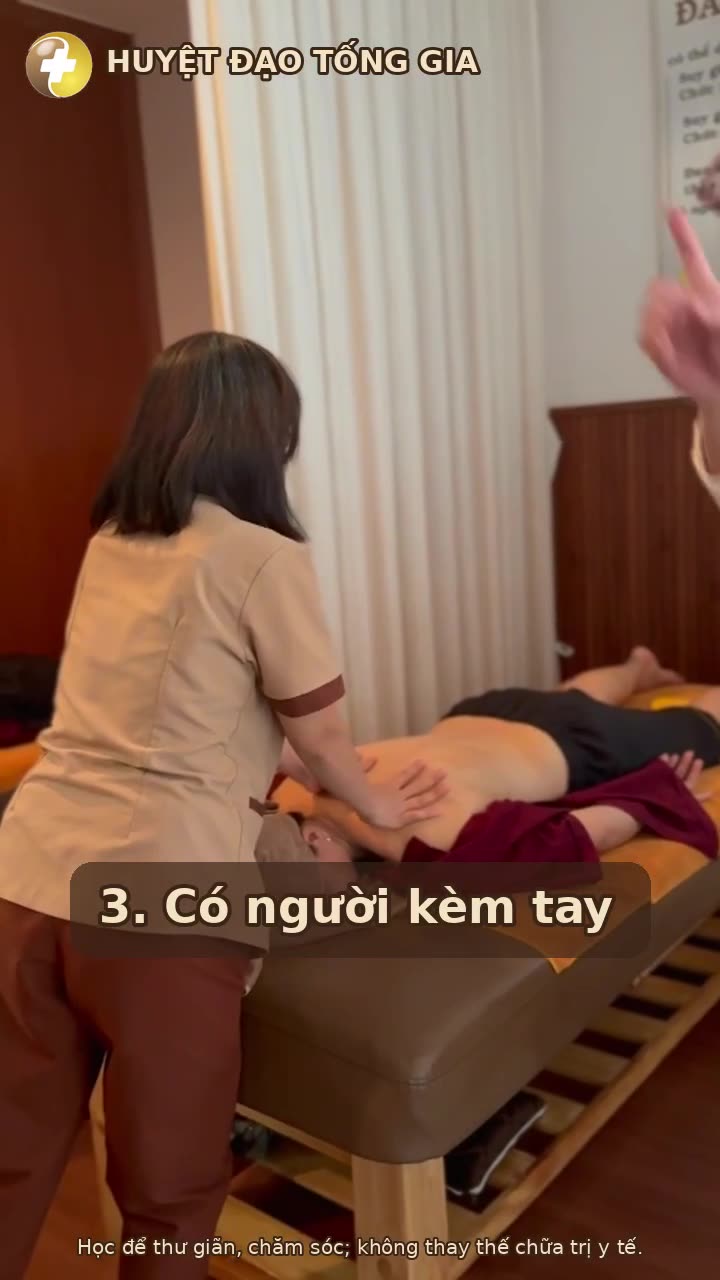
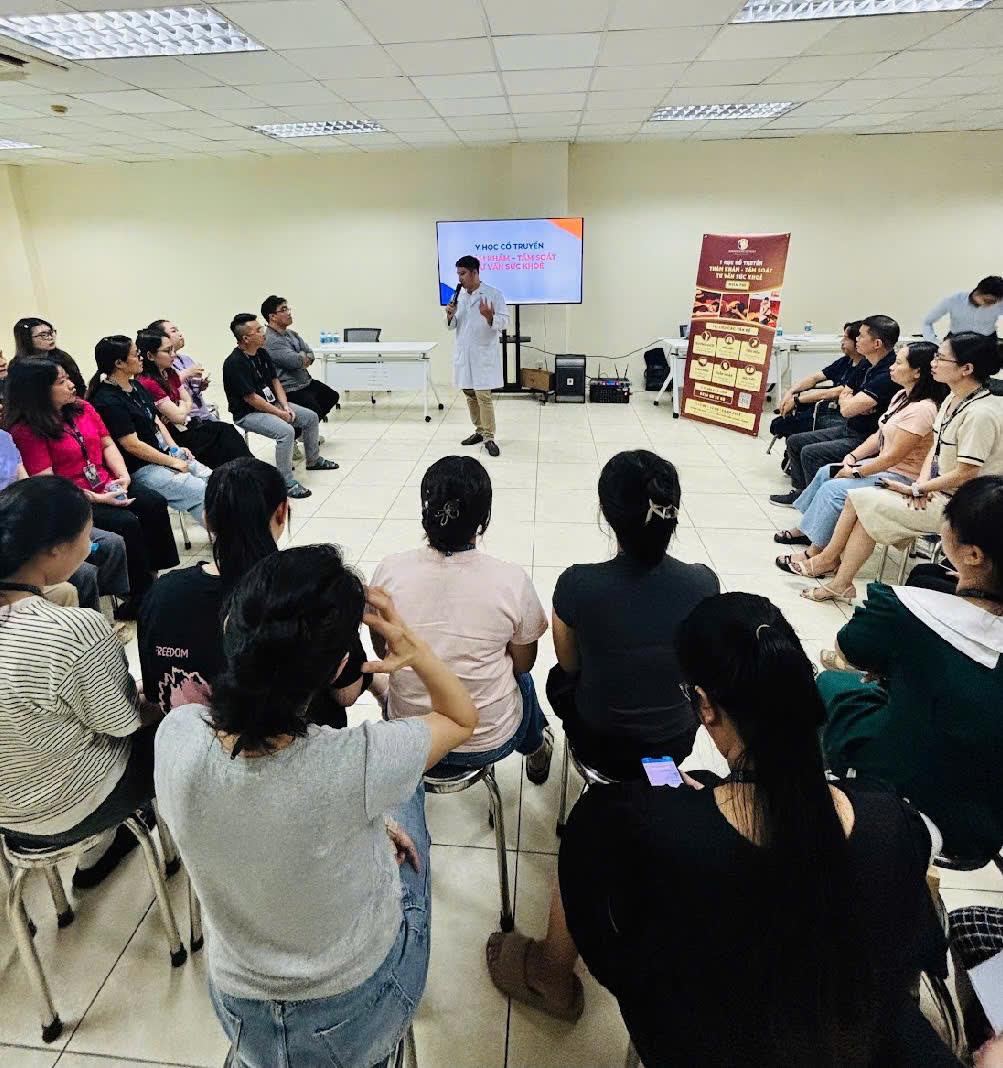
The Specialist Course lasts 1 month, that is 30 days with 60 sessions: theory in the morning, guided hands-on practice on real people in the afternoon. The class is for practitioners already working in spas, massage venues and herbal head-spa shops, and for shop owners who want to reach specialist level. A consultant tells you the tuition when you register.
The course has three parts:
- 5-organ wellness care: Liver, Heart, Spleen, Lung and Kidney in the Eastern wellness tradition, acupoints, seasons, emotions, a care routine for each organ and the signs that mean you must advise the client to see a doctor. See the 5-organ wellness part.
- Wellness massage with spinal nerve-reflex balancing: reading the spine by hand, locating zones and points, 5 pressure levels, the wave method, and the rule of 3 no's: no needles, no medicine, no rough force. See the spinal balancing part.
- Advanced Y Tướng Học (face reading for wellness): 10 face types, bone features and flesh features, the Ten-Character face method, and matching facial signs with the spine.
General information about the course is on the L3 Specialist level page.
The 6-step routine for one care session
The core thing learners take home is the 6-step routine: read the face, ask, read the spine by hand, choose the area, work, give aftercare advice. Tong Gia's two pillars sit right inside it: Y Tướng Học at the first step and spinal nerve-reflex balancing in the middle steps. Every observation from the face must be checked again by hand on the spine.
Try it now: record one of your own sessions
Next session, before you touch the client, write down 3 things you notice: complexion, posture, which shoulder is higher. After the session, write down which area felt tightest under your hands. Compare the two sheets: does what your eyes saw match what your hands felt? This exercise is the first step of the advanced way of working.
What every learner of the trade must remember
Tong Gia is hands-on wellness care, not a medical service. For lasting pain, numbness or weakness that keeps increasing, or an underlying condition, see a doctor at a medical facility; learners must also know when not to work and advise the client to see a doctor. Tong Gia makes no promise of a job or income after the course.
Where can you learn this?
All three parts above are taught in the Specialist Course at Tong Gia, Vinhomes Grand Park, Thủ Đức City (Ho Chi Minh City), by Lương Y Tống Văn Huynh, who has more than 13 years in Eastern wellness practice. If you are not sure which level suits you, come to a trial class first.
Full-body massage course: how is it different from learning one area at a time?
Many practitioners look for a "body massage course" because they want to deliver a full-body session. The difference between full-body work and single-area work is not the number of moves but the order, and how the areas are linked through the spine.
| Area | What to learn | Safety note |
|---|---|---|
| Back and spine | Release both sides of the spine, read tension segment by segment, press back-shu points | No pressure straight on the spinous processes, no cracking or twisting |
| Neck and shoulders | Relax the shoulders and shoulder blades before the back of the neck | Avoid the front of the neck, lighter pressure at the nape |
| Arms | Forearms, hands, familiar points such as Hegu and Neiguan | Do not press Hegu during pregnancy |
| Legs | Calves, heels, feet along the meridians | Avoid varicose veins and hot swollen areas |
| Finish | Linking strokes from back to legs, let the client rest | Ask how they feel, suggest warm water |
A 90-minute Tong Gia body session starts with observing and asking, spends most of its time on the back, neck and shoulders, and only then moves down to the legs. Practitioners used to single areas should practise linking them in this order many times under supervision, because the most common mistake is covering every area but in disconnected pieces, so the client never feels one continuous release.
Further reading on this topic: A therapeutic-style massage course: how it differs from relaxation massage and what a good course must teach · Chronic pain client psychology: what wellness massage learners need to understand to care for long-term aches correctly · Wellness massage ethics: 7 principles to keep your clients, your craft and yourself
How to register
The Sunday-morning trial class, 9:00–12:00 every week, and the free Sunday Y Tướng Học session are both held at Căn T16-21 khu Manhattan, Vinhomes Grand Park, TP. Thủ Đức (unit T16-21, Manhattan zone, Thủ Đức City). Lương Y watches your hand skills at the trial class and then suggests the right level. Register for a trial class or call the training hotline 0917 945 259 (Zalo/WhatsApp +84 917 945 259).
Frequently asked questions
Who is the advanced wellness massage course for? It is for practitioners already working in spas, massage venues or herbal head-spa shops, or shop owners who want a deeper understanding of how to read a client's body and choose the right area and the right pressure.
How long is the Specialist Course at Tong Gia? The course lasts 1 month with 60 sessions: theory in the morning, guided hands-on practice on real people in the afternoon.
How much is the tuition for the advanced wellness massage course? A consultant tells you the Specialist Course tuition when you register. You can join a free Sunday-morning trial class before deciding.
Will I surely get a job after the advanced course? Tong Gia makes no promise of a job or income after the course. The course focuses on hand skills and working safely with clients.
Can I join the Specialist Course without the basic level? Lương Y watches your hand skills at the trial class and then suggests the right level, which may be L2 Basic Trade or L3 Specialist.
At which Tong Gia level is full-body massage taught? The 90-minute routine covering back, neck, shoulders and legs is taught at L2 Basic Practice; in-depth spine reading is at L3 Expert. The advisor gives L2–L3 fees when you register.
How is a body massage course different from relaxation full-body massage? Relaxation full-body massage aims mainly at general comfort. A therapeutic-style body massage course adds observing, asking the client, reading the spine by hand and choosing which areas need more work, while remaining wellness care that does not replace a medical check-up.
Related articles
- 30 basic massage techniques learners should know: learn them in groups, not as a list of names
- 8 principles of spinal wellness massage: the rules of the hands for Tong Gia learners
- How much pressure in acupressure: gauging force by how the receiver feels
- Hands for wellness massage: soft hands, hard hands and 6 things you must train
- All articles about learning the trade
Reserve a free Sunday-morning trial class or ask about the learning path: message Zalo 0917 945 259.

Founder of Tong Gia Acupoint Wellness (Huyệt Đạo Tống Gia), with more than 13 years in Eastern wellness practice, Y Tướng Học (face reading for wellness) and spinal nerve-reflex balancing. Lương Y's story
417 customers have reviewed Tong Gia on Google Maps
Reviews are written by customers themselves on Google; tap to read them before you visit.
Huyệt Đạo Tống Gia Quận 12
225 Dương Thị Mười, Phường Tân Chánh Hiệp (District 12, Ho Chi Minh City). 8:00 – 19:00 daily.
See reviews on Google MapsHuyệt Đạo Tống Gia Quận 9
Căn T16-21 khu Manhattan, Vinhomes Grand Park, Phường Long Bình (Thủ Đức City, Ho Chi Minh City). 9:00 – 20:00 daily.
See reviews on Google MapsWant to be observed in person?
A 90-minute session starts with observation, and only then moves on to muscle release and acupressure on the right areas. Two branches: District 12 and Vinhomes Grand Park.