8 principles of spinal wellness massage: the rules of the hands for Tong Gia learners
Lương Y (traditional healer) Tống Văn Huynh · Tong Gia Acupoint Wellness (Huyệt Đạo Tống Gia) · 13/11/2026
The 8 principles of spinal wellness massage are symmetry, excitation, zone and point, sensation waves, pressure grading, direction, dosage and temperature. At Tong Gia Acupoint Wellness (Huyệt Đạo Tống Gia) in Ho Chi Minh City, learners use these 8 principles to read correctly, work correctly and stop at the right moment on a client's spine.
Questions learners often ask about the 8 principles of spinal wellness massage
I live in Ho Chi Minh City and keep wondering: does spinal massage follow clear rules, or does everyone just work by feel?
It follows clear rules. The spinal nerve-reflex balancing method taught at Tong Gia rests on 8 principles: symmetry, excitation, zone and point, sensation waves, pressure grading, direction, dosage and temperature. Each session therefore has an order and a clear stopping point instead of guesswork.
I work as a spa practitioner in District 2. Which level teaches these 8 principles, and how long does it take?
The 8 principles belong to the spinal nerve-reflex balancing part of the Specialist Course (L3) at Tong Gia, taught by Lương Y Tống Văn Huynh at Vinhomes Grand Park, Thu Duc City. Beginners take L1 Foundation (1.500.000₫) first. Staff confirm the length of each level when you register.
Which principle matters most so a client does not feel sore or tired after a session?
The two clearest safety principles are pressure grading (from light to strong across 5 pressure levels) and dosage (stop when the skin at the key point turns from dry to slightly moist). Add the excitation principle: never work directly on inhibited areas. Tong Gia teaches all 8 as one set.
The first class on the 8 principles
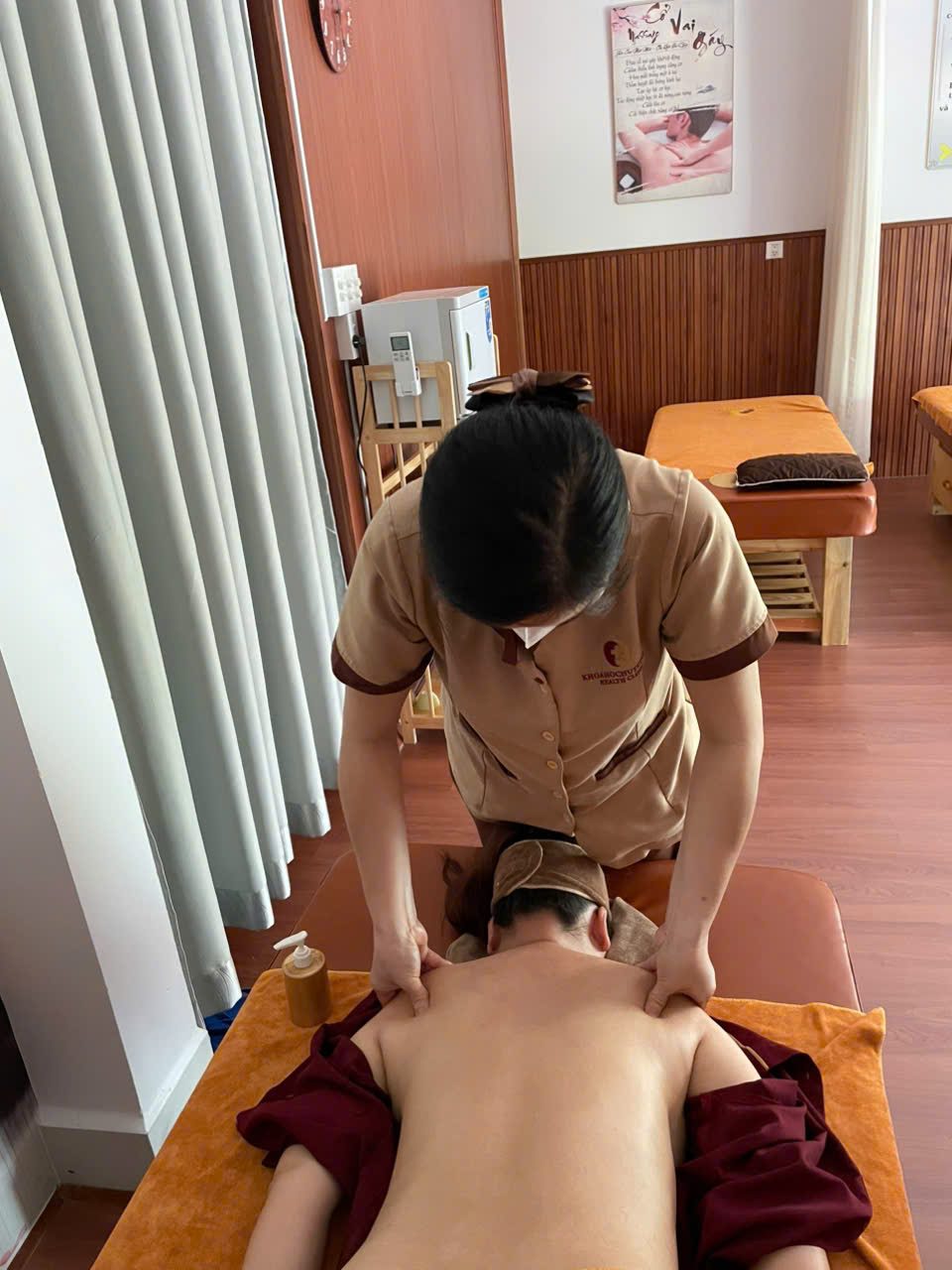
In class at Vinhomes Grand Park, there is one session every learner remembers: pairs of two, one lying down, the other placing hands on the partner's back. Lương Y Tống Văn Huynh walks from table to table, lifts a learner's hands, places them back in the right spot and asks: "Which principle are you following right now?" Many hesitate. That is when the whole class understands why the 8 principles of spinal wellness massage must be learned before any technique.
Why are there 8 principles?
Spinal nerve-reflex balancing massage works over the area that holds the spinal cord and the nerve roots leaving the 33 vertebrae. Working by feel alone makes it easy to press too hard, work the wrong area or keep going without knowing when to stop. Tong Gia's curriculum calls the 8 principles the rules of the hands: read correctly, work correctly and stop at the right moment. The first three help you read; the last five help you work and stop.
Three principles for reading the spine
1. Symmetry
Compare right with left, upper with lower, the centre of the spine with the outer areas. One side's muscle thicker and stiffer, one side's skin warmer: that is the first sign. Read more on the symmetry principle.
2. Excitation
Focus only on excited areas: higher temperature, tight muscle, more pain when pressed. Never work directly on inhibited areas (cool, slack, low sensation). See excited and inhibited areas on the back.
3. Zone and point
Start from the survey area, narrow it to the key zone, then find the key point: the smallest spot that, cared for correctly, lets the whole area settle.
Five principles for working and stopping
4. Sensation waves
Use soft pressure to create a rhythm of "comfortable ache", so the muscle contracts and releases with the rhythm and the body adjusts itself. Keep the rhythm even and watch the client's response.
5. Pressure grading
Pressure moves from light to strong across 5 pressure levels: one finger, the whole hand, bent arm, straight arm, whole-body strength. Never skip a level.
6. Direction
Use the spinal canal as the axis of symmetry to direct pushing, rotating and gliding force to suit each type of change in the vertebrae.
7. Dosage
Control working time: when the skin at the key point turns from dry to moist, the threshold is reached, so stop at once.
8. Temperature
Follow skin temperature in the right direction: bring hot areas down, warm cool areas up, so the session stays safe.
How Lương Y Tống Văn Huynh teaches learners to keep the 8 principles
With more than 13 years in Eastern wellness and spinal nerve-reflex balancing, Lương Y Tống Văn Huynh always reminds learners: "The eight principles are the rules of the hands; skilled hands are not strong hands, they are hands that know which principle they are following and when they must stop." In class, every time a learner places their hands, he asks for the principle again; only those who can answer carry on. This turns the 8 principles into a reflex of the hands, not just words in a book.
One line to remember each principle
- Symmetry: compare right – left, upper – lower.
- Excitation: work only on excited areas.
- Zone – point: find the smallest root.
- Sensation waves: comfortable ache, the body adjusts itself.
- Pressure grading: light to strong, 5 levels.
- Direction: the spinal canal is the axis.
- Dosage: dry to moist, then stop.
- Temperature: bring hot down, bring cool up.
When to advise a client to see a doctor
The 8 principles are only for wellness care. If a client has back pain with fever, unexplained weight loss, numbness or weakness in the limbs that keeps getting worse, bladder problems, chest pain or shortness of breath, or has a heart condition, a stent or takes blood thinners: stop or work only very lightly, and advise a check at a medical facility. If anything unusual happens during the session, stop. Tong Gia offers wellness care, not a medical service.
Which level teaches the 8 principles?
The 8 principles are module 3 of the spinal nerve-reflex balancing part of the Specialist Course (L3), learned after the anatomy of the 33 vertebrae and before the techniques. Beginners start with L1 Foundation to get used to the spine, basic acupoints and how to place the hands. Read more about the teacher: Lương Y Tống Văn Huynh.
How to sign up
The trial class on Sunday morning, 9:00–12:00, and the Sunday Y Tướng Học (face reading for wellness) session with no fee are open sessions for beginners, at unit T16-21, Manhattan block, Vinhomes Grand Park, Thu Duc City. Tong Gia does not promise jobs or income after the course. Book a trial class or call the training hotline 0917 945 259.
Frequently asked questions
What are the 8 principles of spinal wellness massage? Symmetry, excitation, zone and point, sensation waves, pressure grading, direction, dosage and temperature.
Why not work directly on inhibited areas? Inhibited areas are cool, slack and low in sensation; the excitation principle says to work only on excited areas so the session stays safe.
When do you stop working on one point? By the dosage principle: when the skin at the key point turns from dry to moist, the threshold is reached, so stop.
Where can I learn the 8 principles? In the Specialist Course (L3) at Tong Gia, Vinhomes Grand Park, Thu Duc City. Trial class Sunday 9:00–12:00, hotline 0917 945 259.
Related articles
- 30 basic massage techniques learners should know: learn them in groups, not as a list of names
- How to use the right pressure in acupressure: measuring force by how the receiver feels
- Hands for wellness massage: soft hands, hard hands and 6 things you must train
- Protecting a massage practitioner's hands: keeping your hands fit for a long career
- All articles about learning the trade
Reserve a free Sunday-morning trial class or ask about the learning path: message Zalo 0917 945 259.

Founder of Tong Gia Acupoint Wellness (Huyệt Đạo Tống Gia), with more than 13 years in Eastern wellness practice, Y Tướng Học (face reading for wellness) and spinal nerve-reflex balancing. Lương Y's story
417 customers have reviewed Tong Gia on Google Maps
Reviews are written by customers themselves on Google; tap to read them before you visit.
Huyệt Đạo Tống Gia Quận 12
225 Dương Thị Mười, Phường Tân Chánh Hiệp (District 12, Ho Chi Minh City). 8:00 – 19:00 daily.
See reviews on Google MapsHuyệt Đạo Tống Gia Quận 9
Căn T16-21 khu Manhattan, Vinhomes Grand Park, Phường Long Bình (Thủ Đức City, Ho Chi Minh City). 9:00 – 20:00 daily.
See reviews on Google MapsWant to be observed in person?
A 90-minute session starts with observation, and only then moves on to muscle release and acupressure on the right areas. Two branches: District 12 and Vinhomes Grand Park.