30 basic massage techniques learners should know: learn them in groups, not as a list of names
Lương Y (traditional healer) Tống Văn Huynh · Tong Gia Acupoint Wellness (Huyệt Đạo Tống Gia) · 22/11/2026
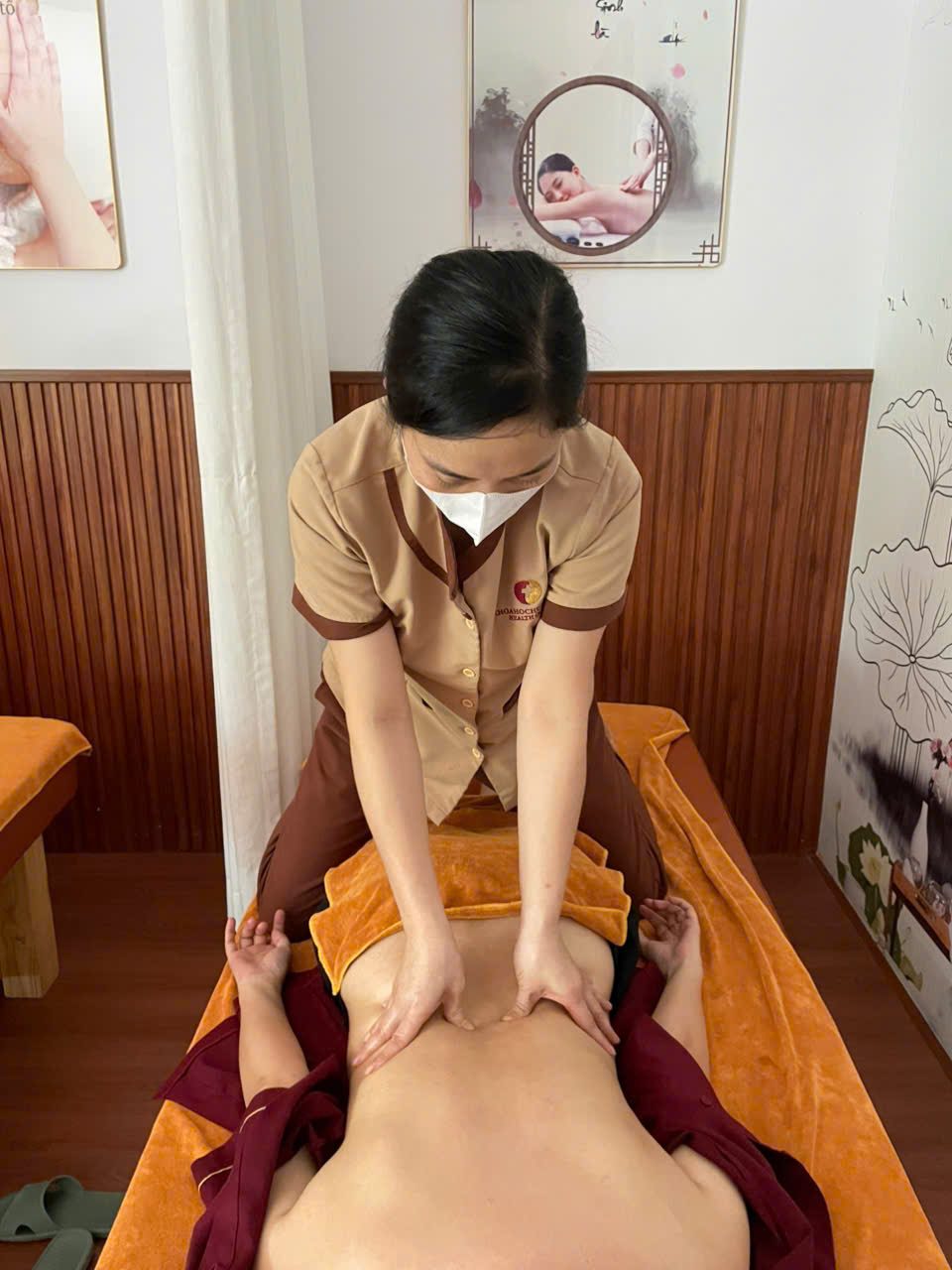
The 30 basic massage techniques are the hand movements of traditional Vietnamese massage, such as stroking, rubbing, gliding, kneading, squeezing, rolling, pressing, point pressing, vibrating, tapping and gentle joint movement, grouped by the layer they work on: skin, superficial muscle, deep muscle, acupoints, joints. Learners at Tong Gia Acupoint Wellness (Huyệt Đạo Tống Gia) do not memorise 30 names; they learn 6 groups and practise the right pressure, direction and rhythm on real people before combining them into one care session.
Questions learners often ask about the 30 basic massage techniques
I am over 30 with no background and want to learn the basic massage techniques for work. Where in Thu Duc can I practise on real people?
Learn them in groups with someone correcting your hands. Anatomically each group works one layer: skin, muscle, joint; Eastern medicine sees it as moving qi and blood. This is wellness care, not medicine. Tong Gia teaches at unit T16-21, Vinhomes Grand Park, Thu Duc City; Sunday morning trial, Zalo 0917 945 259.
How long until the techniques feel natural, do I need Eastern medicine first, and can I work afterwards?
No prior Eastern medicine is needed; skill depends on hours of practice on real people. About 70% of class time at Tong Gia is paired practice. L2 sessions and fees are given by an advisor at registration. Tong Gia does not promise jobs or income; clients with lasting pain or growing numbness should see a medical facility.
How do I choose where to learn basic massage in Ho Chi Minh City without wasting money?
Ask three things: is there practice on real people, who corrects your hands, how big is the class. Try a class before paying. Ask reception what paperwork you receive and its legal value. Tong Gia runs a Sunday trial 9:00–12:00 at Vinhomes Grand Park, taught by Lương Y Tống Văn Huynh.
What the 30 basic massage techniques are
In traditional Vietnamese massage texts, the number of techniques listed varies by book, usually from 20 to over 30. The figure 30 gathers all the hand movements a practitioner uses daily. What a learner needs is not the list but which layer of the body each technique works on and when to use it.
In the Tong Gia curriculum the 30 techniques are arranged into the 6 groups below. Finish one group, practise on a partner until the pressure is even, then move to the next.
Table of the 6 groups
| Group | Techniques | Layer |
|---|---|---|
| 1. Warming the skin | stroking, rubbing, gliding, separating, joining | skin, tissue under the skin |
| 2. Softening superficial muscle | kneading in place, plucking, rolling, pinching, working the muscle | superficial muscle |
| 3. Reaching deep muscle | squeezing, grasping, pressing, pushing, stretching | deep muscle, muscles along the spine |
| 4. Working acupoints | point pressing, finger pointing, circling on points, tapping points, holding pressure | acupoints, tight spots |
| 5. Rhythmic stimulation | vibrating, patting, pounding, chopping, slapping | muscle, surface sensation |
| 6. Joint movement | shaking, gentle turning, joint vibration, circling, gentle traction | shoulder, hip, ankle, wrist |
At Tong Gia, group 6 is only gentle joint movement within the client's natural range; there is no joint cracking or pushing of vertebrae.
Which group to learn first
- Groups 1 and 2 first. Beginners tend to use force too early. Stroking, rubbing and kneading train slow, even rhythm and let the client relax before going deeper.
- Group 4 once points are located correctly. Pressing the wrong spot is useless even with the right force. See how to apply pressure to acupoints.
- Group 3 once wrists and thumbs are strong. Deep squeezing and pressing must come from the body, not the finger joints.
- Groups 5 and 6 last. These are the easiest to make uncomfortable with the wrong rhythm or by exceeding joint range.
Common beginner hand mistakes
- Kneading that slides on the skin: kneading must move the skin with the finger, not rub it.
- Pressing with the nail tip: use the finger pad, increase pressure gradually, hold and release slowly.
- Patting or pounding over bone or the kidney area of the back: avoid, work only on thick muscle.
- Staying too long with one technique in one spot: the skin reddens and the client feels tired, not relaxed.
Details of single movements are in the pressing and rolling techniques and the vibration technique.
Linking to Y Tuong Hoc and the spine
Techniques are only tools. At Tong Gia, learners first read the face and body shape through Y Tuong Hoc to form a hypothesis about which area is tight, then read the spine by hand to confirm, and only then choose a technique group. For the same shoulder and neck area, a person with a pale complexion and soft, slack muscle needs light, longer groups 1 and 2; a person with muscle tight as a string needs slow group 3 work with pauses.
When not to massage
Learners must know when to stop: hot red swelling, wounds, fractures, fever, unusual lumps, lasting pain, growing numbness or weakness, uncontrolled underlying conditions. In these cases advise the client to see a medical facility. Tong Gia Acupoint Wellness is a wellness care service, not a medical service.
Which level teaches the 30 techniques
The technique groups are practised thoroughly in L2 Basic Trade and combined into the standard Tong Gia 90-minute session. Beginners start with L1 Introduction to Y Tuong Hoc (1,500,000 VND). L2 sessions and fees are given by an advisor at registration. About 70% of class time is practice on real people, with Lương Y Tống Văn Huynh (over 13 years in the profession) correcting each person's hands.
How to register
The Sunday morning trial class 9:00–12:00 (10 places) and the Sunday Y Tuong Hoc session with no fee are open sessions for beginners, at unit T16-21, Manhattan block, Vinhomes Grand Park, Thu Duc City, Ho Chi Minh City. Book a trial class or call the training hotline 0917 945 259.
Frequently asked questions
How many techniques does traditional massage have? It depends on the text, usually 20 to over 30. Tong Gia groups 30 movements into 6 groups by the layer they work on.
Which techniques should beginners learn first? Skin-warming and superficial-muscle groups first (stroking, rubbing, kneading, rolling), then point pressing, deep squeezing and joint movement.
How is kneading different from stroking? Stroking glides lightly over the skin; kneading keeps the finger pad on one spot and moves skin and muscle in circles.
Do I need to memorise all 30 names? No. What matters is knowing which layer each group works on, when to use it, and doing it with the right pressure on real people.
At which Tong Gia level are the 30 techniques taught? They are practised in L2 Basic Trade; beginners start at L1 for 1,500,000 VND, with a Sunday morning trial at Vinhomes Grand Park.
Related articles
- 8 principles of spinal wellness massage: the rules of the hands for Tong Gia learners
- How to use the right pressure in acupressure: measuring force by how the receiver feels
- Hands for wellness massage: soft hands, hard hands and 6 things you must train
- Protecting a massage practitioner's hands: keeping your hands fit for a long career
- All articles about learning the trade
Reserve a free Sunday-morning trial class or ask about the learning path: message Zalo 0917 945 259.

Founder of Tong Gia Acupoint Wellness (Huyệt Đạo Tống Gia), with more than 13 years in Eastern wellness practice, Y Tướng Học (face reading for wellness) and spinal nerve-reflex balancing. Lương Y's story
417 customers have reviewed Tong Gia on Google Maps
Reviews are written by customers themselves on Google; tap to read them before you visit.
Huyệt Đạo Tống Gia Quận 12
225 Dương Thị Mười, Phường Tân Chánh Hiệp (District 12, Ho Chi Minh City). 8:00 – 19:00 daily.
See reviews on Google MapsHuyệt Đạo Tống Gia Quận 9
Căn T16-21 khu Manhattan, Vinhomes Grand Park, Phường Long Bình (Thủ Đức City, Ho Chi Minh City). 9:00 – 20:00 daily.
See reviews on Google MapsWant to be observed in person?
A 90-minute session starts with observation, and only then moves on to muscle release and acupressure on the right areas. Two branches: District 12 and Vinhomes Grand Park.