Learn massage to open a shop back home: check demand first, train your hands, start small, then expand
Lương Y (traditional healer) Tống Văn Huynh · Tong Gia Acupoint Wellness (Huyệt Đạo Tống Gia) · 27/10/2026
Quick summary: Learning massage to open a shop back home should follow this order: find out who your customers would be in your hometown and where they feel tired, learn until you can do a full session by a set routine on your own, then start small at home or with people you know before renting premises. Massage is a conditional business line in Vietnam, so ask your local authorities about the paperwork. Tong Gia makes no promise about payback time, jobs or income.
Questions learners often ask about learning massage to open a shop back home
I want to open a head spa and massage shop. Should I learn wellness hair washing in Thu Duc?
Yes, but first build a foundation in head, neck and shoulder massage, since wellness hair washing relies on these areas; ask on Zalo about each level's content at the Thu Duc class. Learners need to know the muscles and vessels of the nape and the Eastern outer-inner principle. Lasting pain needs a medical facility first; this is wellness care, not a medical service. Free Sunday-morning trial at Vinhomes Grand Park, TP. Thủ Đức; Zalo/WhatsApp +84 917 945 259.
Learning massage to open a shop back home: ask about demand before skill
Many people work in the city for a while and then want to go back to their hometown, be near their parents and run a small shop of their own. Massage and acupressure come to mind for many, because the starting capital is mostly a pair of hands. But good hands are not enough if there are not enough people back home who need the service.
The first question is not where to study, but: in my hometown, who will the customers be?
Check demand back home with concrete steps
- Look at the people around you: farmers and gardeners often have tired backs; workers at a nearby industrial park stand a lot and get tired legs; older people often have stiff necks and shoulders and sleep poorly.
- Ask people you know: what they do and where they go when their body feels worn out, and whether they would be willing to pay for a massage and acupressure session.
- See what already exists: which shops there are in the commune or town, what hours they keep, when they are busy. Not to compete, but to find the gap.
- Work out when customers are free: in the countryside, customers are usually free early in the morning, in the evening or on rainy days. The shop's schedule has to follow those hours.
Write down what you observe over a few weeks. These notes are worth more than any general advice, because every rural area is different.
Which level to reach before opening
Many people ask what they can do back home after one month of study. Time is only part of it; the rest is whether you can already do the following on your own:
- Do a full session by a fixed routine, without having to think about the next step.
- Keep your pressure steady when working on several people in a row.
- Ask customers about their health before the session and know which cases you must turn down.
- Release the muscles in the areas rural customers most often feel tired: the back, neck and shoulders, and legs.
At Tong Gia, these skills belong to level L2 Core Trade. L1 is the foundation for understanding the person before you lay hands on them. The article what to learn to open a wellness massage shop goes deeper into the skill list, while how long it takes to learn wellness massage covers the time it takes.
Start small: at home and with people you know
Instead of renting premises right away, many people choose to go step by step:
- Work on family and neighbours first, so your hands get used to many body types and ages.
- Set aside a room in your house as the workspace: a sturdy bed of the right height, clean towels, good light and privacy.
- Work by appointment instead of opening all day, so you can still handle the housework.
- Keep a customer book: name, areas that often feel tired, date of the last session, so you work on the right spot next time.
- Let people you know spread the word: in the countryside, trust between people is the most important source of customers.
Only when customers book regularly and you feel you need more space is it time to think about separate premises.
Business paperwork: ask locally
Massage is a conditional business line in Vietnam. Even for a small shop at home, once you take money from customers you should go to the commune or ward People's Committee or the local business registration office and ask clearly what paperwork is required. Each place may advise differently, so do not rely on the experience of someone from another province.
You also need to tell the difference: wellness massage is not the same as physical rehabilitation (vật lý trị liệu). Physical rehabilitation is a healthcare profession that requires formal training and a practising licence under health-sector rules. The shop's sign and advertising should not use words that make people think it is a doctor's office.
Costs and expectations
Opening a shop back home still has costs: tuition, a bed, towels, oil, electricity and water, and possibly rent. Rural customers also tend to come with the farming seasons and the weather. So prepare yourself for the long run, keep costs low at the start and do not expect to earn your money back quickly. Tong Gia makes no promise about payback time, jobs or income after the course.
When you must turn a customer down
In the countryside, many older people have had pain for a long time but are reluctant to see a doctor, and ask a massage worker to “just rub it better”. A practitioner has to know when to stop: long-lasting pain, numbness or weakness that keeps getting worse, pain after a fall, or underlying conditions such as blood pressure, heart problems or diabetes without a doctor's approval – in these cases, advise them to get a check-up at a medical facility. Turning someone down at the right moment protects the shop's reputation.
When you want to open a place with staff: level L4
If after a while the shop gets busy and you want more staff, the hard part is no longer your own skill but how to make your staff work the way you do. Level L4 Master and Transfer at Tong Gia is for people who want to open their own place: transfer of the routines, SOPs and how to train staff. See also the article wellness spa model transfer.
Study at Tong Gia before you go home
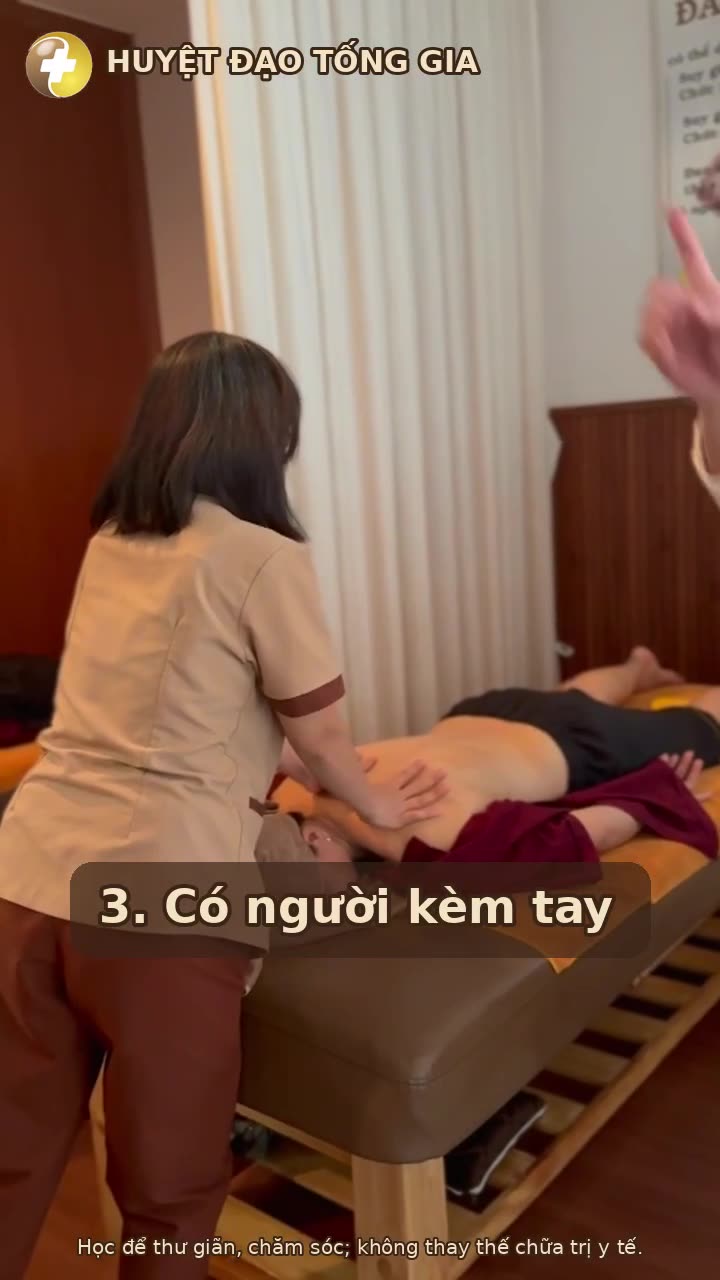
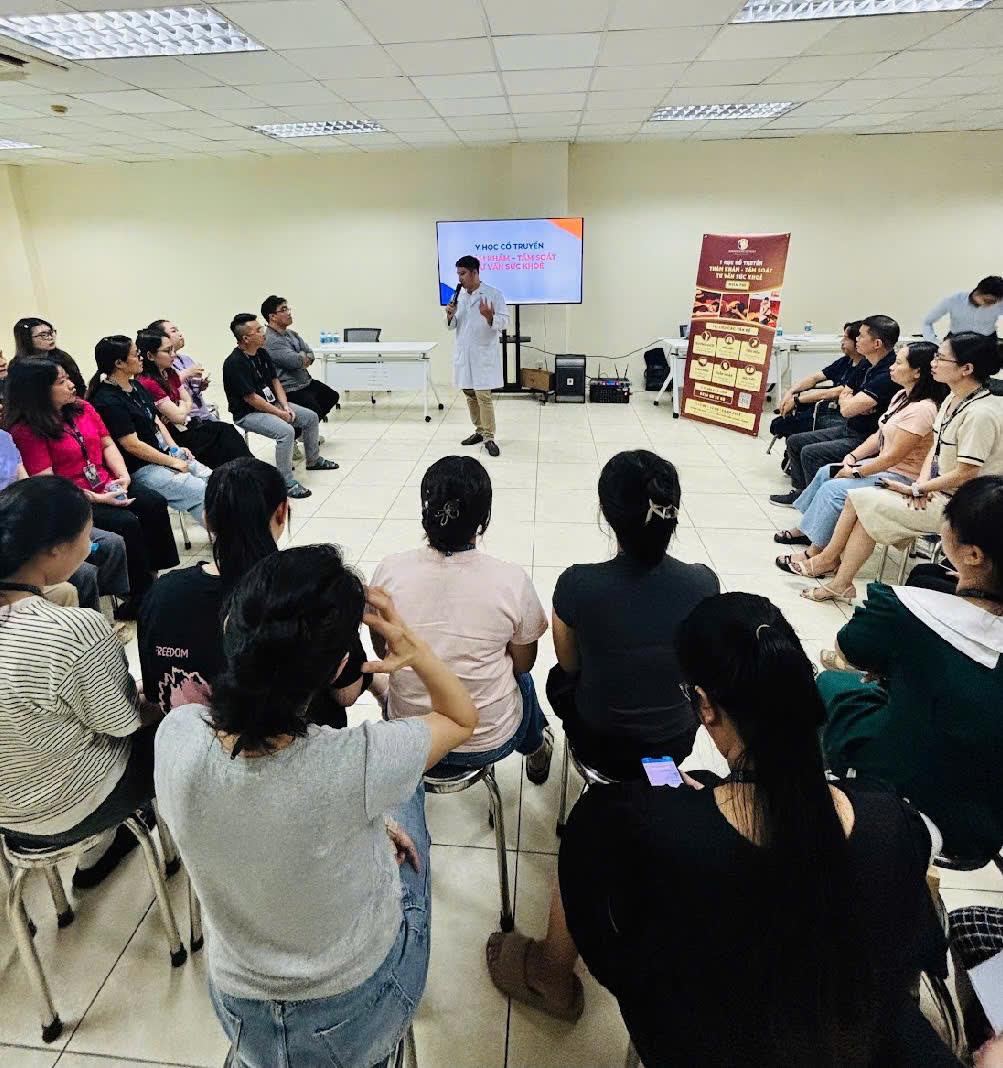
Tong Gia was founded by Lương Y Tống Văn Huynh, who has more than 13 years in Eastern wellness practice. Lương Y teaches the classes in person; about 70% of the time is hands-on practice on real people, in small classes with one-to-one guidance. The routine you learn is the one used every day at the two branches in District 12 and District 9.
The two pillars of the programme suit rural customers well, as they rarely say clearly where they feel tired: Y Tướng Học (face reading for wellness) helps you read complexion and posture to understand a person's condition before you lay hands on them, following the principle “the organs are the cause, the signs are the effect”; wellness massage with spinal nerve-reflex balancing lets you double-check by hand along the spine. L1 costs 1.500.000đ; tuition and the number of sessions for later levels are given by a consultant when you register. The full 4-level ladder is on the home page.
How to register
Before deciding to quit your job and go home, you can come to the free trial class from 9:00 to 12:00 every Sunday morning, 10 places, at căn T16-21 khu Manhattan, Vinhomes Grand Park, Phường Long Bình, TP. Thủ Đức (Thu Duc City, Ho Chi Minh City), so Lương Y can look at your hands and suggest which level to study up to.
The L1 Introduction to Y Tướng Học class opens on a schedule; register via the hotline 0917 945 259.
Frequently asked questions
How long do I need to learn massage before opening a shop back home? There is no common figure. You should learn until you can do a full session by the routine on your own, keep your pressure steady and know when to turn a customer down.
Do I need a licence to open a small massage shop at home in the countryside? Massage is a conditional business line in Vietnam. Ask the commune or ward People's Committee or the local business registration office about the specific procedures.
How long does it take for a rural massage shop to pay back its costs? No one can say in advance, because it depends on local demand, costs and skill. Tong Gia makes no promise about payback time or income.
Should I rent premises right after finishing a massage course? Many people choose to start small at home, working by appointment for people they know first. Only when customers book regularly do they think about separate premises.
What should I study at Tong Gia if I want to open a place with several staff? Level L4 Master and Transfer is for people who want to open their own place, and covers transfer of the routines, SOPs and how to train staff.
Related articles
- 30 basic massage techniques learners should know: learn them in groups, not as a list of names
- 8 principles of spinal wellness massage: the rules of the hands for Tong Gia learners
- How to use the right pressure in acupressure: measuring force by how the receiver feels
- Hands for wellness massage: soft hands, hard hands and 6 things you must train
- All articles about learning the trade
Reserve a free Sunday-morning trial class or ask about the learning path: message Zalo 0917 945 259.

Founder of Tong Gia Acupoint Wellness (Huyệt Đạo Tống Gia), with more than 13 years in Eastern wellness practice, Y Tướng Học (face reading for wellness) and spinal nerve-reflex balancing. Lương Y's story
417 customers have reviewed Tong Gia on Google Maps
Reviews are written by customers themselves on Google; tap to read them before you visit.
Huyệt Đạo Tống Gia Quận 12
225 Dương Thị Mười, Phường Tân Chánh Hiệp (District 12, Ho Chi Minh City). 8:00 – 19:00 daily.
See reviews on Google MapsHuyệt Đạo Tống Gia Quận 9
Căn T16-21 khu Manhattan, Vinhomes Grand Park, Phường Long Bình (Thủ Đức City, Ho Chi Minh City). 9:00 – 20:00 daily.
See reviews on Google MapsWant to be observed in person?
A 90-minute session starts with observation, and only then moves on to muscle release and acupressure on the right areas. Two branches: District 12 and Vinhomes Grand Park.