Massage course in Vietnam on installments? How to weigh the tuition before you enroll
Lương Y (traditional healer) Tống Văn Huynh · Tong Gia Acupoint Wellness (Huyệt Đạo Tống Gia) · 28/10/2026
Quick summary: Can you pay for a massage course in Vietnam in installments? It depends on each school's policy; there is no single answer for every center. Before signing anything, ask clearly about the total amount you will pay, who is lending the money, extra fees and what happens if you drop out. At Tong Gia, tuition and payment options for levels L2–L4 are given by the advisor or front desk when you enroll.
Questions learners often ask about paying for a massage course in installments
Does a massage course fee usually include practice and course materials?
It varies, so ask whether the fee covers practice hours, materials and paperwork after the course. At Tống Gia about 70% of class time is practice on real people; L1 Introduction to Y Tướng Học is 1,500,000 VND, covering muscles, the spine and outer signs reflecting inner organs. This is wellness care, not medical care; lasting pain needs a medical check. Classes: căn T16-21 khu Manhattan, Vinhomes Grand Park, TP. Thủ Đức; Zalo/WhatsApp +84 917 945 259.
Massage course on installments: the straight answer
It depends on the school. Some split the tuition into several payments, some partner with a finance company that lends you the money, and some only accept a single payment. So the right question is not just whether you can pay for a massage course in installments, but: if you can, how much will you actually pay in total, to whom, and with what strings attached?
This article does not tell you whether you should or should not pay in installments. It helps you read an installment offer carefully, work out the real figure yourself and know which questions to ask before you sign.
Two very different kinds of “installments”
Type 1: Paying the tuition in stages directly to the school
You pay part of it when you enroll and the rest at set milestones, for example when a new module starts. The money goes straight to the school. This is usually simple, but you still need paperwork that clearly states the total tuition, the number of payments, the due date of each one and what happens if you stop attending.
Type 2: Borrowing through a third party
The school introduces you to a finance company or bank. You sign a loan contract with that company, it pays the tuition to the school, and you repay the lender every month. The key point to understand: this is your own loan. Even if you later quit, are unhappy with the course or the school closes down, the loan remains in full.
7 questions to ask when you are offered installments
- What is the total amount I will pay? Add up every payment, the application fee and loan insurance if any. Compare it with the one-off tuition.
- Who is the lender? The school or another company? What is the company's name, and is the paperwork officially stamped?
- What are the interest rate and late-payment penalties? Ask for them in writing.
- What if I drop out partway through? Can I defer or switch classes? What happens to the loan?
- What does the tuition include? How many sessions, which content, and are there extra costs for tools or materials?
- What paperwork do I receive after the course? What legal standing does that paperwork have? Ask before you pay, not after.
- Can I try a class before signing? A school that is confident in its classes is usually happy to let you see one first.
You can find a more detailed list in the article questions to ask before you learn massage.
Signs that you should stop
Installments are not bad in themselves. But if you run into any of the situations below, stop, go home and think it over:
- You are pushed to sign on the spot at the very first consultation: “the discount is only for today”.
- The advisor only says “just a few hundred thousand dong a month” without telling you the total.
- You are promised a job right after the course, a high income and a quick payback.
- You are not allowed to take the contract home to read or to photograph it.
- You are not allowed a trial class or to watch a class in progress.
The article massage course scams: warning signs covers these situations in more detail.
Another way to lighten the tuition: learn level by level
Instead of paying a large sum for a whole long program, you can choose a school that splits the content into levels, so you finish one level before deciding on the next. This lets you try yourself first, find out whether the trade suits you, and only then invest more.
Tong Gia has built a 4-level career ladder:
- L1 Introduction to Y Tướng Học (face reading for wellness) (1.500.000đ): reading complexion and body shape by the Five Elements, the 3 zones of the face, daily wellness habits, a few safe self-care acupoints, practice in pairs.
- L2 Core Trade: muscle release, acupressure for the neck and shoulders, back and legs; the standard Tong Gia 90-minute session routine; communicating with clients.
- L3 Specialist: spinal nerve-reflex balancing, advanced Y Tướng Học.
- L4 Master and Transfer: processes and SOPs, marketing, sales and CRM, a team of practitioners, operations support for business owners.
Tuition for L2–L4, the number of sessions, duration and payment options: the advisor or front desk tells you when you enroll. Feel free to ask directly, including whether you can pay for the massage course in installments, and ask for the information in writing. The article the cost of learning therapeutic-style massage explains the other costs to account for.
Don't just count the money, count what you get
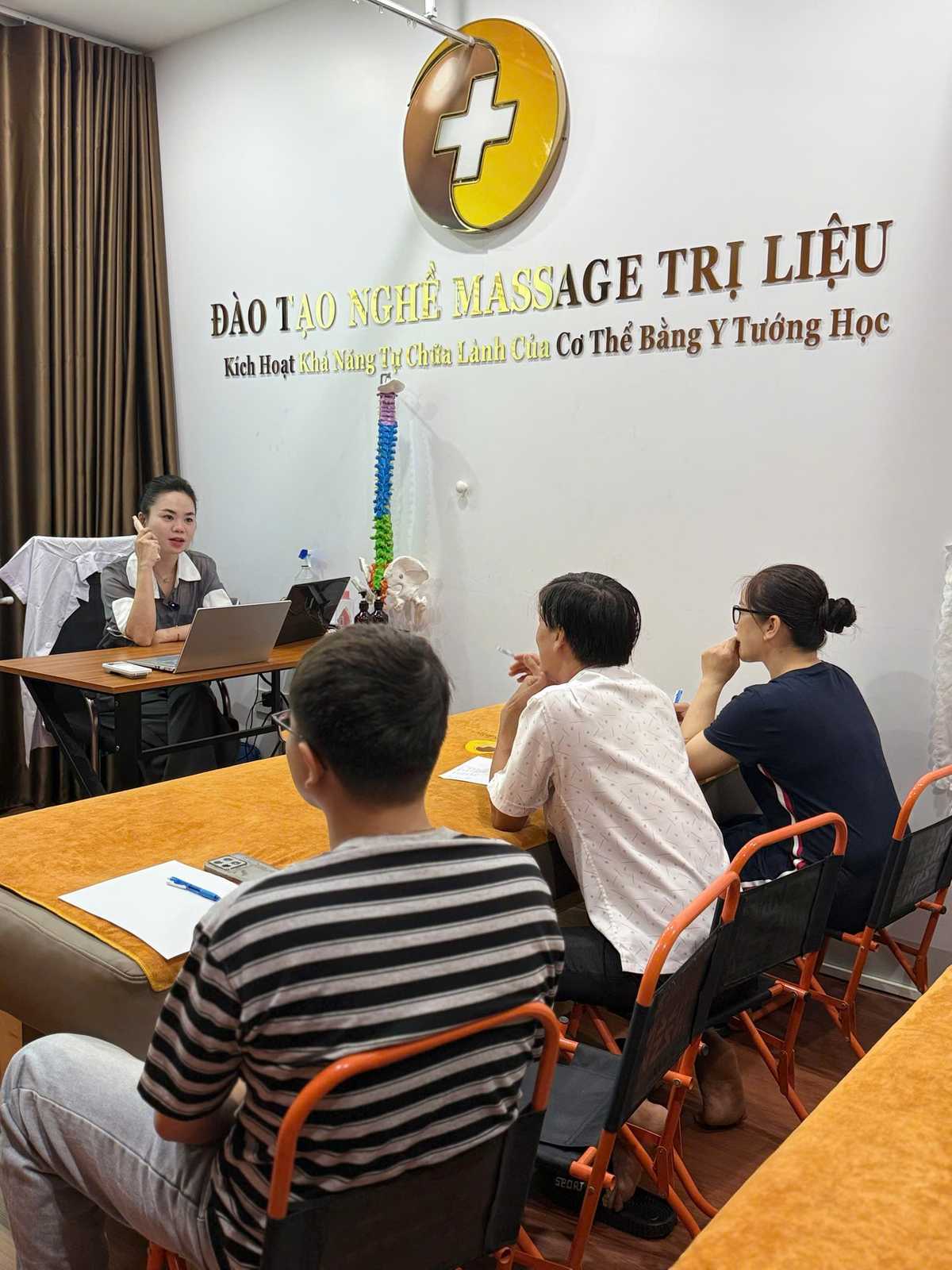
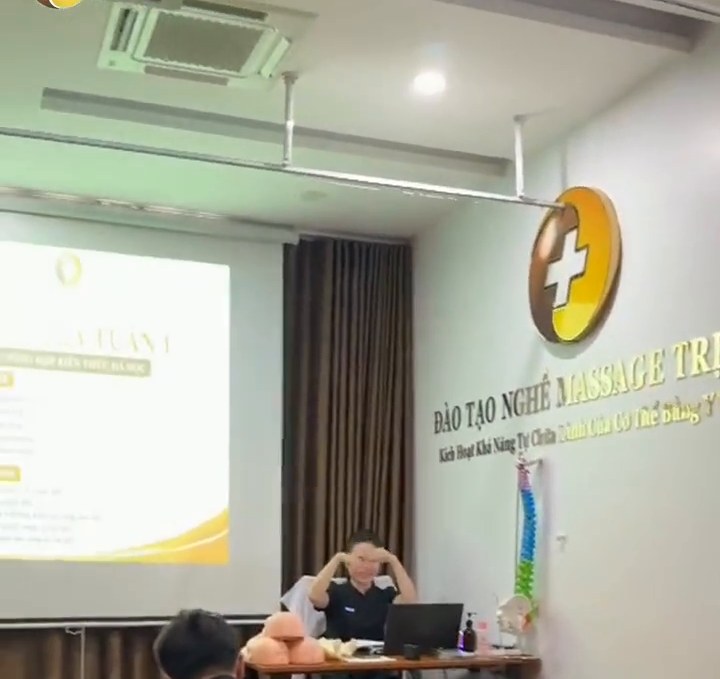
A cheap course with little hands-on practice is still expensive. At Tong Gia, about 70% of class time is hands-on practice on real people: placing your hands, applying pressure, locating the muscle areas to work on. Classes are small, and Lương Y Tống Văn Huynh, with more than 13 years in Eastern wellness practice, teaches in person and coaches each learner.
The program rests on two pillars: Y Tướng Học, reading the signs to understand the organs before laying hands on, because “the organs are the cause, the signs are the effect”; and therapeutic-style massage with spinal nerve-reflex balancing, where every observation from the face is checked again by hand along the spine. The routine is used for real every day at the two service branches in District 12 and District 9, Ho Chi Minh City.
Trainees are also taught when not to work. Tong Gia is a hands-on wellness care service, not a medical service; when a client has long-lasting pain, numbness or weakness that keeps getting worse, or an underlying illness, the practitioner must advise them to see a doctor at a healthcare facility first.
Tong Gia does not promise jobs or income after the course. As for the paperwork you receive after the course and its legal standing, please ask the front desk directly before paying tuition.
What does a massage course fee include?
Before asking about instalments, ask what the fee covers. A clear fee usually states: number of sessions, hours of practice on real people, who teaches, whether supplies are included, whether repeating a session costs extra, and what paper you receive after the course. At Tong Gia, L1 Introduction costs 1,500,000 VND; the advisor gives L2–L4 fees when you register, and you can join the free Sunday morning trial before paying.
Further reading on this topic: Massage course price Vietnam: how much does it cost to learn massage, and how to weigh the full cost against the value you get · Massage course in Vietnam: do you need a degree to start learning wellness massage? · What trade should young people from the countryside learn in the city? 5 criteria for choosing a trade that lasts
How to enroll
The surest way to decide whether to invest, and whether to pay once or in stages, is to see the class with your own eyes. Come to the free trial class 9:00–12:00 every Sunday morning, 10 places, at căn T16-21 khu Manhattan, Vinhomes Grand Park, Phường Long Bình, TP. Thủ Đức (Thu Duc City, Ho Chi Minh City). Lương Y will look at your hands-on skill and suggest a suitable level.
The L1 Introduction to Y Tướng Học class runs on a set schedule. Register via hotline 0917 945 259.
Frequently asked questions
Can I pay for a therapeutic-style massage course in installments? It depends on each school's policy. If installments are offered, ask clearly about the total amount you will pay, who the lender is and the conditions if you drop out, before you sign.
How much does a massage course at Tong Gia cost? Level L1 Introduction to Y Tướng Học is 1.500.000đ. Tuition for L2–L4 and payment options are given by the advisor or front desk when you enroll.
What are the risks of borrowing money for a massage course through a finance company? It is your own loan, and you still have to repay it even if you quit or are unhappy with the course. Read the interest rate, fees and late-payment penalties carefully before you sign.
Should I try a class before paying massage course tuition? Yes. A trial class shows you the teaching style and the share of hands-on practice, and tells you whether the trade suits you before you spend money or sign a contract.
Will I be promised a job after a massage course? Tong Gia does not promise jobs or income after the course. Be wary of any place that promises jobs or income to push you into signing an installment contract.
What is the massage course fee at Tong Gia? L1 Introduction costs 1,500,000 VND. Fees and sessions for L2–L4 are given by the advisor when you register via Zalo/WhatsApp +84 917 945 259; join the free Sunday morning trial before paying.
Related articles
- What is acupressure? Principles, limits and a structured path to learning acupressure
- Acupressure vs acupuncture: how they differ, and what people outside the healthcare field should learn
- Acupressure vs massage: how they differ, and where learners should start
- Acupoint map of the human body: how to read it and in what order to learn it
- All articles about learning the trade
Reserve a free Sunday-morning trial class or ask about the learning path: message Zalo 0917 945 259.

Founder of Tong Gia Acupoint Wellness (Huyệt Đạo Tống Gia), with more than 13 years in Eastern wellness practice, Y Tướng Học (face reading for wellness) and spinal nerve-reflex balancing. Lương Y's story
417 customers have reviewed Tong Gia on Google Maps
Reviews are written by customers themselves on Google; tap to read them before you visit.
Huyệt Đạo Tống Gia Quận 12
225 Dương Thị Mười, Phường Tân Chánh Hiệp (District 12, Ho Chi Minh City). 8:00 – 19:00 daily.
See reviews on Google MapsHuyệt Đạo Tống Gia Quận 9
Căn T16-21 khu Manhattan, Vinhomes Grand Park, Phường Long Bình (Thủ Đức City, Ho Chi Minh City). 9:00 – 20:00 daily.
See reviews on Google MapsWant to be observed in person?
A 90-minute session starts with observation, and only then moves on to muscle release and acupressure on the right areas. Two branches: District 12 and Vinhomes Grand Park.