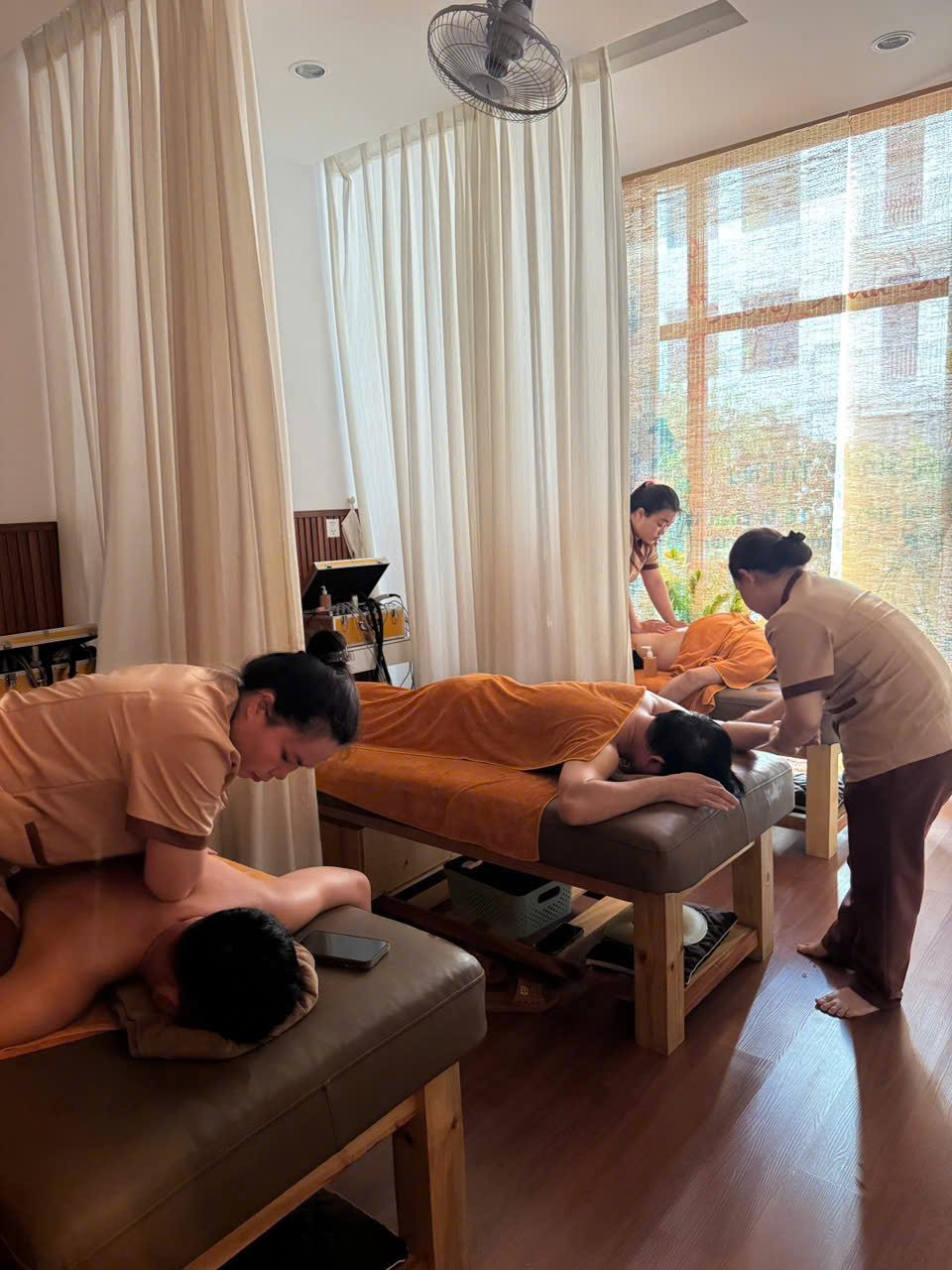
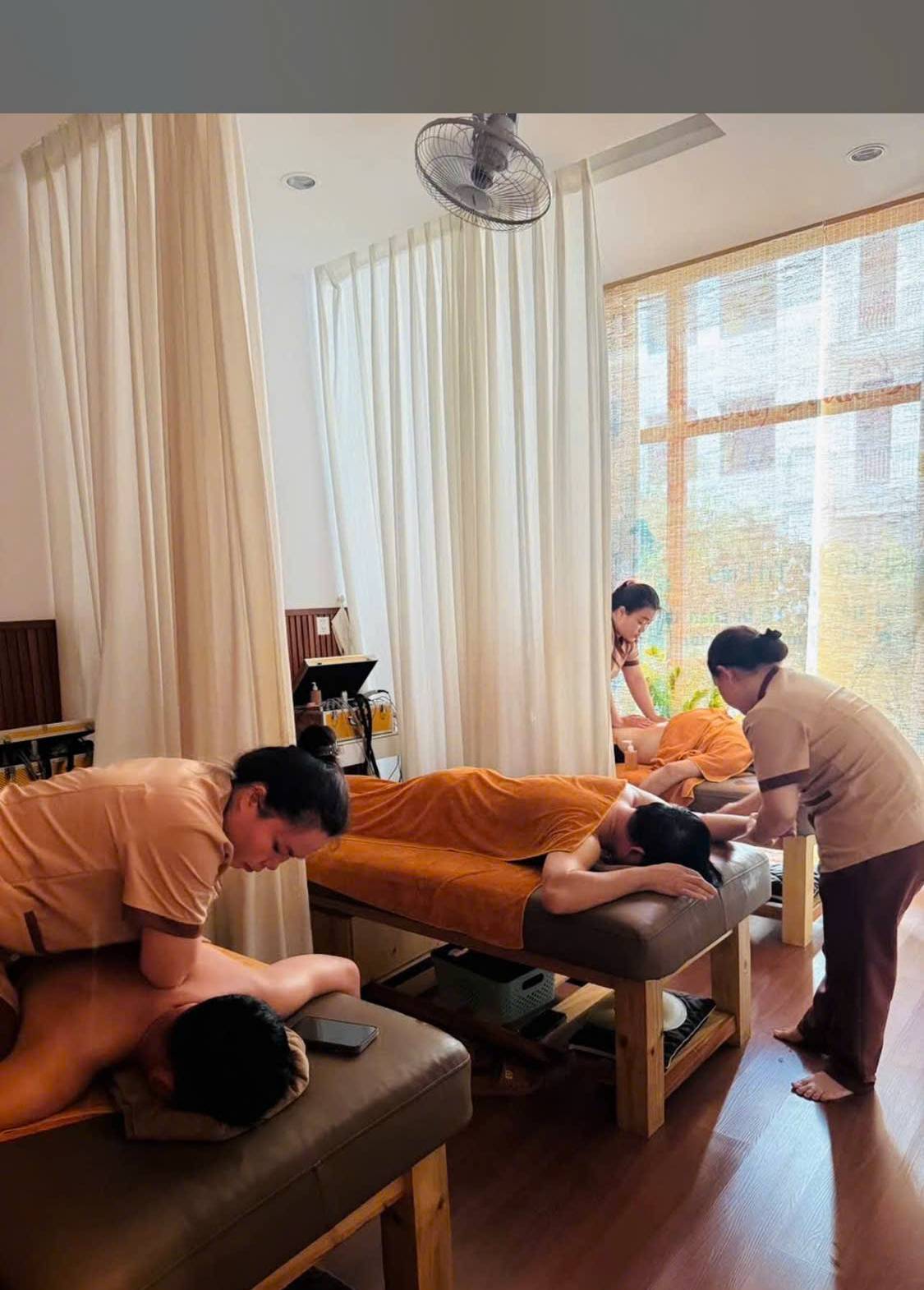
Massage course in Vietnam: do you need a degree to start learning wellness massage?
Lương Y (traditional healer) Tống Văn Huynh · Tong Gia Acupoint Wellness (Huyệt Đạo Tống Gia) · 28/10/2026
Quick summary: Do you need a degree for a massage course in Vietnam? Not to start learning: people from other fields, with no healthcare background, can learn, as long as their hands are strong enough and they are willing to practise and be corrected. What matters is that learning massage is not the same as practising a healthcare profession: physical rehabilitation is a regulated healthcare profession that needs formal training and a practising licence, while opening a massage shop is a conditional business line, so you need to check the procedures with the local authorities.
Questions learners often ask about whether a massage course needs a degree
What paper do I get after a therapeutic massage course, and how does it differ from a medical degree?
Ask Tống Gia's reception about post-course paperwork before paying. A wellness training paper is entirely different from a medical degree and does not allow you to provide medical services. Classes teach muscles, the spine and outer signs reflecting inner organs; lasting pain still needs a medical facility. Classes: căn T16-21 khu Manhattan, Vinhomes Grand Park, TP. Thủ Đức; Zalo/WhatsApp +84 917 945 259.
Do I need muscle anatomy to learn muscle-release massage, and how long does it take?
Yes. Muscle release requires anatomy: attachment points, fiber direction and related muscle groups; how fast you get there depends on practice. Eastern wellness adds the idea that outer signs reflect inner organs. Gym-goers with pain after an injury need a medical check first; Tống Gia teaches wellness care. Classes: căn T16-21 khu Manhattan, Vinhomes Grand Park, TP. Thủ Đức; Zalo/WhatsApp +84 917 945 259.
“I never studied anything health-related and I have no qualifications. Can I still learn wellness massage?” Tong Gia hears this almost every week. The person asking may be an office worker, a nail salon owner, a homemaker who wants to look after elderly parents, or someone changing careers. The short answer is yes. But behind that answer there are a few things you should understand clearly so your expectations are realistic.
Do you need a degree to learn wellness massage: the short answer
You do not need a professional degree to start learning. Wellness-oriented therapeutic-style massage is a skill of the hands: knowing where the muscle areas are, how to apply pressure, and when to stop. All of this can be learned from scratch, through repeated practice with someone correcting you.
What you need to separate are three different things that often get lumped together:
- Learning a hands-on care skill.
- Practising a healthcare profession, such as physical rehabilitation.
- Opening a business that offers massage services.
Each has its own requirements.
How learning massage differs from practising a healthcare profession
Physical rehabilitation belongs to the healthcare sector. To work in it, people need formal training and a practising licence. A massage course, however thorough, cannot replace that path.
Wellness-oriented massage at Tong Gia is a hands-on health-care and relaxation service, not a medical service. The practitioner helps clients feel more comfortable and relaxed, and does not draw conclusions about illness. That is why a learner must know clearly when not to work: if a client has long-lasting pain, numbness or weakness that keeps getting worse, an existing health condition, a recent injury, a sudden severe headache, fever or unexplained weight loss, advise the client to see a doctor at a medical facility. When a client already has a doctor's conclusion, follow the doctor's guidance on whether massage is allowed.
What you need to open a shop
Massage is a conditional business line in Vietnam. If you plan to open a shop or add the service to one you already run, check the procedures with the local authorities where the premises will be before you invest. Nail salon and spa owners can also see the page made for nail salon and spa owners.
So what are the real requirements to learn?
No degree is needed, but some requirements matter more than a degree:
- Hands and body that are strong enough: the work means standing for long periods and using force from your whole body, not just your fingers. If your own wrists, shoulders or back have been hurting for a long time, see a doctor first.
- Willingness to practise repeatedly: your hands only get used to the right pressure by doing it again and again, with someone correcting you each time.
- Willingness to observe: look at how the person in front of you walks and sits and at their complexion before you place your hands.
- Knowing how to listen: ask the client the right questions, hear what they say, and recognise when to stop.
- Knowing your limits: never promise a client something you cannot do.
Read more in is learning massage as a trade hard? if you are still worried you will not keep up.
What about paperwork after the course?
This is where many people get confused: asking “do I need a degree?” often really means asking “will I get any paper when I finish?” Those are two different questions. For the second one, ask the place where you plan to study directly: what kind of document you receive after the course and what legal value it has, and ask before you pay the fee. The article does a massage and acupressure course come with a certificate? explains more about this.
What decides whether you do the work well is still your hands, not a piece of paper. Clients come back because they feel better and trust the person working on them, not because of a paper hanging on the wall.
At Tong Gia, where does a complete beginner start?
Tong Gia divides learning into a 4-level vocational ladder, and the first level requires no medical knowledge:
- L1 Introduction to Y Tướng Học (face reading for wellness) (1.500.000đ): reading complexion, Five Elements body types, the 3 zones of the face, daily wellness habits, a few acupoints that are safe for self-care, and practice in pairs.
- L2 Basic Trade: muscle release, acupressure for the neck and shoulders, back and legs; the standard Tong Gia 90-minute session; communicating with clients.
- L3 Specialist: spinal nerve-reflex balancing and advanced Y Tướng Học.
- L4 Master and Transfer: SOPs, marketing, the sales process and CRM, a team of practitioners, and operational support for business owners.
Fees for L2–L4, the number of sessions and their length are given by a consultant when you register.
Lương Y Tống Văn Huynh, with more than 13 years in traditional Eastern wellness, teaches the classes himself and coaches each person in a small group. About 70% of the time is hands-on practice on real people. The two pillars throughout are Y Tướng Học, reading the signs to understand the organs before placing your hands, and therapeutic-style massage through spinal nerve-reflex balancing. Every observation from the face must be checked again by hand on the spine. Lương Y often reminds learners: “A person's finest feng shui is good health.”
Tong Gia does not promise jobs or income after the course. What Tong Gia can do is teach carefully, correct your hands closely and be clear about the limits of the trade.
So, do you need a degree to learn wellness massage? Not to start. You need hands willing to practise and a mind that knows its limits.
Does a therapeutic massage course award a degree?
This is a different question from "do I need a degree to start". A short massage course at a wellness centre is not a degree programme of a medical school. At Tong Gia, ask reception directly about the paper you receive after the course and its legal value before paying. For a qualification in the health sector, such as physical therapy, you need a formal programme at an authorised training institution.
Further reading on this topic: Massage certificate in Vietnam: how a healthcare practising licence differs from short-course paperwork, and 6 questions to ask before paying · Physical therapy certificate vs massage course: how are they different? · traditional medicine and massage: extra skills for students
How to sign up
If you are not sure the trade suits you, come to the free trial class, 9:00–12:00 every Sunday morning, 10 places, at căn T16-21 khu Manhattan, Vinhomes Grand Park, Phường Long Bình, TP. Thủ Đức (unit T16-21, Manhattan block, Vinhomes Grand Park, Long Binh Ward, Thu Duc City, Ho Chi Minh City). You do not need to bring any qualifications; Lương Y looks at your hands during the trial class and suggests a suitable level.
- The L1 Introduction to Y Tướng Học class runs on a set schedule. Register via hotline 0917 945 259.
- Register and ask more: Zalo 0917 945 259.
Frequently asked questions
Can I learn wellness massage without studying medicine? Yes. To start learning wellness-oriented massage you do not need a professional degree, only hands that are strong enough and a willingness to practise and be corrected.
After a massage course, can I work in physical rehabilitation? No. Physical rehabilitation is a healthcare profession that requires formal training and a practising licence.
Do I need a licence to open a massage shop? Massage is a conditional business line. Check the procedures with the local authorities where the premises will be before you invest.
Will I get a qualification after a wellness massage course? Ask the front desk of the place where you study directly what kind of document you get after the course and what legal value it has, before you pay the fee.
I am older and have never worked in the trade. Can I learn massage? You can, if your hands, shoulders and back allow you to stand for long periods and use force. Come to a trial class first to see how it feels before you register.
Does a therapeutic massage course give a degree? A short course at a wellness centre is not a degree programme. At Tong Gia, ask reception about the paper you receive and its legal value before paying.
Related articles
- 30 basic massage techniques learners should know: learn them in groups, not as a list of names
- 8 principles of spinal wellness massage: the rules of the hands for Tong Gia learners
- How much pressure in acupressure: gauging force by how the receiver feels
- Hands for wellness massage: soft hands, hard hands and 6 things you must train
- All articles about learning the trade
Reserve a free Sunday-morning trial class or ask about the learning path: message Zalo 0917 945 259.

Founder of Tong Gia Acupoint Wellness (Huyệt Đạo Tống Gia), with more than 13 years in Eastern wellness practice, Y Tướng Học (face reading for wellness) and spinal nerve-reflex balancing. Lương Y's story
417 customers have reviewed Tong Gia on Google Maps
Reviews are written by customers themselves on Google; tap to read them before you visit.
Huyệt Đạo Tống Gia Quận 12
225 Dương Thị Mười, Phường Tân Chánh Hiệp (District 12, Ho Chi Minh City). 8:00 – 19:00 daily.
See reviews on Google MapsHuyệt Đạo Tống Gia Quận 9
Căn T16-21 khu Manhattan, Vinhomes Grand Park, Phường Long Bình (Thủ Đức City, Ho Chi Minh City). 9:00 – 20:00 daily.
See reviews on Google MapsWant to be observed in person?
A 90-minute session starts with observation, and only then moves on to muscle release and acupressure on the right areas. Two branches: District 12 and Vinhomes Grand Park.