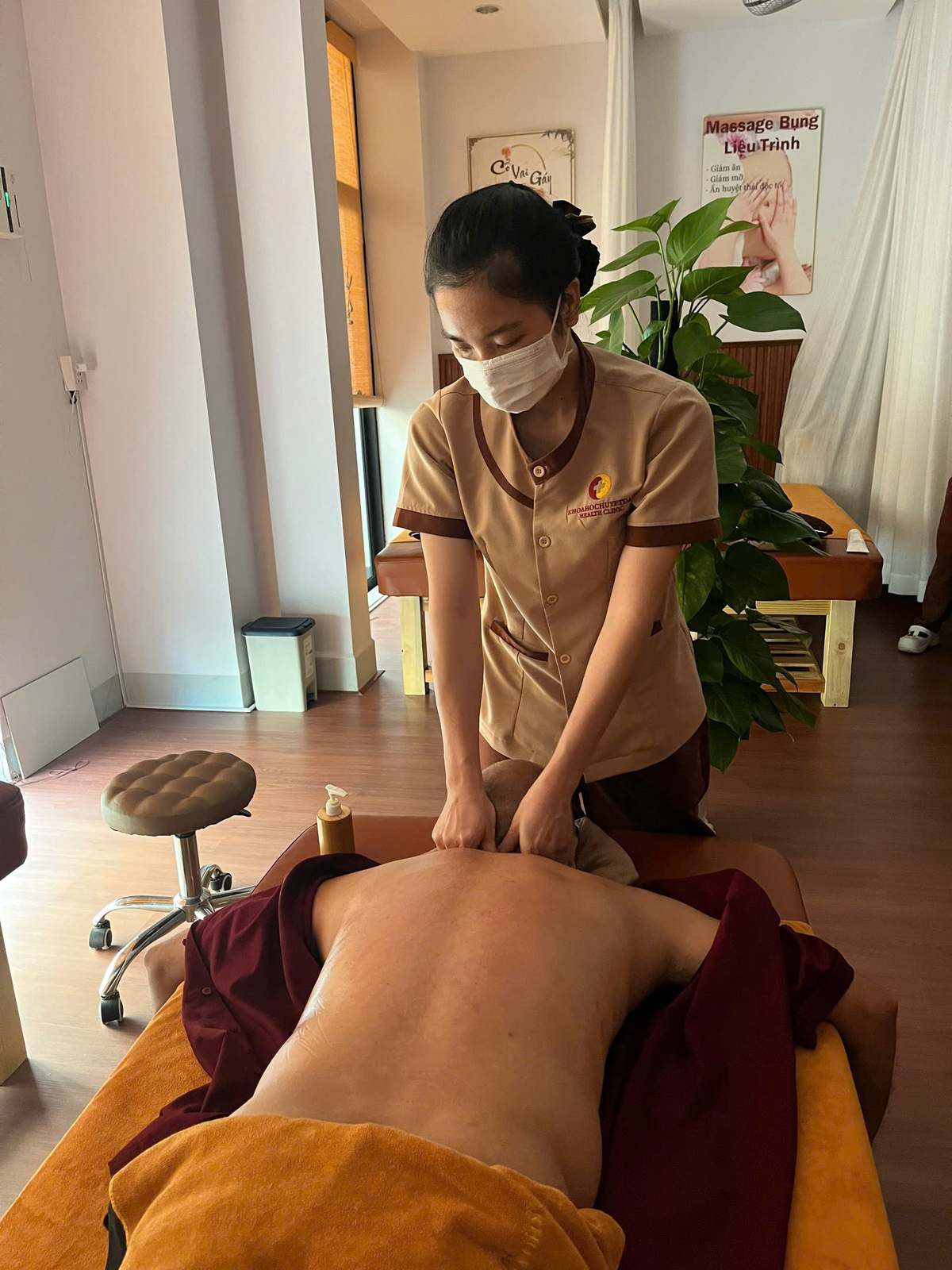
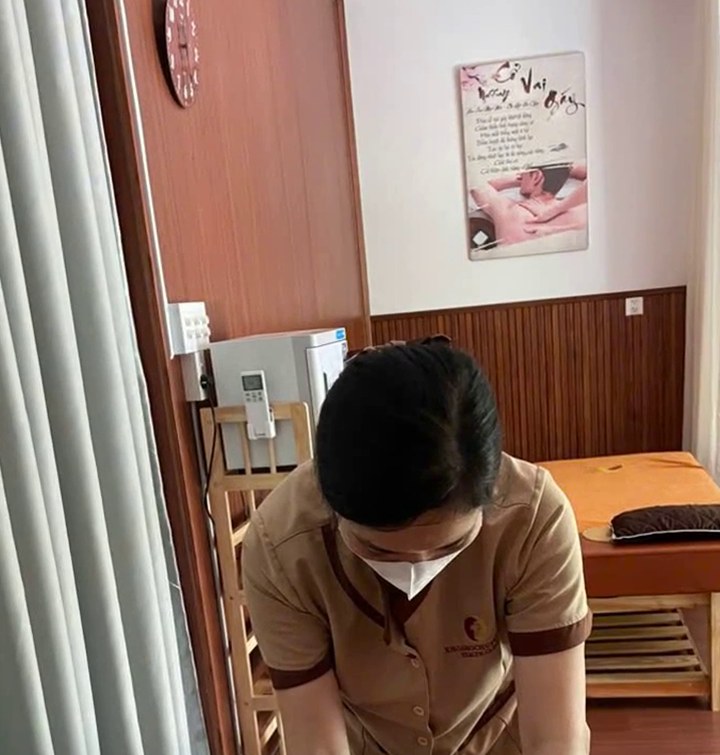
What is acupressure? Principles, limits and a structured path to an acupressure course in Vietnam
Lương Y (traditional healer) Tống Văn Huynh · Tong Gia Acupoint Wellness (Huyệt Đạo Tống Gia) · 07/11/2026
Quick summary: What is acupressure? It means using the fingertips, knuckles or palm to press, knead and hold acupoints, following Eastern wellness theory, to help the body relax and let qi and blood flow more freely. Acupressure is a wellness-care skill, not a medical procedure; to do it properly, learners need to know where the points are, how much pressure to use and when not to press.
Short answer: Acupressure means pressing, circling and holding acupoints with the fingers, following Eastern theory, to relax the body and help qi and blood flow; beneath each point lie muscles, tendons and nerve endings. It is wellness care, not a medical service; lasting pain needs a clinic. Zalo/WhatsApp +84 917 945 259.
Questions learners often ask about what acupressure is
What is acupressure, can anyone do it, and when should it be avoided?
Acupressure means pressing precise points along meridians with the fingers to relax muscles and balance energy; anyone can learn it with someone correcting the pressure. Practitioners first observe, since outer signs reflect inner organs. Skip it with high fever, broken skin or a fresh injury and see a medical facility; Tống Gia is wellness care. Classes: căn T16-21 khu Manhattan, Vinhomes Grand Park, TP. Thủ Đức; Zalo/WhatsApp +84 917 945 259.
Is there a short-term acupressure course in Ho Chi Minh City?
Yes. Huyệt Đạo Tống Gia's Level 1 (1,500,000 VND) suits people with only a few weeks, at Unit T16-21, Vinhomes Grand Park, Thu Duc City, HCMC. You learn a few safe self-care points, their meridians and the muscles under your fingers. It is wellness care, not a medical service. Free trial Sunday morning 9:00–12:00; Zalo/WhatsApp +84 917 945 259.
What is acupressure in Eastern wellness thinking?
Eastern tradition sees the body as having meridians running along the trunk, arms, legs, head and face. Along these lines are points called acupoints, where the qi of the meridian "comes in and goes out" close to the skin's surface. The phrase Tong Gia uses to help learners remember: "The body is the house, the acupoints are the doors, qi and blood are the wind."
Acupressure is purposeful work on those "doors" with the hands: pressing and holding, kneading in circles, stroking along the meridian. No needles, no machines. In wellness care the goal is to help the person relax, feel more comfortable and sleep better after a tiring day.
How is acupressure different from massage?
- Unit of work: massage works over whole large muscle areas; acupressure works on individual small points that must be located precisely.
- Hand pressure: acupressure uses focused, deep and slow pressure; massage spreads pressure widely.
- Theory behind it: acupressure requires understanding meridians and organ systems; relaxation massage does not.
In a real care session, the two skills usually go together: muscle release first to soften the area, then acupressure. A closer comparison is in the article how acupressure and massage differ.
Three basic techniques in acupressure
- Press and hold: place the thumb tip perpendicular to the skin, increase pressure gradually, hold a few seconds, then release slowly.
- Knead: keep the finger on the point and make small circles; the skin moves with the finger rather than the finger sliding over the skin.
- Stroke: push the finger along the meridian across several consecutive points, usually to connect points together.
It sounds simple, but the difference between a beginner and a skilled practitioner lies in this: whether the point is found precisely, whether the pressure is even, and whether they can read the person's reactions.
What can acupressure do, and what can't it do?
In a wellness sense, proper acupressure helps muscles feel less tense; the person feels lighter, breathes more deeply and falls asleep more easily. That is everyday wellness care.
Acupressure does not replace seeing a doctor. People with long-lasting pain, increasing numbness or weakness in the limbs, underlying heart or blood-pressure conditions, pregnancy, or a recent injury should first see a doctor at a medical facility. Anyone learning the trade must know when not to work and advise the client to see a doctor; that is the first part of professional ethics.
When not to use acupressure
- Skin that is swollen and hot, has a wound or bruising, or where a fracture is suspected.
- Right after a heavy meal, or when very hungry or exhausted.
- When the person has a high fever or is drunk.
- Pregnant women: do not self-press, especially points on the abdomen, lower back and certain points on the arms and legs.
Where to start if you want to learn acupressure
Wherever you study, ask the school a few questions: how much of the time is practice on real people, is there someone guiding your hands, do they teach safety and limits? A sensible path usually goes from a few safe self-care points, to muscle release and acupressure by body area, and only then to advanced work.
At Tong Gia, Lương Y Tống Văn Huynh built a 4-level learning ladder. Level L1 Introduction (1.500.000đ) teaches reading facial colour and body shape through Y Tướng Học (face reading for wellness) and a few safe self-care points. Level L2 teaches muscle release and acupressure for the neck and shoulders, back and legs. About 70% of class time is practice on real people. See details in the article basic acupressure course L1 and the page learn therapeutic-style massage in Ho Chi Minh City.
Which body area's points relate to which organ?
New learners often ask: what does acupressure do for the inside of the body? The way Tong Gia teaches is to start from anatomical location first, and only then link it to the organs according to Eastern medicine. On both sides of the spine runs the row of back-shu points of the Bladder meridian. Phế Du (BL13, 肺俞) lies level with thoracic vertebra T3, Tâm Du (BL15, 心俞) level with T5, Can Du (BL18, 肝俞) level with T9, Tỳ Du (BL20, 脾俞) level with T11, and Thận Du (BL23, 肾俞) level with lumbar vertebra L2. Each point sits next to the spinal segment that supplies that area, so when a client is tight between the shoulder blades and breathes shallowly, learners are taught to explore the Phế Du (BL13, 肺俞) area first.
On the outside, Eastern medicine reads the organs through outward signs: the Liver shows in the eyes and nails, the Heart in the complexion, the Spleen in the lips, the Lungs in the skin and breathing, the Kidneys in the ears, hair and lower back. A skilled acupressure practitioner looks at these signs before placing their hands. For example, if a client has tired eyes, dry nails and restless sleep, pay attention to the Can Du (BL18, 肝俞) area and Phong Trì (GB20, 风池) at the back of the neck. This is relaxing care that helps the body find its own balance; it does not replace seeing a doctor. With lasting pain, numbness or weakness in the arms and legs that keeps getting worse, or fever, you must advise the client to see a doctor.
Acupressure within Tong Gia's two pillars
Tong Gia does not teach acupressure as memorising a list of points. Before placing their hands, learners study reading the face to understand the organs through Y Tướng Học: "the organs are the cause, the appearance is the effect". Then they learn to cross-check by hand on the spine using spinal nerve-reflex balancing, and only then choose the points. Every observation from the face must be checked again by hand. That way learners understand why they press a given point, rather than pressing out of habit.
Tong Gia does not promise jobs or income after the course.
How to sign up
The Sunday-morning trial class, 9:00–12:00 every week, and the free Sunday Y Tướng Học session are the open schedule for newcomers, at căn T16-21 khu Manhattan, Vinhomes Grand Park, TP. Thủ Đức (Thu Duc, Ho Chi Minh City). Lương Y assesses your hands at the trial class and then suggests a suitable level. Register for a trial class or call the training hotline 0917 945 259.
Frequently asked questions
What is acupressure? It means using the fingertips, knuckles or palm to press, knead and hold acupoints, following Eastern wellness theory, to help the body relax and let qi and blood flow more freely.
Are acupressure and massage the same? Not exactly. Massage works over whole muscle areas, while acupressure works on individual small points and requires understanding meridians. In a care session, the two skills usually go together.
Who should not receive acupressure? People with a high fever, people who are drunk, skin with a wound or that is swollen and hot, or a suspected fracture. Pregnant women should not self-press. People with long-lasting pain or underlying conditions should see a doctor first.
Can a beginner learn acupressure on their own? You can learn a few safe self-care points yourself, but to work on other people you should learn with someone guiding your hands, especially for pressure and the times when you should not press.
Which level does acupressure training at Tong Gia start from? Beginners start at L1 Introduction (1.500.000đ). You can come to the Sunday-morning trial class so Lương Y can suggest a suitable level.
Related articles
- How acupressure differs from acupuncture, and what people outside medicine should learn
- Acupressure vs massage: how they differ, and where learners should start
- Acupoint map of the human body: how to read the meridian map and what order to learn it in
- Parents worried what people will say if their child learns massage: what to talk about before class starts
- All articles about learning the trade
Reserve a free Sunday-morning trial class or ask about the learning path: message Zalo 0917 945 259.

Founder of Tong Gia Acupoint Wellness (Huyệt Đạo Tống Gia), with more than 13 years in Eastern wellness practice, Y Tướng Học (face reading for wellness) and spinal nerve-reflex balancing. Lương Y's story
417 customers have reviewed Tong Gia on Google Maps
Reviews are written by customers themselves on Google; tap to read them before you visit.
Huyệt Đạo Tống Gia Quận 12
225 Dương Thị Mười, Phường Tân Chánh Hiệp (District 12, Ho Chi Minh City). 8:00 – 19:00 daily.
See reviews on Google MapsHuyệt Đạo Tống Gia Quận 9
Căn T16-21 khu Manhattan, Vinhomes Grand Park, Phường Long Bình (Thủ Đức City, Ho Chi Minh City). 9:00 – 20:00 daily.
See reviews on Google MapsWant to be observed in person?
A 90-minute session starts with observation, and only then moves on to muscle release and acupressure on the right areas. Two branches: District 12 and Vinhomes Grand Park.