Massage course in Vietnam: 15 questions to ask before you learn massage, and before you pay
Lương Y (traditional healer) Tống Văn Huynh · Tong Gia Acupoint Wellness (Huyệt Đạo Tống Gia) · 28/10/2026
Quick summary: The questions to ask before a massage course fall into 5 groups: asking yourself what you are learning for, asking about the teacher, asking about practice hours, asking about money and paperwork, and asking about safety limits. A good answer is specific, can be checked, does not dodge and does not over-promise. Write the questions down, ask them one by one, and take a trial class before paying tuition.
Questions learners often ask about what to ask before a massage course
What can I do after a massage course, and can I open my own shop?
After a massage course you can care for family, work at a wellness place, or open a shop once your skill and paperwork are ready; Tống Gia promises no job or income. The foundation is still muscles, the spine and the idea that outer signs reflect inner organs. This is wellness care, not medical care; lasting pain needs a medical check. Classes: căn T16-21 khu Manhattan, Vinhomes Grand Park, TP. Thủ Đức; Zalo/WhatsApp +84 917 945 259.
Many people pay for a massage course and only then discover that what they needed isn't in it: little practice, nobody correcting their hands, extra fees on top. Most of that can be avoided by asking the right questions from the start. Below are 15 questions Tong Gia suggests, usable at any place you plan to study.
Why prepare questions before learning massage
At a consultation, people usually listen more than they ask. The session passes with a general introduction, and only at home do you remember you never asked the most important thing. Bringing a ready-made list keeps you in control and lets you compare places using the same yardstick.
Each question below comes with a suggested answer to listen for. Not to catch anyone out, but so you know which answers are clear enough.
Group 1: Ask yourself first
- What am I learning for? Caring for family, working in the trade, or adding a service to a shop. Different goals call for different levels.
- How much time do I have each week? A hands-on trade needs regular practice; cramming and then stopping for a long time makes the hands forget.
- How are my own hands, shoulders and back? The work means standing for long periods and using a lot of force. If you are in long-lasting pain yourself, see a doctor before you start.
Group 2: Ask about the teacher
- Who teaches the class directly? Answer to listen for: a specific name, how long that person has been in the trade, and whether they teach throughout the course.
- Does the teacher currently work with clients, and where? Listen for: a specific location that you can go and see.
- What is this place's main method? Listen for: an explanation with real roots, one that says why each movement is done, not just a list of technique names.
Group 3: Ask about the class and practice
- What share of the time is practice? Listen for: a specific percentage, with practice on real people.
- What is the maximum class size? Listen for: a clear number, plus how the teacher corrects each person's hands.
- What will I be able to do after this level? Listen for: a list of specific tasks, for example carrying out a neck-and-shoulder care session, not "you'll be able to do everything".
- Can I take a trial class or sit in on a session? Listen for: yes, with a specific schedule.
Group 4: Ask about money and paperwork
- What does the fee include, and are there extra costs? Listen for: a clear itemised list that can be put in writing. The article the cost of learning therapeutic-style massage helps you know which items to ask about.
- How is payment made, and what if I stop halfway? Listen for: clear rules, nothing vague.
- What document do I receive at the end, and what legal value does it have? Listen for: the specific name of the document and an honest account of its value. See also does a massage and acupressure course come with a certificate.
Group 5: Ask about safety and after the course
- Does the class teach when not to work? Listen for: yes, with examples. If a client has long-lasting pain, increasing numbness or weakness, an underlying condition or a recent injury, the practitioner advises them to see a doctor at a medical facility. A place that never mentions this is a cause for concern.
- Can I ask questions or review after the course? Listen for: a specific form of support and who answers.
One thing you should not expect to hear is a firm promise of a job or income. Nobody knows in advance how your skills will turn out after the course. If you hear such a promise, read more about the warning signs to watch for.
How Tong Gia answers these 15 questions
To make comparison easy, Tong Gia briefly answers the questions in groups 2 to 5:
- Teacher: Lương Y Tống Văn Huynh, with more than 13 years in Eastern wellness practice, built the curriculum and teaches the classes himself.
- Where he works: two wellness-care branches in District 12 (225 Dương Thị Mười, Phường Tân Chánh Hiệp) and District 9 (Vinhomes Grand Park), serving clients every day.
- Method: two pillars: Y Tướng Học (face reading for wellness), reading the face to understand the organs before placing hands, and therapeutic-style massage with spinal nerve-reflex balancing. Every observation from the face must be cross-checked by hand on the spine, because the organs are the cause and the appearance is the effect.
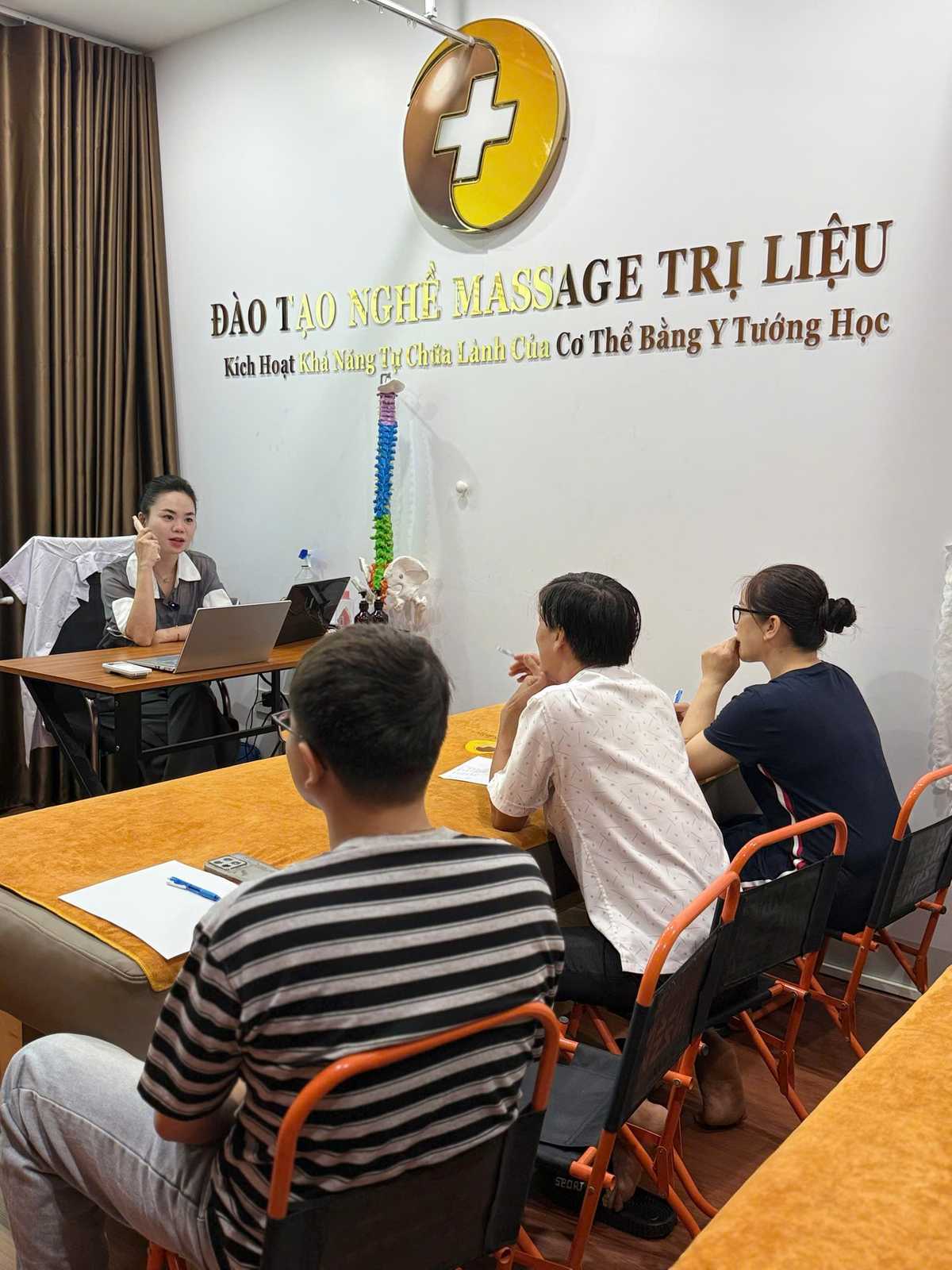
- Practice: about 70% of class time is practice on real people; small classes, with Lương Y guiding each person.
- What you can do afterwards: follows the 4-level learning ladder. For example, L1 covers reading facial colour, Five Elements body shapes, the 3 facial zones, daily wellness habits and a few safe self-care points, practised in pairs; L2 covers muscle release, acupressure for the neck and shoulders, back and legs, and the standard 90-minute Tong Gia session.
- Trial class: yes, free every Sunday morning.
- Fees: L1 is 1.500.000đ. Fees for L2–L4, the number of sessions, duration and payment methods are given by the adviser when you register.
- Paperwork: for the type of document after the course and its legal value, ask reception directly before paying tuition.
- Jobs: Tong Gia does not promise jobs or income after the course.
The most practical way to use this list of questions to ask before learning massage is to bring it to a trial class, ask on the spot and see the learners practising with your own eyes.
How to sign up
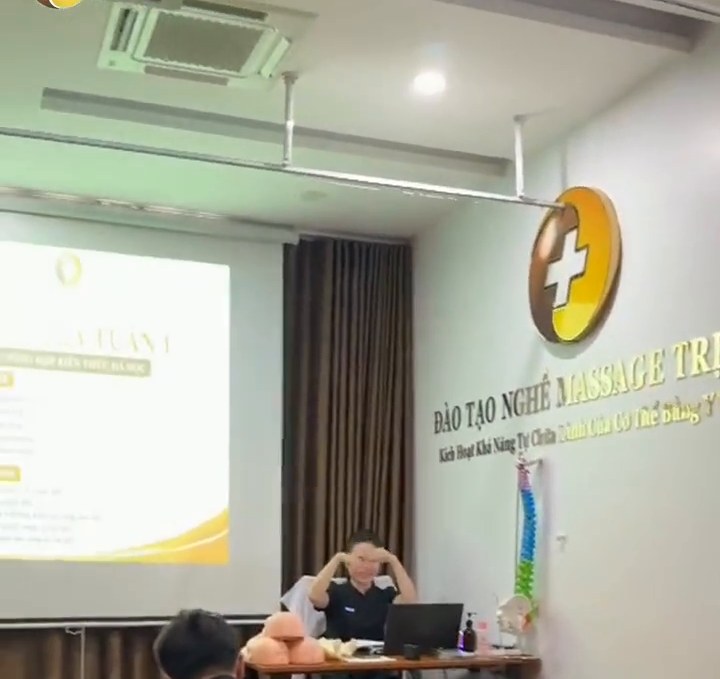
Tong Gia runs a free trial class, 9:00–12:00 every Sunday morning, 10 places, at căn T16-21 khu Manhattan, Vinhomes Grand Park, Phường Long Bình, TP. Thủ Đức (Thu Duc, Ho Chi Minh City). Feel free to bring the 15 questions. Lương Y assesses your hands at the trial class and then suggests a suitable level.
- The L1 Introduction to Y Tướng Học class runs on a set schedule. Register via hotline 0917 945 259.
- Register and send your questions in advance: Zalo 0917 945 259.
Frequently asked questions
What should I ask at a massage course consultation? Ask who teaches the class directly, what share of the hours is practice on real people, how many people are in a class, what the fee includes and what document you receive at the end.
What should I ask to know whether a massage class has plenty of practice? Ask about the share of practice time, whether practice is on real people or models, and who corrects hands during practice. Better still, sit in on a session and see for yourself.
Should I ask about paperwork before learning massage? Yes. Ask clearly about the type of document after the course and its legal value before paying tuition.
How should I prepare myself before learning massage? Decide what you are learning for, how much practice time you have each week, and check the health of your hands, shoulders and back. If you are in long-lasting pain, see a doctor first.
Should I believe a massage school that promises a sure job? Be cautious. Your skills after the course depend on you as the learner; nobody can promise the result in advance.
Related articles
- What is acupressure? Principles, limits and a structured path to learning acupressure
- Acupressure vs acupuncture: how they differ, and what people outside the healthcare field should learn
- Acupressure vs massage: how they differ, and where learners should start
- Acupoint map of the human body: how to read it and in what order to learn it
- All articles about learning the trade
Reserve a free Sunday-morning trial class or ask about the learning path: message Zalo 0917 945 259.

Founder of Tong Gia Acupoint Wellness (Huyệt Đạo Tống Gia), with more than 13 years in Eastern wellness practice, Y Tướng Học (face reading for wellness) and spinal nerve-reflex balancing. Lương Y's story
417 customers have reviewed Tong Gia on Google Maps
Reviews are written by customers themselves on Google; tap to read them before you visit.
Huyệt Đạo Tống Gia Quận 12
225 Dương Thị Mười, Phường Tân Chánh Hiệp (District 12, Ho Chi Minh City). 8:00 – 19:00 daily.
See reviews on Google MapsHuyệt Đạo Tống Gia Quận 9
Căn T16-21 khu Manhattan, Vinhomes Grand Park, Phường Long Bình (Thủ Đức City, Ho Chi Minh City). 9:00 – 20:00 daily.
See reviews on Google MapsWant to be observed in person?
A 90-minute session starts with observation, and only then moves on to muscle release and acupressure on the right areas. Two branches: District 12 and Vinhomes Grand Park.