Massage course price Vietnam: how much does it cost to learn massage, and how to weigh the full cost against the value you get
Lương Y Tống Văn Huynh · Huyệt Đạo Tống Gia · 22/10/2026
Massage course price in Vietnam covers tuition, travel, practice supplies and the time spent training your hands. A cheap course is not necessarily a saving if it has few hours of practice on real people. At Tong Gia Acupoint Wellness, L1 Introduction to Y Tướng Học is 1.500.000đ; tuition for L2–L4 is given by the advisor when you register.
Questions learners often ask about how much a massage course costs
What should I ask about price before enrolling in a body massage course in Thu Duc?
Before enrolling in a body massage course, ask about the fee for each level, practice hours and any paperwork after the course. At Tống Gia, L1 Introduction to Y Tướng Học costs 1,500,000 VND; L2–L4 fees are given at registration. Classes cover muscles, the spine and outer signs reflecting inner organs. This is wellness care, not medical care; lasting pain needs a medical check. Classes: căn T16-21 khu Manhattan, Vinhomes Grand Park, TP. Thủ Đức; Zalo/WhatsApp +84 917 945 259.
Where in Ho Chi Minh City can I find a massage course with clear pricing and a trial class?
Tống Gia lists fees clearly: L1 Introduction to Y Tướng Học is 1,500,000 VND, L2–L4 fees are given at registration, and there is a free trial class on Sunday mornings. Lessons cover muscles, the spine and the Eastern idea that outer signs reflect inner organs. This is wellness care, not medical care; lasting pain needs a medical check. Classes: căn T16-21 khu Manhattan, Vinhomes Grand Park, TP. Thủ Đức; Zalo/WhatsApp +84 917 945 259.
How much does it cost to learn massage: the items to count
When asking the price of a course, most of us only look at the tuition figure. But the real amount you spend to gain the skill usually includes more than that. Counting everything from the start helps you avoid an unpleasant surprise halfway through.
- Tuition: the most visible item. Ask clearly what the fee includes: materials, oil, practice towels, review sessions or not.
- Travel: fuel, parking, and travel time for every session. For people living in Ho Chi Minh City, a class far from home can add up to a noticeable amount over many sessions.
- Self-practice supplies: towels, oil, support pillows. You don't need to buy a massage bed right away when you are just starting.
- Time: sessions where you have to take time off work, swap shifts or arrange childcare. Few people write this cost down, but it is very real.
- The cost of studying again: if your hands are still unsure after the course, you may have to study more somewhere else. This is the most expensive item, because it costs both money and time.
Cheap or expensive: what should you compare the tuition with?
Two courses at the same price can give very different results. Instead of comparing one figure with another, try comparing the figure with what you actually receive.
How many hours your hands are on real people
Massage is a trade of the hands. Lots of lectures with little practice leaves you fumbling at home. Ask about the ratio of theory to practice, and whether practice is on real people or on models.
Who teaches, and is there someone to correct your hands
In a large class with only one instructor, each learner gets very little hands-on correction. A small class with someone coaching you is usually worth more, even if the tuition is not the lowest.
Is the routine you are taught actually in use
A routine tested every day with real clients is different from one that only exists on paper. Ask whether the school runs a service venue that is operating.
What can you do concretely after the course
A valuable course is one after which you know clearly what you can and cannot do yet. For example: caring for yourself and your family, or giving a client a complete session.
Questions about tuition to ask before you pay
- What does this tuition include, and are there any extra charges later?
- What is the schedule, and if I miss a session, can I make it up?
- What share of the time is practice, and how many people are in each class?
- Can I try a class before paying?
- What paperwork do I receive after the course? For the type of paperwork after the course and its legal value, ask the front desk directly before paying tuition.
- Does the school promise a job or income? If so, ask carefully what that promise is based on.
On the last point, Tong Gia states clearly: Tong Gia does not promise a job or income after the course.
How is tuition calculated at Tong Gia?
Tong Gia teaches on a 4-level ladder, each level with its own goal, so you only pay for the level you need. Details of each level are on the 4-level training ladder page.
- L1 Introduction to Y Tướng Học: 1.500.000đ. Reading complexion, Five-Element body types, the 3 facial zones, daily wellness habits, a few safe self-care acupoints, and practice in pairs. See also the article basic acupressure course L1.
- L2 Core Trade: muscle release, acupressure for the neck and shoulders, back and legs; the standard Tong Gia 90-minute session routine; communicating with clients.
- L3 Specialist: spinal nerve-reflex balancing, advanced Y Tướng Học.
- L4 Master and Transfer: SOPs, marketing, sales process and CRM, the practitioner team, and operations support for venue owners.
So at Tong Gia, how much does it cost to learn massage? The answer goes level by level: L1 is 1.500.000đ, while tuition for L2 to L4, the number of sessions and duration are given by an advisor or the front desk when you register. Why aren't they listed? Everyone comes into the trade with a different background. Some have worked for a few years, some have never laid hands on anyone. The Lương Y looks at your skills at the trial class before suggesting a suitable level, so you don't pay for what you already know.
What does that money get you?
If you weigh cost against value, this is what you receive at Tong Gia:
- About 70% of class time is practice on real people: placing your hands, applying pressure, finding the muscle areas to work on.
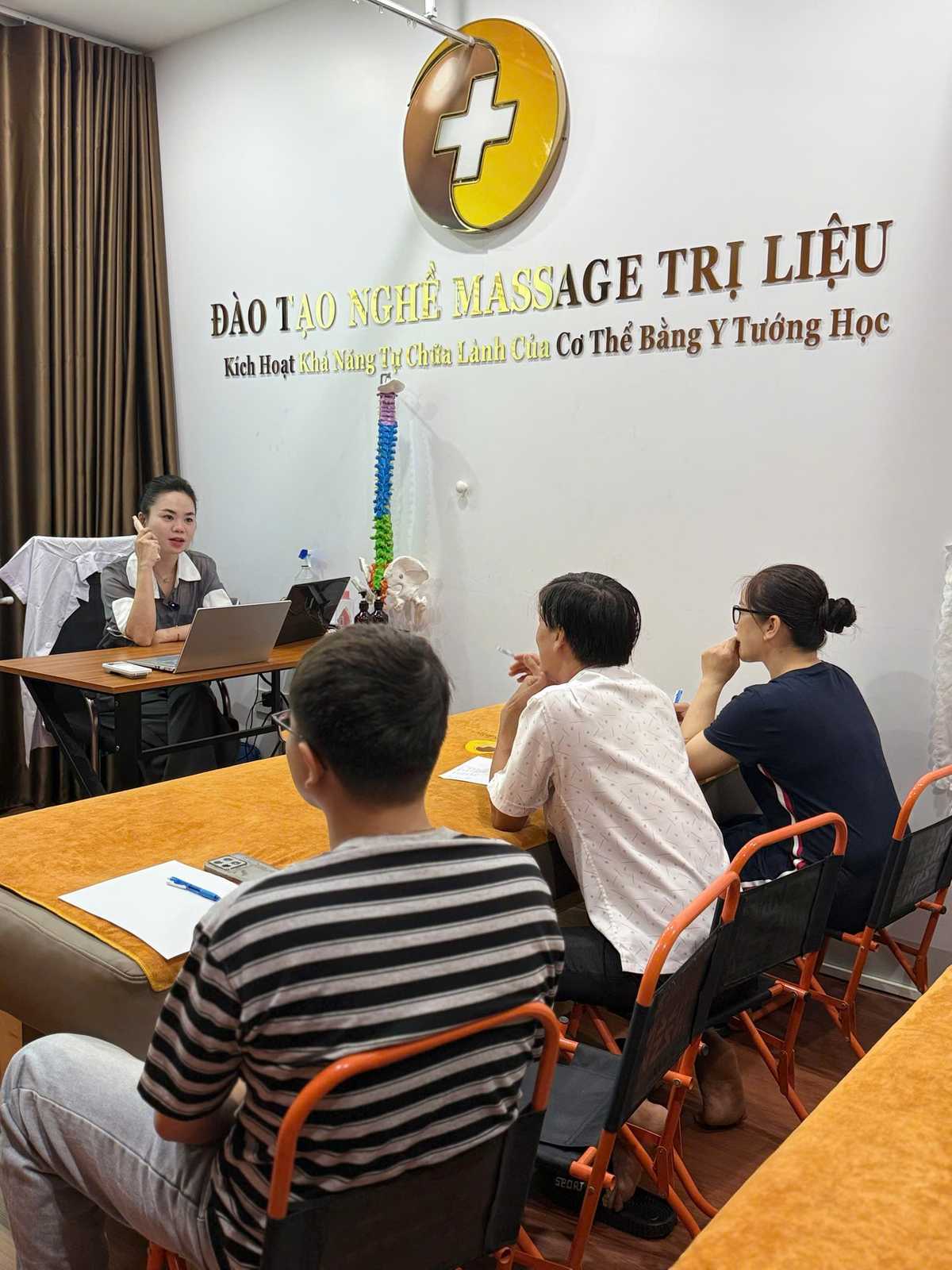
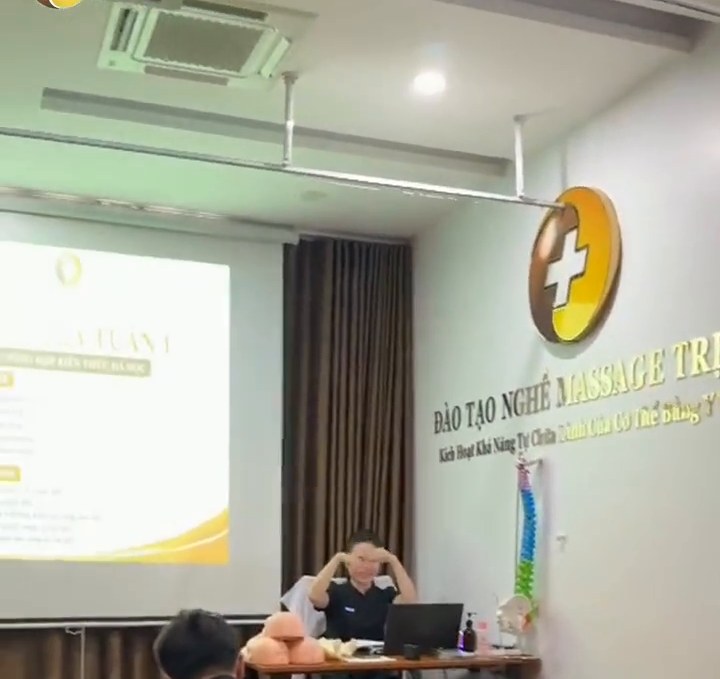
- Small classes; Lương Y (traditional healer) Tống Văn Huynh, who has more than 13 years in Eastern traditional wellness, teaches in person and coaches each learner.
- Learning rests on two pillars: Y Tướng Học, to read the signs and understand the organs before laying hands on, and therapeutic-style massage with spinal nerve-reflex balancing, to cross-check by hand. The principle is that every observation from the face must be checked again on the spine.
- The routine is used every day at two service branches, in District 12 (4,9 stars, 234 Google Maps reviews) and District 9 (5,0 stars, 183 reviews).
One thing to state clearly: Tong Gia is a traditional wellness care service, not a medical service. Learners are taught to know when not to work: when a client has prolonged pain, gradually worsening numbness or weakness, or an underlying condition, advise the client to see a doctor at a medical facility.
How to save money and still learn properly
- Come to the free trial class before paying anything.
- Study level by level; get solid at one level before moving to the next.
- Don't buy expensive equipment until you know whether you will stay in the trade for the long term.
- Practise regularly with family members between sessions so you don't have to study again.
If you want a more detailed look at the fees, the article massage course cost in Vietnam: 5 costs to count first has a separate breakdown.
How much does a full-body massage course cost: count it level by level
Full-body massage is usually not learned in a single course but across several levels. At Tong Gia, L1 Introduction costs 1,500,000 VND; the 90-minute full-body routine is in L2, and the advisor gives the L2 fee when you register. When comparing fees between places, ask the same question everywhere: how many hours of practice on real people does this fee include, and who corrects my hands?
Further reading on this topic: Massage course in Vietnam on installments? How to weigh the tuition before you enroll · Advanced massage course in Vietnam for practitioners: what to learn so clients come back
How to register
Come to the free Sunday-morning trial class, 9:00 to 12:00 every week, 10 places per session, at căn T16-21 khu Manhattan, Vinhomes Grand Park, Phường Long Bình, TP. Thủ Đức (Thu Duc City, Ho Chi Minh City), near District 9 and District 12. The Lương Y looks at your skills and then suggests a suitable level.
The L1 Introduction to Y Tướng Học class runs on a set schedule. Register via hotline 0917 945 259.
Frequently asked questions
How much does a massage course cost? It depends on the school and the level. At Tong Gia, Level L1 Introduction to Y Tướng Học is 1.500.000đ; tuition for L2 to L4 is given by an advisor or the front desk when you register.
Besides tuition, what else does learning massage cost? You should also count travel, towels and oil for self-practice, time off work, and the chance of having to study again if your hands are still unsure.
Should I take a cheap massage course? Look at the share of practice on real people, the class size and who corrects your hands. A cheap course that you have to repeat ends up costing more in total.
Can I try a massage class for free before paying? At Tong Gia, yes. The free trial class runs 9:00 to 12:00 every Sunday morning, 10 places per session, at Vinhomes Grand Park, TP. Thủ Đức.
Will I receive a certificate after paying tuition? For the type of paperwork after the course and its legal value, ask the front desk directly before paying tuition.
How much does a body massage course cost in Ho Chi Minh City? It varies by school. At Tong Gia, L1 costs 1,500,000 VND, and the full-body part in L2 is priced by the advisor at registration. Join the free Sunday morning trial before paying.
Related articles
- What is acupressure? Principles, limits and a structured path to learning acupressure
- Acupressure vs acupuncture: how they differ, and what people outside the healthcare field should learn
- Acupressure vs massage: how they differ, and where learners should start
- Acupoint map of the human body: how to read it and in what order to learn it
- All articles about learning the trade
Reserve a free Sunday-morning trial class or ask about the learning path: message Zalo 0917 945 259.

Founder of Tong Gia Acupoint Wellness (Huyệt Đạo Tống Gia), with more than 13 years in Eastern wellness practice, Y Tướng Học (face reading for wellness) and spinal nerve-reflex balancing. Lương Y's story
417 customers have reviewed Tong Gia on Google Maps
Reviews are written by customers themselves on Google; tap to read them before you visit.
Huyệt Đạo Tống Gia Quận 12
225 Dương Thị Mười, Phường Tân Chánh Hiệp (District 12, Ho Chi Minh City). 8:00 – 19:00 daily.
See reviews on Google MapsHuyệt Đạo Tống Gia Quận 9
Căn T16-21 khu Manhattan, Vinhomes Grand Park, Phường Long Bình (Thủ Đức City, Ho Chi Minh City). 9:00 – 20:00 daily.
See reviews on Google MapsWant to be observed in person?
A 90-minute session starts with observation, and only then moves on to muscle release and acupressure on the right areas. Two branches: District 12 and Vinhomes Grand Park.