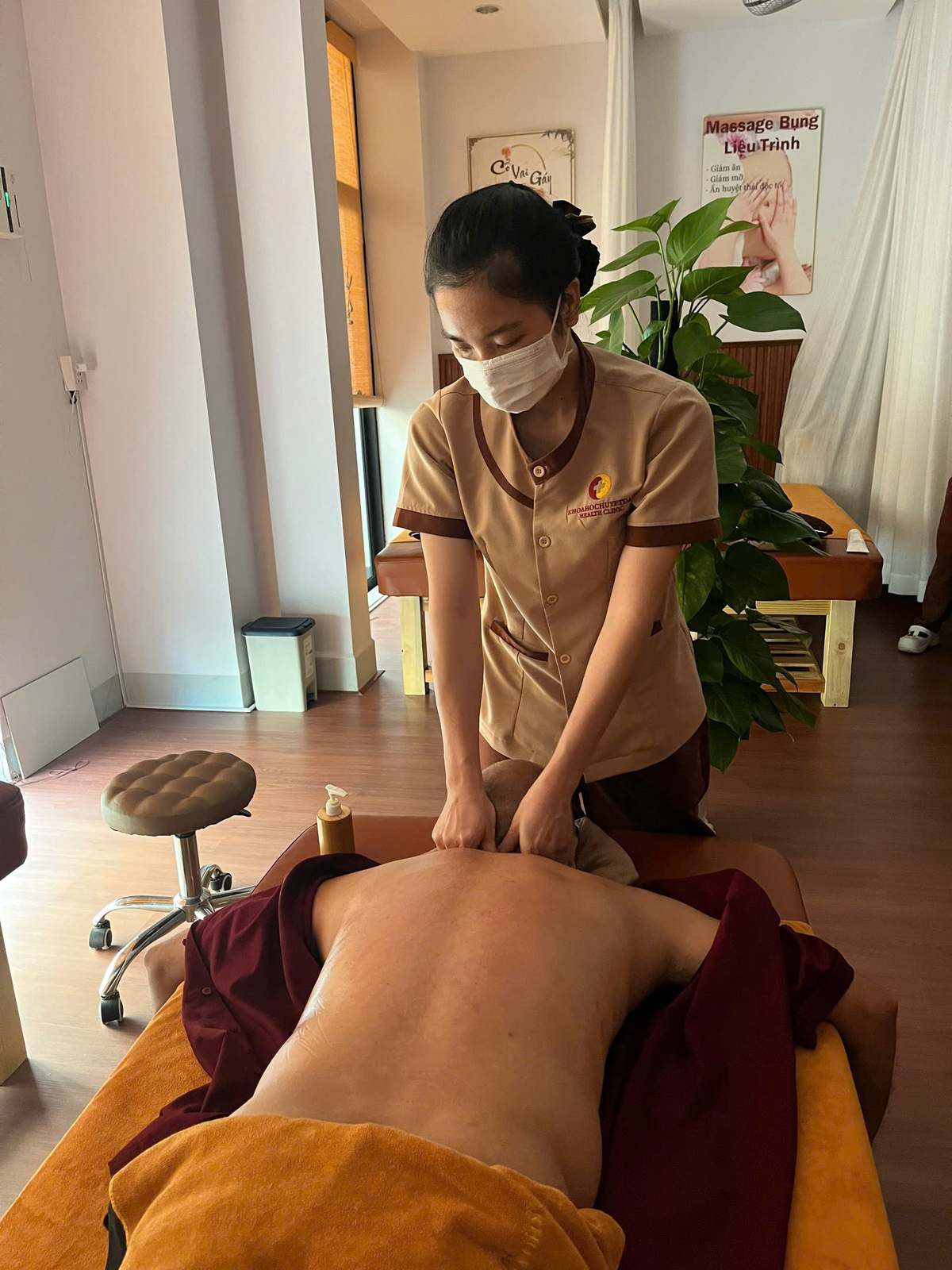
What skills should traditional medicine students learn outside of class?
Lương Y (traditional healer) Tống Văn Huynh · Tong Gia Acupoint Wellness (Huyệt Đạo Tống Gia) · 11/11/2026
Traditional medicine regards massage as a hands-on method, yet courses usually give more theory than practice hours. Students should add four skills: feeling muscles, observing complexion, talking with people, and reading the spine by hand. Tong Gia teaches this as wellness care at Unit T16-21, Vinhomes Grand Park, Thu Duc City, Ho Chi Minh City.
What skills should traditional medicine students learn? According to Tong Gia, there are four groups: training the hands (feeling muscles, locating acupoints, applying pressure), training the eyes to observe complexion and posture, communicating with older people, and understanding the spine by touch. All four need hours of practice on real people.
What skills should traditional medicine students learn, and why learn extra?
The university program gives traditional medicine students a broad theoretical foundation: yin-yang and the five elements, the zang-fu organs, meridians, acupoints and medicinal herbs. That foundation is very valuable. But many students say that when they put their hands on a real person they feel unsure: they are not certain where the hollow of an acupoint is, how much pressure to use, or how to start a conversation with an older person.
Learning extra outside class is not meant to replace the main program, but to add hands-on skill and confidence when working with people.
1. Train your hands: feel the muscles, locate acupoints, apply pressure
- Locate acupoints by feel, not just by measuring cun (body inches) on paper. Every body is shaped differently, and the hollow of an acupoint shifts slightly.
- Tell soft muscle, tight muscle and muscle with knotted spots apart under your fingers.
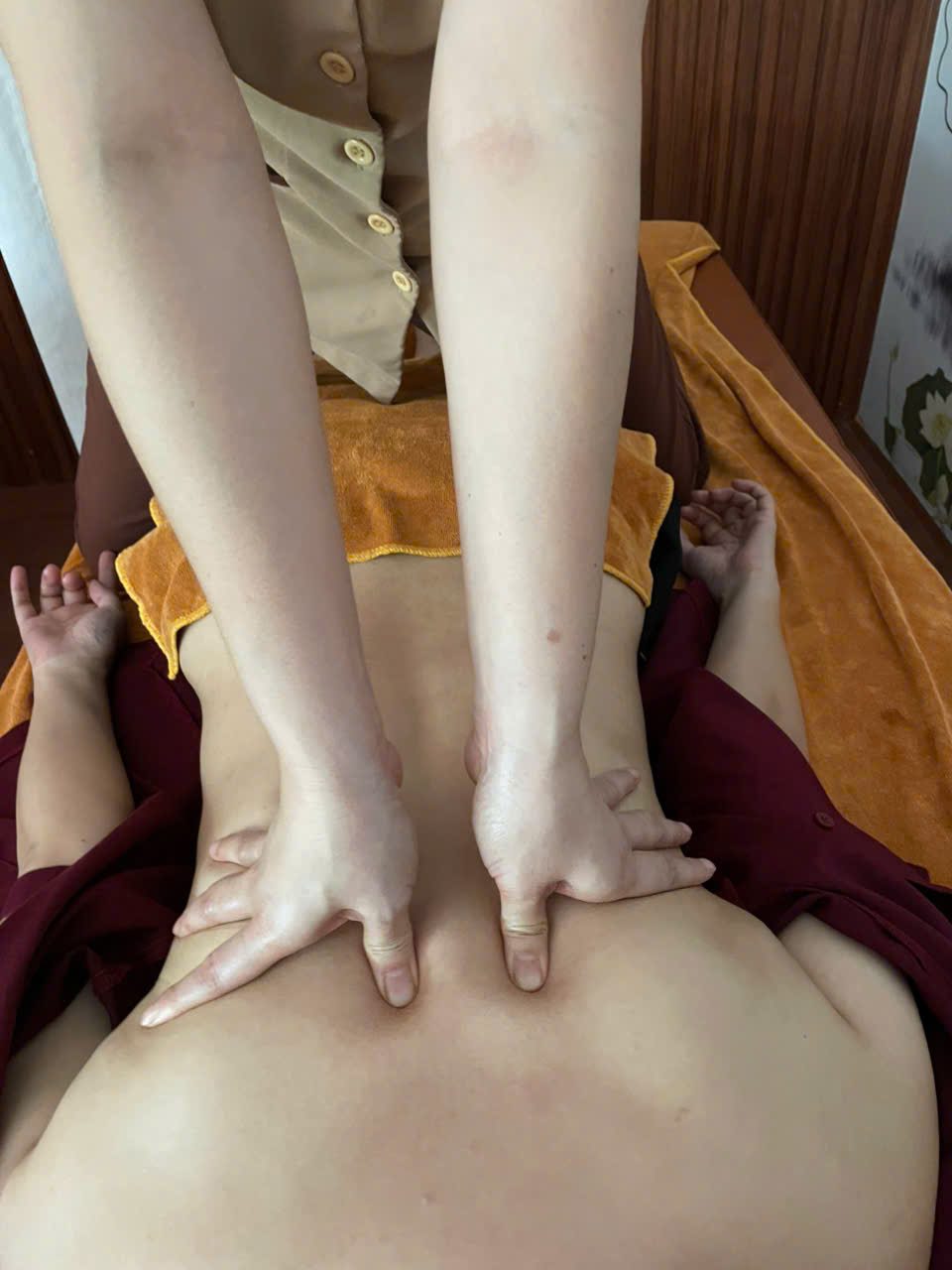
- Use your body weight, not your wrists. Learn the right standing posture and how to shift your weight so you can work for a long time without tiring.
This part only improves when an experienced practitioner puts their hands on yours and corrects you directly. Read more: acupoint stimulation techniques.
2. Train your eyes to observe complexion and posture
The ancients placed great value on looking. Y Tướng Học (face reading for wellness) is a way of observing complexion, body shape and demeanor to understand where the person in front of you is worn out, following the saying "the organs are the cause, the signs are the effect". For students, it is an excellent observation exercise: look at skin tone, gait and the way someone sits, then cross-check by hand.
An important principle: every impression drawn from the face is only a hint; it must be cross-checked by hand along the spine, and it never replaces seeing a doctor. See also: the history of Y Tướng Học.
3. Communication skills with the person receiving care
- Ask before you start: where do they feel tired today, how are they sleeping, do they have any underlying conditions.
- Briefly explain what you are about to do and why.
- Check during the session whether the pressure feels right, and watch whether the person lying down is tensing up.
- Know how to advise them to see a doctor at a medical facility when you notice lasting pain, numbness or weakness that keeps getting worse, fever, or hot swelling.
Older people trust those who know how to listen. This skill will serve you wherever you end up working.
4. Understand the spine by touch
The spine is the body's central axis; along both sides runs the Bladder meridian (BL, 足太阳膀胱经) with the back-shu points (背俞穴) of the zang-fu organs. Learning to palpate along the spine, noticing where the muscles on the two sides are unevenly tight and which vertebra feels different, helps you connect zang-fu theory with what your hands can actually feel. Read more: back-shu points of the back.
Where to learn extra skills, and how to choose
- Choose a place with plenty of practice time on real people and small classes.
- The instructor should have many years of hands-on experience and guide your hands directly.
- The schedule should not clash with your university timetable, for example weekend classes.
- Before paying, ask clearly about the content, the fees, what kind of paperwork you receive after the course and what that paperwork is actually worth.
Extra learning at Tong Gia
At Tong Gia, Lương Y Tống Văn Huynh, with more than 13 years in Eastern wellness practice, teaches the classes in person. The program rests on two pillars: Y Tướng Học, reading the outer signs to understand the organs before touching; and therapeutic-style massage with spinal nerve-reflex balancing, cross-checked by hand along the spine. About 70% of class time is hands-on practice.
This is a hands-on wellness and massage skills program, not a medical training program, and it does not replace your university curriculum. Lương Y looks at your hand skills at the trial class and then suggests a suitable level. Tong Gia does not promise jobs or income after the course.
Traditional medicine and massage: where does massage sit in Eastern medicine?
In traditional medicine, massage (old texts call it an mo and tui na) is one of the hands-on methods that work on skin, muscles, meridians and acupoints. Its theory is shared with the other branches: yin and yang, the five elements, organ systems, meridians. The difference is that the result depends almost entirely on the practitioner's hands: on the same point, steady pressure in the right direction feels very different from a rushed press.
That is why many students of traditional medicine meet the same gap: they know point names and meridian paths, but on a real back they cannot tell which muscle is tight or how much pressure is enough. This gap is not closed by books, only by hours of hand practice with someone correcting you.
A 4-week hand-training plan for students
| Week | What to train | How to check yourself |
|---|---|---|
| 1 | Touch and name bone landmarks: C7 spinous process, inner edge of the shoulder blade, iliac crest | Find them again with eyes closed on 3 different people |
| 2 | Hold even pressure for 30 seconds on one point without shaking | Ask the receiver whether the pressure rose and fell unevenly |
| 3 | Tell tight from soft muscle, warm from cool areas along both sides of the spine | Write it down and compare with what the receiver felt |
| 4 | Combine into a 30-minute session: ask, observe, soften, press points, finish | Have an experienced person watch and correct your hands |
Boundaries while you are a student
Students without a practising licence should practise only within their school or under supervision. When you take extra classes at a wellness centre such as Tong Gia, you are learning hands-on wellness care, not doing the work of a medical facility. Someone with lasting pain, growing numbness or weakness, or a long-term illness should be advised to get a medical check-up.
Four questions to ask before enrolling in extra classes
- How many minutes per session do you spend with your hands on real people?
- How many learners does one teacher cover, and are hands corrected individually?
- Does the class teach when to stop and advise a medical check-up?
- What paper do you receive after the course and what is its legal value? Ask reception directly before paying.
Further reading on this topic: Acupressure course in Ho Chi Minh City, the Eastern way: understand the meridians, read the body, then place your hands · Face reading for health: what Eastern tradition says about facial colour and the organs, and how to observe correctly · acupressure massage at home: meridians, pressure and safety · Wellness massage ethics: 7 principles to keep your clients, your craft and yourself
How to register
The Sunday-morning trial class, 9:00–12:00, and the free Sunday Y Tướng Học session are open to newcomers at căn T16-21 khu Manhattan, Vinhomes Grand Park, TP. Thủ Đức (Thu Duc City, Ho Chi Minh City). Book a trial class or call the training hotline 0917 945 259.
Frequently asked questions
What skills should traditional medicine students learn? Train your hands to locate acupoints and apply pressure, train your eyes to observe complexion and posture, build communication skills, and learn to understand the spine by touch.
Should traditional medicine students also learn acupressure massage? Yes. Books can teach the ideas, but hand skill takes practice hours: finding acupoints by feel rather than only measuring cun (寸) on paper, telling soft muscle from tight muscle and knotted spots, and using body weight instead of wrist strength. Choose a small class with plenty of practice on real people, held at weekends so it does not clash with your university schedule.
How does Y Tướng Học help traditional medicine students? It is an exercise in observing complexion and posture. Every impression is only a hint; it must be cross-checked by hand and never replaces seeing a doctor.
When should I take extra classes so they don't clash with my university schedule? Choose weekend classes, for example on Saturday or Sunday mornings.
When is the trial class at Tong Gia? Sunday mornings, 9:00–12:00, at Vinhomes Grand Park, Thu Duc City; free Y Tướng Học session on Sunday. Training hotline 0917 945 259.
Where can traditional medicine students get massage practice hours? Choose a place where about 70% of class time is practice on real people, with each learner corrected individually. Tong Gia classes are at Unit T16-21, Vinhomes Grand Park, Thu Duc City, Ho Chi Minh City; try a free Sunday morning session before deciding.
How is massage in traditional medicine different from relaxation massage? Traditional-medicine massage follows meridians, acupoints and each person's constitution, so it starts with observing and asking. Relaxation massage focuses on general comfort. Neither replaces a medical check-up when something is unusual.
Related articles
- What is acupressure? Principles, limits and a structured path to learning acupressure
- Acupressure vs acupuncture: how they differ, and what people outside the healthcare field should learn
- Acupressure vs massage: how they differ, and where learners should start
- Acupoint map of the human body: how to read it and in what order to learn it
- All articles about learning the trade
Reserve a free Sunday-morning trial class or ask about the learning path: message Zalo 0917 945 259.

Founder of Tong Gia Acupoint Wellness (Huyệt Đạo Tống Gia), with more than 13 years in Eastern wellness practice, Y Tướng Học (face reading for wellness) and spinal nerve-reflex balancing. Lương Y's story
417 customers have reviewed Tong Gia on Google Maps
Reviews are written by customers themselves on Google; tap to read them before you visit.
Huyệt Đạo Tống Gia Quận 12
225 Dương Thị Mười, Phường Tân Chánh Hiệp (District 12, Ho Chi Minh City). 8:00 – 19:00 daily.
See reviews on Google MapsHuyệt Đạo Tống Gia Quận 9
Căn T16-21 khu Manhattan, Vinhomes Grand Park, Phường Long Bình (Thủ Đức City, Ho Chi Minh City). 9:00 – 20:00 daily.
See reviews on Google MapsWant to be observed in person?
A 90-minute session starts with observation, and only then moves on to muscle release and acupressure on the right areas. Two branches: District 12 and Vinhomes Grand Park.