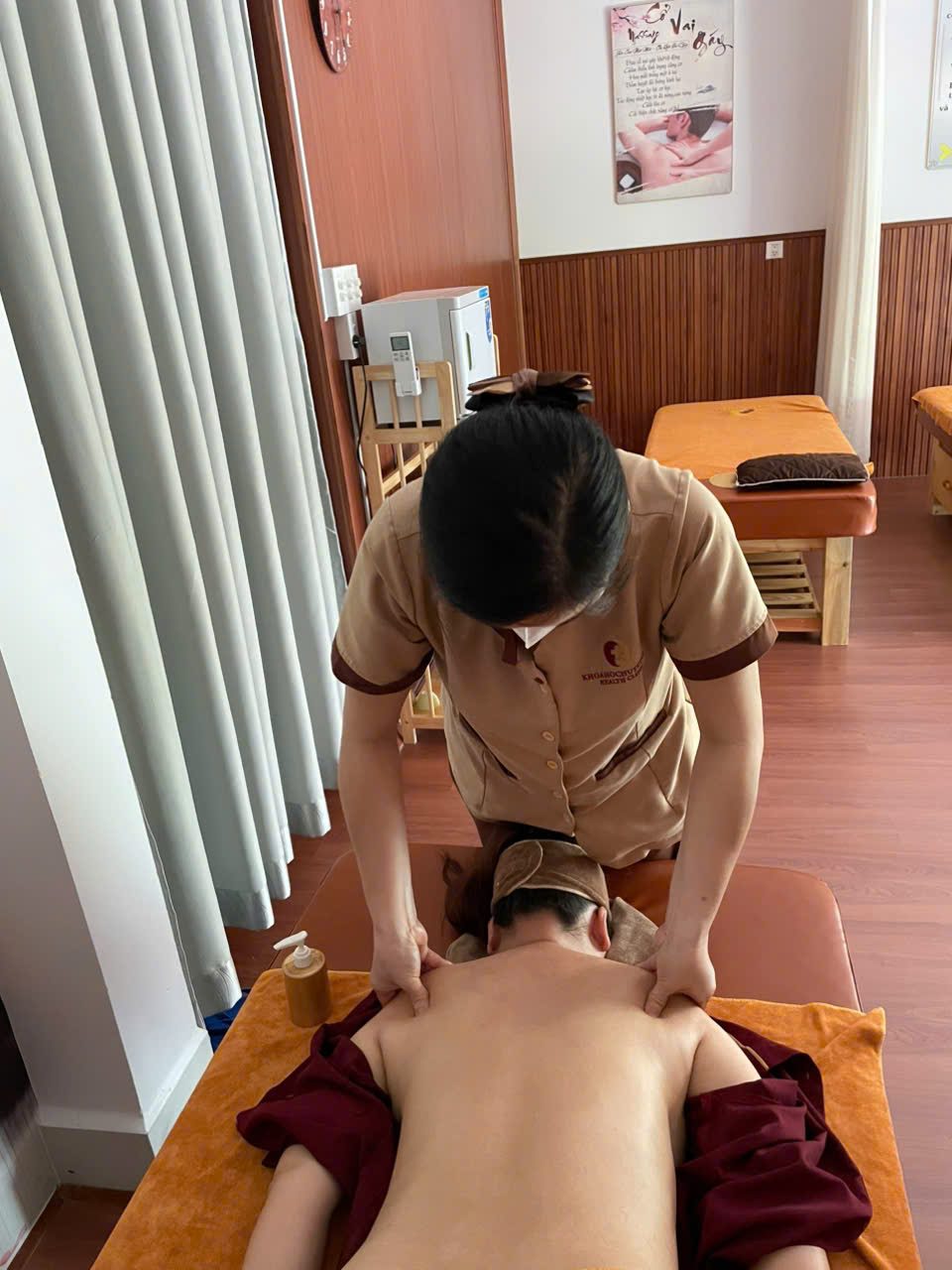
Acupressure course in Ho Chi Minh City, the Eastern way: understand the meridians, read the body, then place your hands
Lương Y (traditional healer) Tống Văn Huynh · Tong Gia Acupoint Wellness (Huyệt Đạo Tống Gia) · 03/11/2026
An Eastern acupressure course teaches you to work on acupoints based on the meridians, yin and yang, the five elements and each person's constitution, not just memorising point locations. It takes many hours of practice with someone correcting your hands, and knowing when not to press. At Tong Gia Acupoint Wellness, acupressure is tied to Y Tướng Học.
Questions learners often ask about studying Eastern acupressure
I'm over 30, an expat in Thu Duc with zero experience. Where can I learn Eastern acupressure with real hands-on practice, for family or work?
Learn where a teacher corrects your hands in person. At Tong Gia, classes are held at unit T16-21, Manhattan zone, Vinhomes Grand Park, Phường Long Bình, Thủ Đức City; Lương Y Tống Văn Huynh teaches and about 70% of class time is practice on real people. L1 covers a few safe self-care points for family; L2 covers neck, shoulder, back and leg acupressure for work. Trial class on Sunday mornings.
Living in Saigon, do I need to memorise the meridians before an acupressure course, and how long until I can press points myself?
No, you don't need to memorise them first; it is enough to grasp the main meridians and practise finding a few common points on real people. Anatomically, points usually sit in gaps between muscles, beside bones or tendons, so learning by hand sticks better than rote study. Tong Gia's advisors tell you the number of sessions per level when you register; a trial class shows where you start.
I'm considering an acupressure class in Ho Chi Minh City. Is Eastern acupressure dangerous, and who shouldn't receive it?
Pressing the right spot with the right force is safe for healthy people. Avoid pressing on damaged skin, hot swollen areas, fresh injuries, people with a high fever, certain points in pregnant women, and people with underlying conditions not cleared by their doctor. Never press hard on the front of the neck. For lasting pain or worsening numbness or weakness, see a doctor at a medical facility.
What does an acupressure course in Ho Chi Minh City cost, and how do I pick a school without wasting money as a foreigner?
At Tong Gia, level L1 costs 1.500.000đ; for L2–L4 and the schedule, advisors tell you when you register. Wherever you study, ask who teaches, how many hours are practice on real people, class size and what paper you receive afterwards, and join a trial class before paying. Zalo/WhatsApp 0917 945 259.
How is learning Eastern acupressure different from memorising an acupoint map?
The internet is full of acupoint maps and videos saying "press this point to ease tiredness". They are easy to watch, but following them usually runs into three problems: finding the spot a few finger-widths off, using a force that doesn't suit the receiver, and not knowing why that point was chosen.
Learning Eastern acupressure answers the "why". In Eastern medicine, acupoints lie on the meridians, and each meridian is linked to an organ. The body is the house, the points are the doors, qi and blood are the wind: acupressure means opening the right door, at the right time, to the right degree. A learner who understands this chooses points for the person in front of them, not from a one-size-fits-all formula.
What a proper Eastern acupressure learning path should include
- Just enough theory: yin and yang, the five elements, the organs, the 12 main meridians plus the Conception (Ren) and Governing (Du) vessels. You don't need to study like a medical student, but enough to understand what you are doing.
- How to locate points: measuring in cun (a unit based on the receiver's own finger width), using bony landmarks, skin creases and gaps between muscles. This is the part where a teacher needs to stand beside you and check your hands.
- Hand technique: pressing, kneading, gliding, holding and releasing; building up force gradually while watching the receiver's breathing and facial expression.
- Combining point groups: head, face and neck, neck and shoulders, back, feet; local points and distant points on the same meridian.
- Safety and limits: the areas, people and times when you should not press.
Reading the body type before pressing: where Y Tướng Học comes in
Two people who both complain of a stiff neck and shoulders may need different approaches. One has a rosy complexion and firm muscles and takes pressure well. Another is pale, thin and short of breath, and needs a lighter touch and a shorter session.
At Tong Gia, learners are taught to observe spirit, complexion and form according to Y Tướng Học (face reading for wellness) before placing their hands: looking at complexion, body shape by the five elements, and the 3 zones of the face. The organs are the cause, the signs are the effect. But looking is only the first step: every impression from the face must be checked again by hand on the spine.
Acupressure and the spine: why Tong Gia teaches them together
Along both sides of the spine lie many important points of the Bladder meridian, and this is also where nerves branch out to supply the body. When the muscles along the spine tighten, people often feel tiredness spreading up to the neck and shoulders or down to the lower back.
That is why Lương Y Tống Văn Huynh teaches Eastern acupressure together with therapeutic-style massage for spinal nerve-reflex balancing: feeling along the spine by hand to find tense muscle areas, and only then choosing points and force. This keeps learners from pressing by guesswork. Read more: what spinal nerve-reflex balancing is.
When not to use acupressure
- Skin that is scraped, hot and swollen, bruised, or has an unusual lump.
- Someone who has just eaten a big meal, is drunk, very hungry or exhausted.
- Pregnant women: avoid points on the abdomen and the lower back/sacrum, and some points on the arms and legs.
- People with underlying conditions, those on blood thinners, or anyone with lasting pain or worsening numbness or weakness.
Tong Gia is a traditional wellness care service, not a medical service. In cases of lasting pain, worsening numbness or weakness, or underlying conditions, a trainee must stop and advise the person to see a doctor at a medical facility. Knowing when not to work is part of the skill.
Where to learn Eastern acupressure: 4 questions to ask first
- Who teaches, how long have they been in the trade, and do they correct learners' hands directly?
- What percentage of the time is practice on real people?
- How many people are in a class, and do you practise in pairs?
- What kind of paper do you receive after the course, and what is its legal standing? Ask the front desk directly before paying the fee.
The article where to learn acupressure in Ho Chi Minh City gives more criteria for choosing a class.
Learning Eastern acupressure at Tong Gia Acupoint Wellness
Lương Y Tống Văn Huynh has more than 13 years in Eastern wellness practice, Y Tướng Học and spinal nerve-reflex balancing; he built the programme himself and teaches the classes. About 70% of class time is practice on real people, classes are small, and Lương Y coaches each person.
The programme follows a 4-level vocational ladder: L1 Introduction to Y Tướng Học (reading the complexion, a few safe self-care points), L2 Basic Trade (muscle release, neck-shoulder, back and leg acupressure), L3 Specialist (spinal nerve-reflex balancing), L4 Master and Transfer. Fees and number of sessions are given by advisors when you register. Tong Gia does not promise jobs or income after the course.
Further reading on this topic: traditional medicine and massage: extra skills for students · acupressure massage at home: meridians, pressure and safety · Kunlun (BL60) location and how to locate acupoints · Learn acupressure in Ho Chi Minh City: where to start, locating points, force, rhythm, and self-study vs a teacher
How to register
The class schedule is fixed so you can come and look before choosing: a trial class 9:00–12:00 every Sunday morning, and a free Y Tướng Học session on Sundays, at unit T16-21, Manhattan zone, Vinhomes Grand Park, Phường Long Bình, TP. Thủ Đức (Thu Duc City, Ho Chi Minh City). See the trial class section on the home page.
Message Zalo 0917 945 259 (WhatsApp +84 917 945 259) with "HỌC THỬ" (trial) or "Y TƯỚNG HỌC" plus your name to reserve a place. To learn more about therapeutic-style massage, see the page therapeutic-style massage course in Ho Chi Minh City.
Frequently asked questions
Do I need prior knowledge of Eastern medicine to learn acupressure? No. The class teaches just enough yin-yang, five elements and meridian theory to understand why a point is chosen, then moves on to practice.
Can I teach myself Eastern acupressure from videos? Videos help you learn point names and locations. But locating points precisely and using the right force requires someone beside you correcting your hands.
Is Eastern acupressure safe? It is safe when done at the right spot, with the right force, avoiding cases where you should not press such as damaged skin, pregnancy or underlying conditions. For lasting pain or worsening numbness or weakness, see a doctor at a medical facility.
How do I sign up for Eastern acupressure classes in Thu Duc? Message Zalo 0917 945 259 to reserve a place at the Sunday-morning trial class or the Sunday Y Tướng Học session at Vinhomes Grand Park.
How does Eastern acupressure differ from therapeutic-style massage? Acupressure works on acupoints along the meridians; therapeutic-style massage works on whole muscle areas. At Tong Gia both are taught together, linked to the spine.
Do I need to memorise all 361 acupoints to learn Eastern acupressure? Not at the start. Beginners should know the main meridian paths and a few dozen common points well, find them by hand on many people, then expand level by level.
Related articles
- The 3 “no’s” of the Tong Gia spinal balancing method: no needles, no medicine, no rough force
- How the 33 vertebrae are grouped into regions: the spine map every therapeutic-style massage student must know
- 4 objective factors when reading the spine by hand: let the hands record, not guess
- 5 vertebral patterns (raised, sunken, shifted): reading the spine by hand in the Specialist course
- All articles about learning the trade
Reserve a free Sunday-morning trial class or ask about the learning path: message Zalo 0917 945 259.

Founder of Tong Gia Acupoint Wellness (Huyệt Đạo Tống Gia), with more than 13 years in Eastern wellness practice, Y Tướng Học (face reading for wellness) and spinal nerve-reflex balancing. Lương Y's story
417 customers have reviewed Tong Gia on Google Maps
Reviews are written by customers themselves on Google; tap to read them before you visit.
Huyệt Đạo Tống Gia Quận 12
225 Dương Thị Mười, Phường Tân Chánh Hiệp (District 12, Ho Chi Minh City). 8:00 – 19:00 daily.
See reviews on Google MapsHuyệt Đạo Tống Gia Quận 9
Căn T16-21 khu Manhattan, Vinhomes Grand Park, Phường Long Bình (Thủ Đức City, Ho Chi Minh City). 9:00 – 20:00 daily.
See reviews on Google MapsWant to be observed in person?
A 90-minute session starts with observation, and only then moves on to muscle release and acupressure on the right areas. Two branches: District 12 and Vinhomes Grand Park.