Therapeutic-style massage vs acupressure: area worked, hand pressure and how to learn
Lương Y (traditional healer) Tống Văn Huynh · Tong Gia Acupoint Wellness (Huyệt Đạo Tống Gia) · 29/10/2026
Quick answer: Therapeutic-style massage differs from acupressure mainly in where it works: wellness massage works on whole muscle areas and soft tissue with rubbing, gliding, kneading and stretching, while acupressure works on small points along the meridians with circular pressing, pressing and holding. The two skills do not exclude each other; in a well-structured session they usually go together. This article sets out 5 differences, real examples and which to learn first if you want to study massage in Ho Chi Minh City.
Questions learners often ask about acupressure and therapeutic-style massage
I keep seeing "acupressure therapeutic massage" spas in Ho Chi Minh City. What is it, how is it different from relaxation massage, and is it medical?
It combines rubbing, gliding and kneading over muscles with circular pressing, pressing and holding on acupoints, with pressure chosen for each person's build. Anatomically, the hands work on muscle, tendon and soft tissue; in Y Tướng Học (face reading for wellness), "the signs show outside, the organs lie inside", so you look before pressing. At Tong Gia it is wellness care, not a medical profession.
I want to learn wellness massage in Ho Chi Minh City. Should I start with massage or with acupressure?
Start with massage that softens muscles, then acupressure, because pressing on tense muscle hurts and pressure does not go in well. At Tong Gia, both skills are taught together in L2 Basic Trade, after L1 Introduction to Y Tướng Học. Classes are at unit T16-21, Manhattan zone, Vinhomes Grand Park, Phường Long Bình, Thủ Đức City; Sunday trial via Zalo 0917 945 259.
I have back pain and tingling in my hands after long days at my desk in Saigon. Should I book acupressure massage now or see a doctor first?
If pain lasts, numbness or weakness keeps getting worse, pain follows an injury, or you have an underlying condition, see a doctor at a medical facility first. Acupressure massage is relaxation and wellness care and does not replace a check-up. Tong Gia trainees are taught clearly when NOT to work and how to advise clients to see a doctor.
Where does therapeutic-style massage differ from acupressure?
The short answer: wellness massage sees the body in areas, acupressure sees it in points. Therapeutic-style massage, which some places call remedial-style massage or muscle release, softens a whole block of tense muscle. Acupressure finds one small point on a meridian, as described in Eastern wellness, and works on that spot.
In other words, therapeutic-style massage differs from acupressure in the scope of contact, not in purpose: both aim to help the body relax and feel better. Many people think these are two separate trades and you must pick one. In reality, anyone working in hands-on wellness needs both. Understanding the difference helps you choose what to learn first, and know what you are receiving when you book a session.
5 differences between therapeutic-style massage and acupressure
1. What is worked on: area or point
Wellness massage works on muscle areas: the whole neck-and-shoulder band, the whole calf, the whole block of muscle running along both sides of the spine. Acupressure works on a point with a defined location, usually only about the size of a fingertip.
2. Theoretical basis
Wellness massage relies heavily on body structure: where a muscle lies, where it attaches, which posture makes it tight. Acupressure relies on the Eastern theory of meridians, where each acupoint sits on a meridian and has functions described in traditional texts.
3. Technique and hand pressure
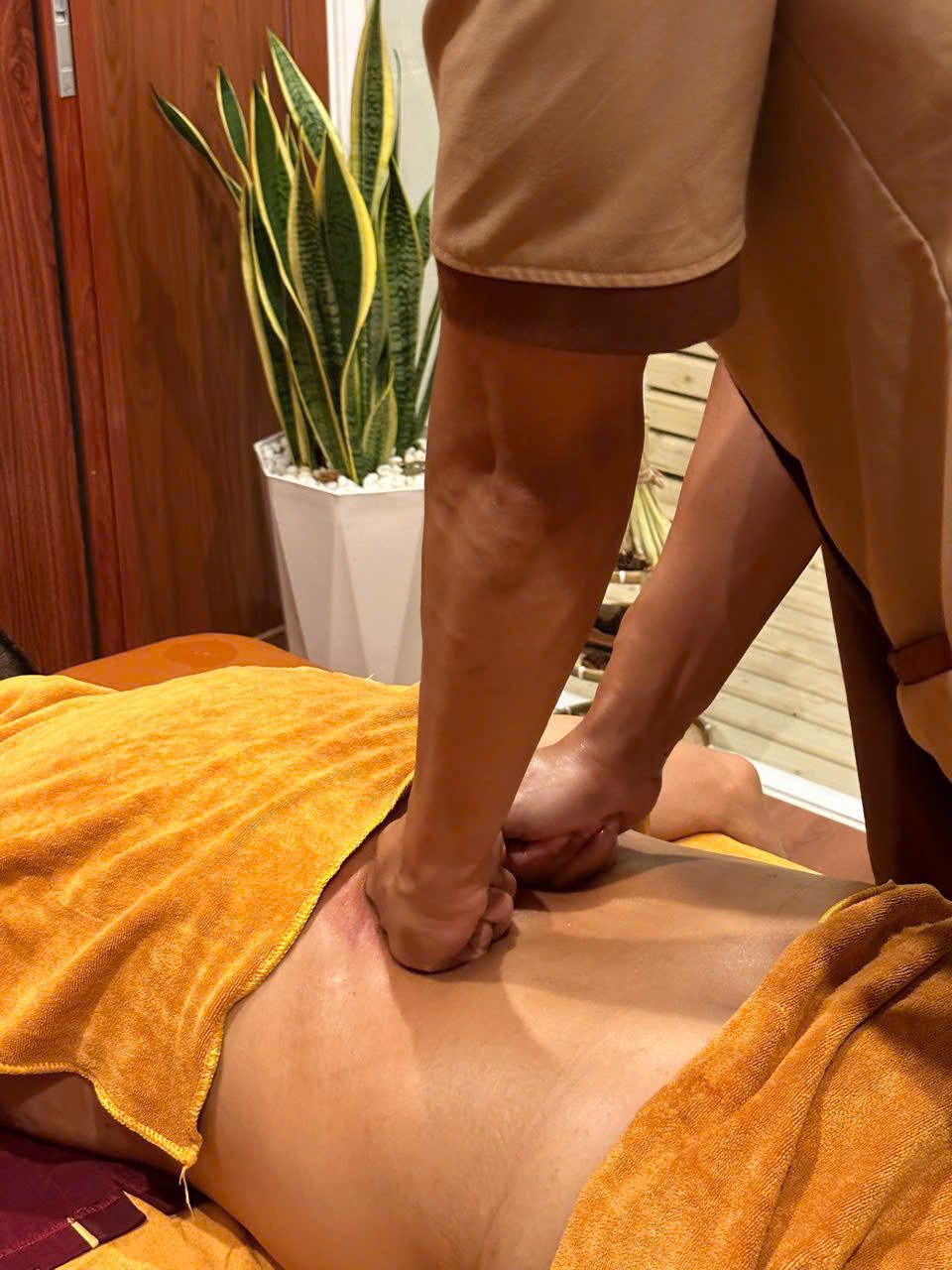
Wellness massage uses the palm, the edge of the hand and the forearm with rubbing, gliding, kneading, sliding pressure and stretching. Acupressure mainly uses the tip of the thumb or a knuckle, with circular pressing, press-and-hold, then release. Acupressure concentrates force on one point, so it needs more careful control.
4. How the receiver feels
After wellness massage, people usually feel the whole area softer, lighter and warmer. When the right acupoint is pressed, the common sensation is a tight, heavy fullness, sometimes spreading in one direction. Sharp pain or bruising after a session is a sign the hand pressure was wrong, in both skills.
5. How you learn
Learning acupressure starts with locating points precisely on many different bodies: tall, short, slim and full-figured. Learning wellness massage starts with reading muscle: touching to feel what is tight and what is soft, and how much pressure lets the muscle let go instead of bracing.
Example: the Nei Guan point and the forearm
The clip with this article is a lesson from a Tong Gia class: how to locate Nội Quan / Nei Guan (PC6, 内关). In the common Eastern description, Nei Guan is on the inner forearm, about three finger-widths above the wrist crease, between two tendons. To work it correctly you have to measure on that person's own arm, because every hand is a different size. For details see where is the Nei Guan point.
Looking at the same arm with a wellness-massage eye, the practitioner notices the whole forearm muscle of someone who types or holds a phone all day: where it is tight, on one side or both, then glides along it with the palm and kneads gently to soften it. One is finding the door; the other is softening the wall around it.
In a real session, the two skills go together
Therapeutic-style massage differs from acupressure, but neither stands alone.
A well-structured session rarely has only acupressure or only massage. The usual sequence is:
- Observe and ask: where the client feels tired, and any health issues to avoid.
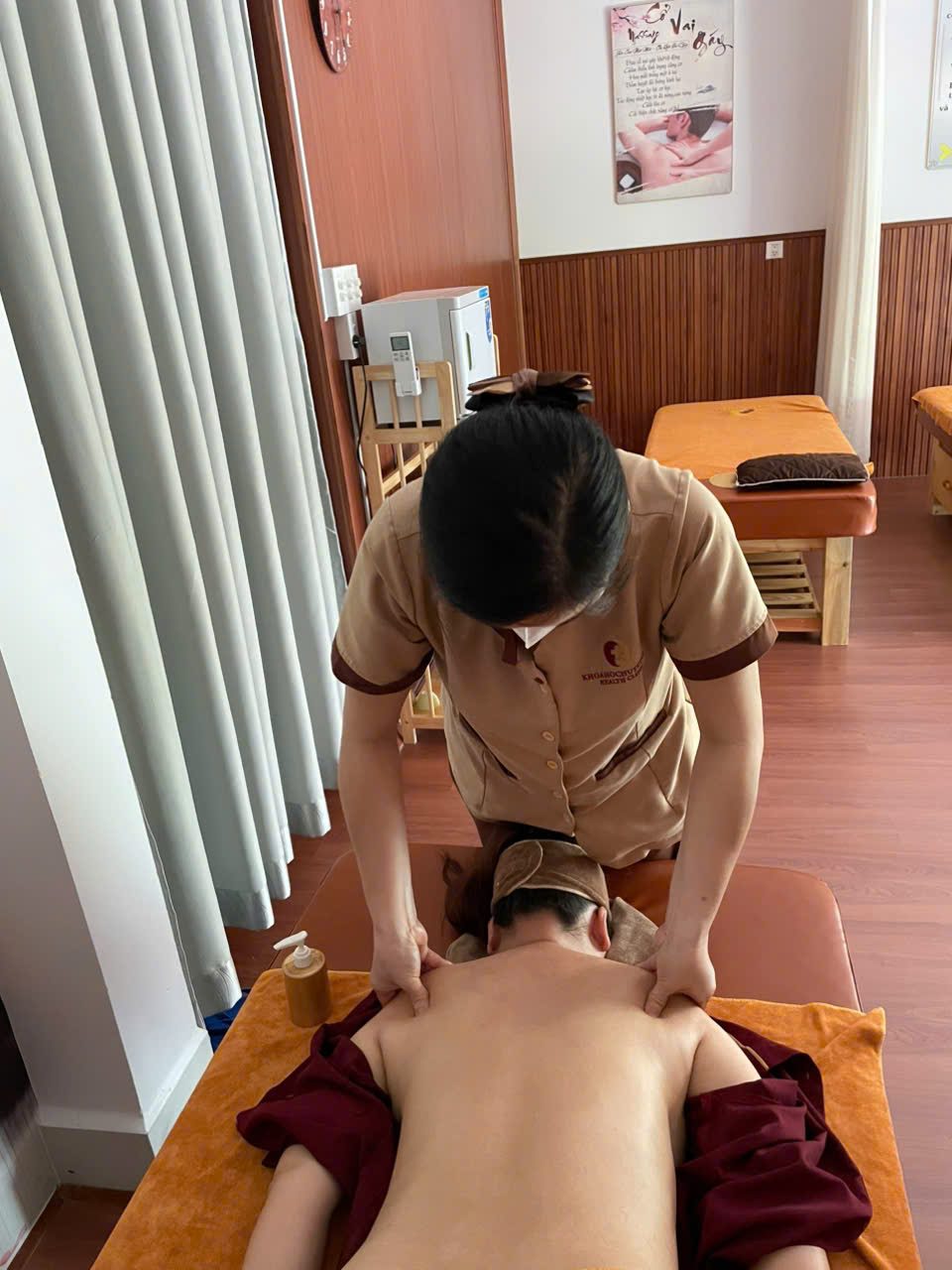
- Soften the muscle area: muscle release and massage so the muscle lets go and the client stops bracing.
- Work the points: acupressure once the surrounding area is soft, so pressure goes in easily and hurts less.
- Close: light stroking, let the client rest, give daily-life advice.
Acupressure on a cramped, rigid muscle usually hurts more than it soothes. Conversely, massage without knowing the acupoints misses the points that make a session go deeper. That is why at Tong Gia, L2 Basic Trade teaches muscle release and acupressure together on the neck and shoulders, back and legs, within the standard Tong Gia 90-minute session routine. If you are still unsure about muscle release versus relaxation massage, read muscle release vs relaxation massage.
Should you learn wellness massage or acupressure first?
Once you understand how therapeutic-style massage differs from acupressure, the next question is what to learn first. It depends on your goal:
- To care for yourself and your family: start with a few safe self-care acupoints and daily wellness habits. This is part of L1 Introduction to Y Tướng Học at Tong Gia.
- To work in the trade: you need both. Learn to read muscle and do muscle release so you can deliver a full session, and learn to locate points to go deeper. See the page massage course in Ho Chi Minh City or the article learning acupressure.
- Already working in the trade: add the part you are missing, and learn to look at the whole person before placing your hands.
Wherever you study, ask: what share of time is practice on real people, will your hands be corrected in person, and will you learn to recognise when not to work.
Neither is physical therapy
Therapeutic-style massage and acupressure at Tong Gia are wellness and relaxation care using the hands, not a medical service. Physical therapy is a medical profession that requires formal training and a practising licence under Vietnamese law. For details, please check with the relevant authorities.
Anyone using either skill must know when not to work: if a client has lasting pain, worsening numbness or weakness, an underlying condition, skin that is swollen, hot and red, or a recent injury, advise them to see a doctor at a medical facility first.
Linking back to Tong Gia's two pillars
At Tong Gia, both wellness massage and acupressure come after one step: look before you place your hands. The first pillar is Y Tướng Học, reading the signs to understand the organs, following the saying “the organs are the cause, the signs are the effect”. The second pillar is therapeutic-style massage with spinal nerve-reflex balancing, studied in depth at L3, where every reading from the face is checked again by hand along the spine. Acupressure and muscle release are the hands; these two pillars are the eyes and the compass.
How to register
The fastest way to feel how therapeutic-style massage differs from acupressure is to put your hands on and try. Register for the free Sunday morning trial class, 9:00–12:00, 10 places each week, at unit T16-21, Manhattan zone, Vinhomes Grand Park, Phường Long Bình, Thủ Đức City. Lương Y Tống Văn Huynh checks your hands and suggests the right level.
The L1 Introduction to Y Tướng Học class (1.500.000đ) runs on a set schedule. Register via hotline 0917 945 259. Fees and session counts for L2–L4 are given by the advisor when you register. Tong Gia does not promise a job or income after the course.
Frequently asked questions
Which is better, therapeutic-style massage or acupressure? Neither is better in absolute terms. Wellness massage softens whole muscle areas, acupressure works on points; a well-structured session usually uses both.
Is acupressure a type of massage? Acupressure is a technique within Eastern massage-and-acupressure, focusing on points along the meridians. Therapeutic-style massage is broader, working on whole muscle areas and soft tissue.
Does acupressure hurt more than massage? Acupressure concentrates force on one point, so the tight, full sensation is usually stronger. Sharp pain or bruising after a session means the pressure was wrong; tell the practitioner to ease off.
Should I learn acupressure or wellness massage first? If you are caring for family, you can start with a few safe self-care points; if you want to work in the trade, you need both muscle release and acupressure. At Tong Gia, the two skills are taught together at L2.
Is therapeutic-style massage the same as physical therapy? No. Physical therapy is a medical profession requiring formal training and a practising licence. Therapeutic-style massage at Tong Gia is hands-on wellness care.
Related articles
- What is acupressure? Principles, limits and a structured path to learning it
- Acupressure vs acupuncture: what non-medical learners should study
- Acupressure vs massage: where a trainee should start
- The human acupoint map: how to read it and in what order to learn
- All articles on learning the trade
Reserve a free Sunday morning trial or ask about the learning path: message Zalo 0917 945 259.

Founder of Tong Gia Acupoint Wellness (Huyệt Đạo Tống Gia), with more than 13 years in Eastern wellness practice, Y Tướng Học (face reading for wellness) and spinal nerve-reflex balancing. Lương Y's story
417 customers have reviewed Tong Gia on Google Maps
Reviews are written by customers themselves on Google; tap to read them before you visit.
Huyệt Đạo Tống Gia Quận 12
225 Dương Thị Mười, Phường Tân Chánh Hiệp (District 12, Ho Chi Minh City). 8:00 – 19:00 daily.
See reviews on Google MapsHuyệt Đạo Tống Gia Quận 9
Căn T16-21 khu Manhattan, Vinhomes Grand Park, Phường Long Bình (Thủ Đức City, Ho Chi Minh City). 9:00 – 20:00 daily.
See reviews on Google MapsWant to be observed in person?
A 90-minute session starts with observation, and only then moves on to muscle release and acupressure on the right areas. Two branches: District 12 and Vinhomes Grand Park.