What to do when a client says massage hurts: 6 steps Tong Gia learners practise in class
Lương Y (traditional healer) Tống Văn Huynh · Tong Gia Acupoint Wellness (Huyệt Đạo Tống Gia) · 13/11/2026
What to do when a client says massage hurts? Ease off, ask where and how it hurts, then lower pressure or change the approach. At Tong Gia Acupoint Wellness (Huyệt Đạo Tống Gia) in Ho Chi Minh City, learners practise 6 steps: stop, ask, lower pressure, switch method, read the pain type, log it, and know when to stop fully.
Questions learners often ask about what to do when a client says massage hurts
I'm new as a massage practitioner in District 9 and freeze when clients say it hurts. Where can I learn to handle that?
At Tong Gia, learners practise this on real people: release pressure, ask briefly, step down through the 5 pressure levels and switch to the Wave method. If numbness spreads or limbs weaken, stop and advise the client to see a doctor. Lương Y Tống Văn Huynh teaches at Vinhomes Grand Park, Thu Duc City. Zalo 0917 945 259.
I'm training as a massage practitioner in Thu Duc. Does massage really have to hurt to work, or is that a myth?
No, massage does not have to hurt to work. Under the sensation-wave principle, the right level is a dull, pleasant ache with even breathing; sharp, stabbing pain or spreading numbness means stop. Tong Gia teaches working from light to strong; if pain lasts or numbness and weakness grow, the client should see a doctor. Zalo 0917 945 259.
I'm in Ho Chi Minh City and want to learn client communication and pressure control. How long, what fees, and how to avoid wasting money?
Choose a place with practice on real people, a teacher who corrects your hands, and clear rules on when to stop. At Tong Gia, L1 Foundation is 1.500.000₫; for L2 and L3, staff confirm the fee when you register. Trial class on Sunday morning at Vinhomes Grand Park, Thu Duc City. Zalo 0917 945 259.
The moment a client says "ouch" in practice class
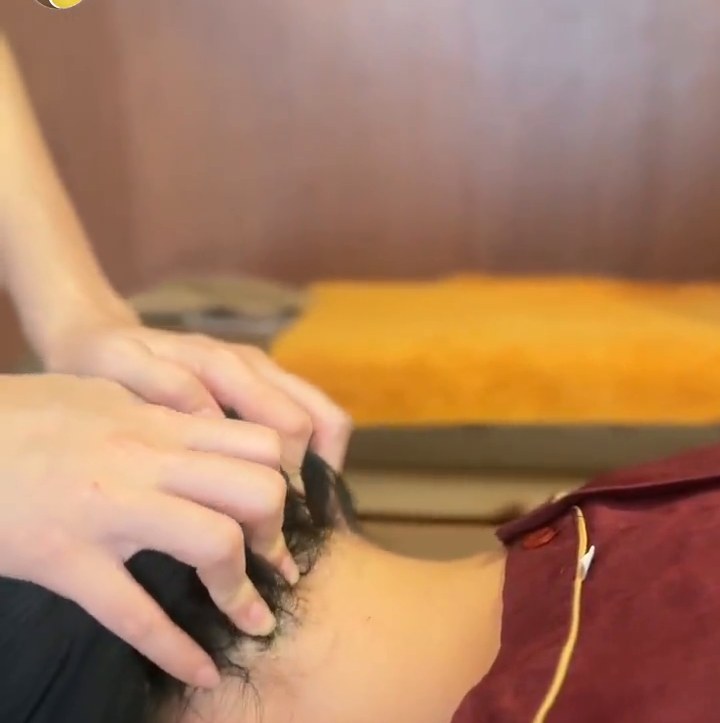
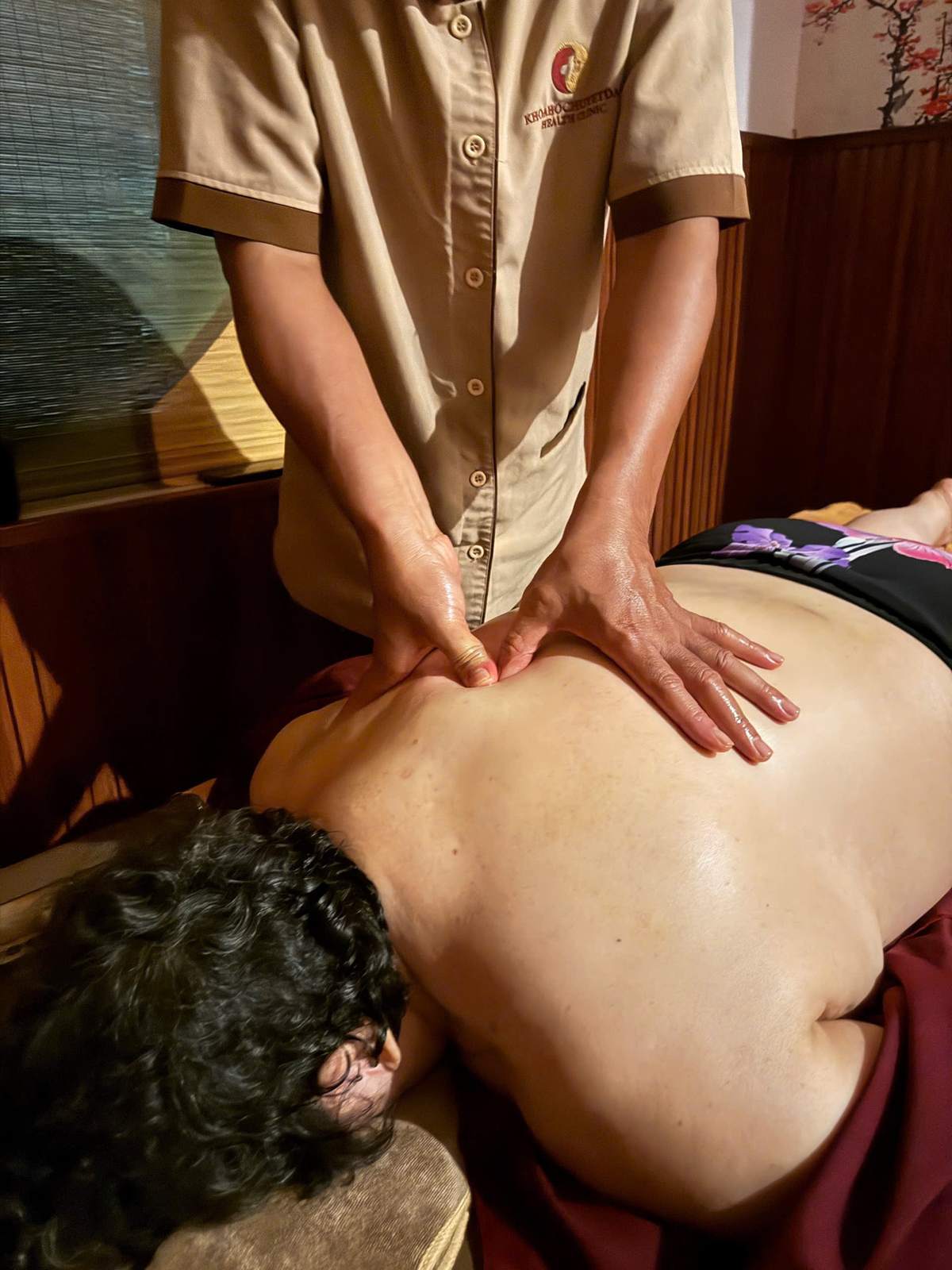
In class at Vinhomes Grand Park, the person lying down lets out a quiet "ouch" just as their partner presses into the lower back. The learner jerks the hand away, then puts it back on exactly the same spot and says "just bear with it a bit longer". Lương Y Tống Văn Huynh stops the pair, places his hand over the learner's, eases the pressure right down, and tells them to start again from the top: stop, ask, and only then decide. That is the lesson of what to do when a client says massage hurts: how you react in the first few seconds decides whether the client still trusts your hands.
What to do when a client says massage hurts: 6 steps in order
- Stop, but do not jerk your hand away. Release the pressure at once and let your hand rest lightly on the skin. Pulling away suddenly startles the client and the muscle tightens even more.
- Ask short, precise questions. "Does it hurt right under my hand, or does it spread somewhere?", "Is it a heavy ache or a sharp, stabbing pain?", "Any numbness?". Short questions let the client answer straight away while lying down.
- Lower pressure step by step. Go back one level on the 5 pressure levels: from straight arm to bent arm, from fingertip to the whole palm so the force spreads wider. Never keep the same pressure and tell the client to push through.
- Change the approach. If the client is bracing, pause the Compression method and switch to the Wave method: an even, controlled rhythm. Or soften the surrounding area first and read the key point again afterwards.
- Tell the types of pain apart. A dull, pleasant ache while the client keeps breathing evenly is a sensation wave on the right point. Sharp, stabbing pain, spreading numbness, or a client who holds their breath or curls up is warning pain: do not continue on that point. Each type is explained in the article on pain, numbness and sharp sensations when pressing a key point.
- Write it down. Location, pressure level when the client said it hurt, type of sensation, and what you changed. Next session, start that area at a lower pressure level. For how to record it, see keeping client cards.
Reading the client: many people hurt and say nothing
First-time clients are often anxious, lie there braced, and do not want to be a bother, so they put up with it. Learners have to read the non-verbal signals: holding the breath, clenched fists, curled toes, raised shoulders, a grimace. See one sign, lower the pressure and ask, without waiting for the client to speak up.
Before the session, Y Tướng Học (face reading for wellness) offers a hint: a tired complexion, dark circles under the eyes, or a hunched sitting posture means starting at a lighter pressure level. Also ask about history: where it hurts, any recent injury, any underlying condition. Then agree on a signal: "If it's too much, just say 'lighter' and I'll ease off right away." When clients know they are allowed to speak, they relax more.
Keeping trust after you have caused a client pain
- Do not deny it, and do not blame the client with "your muscles are just too stiff".
- Do not say "it has to hurt to work"; the right sensation wave is a pleasant ache, not something to endure.
- Do not announce "this area is in bad shape"; learners do not draw conclusions about illness.
- Be honest and brief: "I've eased the pressure, how does it feel now?". At the end of the session, ask again about that same area.
One painful moment handled well often builds more trust than a session where nobody checks in.
How Lương Y Tống Văn Huynh teaches learners to listen to a client's "it hurts"
With more than 13 years in the craft and hundreds of learners trained, Lương Y Tống Văn Huynh teaches one line: "When a client says it hurts, the client is talking to your hands; ease off, hear the whole sentence, and only then decide whether to continue or stop." The curriculum states: if there is an unusual reaction, stop working and tell the teacher. In class, every time your partner practises saying it hurts, the person working must be able to explain how they stopped, what they asked and what they changed.
When to stop completely and advise the client to see a doctor
End the session, do not continue on that area, and advise the client to see a doctor at a medical facility when: numbness spreads into the arms or legs and does not fade after you lift your hands; the arms or legs feel weak; there is sudden, severe sharp pain; there is strong dizziness when turning the neck; the painful area is swollen, hot, red or was just knocked; or the pain comes with fever. Lasting chest tightness, shortness of breath, a drooping mouth, or weakness on one side of the body: stop at once and call 115. If pain lasts, numbness and weakness grow, or there is an underlying condition, the client should see a doctor before the next session. Tong Gia is traditional wellness care, not a medical service.
Which level teaches this skill?
Client communication and the 90-minute session routine are taught in L2 Basic Trade. Pressure grading, creating sensation waves, and the Compression and Wave methods belong to the spinal nerve-reflex balancing part of the Specialist Course (L3). Beginners start with L1 Foundation (1.500.000₫); for L2–L4, staff confirm the fee when you register. More about the teacher: Lương Y Tống Văn Huynh.
How to sign up
Beginners can join the trial class on Sunday morning, 9:00–12:00, with no fee, and the Sunday Y Tướng Học session, at căn T16-21 khu Manhattan, Vinhomes Grand Park, TP. Thủ Đức (unit T16-21, Manhattan block, Thu Duc City). Lương Y Tống Văn Huynh watches your hands at the trial class and then suggests a suitable level. Tong Gia does not promise jobs or income after the course. Book a trial class or call the training hotline 0917 945 259.
Frequently asked questions
What should I do when a client says massage hurts? Release the pressure immediately without jerking your hand away, ask where and how it hurts, then lower the pressure or change the approach. With sharp, stabbing pain or spreading numbness, do not continue on that point.
How can I tell a client is in pain if they say nothing? Watch the non-verbal signals: holding the breath, clenched fists, curled toes, raised shoulders, a grimace. If you see one, lower the pressure and ask.
Should I tell clients massage has to hurt to work? No. The right sensation wave is a pleasant ache while the client keeps breathing evenly; making clients endure pain tightens the muscles and loses their trust.
When should a massage session stop completely? When numbness spreads and does not fade, the arms or legs feel weak, sharp pain comes on suddenly, the area is swollen, hot and red, or pain comes with fever; advise the client to see a doctor. For chest pain, shortness of breath or signs of a stroke, call 115.
Related articles
- What is acupressure? Principles, limits and a structured path to an acupressure course in Vietnam
- Acupressure and acupuncture: what is the difference for learners
- Acupressure and massage: how they differ and how they combine
- Acupoint map of the human body: how to read the meridian map and what order to learn it in
- All articles about learning the trade
Reserve a free Sunday-morning trial class or ask about the learning path: message Zalo 0917 945 259.

Founder of Tong Gia Acupoint Wellness (Huyệt Đạo Tống Gia), with more than 13 years in Eastern wellness practice, Y Tướng Học (face reading for wellness) and spinal nerve-reflex balancing. Lương Y's story
417 customers have reviewed Tong Gia on Google Maps
Reviews are written by customers themselves on Google; tap to read them before you visit.
Huyệt Đạo Tống Gia Quận 12
225 Dương Thị Mười, Phường Tân Chánh Hiệp (District 12, Ho Chi Minh City). 8:00 – 19:00 daily.
See reviews on Google MapsHuyệt Đạo Tống Gia Quận 9
Căn T16-21 khu Manhattan, Vinhomes Grand Park, Phường Long Bình (Thủ Đức City, Ho Chi Minh City). 9:00 – 20:00 daily.
See reviews on Google MapsWant to be observed in person?
A 90-minute session starts with observation, and only then moves on to muscle release and acupressure on the right areas. Two branches: District 12 and Vinhomes Grand Park.