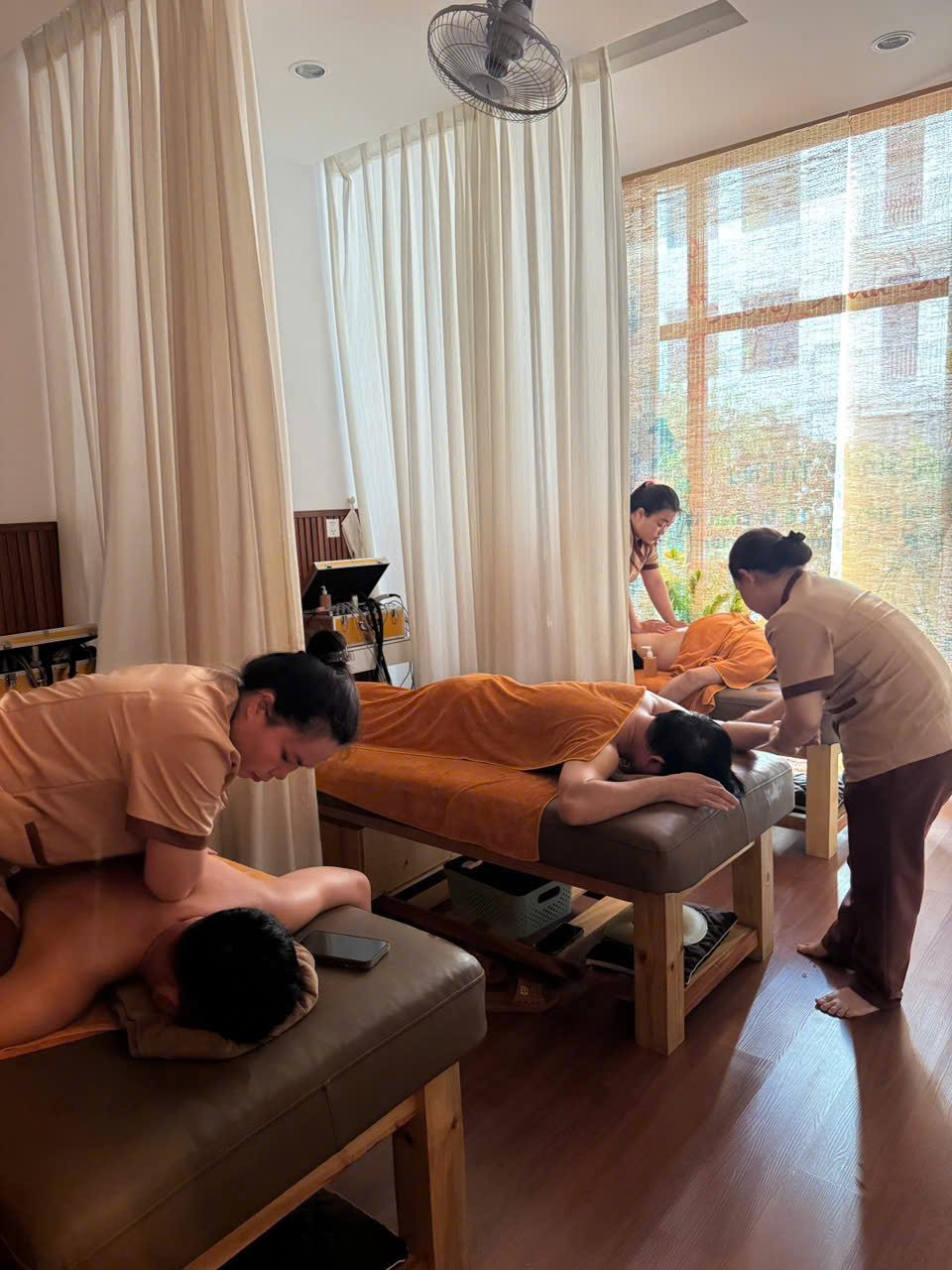
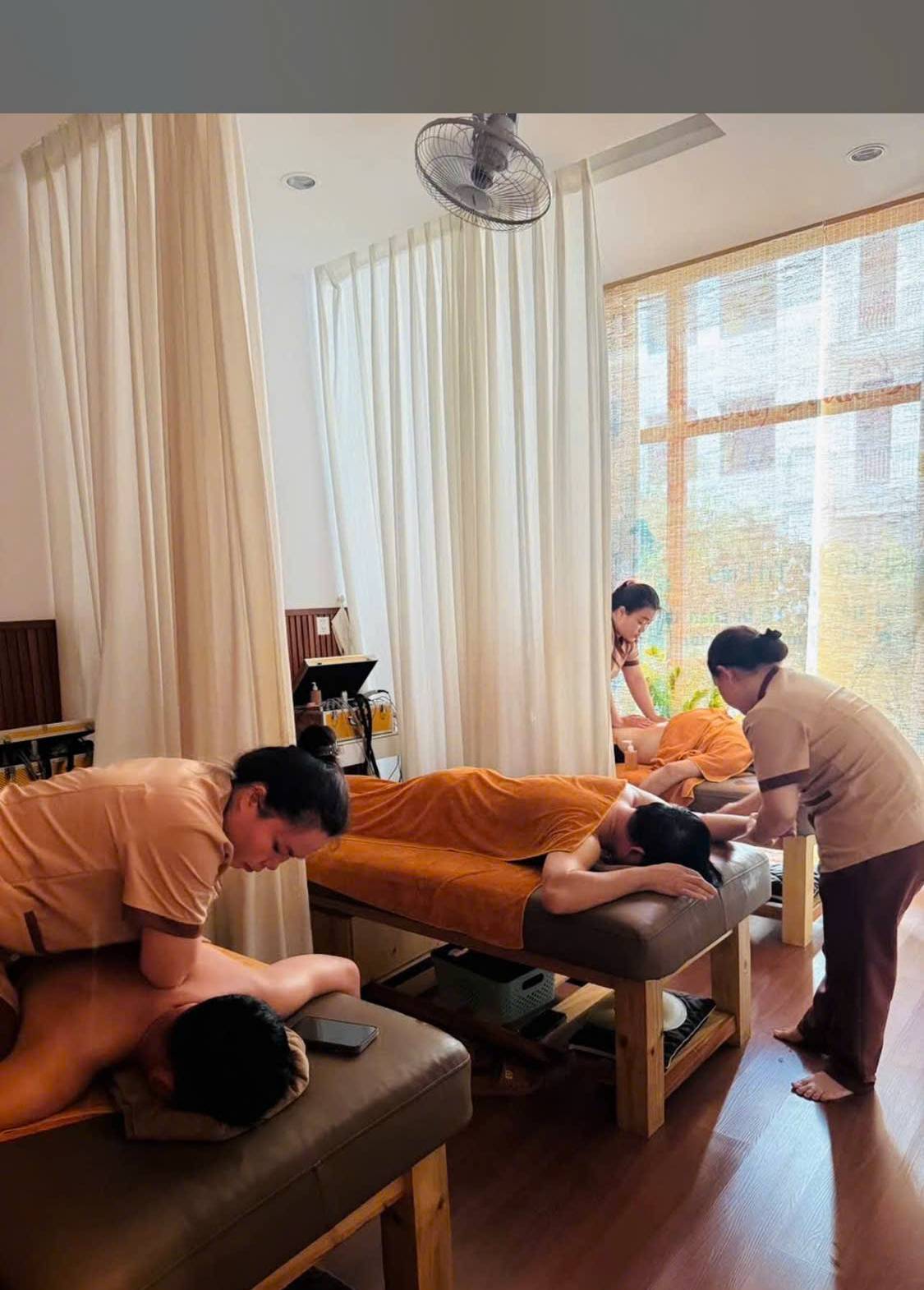
Spa owner course in Ho Chi Minh City: three layers of knowledge so the owner no longer depends on staff
Lương Y (traditional healer) Tống Văn Huynh · Tong Gia Acupoint Wellness (Huyệt Đạo Tống Gia) · 25/10/2026
Quick summary: A good spa owner course teaches three layers: enough hands-on skill to check your own staff, a written routine turned into an SOP, and a way to train newcomers. A course for practitioners only teaches how to do the work correctly; a spa owner needs to judge that work and replicate it. At Tong Gia in Ho Chi Minh City, the hands-on part sits in L2, while SOPs and staff training sit in L4, taught from the routines used every day in two real service branches.
Short answer: A course for spa owners should teach three layers: enough hand skill to check staff, a routine written as an SOP, and how to train newcomers. At Huyệt Đạo Tống Gia, hand skill is learned in L2, and SOPs plus staff training in L4. A spa offers wellness care, not medical services. Zalo/WhatsApp +84 917 945 259.
Questions learners often ask about a spa owner course
What does a spa course include, and is there a wellness massage part at Vinhomes?
Tong Gia's course at Vinhomes Grand Park focuses on wellness massage: muscle and bone anatomy, applying pressure, locating points and observing by the Eastern principle that outer signs reflect inner organs. About 70% of time is practice on real people, starting at Level 1. Lasting pain needs a medical facility first; this is wellness care, not a medical service. Classes: căn T16-21 khu Manhattan, Vinhomes Grand Park, TP. Thủ Đức; free trial on Sunday mornings; Zalo/WhatsApp +84 917 945 259.
Do I need a diploma to learn spa massage? I only finished grade 9; can I study in Thu Duc?
Ask reception on Zalo about entry requirements; Level 1, Introduction to Physiognomy, starts from zero. Massage mainly needs hand practice: about 70% of class time is hands-on, alongside muscle anatomy and the Eastern principle that outer signs reflect the inner organs. People with chronic conditions should visit a medical facility first; Tong Gia teaches wellness care, not medical services. Taught by traditional practitioner Tống Văn Huynh at Vinhomes Grand Park, TP. Thủ Đức; Zalo/WhatsApp +84 917 945 259.
Is there a short spa course near Vinhomes Grand Park focused on massage?
Yes. Tong Gia's class at unit T16-21, Manhattan zone, Vinhomes Grand Park, teaches wellness massage, starting with Level 1 at 1,500,000 VND. Students learn back and shoulder anatomy, how to place pressure, and the Eastern observation that outer signs reflect the inner organs. Anyone with ongoing pain should get checked at a medical facility first; this is wellness care, not a medical service. Free Sunday-morning trial at Vinhomes Grand Park, TP. Thủ Đức; Zalo/WhatsApp +84 917 945 259.
Is there a course for new spa owners in Ho Chi Minh City?
Yes. Huyệt Đạo Tống Gia trains spa owners at Unit T16-21, Vinhomes Grand Park, Thu Duc City, HCMC. Owners need not work on clients daily, but should know neck, shoulder and back muscles and read the face well enough to check staff. L4 adds SOP and staff training; fees are given at registration. Zalo/WhatsApp +84 917 945 259.
How a spa owner course differs from a course for practitioners
A course for practitioners answers the question “how do I do this correctly?”. A spa owner course must also answer two more: “how do I know someone else is doing it correctly?” and “how do I train a newcomer without quality slipping?”. A spa owner stands in a different place from a practitioner, so what they need to learn is different too.
Many spa owners take an ordinary practitioner course and find something missing: afterwards they can do the work, but back at the shop they still don't know how to assess staff, how to write a routine, or which lesson to start with when training someone new. This article helps you work out which group of spa owner you belong to, which parts you need to learn, and what to ask before signing up for a course designed for business owners.
Four groups of spa owners, four different learning needs
Owners running a spa without knowing the work
The shop has customers and staff, but the owner relies entirely on the lead practitioner. This group needs enough foundational hand skill to check the work by touch, then needs to learn how to assess staff against clear criteria.
Owners who know the work but have no routine
The owner has good hands, but every staff member works differently and customers complain about uneven quality. This group needs to learn how to turn their own experience into a written routine, with an order, timings and criteria.
Nail salon and hair-wash shop owners adding wellness services
They already have regular customers and want to add neck-and-shoulder relief or a herbal head spa. This group needs a compact, safe service package that is easy to teach to existing staff. Shop owners living abroad can see the dedicated page for nail salon and spa owners.
People preparing to open a spa
No shop yet, learning in preparation. This group should start with hands-on skill first and move on to routines afterwards. The concrete preparation steps are in the article on opening a wellness massage spa.
The three layers of knowledge a spa owner needs
Layer 1: enough skill to check. A spa owner doesn't need to be the most skilled hand in the shop, but must be able to give a basic session and lie on the bed to feel whether a practitioner is working correctly: is the pressure even, are they finding the tight areas, are they skipping steps.
Layer 2: a written routine. What steps make up a standard session in your shop, how long each step takes, how pressure is applied, when to stop. This routine also needs a safety section: if a customer has long-lasting pain, numbness or weakness that keeps getting worse, pain with fever, or an underlying illness, staff do not handle it but advise the customer to see a medical facility. A wellness spa is health care by hand, not a medical service, and the owner must be the one who keeps that line.
Layer 3: how to teach it again. Break skills into small lessons, know which lesson comes first, how to check hands, how to correct mistakes, and when a new practitioner may work on real customers. Many courses skip this part, yet it decides whether a shop can grow.
Questions to ask before signing up for a spa owner course
- Does the instructor run a real business, or only teach?
- Is the routine being taught used every day with real customers?
- Does the course include practice on real people, or is it only on paper?
- Will you take home routine documents you can use to train your staff?
- Does it teach safety and the limits of the trade?
- What kind of paper do you receive after the course, and what is its legal value? Please ask reception directly before paying the fee.
Be cautious of courses that promise revenue, promise a payback period, or promise your shop will be “busy right away”. No one can say those things in advance. In addition, massage is a conditional business line in Vietnam; a vocational course does not replace the owner's own research into local procedures.
The Tong Gia learning ladder from a spa owner's point of view
Tong Gia was founded by Lương Y Tống Văn Huynh, who has more than 13 years in Eastern wellness practice, Y Tướng Học and spinal nerve-reflex balancing. Tong Gia both teaches the trade and runs two service branches serving customers every day: District 12 at 225 Dương Thị Mười (4.9★, 234 Google Maps reviews) and District 9 at Vinhomes Grand Park (5.0★, 183 reviews). The routines taught to spa owners are the ones running there.
For a spa owner, the 4-level ladder can be read like this:
- L1 Introduction to Y Tướng Học (1.500.000đ): learn to read complexion, Five Elements body types and the 3 zones of the face before laying hands on anyone. Useful for owners who want deeper conversations with customers.
- L2 Core Trade Skills: muscle release, acupressure for the neck and shoulders, back and legs; the standard Tong Gia 90-minute session routine; communicating with customers. This is layer 1, “enough skill to check”.
- L3 Specialist: spinal nerve-reflex balancing and advanced Y Tướng Học, for owners who want an in-depth service.
- L4 Master and Transfer: transfer of routines, SOPs and how to train staff, for business owners. This covers layers 2 and 3 above.
Not every spa owner needs all 4 levels. Lương Y looks at your hands during the trial class and suggests which level to start from. Fees for L2 to L4, the number of sessions and the duration are given by the advisor when you register. Tong Gia does not promise a job or income after the course.
The teaching rests on two pillars: Y Tướng Học, reading the signs to understand the organs before laying hands, “the organs are the cause, the signs are the effect”; and wellness massage with spinal nerve-reflex balancing, where every observation from the face is cross-checked by hand along the spine. When owner and staff speak the same language like this, checking and teaching become much clearer. About 70% of class time is hands-on practice on real people, in small classes, with Lương Y guiding each person.
For selling and customer care after a session, Tong Gia has a separate article on sales routines and CRM for a wellness spa.
How to register
Spa owners should come and see the class before deciding. The free trial class runs 9:00 to 12:00 every Sunday morning, 10 places, at unit T16-21, Manhattan zone, Vinhomes Grand Park, Phường Long Bình, TP. Thủ Đức (Thủ Đức City, Ho Chi Minh City). You can bring your shop's lead practitioner along to see how we teach.
The L1 Introduction to Y Tướng Học class runs on a set schedule. Register via hotline 0917 945 259.
Frequently asked questions
Does a spa owner need to know massage themselves? You should know enough to give a basic session yourself and feel whether staff are working correctly. You don't need to be the top hand in the shop, but if you know nothing it is very hard to manage quality.
Does a spa owner course teach how to write SOPs? A course for business owners should. At Tong Gia, routine transfer, SOPs and staff training are in level L4 Master and Transfer.
Which Tong Gia level should a spa owner take? It depends on your current skill. Lương Y checks your hands at the Sunday-morning trial class and suggests where to start; fees and duration for L2 to L4 are given by the advisor.
Will my shop get more customers after a spa owner course? No one can promise this in advance. Tong Gia does not promise income; the course helps make service quality more consistent, while business results depend on many factors.
Can I bring a staff member to the trial class? Yes. Message Zalo 0917 945 259 to reserve places for both of you at the free Sunday-morning trial class.
Related articles
- 30 basic massage techniques learners should know: learn them in groups, not as a list of names
- 8 principles of spinal wellness massage: the rules of the hands for Tong Gia learners
- How much pressure in acupressure: gauging force by how the receiver feels
- Hands for wellness massage: soft hands, hard hands and 6 things you must train
- All articles about learning the trade
Reserve a free Sunday-morning trial class or ask about the learning path: message Zalo 0917 945 259.

Founder of Tong Gia Acupoint Wellness (Huyệt Đạo Tống Gia), with more than 13 years in Eastern wellness practice, Y Tướng Học (face reading for wellness) and spinal nerve-reflex balancing. Lương Y's story
417 customers have reviewed Tong Gia on Google Maps
Reviews are written by customers themselves on Google; tap to read them before you visit.
Huyệt Đạo Tống Gia Quận 12
225 Dương Thị Mười, Phường Tân Chánh Hiệp (District 12, Ho Chi Minh City). 8:00 – 19:00 daily.
See reviews on Google MapsHuyệt Đạo Tống Gia Quận 9
Căn T16-21 khu Manhattan, Vinhomes Grand Park, Phường Long Bình (Thủ Đức City, Ho Chi Minh City). 9:00 – 20:00 daily.
See reviews on Google MapsWant to be observed in person?
A 90-minute session starts with observation, and only then moves on to muscle release and acupressure on the right areas. Two branches: District 12 and Vinhomes Grand Park.