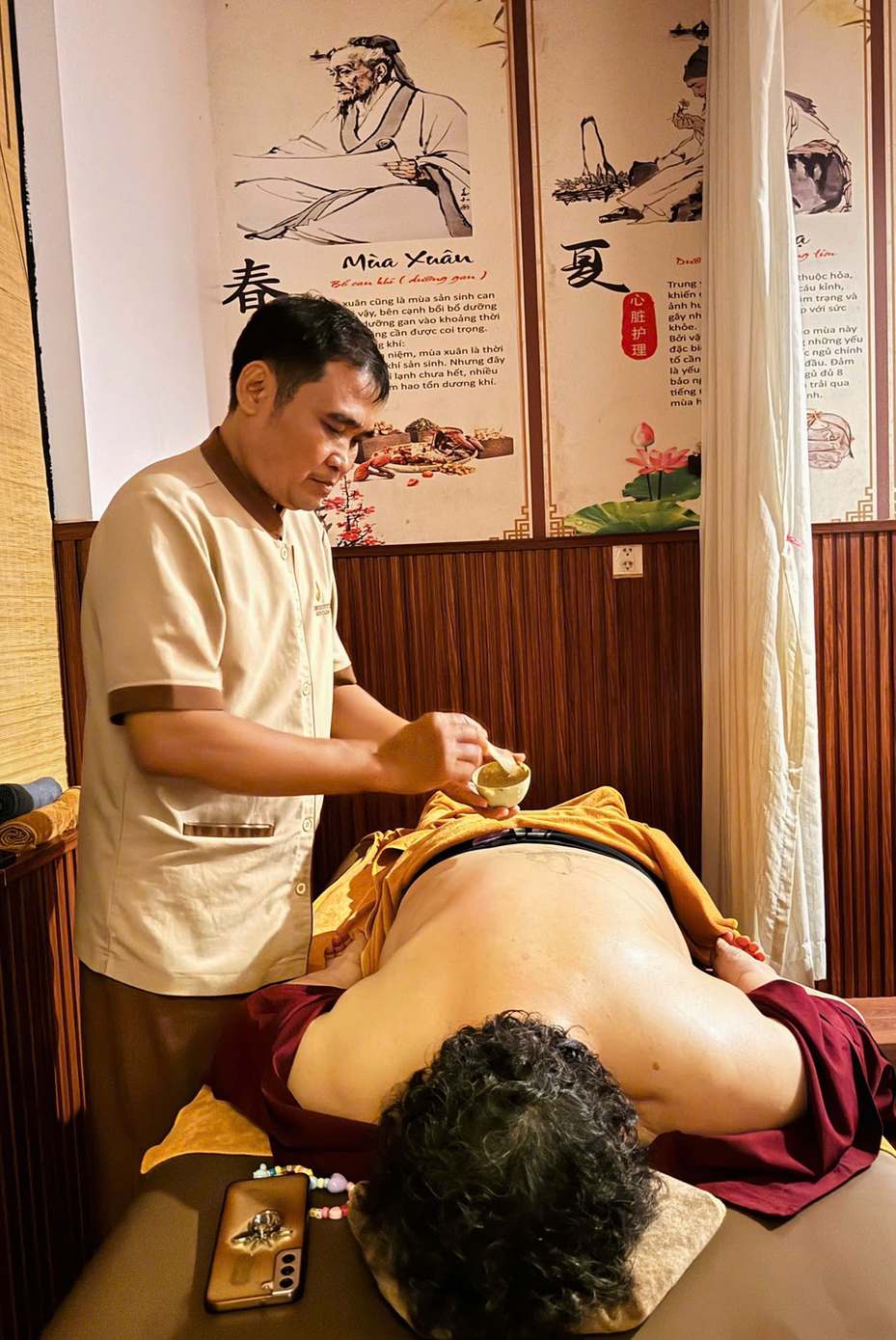
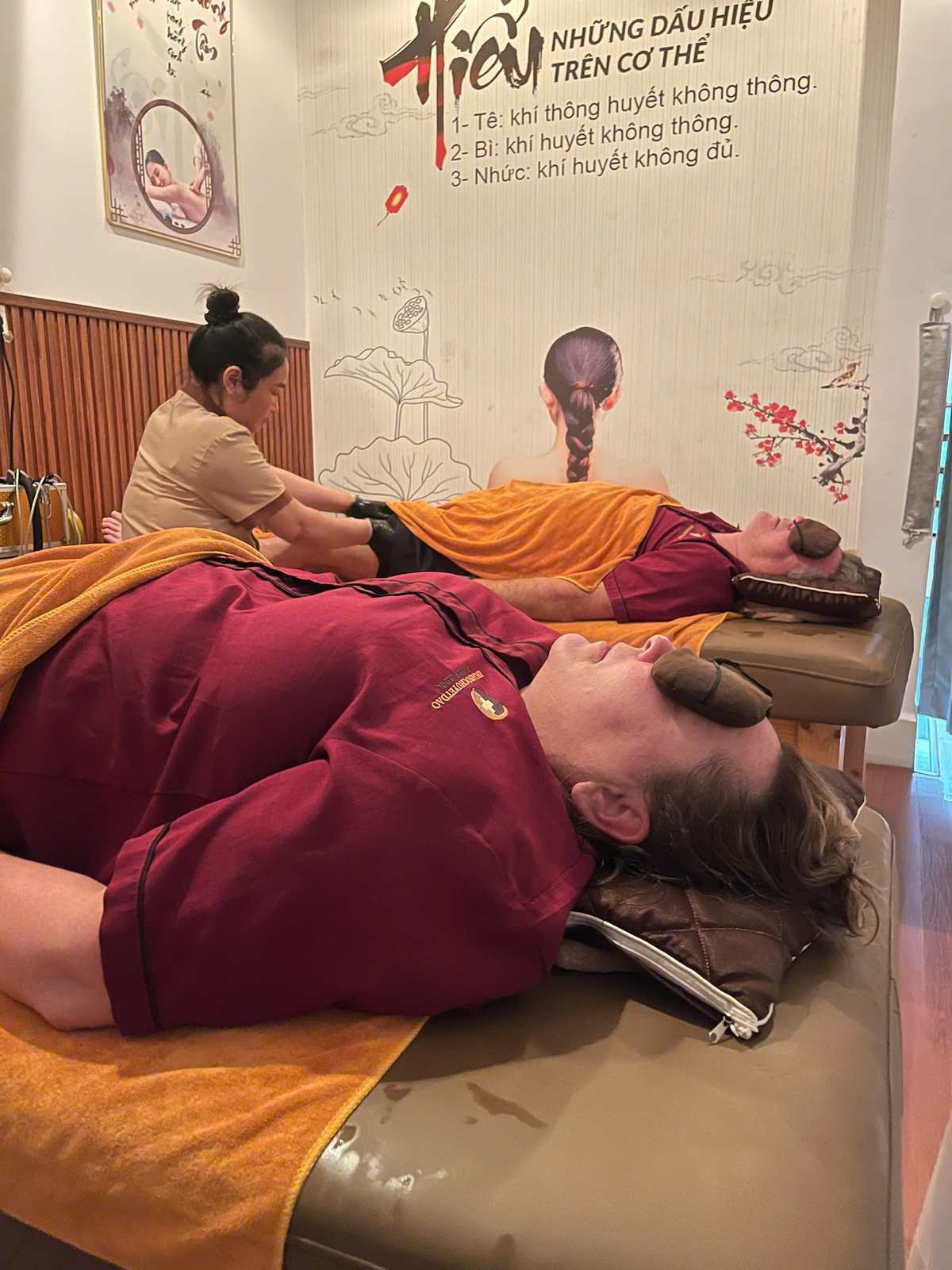
Neck and shoulder massage course in Ho Chi Minh City: the muscles to know, hand technique and the moments to stop
Lương Y (traditional healer) Tống Văn Huynh · Tong Gia Acupoint Wellness (Huyệt Đạo Tống Gia) · 22/10/2026
A neck and shoulder massage course should teach four things: feeling the trapezius, the levator scapulae and the suboccipital muscles; reading the area before you work; hand technique from light to deep; and when to stop and advise the client to see a doctor. At Tong Gia in Ho Chi Minh City, this sits in L2.
Questions learners often ask about the neck and shoulder massage course
Do I need naturally soft hands to learn massage, or can it be trained?
No. Soft hands are trained, not inborn: softness and steady pressure come with supervised practice. You learn to relax the shoulder and wrist joints and to observe clients through the Eastern idea that outer signs reflect inner organs. Tống Gia teaches wellness care, not medical services; lasting pain or numbness needs a medical check first. Classes: căn T16-21 khu Manhattan, Vinhomes Grand Park, TP. Thủ Đức; Zalo/WhatsApp +84 917 945 259.
Which neck and shoulder areas are risky in massage, and when should a client go for a medical check?
In neck and shoulder massage, avoid pressing hard on the front sides of the neck where the carotid arteries run, and never twist the neck. Eastern observation reads posture and complexion. Numbness spreading to the arm, dizziness or severe headache means a medical check first; Tống Gia is wellness care, not medical care. Classes: căn T16-21 khu Manhattan, Vinhomes Grand Park, TP. Thủ Đức; Zalo/WhatsApp +84 917 945 259.
Why study the neck and shoulders in depth?
The neck and shoulders are where clients complain of stiffness most: a whole day at the computer, looking down at a phone, the wrong pillow, long motorbike rides. For practitioners, it is also the most sensitive area, because the neck is small and many blood vessels and nerves pass through it; the wrong pressure can easily leave the client feeling worse than when they arrived.
That is why a serious neck and shoulder massage course does not just teach “squeeze where it aches”. It teaches how this area is built, which muscles tend to tighten, and how far to go before you stop.
What should a neck and shoulder massage course teach?
1. Muscle anatomy at a practitioner's level
You do not need to study like a doctor in training, but you must be able to name and feel the main muscle groups:
- Trapezius: a large sheet of muscle running from the nape down to the shoulders and mid-back, often tight in people who sit for long hours.
- Levator scapulae: runs from both sides of the neck down to the upper corner of the shoulder blade; usually the spot clients point to when they say “my shoulder is stiff”.
- Suboccipital muscles: small muscles right at the hairline behind the nape, often tight in people who look down a lot.
- Sternocleidomastoid: on both sides at the front of the neck; this area is only worked lightly, never pressed deeply.
- Rhomboids and the muscles around the shoulder blade: connecting the shoulder area to the upper back.
2. Read the area before you work
Look at whether the two shoulders are level, whether the head pushes forward, whether the neck turns evenly to both sides. Ask the client how long the stiffness has lasted, at what time of day it comes, whether it spreads into the arm. These few questions decide whether the session is light or deep, long or short.
3. Hand technique in order
Warm up with rubbing and gliding strokes; release the muscles from shallow to deep; knead and press the tight points; finish with light strokes so the muscles let go. The practitioner's posture matters just as much: let your body weight sink down, do not tense your fingers. Tense hands tire quickly and make the pressure harsh. To learn more about muscle release, read what is muscle release technique.
4. Acupoints of the nape and shoulders
In the Eastern approach, the nape and shoulders have several familiar acupoints. Learners practise locating them, and the pressure and rhythm of pressing. The aim is to help the muscles relax and qi and blood flow, not to promise any specific result.
When NOT to work on the neck and shoulders
This is the part many learners skim over, yet it protects both the client and the practitioner. A practitioner stops and advises the client to see a doctor at a medical facility when there is:
- Lasting pain, numbness or weakness that keeps increasing, numbness spreading into the arm or hand.
- A weakening hand, poor grip, often dropping things.
- Dizziness or nausea when turning the neck, or an unusually severe headache.
- A recent accident, fall or knock to the neck.
- An underlying condition, especially heart or blood pressure problems, without having asked a doctor first.
Two more things you never do: never crack or twist the neck hard; never press deeply on the front of the neck. Neck and shoulder massage is hands-on care and relaxation; it does not replace seeing a doctor.
Why the neck and shoulders must be linked to the spine
Many learners focus only on the shoulders and nape. But the neck is the top section of the spine; uneven shoulders sometimes start in the mid-back, from a habit of standing on one leg or sitting tilted to one side. Work on the shoulders over and over without looking down the back, and the client easily comes back with the same stiff spot.
That is why Tong Gia teaches along the axis of the spine: the hands travel along the spine to see which section is tight or misaligned, and only then decide where to work. Spinal nerve-reflex balancing is studied in depth at level L3. If you want to learn the whole chain down to the lower back, read head, neck, shoulder and lower back massage course.
Before touching comes looking
In Y Tướng Học (face reading for wellness), complexion and body type according to the Five Elements hint at a person's constitution: a slender person with thin skin usually needs different pressure from a sturdy person with thick muscles. Tong Gia sums it up: “the organs are the cause, the signs are the effect”. But what you read from the face must always be checked again by hand along the spine; never guess and then just start working.
Where does the neck and shoulder massage course sit in the Tong Gia path?
At Tong Gia, neck and shoulder work belongs to level L2 – Basic Trade: muscle release, acupressure for the neck, shoulders, back and legs; the standard 90-minute Tong Gia session flow; communicating with clients. L2 fees, number of sessions and duration are given by the advisor when you register.
If you have never studied before, start with L1 – Introduction to Y Tướng Học (1.500.000đ) to build a base in reading signs, daily self-care and a few safe self-care acupoints. If you already have hands-on skills, Lương Y Tống Văn Huynh will assess you at the trial class and suggest the right level. About 70% of class time is hands-on practice on real people, in small classes, with Lương Y guiding each learner. The article neck and shoulder massage course in Ho Chi Minh City adds more perspective for beginners.
About paperwork: ask reception directly about the type of document issued after the course and its legal value before paying the fee. Tong Gia does not promise a job or income after the course.
What does a neck and shoulder practice session in class look like?
In Tong Gia classes, neck and shoulder work is practised in pairs; each person both gives and receives, to understand how the client feels:
- Observe the sitting posture, how uneven the shoulders are, how far the head pushes forward.
- Ask the client: which side is stiff, for how long, is there numbness spreading into the arm.
- Release the shoulder and shoulder-blade area first; do not work on the neck yet.
- Move gradually up to the nape with lighter pressure, staying completely away from the front of the neck.
- Check the lower neck vertebrae and upper back by hand, and note which side is tighter.
Lương Y Tống Văn Huynh goes from pair to pair correcting pressure and hand direction. If hand numbness keeps increasing, the hand weakens or there is dizziness when turning the neck, stop and advise the client to see a doctor.
Read more on this topic: Acupressure course for the neck and shoulders: where to start and what to be careful with in the neck · Hand and wrist massage course for office workers: what you learn and where to learn it in Ho Chi Minh City · Massage course in Ho Chi Minh City: how therapeutic-style massage differs from relaxation massage and what a good course must teach
How to register
Free trial class 9:00–12:00 every Sunday morning, 10 places, at căn T16-21 khu Manhattan, Vinhomes Grand Park, Phường Long Bình, TP. Thủ Đức (Thu Duc City, Ho Chi Minh City). See the schedule in the Sunday trial class section.
The L1 Introduction to Y Tướng Học class opens on schedule; register via the hotline 0917 945 259.
Frequently asked questions
Is neck and shoulder massage dangerous? The neck is small and sensitive, so it must be worked with the right pressure: no cracking, no hard twisting, no deep pressing on the front of the neck. Learners need to be taught clearly the signs for stopping and advising the client to see a doctor.
Should I have neck and shoulder massage if my hand is numb? If numbness or weakness keeps increasing, numbness spreads into the arm or the hand gets weaker, see a doctor at a medical facility first. A practitioner does not carry on alone when these signs appear.
Which muscles do I need to know to learn neck and shoulder massage? At least the trapezius, levator scapulae, suboccipital muscles, sternocleidomastoid and the muscles around the shoulder blade, along with how to feel and locate them on a real person.
At which level does Tong Gia teach neck and shoulder massage? Neck and shoulder work belongs to L2 Basic Trade. L2 fees and duration are given by the advisor when you register via Zalo 0917 945 259.
Where can I take a neck and shoulder massage course in Thu Duc? The Tong Gia Acupoint Wellness class is at căn T16-21 Vinhomes Grand Park, TP. Thủ Đức, TP.HCM (Ho Chi Minh City); neck and shoulder work belongs to level L2 Basic Trade. Come to a free Sunday-morning trial class first, Zalo 0917 945 259.
Related articles
- Level L2 Basic Trade: from reading people to delivering a full care session
- Muscle cramps and muscle release: what to do during a cramp and what to do afterwards
- Agonist and antagonist muscles: why the practitioner also works the chest when the neck and shoulders ache
- Tension headache from tight neck muscles: recognising it, self-care, safe muscle release and signs you need to see a doctor right away
- All articles about learning the trade
Reserve a free Sunday-morning trial class or ask about the learning path: message Zalo 0917 945 259.

Founder of Tong Gia Acupoint Wellness (Huyệt Đạo Tống Gia), with more than 13 years in Eastern wellness practice, Y Tướng Học (face reading for wellness) and spinal nerve-reflex balancing. Lương Y's story
417 customers have reviewed Tong Gia on Google Maps
Reviews are written by customers themselves on Google; tap to read them before you visit.
Huyệt Đạo Tống Gia Quận 12
225 Dương Thị Mười, Phường Tân Chánh Hiệp (District 12, Ho Chi Minh City). 8:00 – 19:00 daily.
See reviews on Google MapsHuyệt Đạo Tống Gia Quận 9
Căn T16-21 khu Manhattan, Vinhomes Grand Park, Phường Long Bình (Thủ Đức City, Ho Chi Minh City). 9:00 – 20:00 daily.
See reviews on Google MapsWant to be observed in person?
A 90-minute session starts with observation, and only then moves on to muscle release and acupressure on the right areas. Two branches: District 12 and Vinhomes Grand Park.