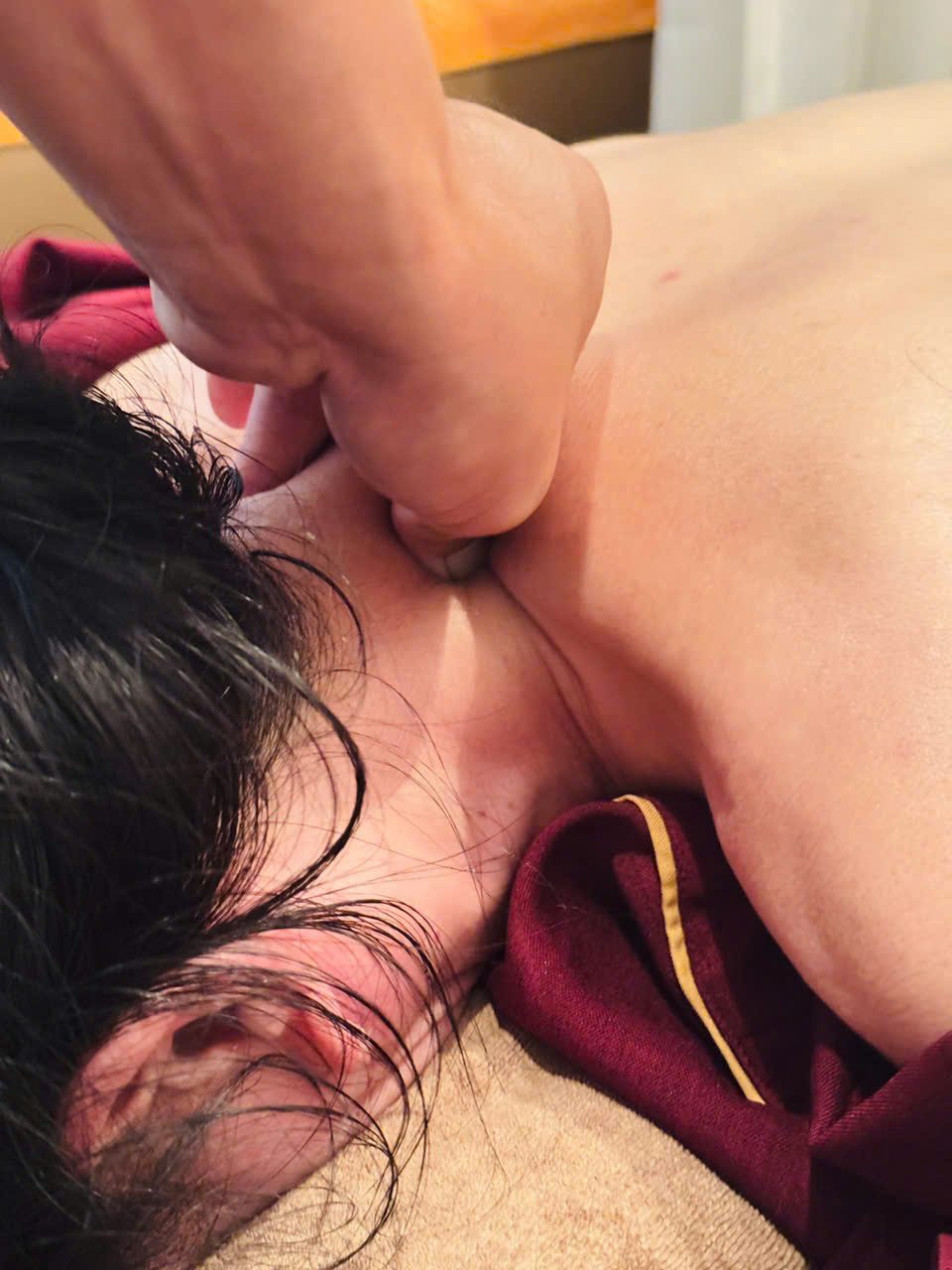
Acupressure course for the neck and shoulders: where to start and what to be careful with in the neck
Lương Y (traditional healer) Tống Văn Huynh · Tong Gia Acupoint Wellness (Huyệt Đạo Tống Gia) · 22/10/2026
Quick summary: An acupressure course for the neck and shoulders teaches you to find a familiar group of acupoints around the nape, shoulders and shoulder blades, use just enough pressure, and know exactly which spots on the neck must never be pressed hard. Learners should start with basic muscle anatomy and neck safety before moving on to technique, because the neck is the top section of the spine, not a separate area. At Tong Gia Acupoint Wellness in Ho Chi Minh City, this part sits in level L2 and connects up to spinal nerve-reflex balancing in level L3.
Questions learners often ask about acupressure for the neck and shoulders
I live in District 12 and my neck is always stiff. Should I book acupressure nearby, or learn it myself to help my family?
Both are possible. For care right away, visit a Tong Gia branch at 225 Dương Thị Mười (District 12) or Vinhomes Grand Park (District 9). To do it for your family, neck-and-shoulder acupressure is part of Level L2, taught at unit T16-21, Manhattan zone. If pain lasts or arm numbness keeps growing, see a doctor at a medical facility first.
Desk work in Saigon knots my shoulders. Where exactly is Kiên Tỉnh (GB21, 肩井), how long should I press it, and who should skip it?
Kiên Tỉnh (GB21, 肩井) sits on top of the shoulder, midway between Đại Chùy (GV14, 大椎, below the C7 vertebra) and the tip of the shoulder, where the trapezius rises highest. Knead and press with your thumb, medium pressure, about 1–2 minutes per side. Skip it during pregnancy or on damaged shoulder skin; if arm numbness lasts, see a doctor.
My nape feels tired after long screen days. Where is Phong Trì (GB20, 风池), and how do I press it correctly?
Phong Trì (GB20, 风池) lies at the back of the neck, below the occipital bone, in the hollow between the sternocleidomastoid and trapezius muscles, one point on each side. Place both thumbs in the hollows and press upward, light to medium pressure, without jerking the neck. If you often feel dizzy or have blood-pressure issues, ask a doctor before pressing yourself.
Why the neck and shoulders are where acupressure learners usually start
Ask ten customers who walk into a massage shop, and most will point to the nape or the shoulder blades. Long hours at a computer, looking down at a phone, sleeping on the wrong pillow, carrying loads on one side… all of it piles up in this area. So for newcomers to the trade, the neck and shoulders are the area they meet most often, and also the easiest to get wrong.
What makes the neck hard is that it is small, many important structures lie close together, and the customer's feeling of stiffness is often not exactly where they point. A customer who complains of a stiff nape may actually be tight in the trapezius, around the shoulder blade, or pulled from a misalignment in the upper back. Pressing the right point without understanding why that area is tight only brings comfort for a while.
That is why a serious neck and shoulder acupressure course usually has three layers: understanding the muscles and bones of the neck at a practitioner's level, learning the commonly used point group and how to locate each point, and learning when to stop.
Layer one: understand the neck before laying your hands on it
You do not need to study it the way a medical student does, but you do need to be able to recognise a few basic landmarks by touch:
- The 7th cervical vertebra: the most prominent bone when you bow your head, the landmark for locating many points around the nape and shoulders.
- The trapezius: the band of muscle running from the nape out to the tip of the shoulder and down to the middle of the back. Its upper part is where customers most often complain of stiffness.
- The shoulder-blade area: the scapula and the muscles attached around it, where many people feel fatigue without realising it.
- The hairline at the back of the neck: the two hollows below the occipital bone, home to familiar points of the head and neck.
The first lesson is usually to run the fingertips from the hairline down to the 7th cervical vertebra, then out to both shoulder tips, with no pressure yet, just feeling where it is tight and where the two sides differ.
Layer two: the commonly used points of the neck and shoulders
In Eastern wellness practice, the neck and shoulders have a number of points mentioned often in introductory textbooks. Tong Gia lists them only so that you know their names, and does not promise that any point will remove fatigue or pain:
- Fengchi (Phong Trì, GB20, 风池): the two hollows below the occipital bone, level with the hairline at the back of the neck.
- Tianzhu (Thiên Trụ, BL10, 天柱): near Fengchi, right beside the two columns of muscle along the nape.
- Dazhui (Đại Chùy, GV14, 大椎): below the spinous process of the 7th cervical vertebra.
- Jianjing (Kiên Tỉnh, GB21, 肩井): on top of the shoulder, about midway between the 7th cervical vertebra and the shoulder tip.
- Tianzong (Thiên Tông, SI11, 天宗): in the middle of the shoulder-blade area.
- Hegu (Hợp Cốc, LI4, 合谷) and Houxi (Hậu Khê, SI3, 后溪): on the hand, often combined when caring for the neck and shoulders along the meridians.
Knowing the names is only the first step. The important part is locating the points on each individual: on a thin person, a fuller person, someone with sloping shoulders or someone with square shoulders, the positions differ. That is why in class, learners find the points on many classmates rather than just looking at pictures.
Pressure and rhythm when pressing the shoulders and nape
The general rule: build pressure gradually, hold for one beat, then release slowly. No jerky pressing. Never use the elbow to bear straight down on the neck. On top of the shoulder the muscle is thicker, so you can go a little deeper; moving up to the nape, reduce the pressure and work mainly with the tip of the thumb or middle finger. Always ask the customer how it feels, because the same pressure may feel just right to one person and too much to another.
Layer three: neck safety, the part you must not skip
This is the part Tong Gia teaches most thoroughly, because mistakes in the neck have heavier consequences than in other areas.
- Do not press hard on the front and sides of the neck. This area has large blood vessels and many soft structures. A wellness practitioner works only lightly here or avoids it altogether.
- Do not crack or twist the neck. Sudden neck rotation is outside the scope of a hands-on wellness practitioner.
- Do not press straight onto the spinous processes. Work on the muscle on both sides; do not load pressure onto the bone.
- Be careful with Jianjing (GB21) in pregnant women. According to traditional wellness thinking, this point should not be pressed hard in someone who is pregnant.
- Know when not to work. If a customer has long-lasting pain, increasing numbness or weakness in the arms, dizziness, nausea, a past neck injury or an underlying illness, the practitioner stops and advises them to see a doctor at a medical facility. Tong Gia is a hands-on wellness care service, not a medical service.
A skilled trainee is not the one who can press the hardest, but the one who knows when to stop.
Neck and shoulder acupressure must connect back to the spine
The neck is the top section of the spine. Many cases of a stiff nape are actually related to the upper back, to how that person stands and sits. If you only press a few points on the nape without looking at the whole axis of the back, you will miss the root.
This is why the Tong Gia method rests on two pillars. The first pillar is Y Tướng Học (face reading for wellness): before laying on hands, look at the complexion, body shape and shoulder posture to gauge which area is carrying the load. The second pillar is spinal nerve-reflex balancing: running the hands along the spine to cross-check what the eyes have seen. The class rule is that every reading from the face must be cross-checked by hand on the spine.
Lương Y Tống Văn Huynh often says: “The body is the house, the acupoints are the doors, qi and blood are the wind.” Acupressure opens the doors, but to know which door to open, you have to understand the whole house.
Where the neck and shoulders sit in the Tong Gia trade ladder
- L1 Introduction to Y Tướng Học (1.500.000đ): reading complexion and Five-Element body types, plus a few safe self-care points.
- L2 Basic Trade: muscle release, acupressure for the neck and shoulders, back and legs; the standard Tong Gia 90-minute session routine. This is the main level for this topic.
- L3 Specialist: spinal nerve-reflex balancing, advanced Y Tướng Học.
- L4 Master and Transfer: SOPs, marketing, sales and team building for business owners.
Fees for L2 to L4, the number of sessions and the duration are given by a consultant when you register. About 70% of class time is hands-on practice on real people, in small classes so that Lương Y can coach each person. For the full learning path, read the page therapeutic-style massage course in Ho Chi Minh City.
Questions to ask when choosing where to learn
- Does the class teach neck safety as a separate part?
- Does the teacher correct each person's hands, and is the class large or small?
- Is the neck and shoulder work connected to the back and spine?
- Does the school run a working centre that serves real customers?
Tong Gia has two care-service branches serving customers every day: District 12 at 225 Dương Thị Mười, Phường Tân Chánh Hiệp, and District 9 at Vinhomes Grand Park. The routine taught in class is the routine actually used there. Tong Gia does not promise a job or income after the course.
Further reading on this topic: acupressure massage at home: meridians, pressure and safety · Kunlun (BL60) location and how to locate acupoints · Neck and shoulder massage course in Ho Chi Minh City: the core skill of the trade and what you must know
How to register
The simplest way is to come to the free Sunday-morning trial class, 9:00 to 12:00, 10 places each week, at unit T16-21, Manhattan zone, Vinhomes Grand Park, Phường Long Bình, TP. Thủ Đức (Thủ Đức City, Ho Chi Minh City). Lương Y looks at your hand skills at the trial class and suggests the right level; newcomers usually start at L1 and then move up to L2.
The L1 Introduction to Y Tướng Học class runs on a set schedule. Register via hotline 0917 945 259.
Frequently asked questions
Can I learn neck and shoulder acupressure by myself at home? You can look up point names and locations in books, but pressure, rhythm and neck safety need someone correcting your hands in person. The neck has many important structures, so getting it wrong on your own can do more harm than in other areas.
Is neck and shoulder acupressure dangerous? Pressing hard on the front or sides of the neck, cracking or twisting the neck, or loading pressure onto the bone can cause harm. Trainees must know the areas to avoid and know to stop when a customer has long-lasting pain, increasing numbness or weakness, or an underlying illness; in that case they should advise the customer to see a doctor at a medical facility.
Which points are commonly used for the neck and shoulders? Points often mentioned in introductory textbooks include Fengchi (GB20), Tianzhu (BL10), Dazhui (GV14), Jianjing (GB21) and Tianzong (SI11), combined with Hegu (LI4) and Houxi (SI3) on the hand. Positions vary from person to person, so you need to learn to locate them on real people.
Which level at Tong Gia covers neck and shoulder acupressure? Acupressure for the neck and shoulders is part of level L2 Basic Trade, after L1 Introduction to Y Tướng Học. The connection to the spine is studied in depth at L3 with the spinal nerve-reflex balancing method.
How much does the neck and shoulder acupressure course cost? L1 costs 1.500.000đ. The L2 fee, number of sessions and duration are given by a consultant when you register via Zalo 0917 945 259.
Where can I learn neck and shoulder acupressure in Ho Chi Minh City? At Tong Gia, neck and shoulder acupressure is part of L2 Basic Practice, taught at Unit T16-21, Vinhomes Grand Park, Thu Duc City. Join the free trial on Sunday morning, 9:00–12:00, first; message Zalo/WhatsApp +84 917 945 259 to book.
Related articles
- The 3 “no’s” of the Tong Gia spinal balancing method: no needles, no medicine, no rough force
- How the 33 vertebrae are grouped into regions: the spine map every therapeutic-style massage student must know
- 4 objective factors when reading the spine by hand: let the hands record, not guess
- 5 vertebral patterns (raised, sunken, shifted): reading the spine by hand in the Specialist course
- All articles on learning the trade
Reserve a free Sunday-morning trial class or ask about the learning path: message Zalo 0917 945 259.

Founder of Tong Gia Acupoint Wellness (Huyệt Đạo Tống Gia), with more than 13 years in Eastern wellness practice, Y Tướng Học (face reading for wellness) and spinal nerve-reflex balancing. Lương Y's story
417 customers have reviewed Tong Gia on Google Maps
Reviews are written by customers themselves on Google; tap to read them before you visit.
Huyệt Đạo Tống Gia Quận 12
225 Dương Thị Mười, Phường Tân Chánh Hiệp (District 12, Ho Chi Minh City). 8:00 – 19:00 daily.
See reviews on Google MapsHuyệt Đạo Tống Gia Quận 9
Căn T16-21 khu Manhattan, Vinhomes Grand Park, Phường Long Bình (Thủ Đức City, Ho Chi Minh City). 9:00 – 20:00 daily.
See reviews on Google MapsWant to be observed in person?
A 90-minute session starts with observation, and only then moves on to muscle release and acupressure on the right areas. Two branches: District 12 and Vinhomes Grand Park.