Wellness spa training in Vietnam: the skills you need to work in or open a traditional Eastern wellness spa
Lương Y (traditional healer) Tống Văn Huynh · Tong Gia Acupoint Wellness (Huyệt Đạo Tống Gia) · 22/10/2026
Quick summary: Wellness spa training in Vietnam, in the traditional Eastern style, means learning to care for the body with your hands: observing a person's condition, muscle release, acupressure, following a standard session routine and communicating well with guests. It differs from a beauty spa because the focus is the body and deep relaxation, not skin or cosmetics. If you want to work as a spa practitioner, build from basic hand skills up to a full routine; if you want to open a spa, you also need operations, team building and business paperwork.
Questions learners often ask about wellness spa training in Vietnam
I want to learn spa work in HCMC. Should I choose wellness massage in Thu Duc?
Worth considering: wellness massage is a core skill in many spas and stays useful long term, and Tong Gia's class in Thu Duc teaches this path. Students learn muscle anatomy, pressure suited to body type, and the Eastern idea that outer signs reflect the inner organs. Lasting pain needs a medical facility first; this is wellness care, not a medical service. Taught by traditional practitioner Tống Văn Huynh at Vinhomes Grand Park, TP. Thủ Đức; Zalo/WhatsApp +84 917 945 259.
I'm from Vinh. How long does spa training far from home take, and what should I prepare?
Arrange accommodation near Vinhomes Grand Park and ask on Zalo about the length of each level to budget your stay. About 70% of class time is hands-on with real people, covering muscle anatomy and the Eastern view that outer signs reflect the inner organs. Anyone with ongoing pain should get checked at a medical facility first; this is wellness care, not a medical service. Free Sunday-morning trial at Vinhomes Grand Park, TP. Thủ Đức; Zalo/WhatsApp +84 917 945 259.
What is the spa trade, and does wellness massage count as spa work?
The spa trade covers beauty and body care; wellness massage is a health-focused branch done by hand. This branch needs knowledge of muscles and bones and the Eastern principle that outer signs reflect the inner organs, so the work suits each person's condition. Lasting pain needs a medical facility first; this is wellness care, not a medical service. Classes: căn T16-21 khu Manhattan, Vinhomes Grand Park, TP. Thủ Đức; free trial on Sunday mornings; Zalo/WhatsApp +84 917 945 259.
Without hands-on skills, should I open a wellness spa, and what should I learn first?
Learn first, then open, so you can check quality and train staff yourself. A wellness spa owner needs muscle anatomy, a routine of observing, asking and advising before each session, and the Eastern idea that outer signs reflect the inner organs. People with chronic conditions should visit a medical facility first; Tong Gia teaches wellness care, not medical services. Taught by traditional practitioner Tống Văn Huynh at Vinhomes Grand Park, TP. Thủ Đức; Zalo/WhatsApp +84 917 945 259.
I'm planning a wellness spa in HCMC. Should I start by learning the trade or by hiring staff?
Start by learning: an owner who understands technique does not depend on staff and can check quality. At minimum, know neck, shoulder and back anatomy and the Eastern reading of outer signs of the inner organs, starting with Level 1 at 1,500,000 VND. Anyone with ongoing pain should get checked at a medical facility first; this is wellness care, not a medical service. Free Sunday-morning trial at Vinhomes Grand Park, TP. Thủ Đức; Zalo/WhatsApp +84 917 945 259.
With little capital, should I open a wellness spa or work as a technician first?
With little capital, learn the trade and work as a technician first, saving money and understanding clients, then open small. Solid skill means muscle anatomy, correct pressure and the Eastern outer-inner reading; I have no specific capital figure to give. People with chronic conditions should visit a medical facility first; Tong Gia teaches wellness care, not medical services. Classes: căn T16-21 khu Manhattan, Vinhomes Grand Park, TP. Thủ Đức; free trial on Sunday mornings; Zalo/WhatsApp +84 917 945 259.
What skills should staff learn to run a traditional Eastern wellness spa in Ho Chi Minh City?
An Eastern wellness spa relies on hands-on skills such as massage, acupressure, muscle release, wellness hair washing, cupping and coin scraping. The foundation is muscle and bone anatomy plus the principle that outer signs reflect the inner organs, so staff observe before working. People with chronic conditions should visit a medical facility first; Tong Gia teaches wellness care, not medical services. Taught by traditional practitioner Tống Văn Huynh at Vinhomes Grand Park, TP. Thủ Đức; Zalo/WhatsApp +84 917 945 259.
How a traditional Eastern wellness spa differs from a beauty spa
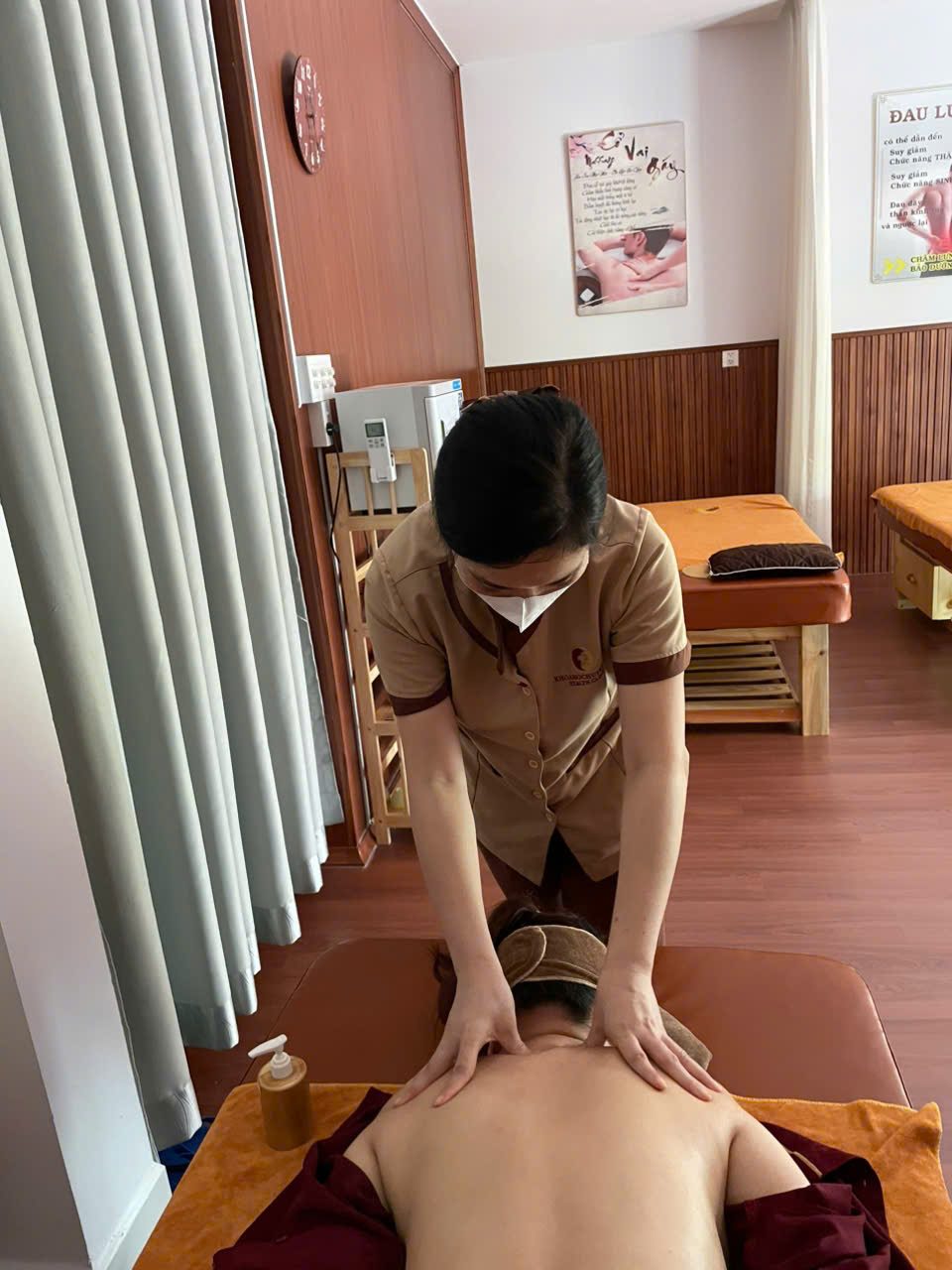
When many people hear the word spa, they immediately think of skin care, hair removal or facials. A traditional Eastern wellness spa goes in a different direction: guests come because of stiff neck and shoulders, back pain from long hours of sitting, poor sleep or stress, and they want deep relaxation through skilled hands.
- Focus: a beauty spa cares for the surface; a wellness spa cares for the body inside, following the Eastern view.
- Main tools: a beauty spa relies heavily on cosmetics and devices; a wellness spa relies mainly on the practitioner's hands.
- Core skills: a wellness spa requires understanding muscles, acupoints and body types, and knowing how to use the right pressure.
- Typical services: muscle release, acupressure, wellness massage, Vietnamese herbal head spa.
Because the tool is the hands, the quality of a wellness spa depends almost entirely on the skills and routines of its team. This is also why anyone taking wellness spa training in the traditional Eastern style needs a longer path than one short course.
The skills you need to do this work
1. Hand skills
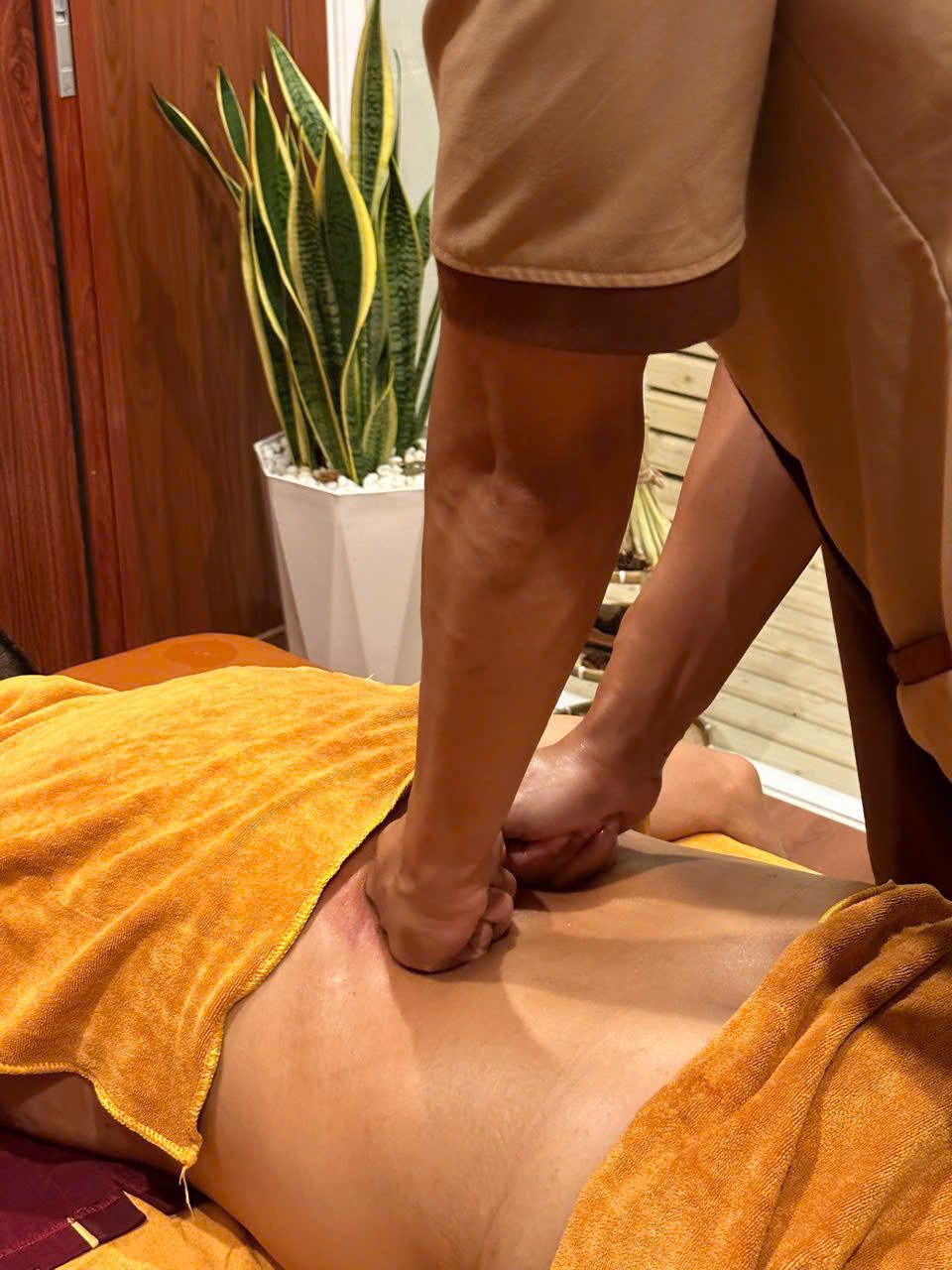
Muscle release and acupressure for the areas guests complain about most, such as the neck and shoulders, back and legs. Using your body weight instead of wrist strength, and keeping even pressure through a long session without hurting yourself.
2. Observation
Before placing their hands, a skilled practitioner has already seen how a guest is tired from their complexion, posture and the way they sit. Tong Gia teaches this through Y Tướng Học (face reading for wellness): reading the outer signs to understand the organs, then cross-checking with the hands along the spine.
3. Routine
Guests come back because the experience is consistent, every visit as good as the last. For that, a spa needs a clear session routine: welcoming the guest, asking about their condition, the order of steps, timing, closing and aftercare advice.
4. Communication and hygiene
Ask the right questions, listen to the guest and briefly explain what you are about to do. Towels, sheets and the practitioner's hands must be clean. These small things decide whether a guest returns.
5. Knowing the limits of the trade
A wellness spa is a hands-on care and relaxation service, not a medical service. If a guest has lasting pain, growing numbness or weakness, an underlying illness or a recent injury, the practitioner does not work on them and instead advises them to see a doctor at a medical facility. Knowing when to say no is part of the skill.
Running a wellness spa business: what to research first
Massage services are a conditional business line in Vietnam. Anyone who wants to open a spa needs to research the procedures and the requirements for premises and staff in their own locality before investing. It is also important to distinguish: physical rehabilitation is a profession within the healthcare sector, requiring formal training and a practice license, and is different from hands-on wellness work.
About paperwork after the course: please ask the front desk directly what kind of document is issued and its legal value before paying the fee. Tong Gia does not claim the course is recognized by any state authority, and does not promise a job or income after the course.
The 4-level path for traditional Eastern wellness spa training
Tong Gia has built a 4-level learning ladder so you can progress step by step and stop at the level that fits your goal:
- L1 Introduction to Y Tướng Học (1.500.000đ): reading the complexion, Five Element body types, the 3 zones of the face, daily wellness habits, a few safe self-care acupoints, and practice in pairs. This is the observation foundation for every level after it.
- L2 Basic Trade Skills: muscle release and acupressure for the neck and shoulders, back and legs; the standard Tong Gia 90-minute session routine; communicating with guests. After L2, you have a foundation for running a full service session.
- L3 Specialist: spinal nerve-reflex balancing and advanced Y Tướng Học. For those who want to go deeper and handle more difficult cases within the scope of wellness care.
- L4 Master and Transfer: SOPs, marketing, sales process and CRM, building a team of practitioners, and operations support for business owners. For those who want to open or standardize a spa.
Fees for L2 to L4, the number of sessions and the duration are given by a consultant when you register. About 70% of class time is hands-on practice on real people, in small classes, with Lương Y Tống Văn Huynh guiding each learner.
Working in a spa and opening a spa call for different learning paths
- If you want to be a practitioner: focus on L1 and L2, build very solid hands, then move up to L3 once you have experience.
- If you want to open a spa: you should still have your own L1 and L2 skills so you understand your staff's work, then take L4 for routines and for hiring and training a team. The article what to learn before opening a wellness massage shop covers this in more detail.
- If you already run a nail salon or spa abroad: to add wellness services, see the page for nail salon and spa owners.
Learn where the routines are used for real
One criterion worth setting when choosing where to take wellness spa training: is the routine being taught actually used with real guests? Tong Gia has two service branches serving guests every day: District 12 at 225 Dương Thị Mười, Phường Tân Chánh Hiệp (4.9★, 234 Google Maps reviews) and District 9 at Vinhomes Grand Park (5.0★, 183 reviews). The branches have an herbal head spa room; the related skills are part of L1 and L2, and if you want to learn them separately, please ask a consultant.
As Lương Y often says, “The body is a house, the acupoints are its doors, and qi and blood are the wind.” A wellness spa practitioner is the person who keeps that house airy and open, and that takes both hand skills and understanding.
How to register
Come to the free trial class on Sunday morning, 9:00 to 12:00, 10 places each week, at căn T16-21 khu Manhattan, Vinhomes Grand Park, Phường Long Bình, TP. Thủ Đức (Thủ Đức City, Ho Chi Minh City). Lương Y looks at your hands-on skills during the trial class and then suggests which level you should start from.
The L1 Introduction to Y Tướng Học class runs on a set schedule. Register via hotline 0917 945 259.
Frequently asked questions
What skills does wellness spa training cover? Hand skills in muscle release and acupressure, the ability to observe a person's condition, a clear session routine, communication, hygiene, and knowing when not to work and to advise the guest to see a doctor instead.
How is a wellness spa different from a beauty spa? A beauty spa focuses on skin care and relies heavily on cosmetics and devices. A wellness spa focuses on caring for the body and relaxation through the hands, based on traditional Eastern principles.
Do I need a license to open a wellness spa? Massage services are a conditional business line, so you need to research the procedures in your locality before opening. We suggest asking the regulatory authority where you plan to do business.
Will I receive any official paperwork after wellness spa training? Please ask the front desk directly what kind of document is issued after the course and its legal value before paying the fee. Tong Gia does not promise a job or income after the course.
Where can I take traditional Eastern wellness spa training in Ho Chi Minh City? Tong Gia teaches at Vinhomes Grand Park, Thủ Đức City, with a free trial class every Sunday morning. Register via Zalo 0917 945 259.
Related articles
- 30 basic massage techniques learners should know: learn them in groups, not as a list of names
- 8 principles of spinal wellness massage: the rules of the hands for Tong Gia learners
- How much pressure in acupressure: gauging force by how the receiver feels
- Hands for wellness massage: soft hands, hard hands and 6 things you must train
- All articles about learning the trade
Reserve a free Sunday-morning trial class or ask about the learning path: message Zalo 0917 945 259.

Founder of Tong Gia Acupoint Wellness (Huyệt Đạo Tống Gia), with more than 13 years in Eastern wellness practice, Y Tướng Học (face reading for wellness) and spinal nerve-reflex balancing. Lương Y's story
417 customers have reviewed Tong Gia on Google Maps
Reviews are written by customers themselves on Google; tap to read them before you visit.
Huyệt Đạo Tống Gia Quận 12
225 Dương Thị Mười, Phường Tân Chánh Hiệp (District 12, Ho Chi Minh City). 8:00 – 19:00 daily.
See reviews on Google MapsHuyệt Đạo Tống Gia Quận 9
Căn T16-21 khu Manhattan, Vinhomes Grand Park, Phường Long Bình (Thủ Đức City, Ho Chi Minh City). 9:00 – 20:00 daily.
See reviews on Google MapsWant to be observed in person?
A 90-minute session starts with observation, and only then moves on to muscle release and acupressure on the right areas. Two branches: District 12 and Vinhomes Grand Park.