Is learning massage hard? What is easy, what is truly hard in a massage course in Vietnam, and how to get past it
Lương Y (traditional healer) Tống Văn Huynh · Tong Gia Acupoint Wellness (Huyệt Đạo Tống Gia) · 27/10/2026
Quick summary: Is learning massage hard? In a massage course in Vietnam, memorising the strokes and the sequence is not hard, but five things are genuinely hard: keeping your pressure even, standing in the right posture, feeling which muscle is tight, talking with clients and knowing when to stop. The hardest part is practising every day in the early stage, when your hands get tired and the feel under your fingers is still vague. If you practise regularly and have an experienced practitioner correct each mistake, you will get past it.
Questions learners often ask: is learning massage hard?
Is spa massage hard to learn? I'm a complete beginner; can I study in Thu Duc?
The moves are not hard; the challenge is keeping pressure even and understanding people. Complete beginners can start at Level 1 in Thu Duc. Class helps with muscle anatomy, body-weight posture and the Eastern reading of outer signs of the inner organs. Lasting pain needs a medical facility first; this is wellness care, not a medical service. Classes: căn T16-21 khu Manhattan, Vinhomes Grand Park, TP. Thủ Đức; free trial on Sunday mornings; Zalo/WhatsApp +84 917 945 259.
How long does it take a woman to learn massage as a trade, and is it physically hard?
Women can absolutely learn the trade; how hard it feels depends on technique, and learning time depends on practice. Class teaches using body weight rather than finger strength, based on anatomy, and the Eastern reading of outer signs of the inner organs to choose just-right pressure. Lasting pain needs a medical facility first; this is wellness care, not a medical service. Taught by traditional practitioner Tống Văn Huynh at Vinhomes Grand Park, TP. Thủ Đức; Zalo/WhatsApp +84 917 945 259.
How much does massage trade training cost in HCMC? I'd like to study in Thu Duc.
At Tong Gia's class in Thu Duc, Level 1, Introduction to Physiognomy, costs 1,500,000 VND; Levels 2–4 are quoted by the consultant at enrolment. Fees should come with practice: about 70% of hours are on real people, covering muscle anatomy and the Eastern outer-inner principle. Anyone with ongoing pain should get checked at a medical facility first; this is wellness care, not a medical service. Free Sunday-morning trial at Vinhomes Grand Park, TP. Thủ Đức; Zalo/WhatsApp +84 917 945 259.
Where can I learn foot massage as a job skill in Ho Chi Minh City?
Proper foot massage needs a foundation in foot and lower-leg anatomy and point locations, not just memorised moves; Tong Gia's class in Thu Duc teaches this foundation from Level 1, and you can ask on Zalo about each level's content. Eastern practice also reads outer signs of the inner organs. Lasting pain needs a medical facility first; this is wellness care, not a medical service. Free Sunday-morning trial at Vinhomes Grand Park, TP. Thủ Đức; Zalo/WhatsApp +84 917 945 259.
Is learning massage hard: the straight answer
Many people ask this when they are thinking about changing careers, or when they see someone else working and it looks effortless. The honest answer: the part you can see is easy; the part you cannot see is what is hard.
Anyone can copy rubbing, gliding, pressing and kneading after watching a few times. But making the pressure land in the right place, evenly from the start of a session to the end, so the person lying down feels comfortable rather than sore, and so you are not exhausted after a few clients, takes time spent training your hands. When you ask is learning massage hard, ask the follow-up too: hard in which part, and am I ready to practise that part?
The parts that are easier than you think
- You don't need great strength: small-framed people can do it too, because the right pressure comes from body weight transferred through a straight arm, not from squeezing with your fingers.
- You don't need a high level of education: knowledge of muscles, acupoints and the spine is taught from the beginning by pointing things out on real people, which is easier to remember than reading a book.
- A session follows a set sequence: which area first, which next, how long for each area, all follow a routine you can stick to. Learning the routine is a matter of memory; a few rounds of practice and it becomes familiar.
If you know nothing at all yet, the article learning massage for complete beginners suggests a first step.
Five genuinely hard parts of learning massage and acupressure
1. Hand pressure: not too light, not too heavy
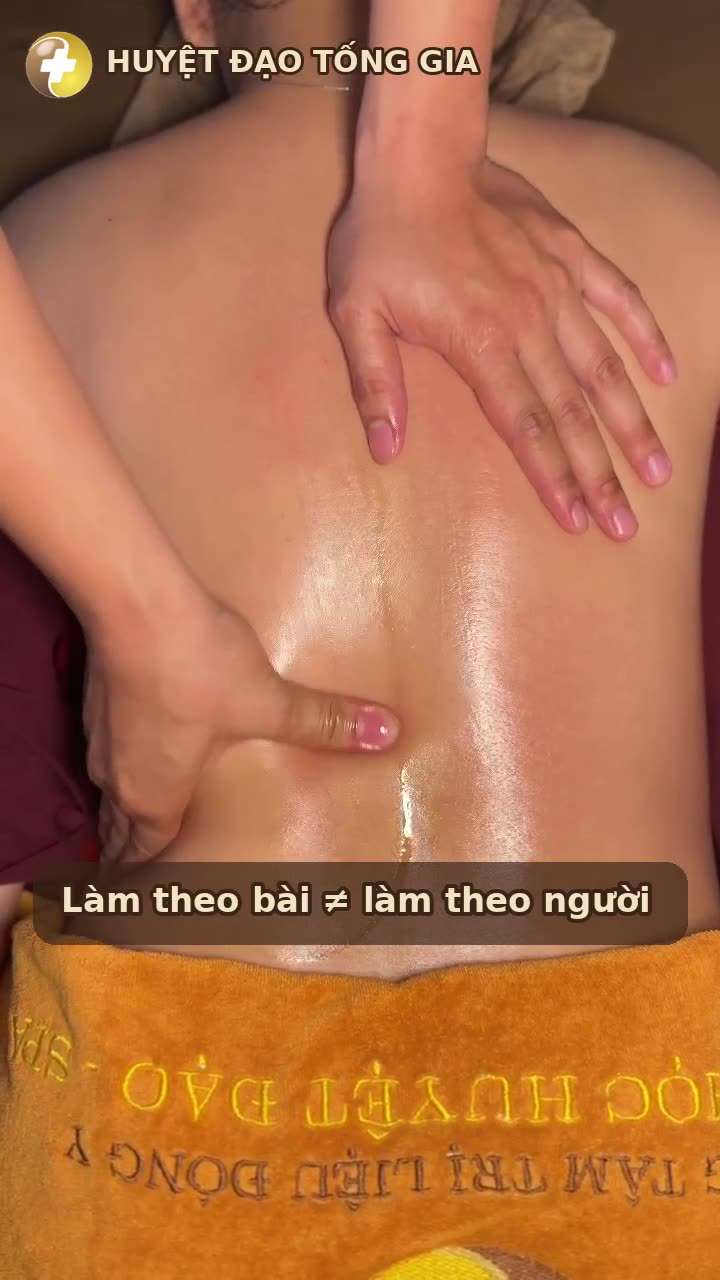
Too light, and the person lying down feels merely stroked, not satisfied. Too heavy, and the muscle contracts to brace itself and is still sore the next day. Everyone tolerates pressure differently, and each area differs too: the shoulder muscles can take more than the neck, and the lower back on either side of the waist needs a lighter hand than the thighs. Learning hand pressure means learning to adjust constantly to how the person responds. The article how much pressure to use in acupressure explains this in detail.
2. Your own posture as a practitioner
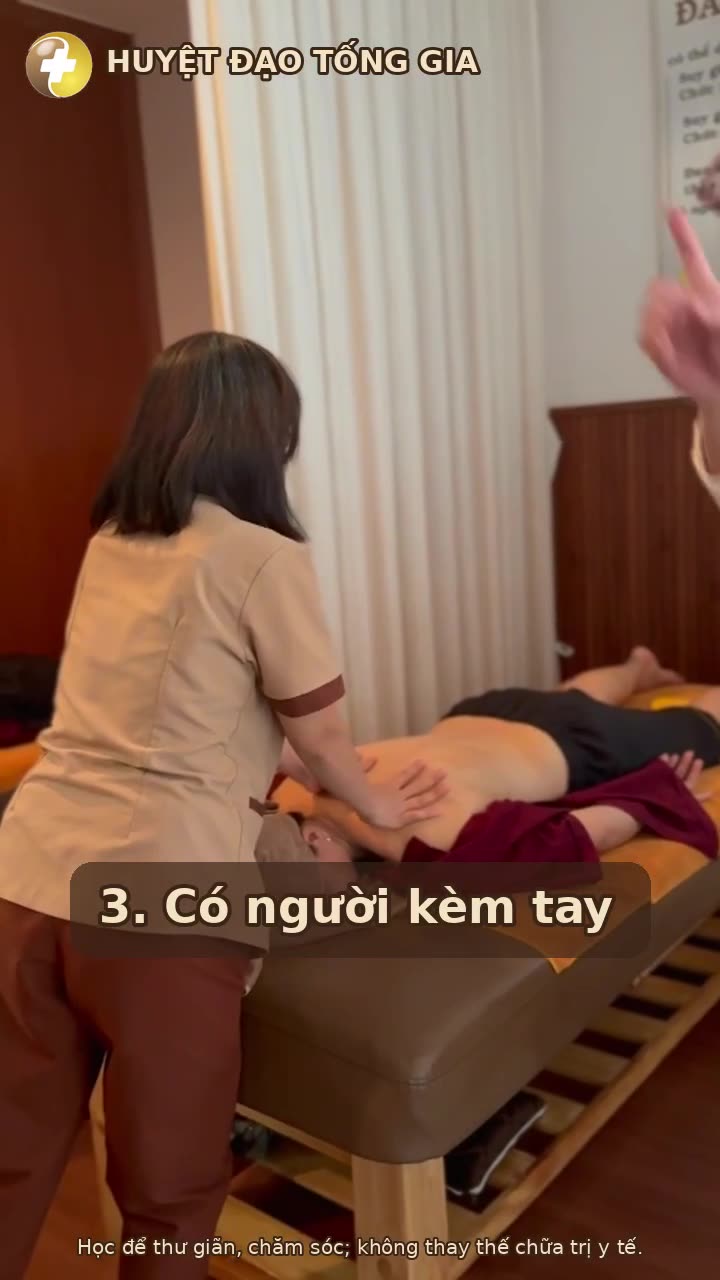
This is the part beginners skip most often. Stooping, hunching your shoulders and bending your wrists to generate force means that a few weeks later, the one in pain is you. The right posture is one foot forward and one back, knees slightly bent, back straight and arms straight so that force travels down from your trunk. Correcting posture is hard because old habits are stubborn; someone needs to stand beside you and remind you many times.
3. Feeling which muscle is tight
Your eyes cannot see under the skin. Someone with years in the trade puts a hand down and knows where it is hard, where it is soft, and where the left side is tighter than the right. A beginner feels everything as the same. This sense only comes from touching many people, each with a different build, and having an experienced practitioner show you: this is muscle, this is bone, this spot is tight.
4. Talking with clients
Asking questions before the session, checking the pressure midway, giving advice afterwards. Introverts often find this harder than the hand work. It is hard not because you have to talk a lot, but because you have to speak at the right moment and in the right measure, without over-promising and without staying silent when you need to ask.
5. Knowing when to stop
This is the hardest part in terms of responsibility. Therapeutic-style massage in the wellness tradition is relaxation care with the hands, not a medical service. When you meet someone with long-lasting pain, numbness or weakness in the arms or legs that keeps getting worse, pain after a fall, fever, or an underlying condition that a medical facility has not cleared, you must stop and advise them to see a doctor at a medical facility. Recognising these signs takes knowledge, and it also takes the courage to say no to a client.
The biggest difficulty: sticking with hand training
All five parts above come down to one thing: your hands have to be trained through many real sessions. The early stage is usually the most discouraging. Your wrists ache, your thumbs hurt, one person leaves you tired, and the person you worked on still says the pressure was uneven. Many people quit right at this stage, not because they lack talent but because they decide the trade is not for them.
In fact, early hand fatigue mostly comes from poor posture and using finger strength instead of body weight. As your posture improves, the fatigue drops noticeably. The feel under your hands is the same: it does not suddenly appear one day, it becomes clearer with each person you touch. To find out how long it takes, read how long it takes to learn therapeutic-style massage well enough to work.
How to get past the hard parts
- Practise on real people, not just videos: videos show the strokes but not the feel of pressure or how tight a muscle is.
- Have an experienced practitioner correct your posture early: fixing it in the first week is far easier than fixing it after months of doing it wrong.
- Ask for feedback after every session: was the pressure right, which spots felt good, which hurt. Note it down so you can adjust next time.
- Look after your own hands: warm up your wrists and fingers before working, rest when they hurt, don't force it.
- Memorise the signs that mean stop: write them down and stick them somewhere visible so they become a reflex.
Ask yourself before you start
- Can I put up with repeating one movement many times until it is right?
- Am I comfortable touching other people, and letting others touch me, when practising in pairs?
- Am I ready to have my mistakes pointed out in front of others?
- Do I have time to practise regularly, including outside class hours?
If most of your answers are yes, then for you the question of whether learning massage is hard is only a matter of time.
How Tong Gia breaks the hard parts into small steps
Tong Gia was founded by Lương Y Tống Văn Huynh, who has more than 13 years in Eastern wellness practice. He built the programme himself and teaches the classes in person. About 70% of class time is hands-on practice on real people: placing your hands, using pressure, finding the muscle areas to work on. Classes are small and Lương Y coaches each person, so posture and pressure mistakes are corrected on the spot.
Learning rests on two pillars. The first is Y Tướng Học (face reading for wellness): looking at the complexion and build before placing your hands, following the principle “the organs are the cause, the signs are the effect”. The second is therapeutic-style massage with spinal nerve-reflex balancing: every observation from the face must be cross-checked by hand along the spine. This way, learners don't just remember strokes; they understand why one area is worked before another.
There are 4 levels. L1 Introduction to Y Tướng Học costs 1.500.000đ and includes practice in pairs. L2 Core Trade covers muscle release, acupressure for the neck, shoulders, back and legs, and the standard Tong Gia 90-minute session routine. L3 and L4 go deeper. Fees for L2 and above and the number of sessions are given by an advisor when you register. General information is on the page massage course in Ho Chi Minh City. Tong Gia does not promise jobs or income after the course.
How to register
The quickest way to find out whether learning massage is hard for you personally is to put your hands to work for one session. Come to the free trial class from 9:00 to 12:00 every Sunday morning, 10 places, at Căn T16-21 khu Manhattan, Vinhomes Grand Park, Phường Long Bình, TP. Thủ Đức (Thủ Đức City, Ho Chi Minh City). Lương Y will look at your hands-on skills and suggest a suitable level.
The L1 Introduction to Y Tướng Học class opens on a set schedule; register via the hotline 0917 945 259.
Frequently asked questions
Do I need to be very fit to learn massage as a trade? You need ordinary health, not great strength. The right pressure comes from body weight and stance, not from squeezing with your fingers.
If my hands get tired while learning massage, does that mean the trade isn't for me? Usually not. Early hand fatigue mostly comes from poor posture and using finger strength. Fix your posture early and the fatigue drops noticeably.
Can an introvert learn massage as a trade? Yes. The talking part only requires asking at the right time and speaking in the right measure, and it can be practised step by step, just like the hand work.
What is the hardest part of learning therapeutic-style massage? Sticking with hand training until your pressure is even and you can feel tight muscles. In terms of responsibility, the hardest thing is knowing when to stop and advising the client to see a doctor.
Can I teach myself massage from videos? Videos help you learn the strokes, but they do not give you the feel of pressure or muscle tension. You need to practise on real people with an experienced practitioner correcting your mistakes.
Related articles
- What is acupressure? Principles, limits and a structured path to an acupressure course in Vietnam
- Acupressure vs acupuncture: how they differ, and what people outside the health professions should learn
- Acupressure vs massage: how they differ, and where to start if you want to learn the trade
- Acupoint map of the human body: how to read the meridian map and what order to learn it in
- All articles about learning the trade
Reserve a free Sunday-morning trial class or ask about the learning path: message Zalo 0917 945 259.

Founder of Tong Gia Acupoint Wellness (Huyệt Đạo Tống Gia), with more than 13 years in Eastern wellness practice, Y Tướng Học (face reading for wellness) and spinal nerve-reflex balancing. Lương Y's story
417 customers have reviewed Tong Gia on Google Maps
Reviews are written by customers themselves on Google; tap to read them before you visit.
Huyệt Đạo Tống Gia Quận 12
225 Dương Thị Mười, Phường Tân Chánh Hiệp (District 12, Ho Chi Minh City). 8:00 – 19:00 daily.
See reviews on Google MapsHuyệt Đạo Tống Gia Quận 9
Căn T16-21 khu Manhattan, Vinhomes Grand Park, Phường Long Bình (Thủ Đức City, Ho Chi Minh City). 9:00 – 20:00 daily.
See reviews on Google MapsWant to be observed in person?
A 90-minute session starts with observation, and only then moves on to muscle release and acupressure on the right areas. Two branches: District 12 and Vinhomes Grand Park.