Can you learn massage online? What a screen can teach and what needs hands-on training in a massage course in Vietnam
Lương Y (traditional healer) Tống Văn Huynh · Tong Gia Acupoint Wellness (Huyệt Đạo Tống Gia) · 25/10/2026
Quick summary: Can you learn therapeutic-style massage online? Partly. Background knowledge, the names of muscle areas, the general location of a few common acupoints and safety principles can be learned on a screen. What makes the skill (feeling the muscle, using pressure and reading how the receiver responds) has to be learned in person, with someone beside you correcting your hands. The sensible route is to learn the basics online, then come to class to train your hands.
Questions learners often ask about learning massage online
Can I really learn massage skills online, or which parts need in-person practice?
Online lessons can cover theory such as muscle names, the spine and the idea that outer signs reflect inner organs, but pressure, rhythm and touch must be learned in person with someone correcting your hands. About 70% of Tống Gia class time is practice. This is wellness care, not medical care; lasting pain needs a medical check. Classes: căn T16-21 khu Manhattan, Vinhomes Grand Park, TP. Thủ Đức; Zalo/WhatsApp +84 917 945 259.
Can you learn massage online: the short answer
Whether you can learn therapeutic-style massage online is a very reasonable question for people who work full-time, live far away or are looking after small children. The honest answer: online you can learn the "knowing" part, but a screen cannot replace the "doing" part.
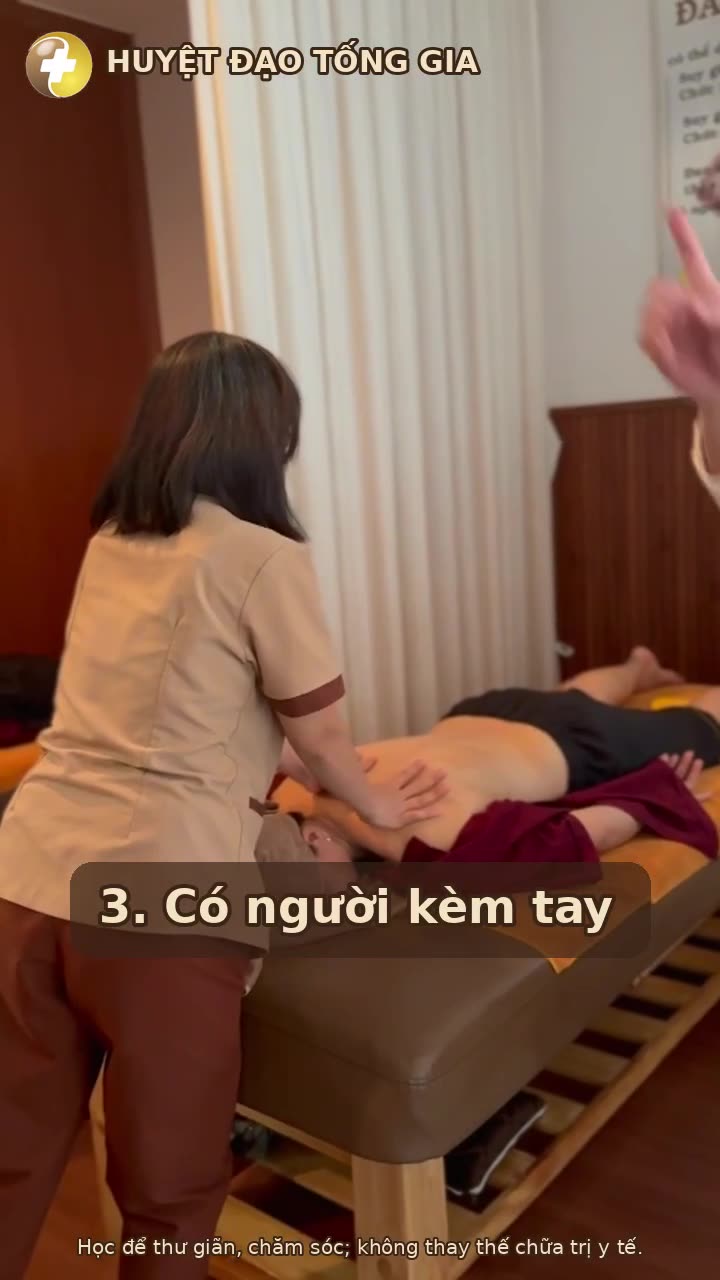
Therapeutic-style massage is a trade of the hands. A video can show you where someone else places their hands, but it cannot tell you how tense the muscle feels under their hands, how heavy or light their pressure is, or how the receiver reacts. Those things can only be learned when your own hands touch a real person and someone points out the mistake right at that moment.
What you can learn online
- Background knowledge of the body: the large muscle areas of the neck and shoulders, back and legs; which way each muscle band runs.
- The general location of a few very common acupoints, for example Hợp Cốc (LI4, 合谷) on the back of the hand, Túc Tam Lý (ST36, 足三里) on the lower leg below the knee, Phong Trì (GB20, 风池) at the nape of the neck. Note that Hợp Cốc and Tam Âm Giao (SP6, 三阴交) are points to avoid with pregnant women.
- Safety principles: the cases where you do not work, the areas where you do not press hard.
- Everyday wellness habits: eating and sleeping, movement, sitting posture at work.
- The visual side of Y Tướng Học (face reading for wellness): getting familiar with the ideas of complexion, Five Elements body types and the 3 zones of the face. Tong Gia has a separate article on learning Y Tướng Học online if you want to start from this direction.
What must be learned in person
- Feeling the muscle: telling tense muscle, normal muscle, tendon and bone apart with your fingertips.
- Using pressure: building up, holding, releasing; using your body weight instead of only finger strength so you are not worn out after one session.
- The practitioner's posture: how to stand, sit and place your feet so the pressure goes down evenly and you do not hurt your own back.
- Reading the receiver's response: holding the breath, tensing the shoulders, flinching are signs you are pressing too hard.
- Cross-checking by hand: what the eyes see on the face must be checked again by hand on the spine.
All of these skills need a skilled person to put their hands over yours and adjust you bit by bit. A camera cannot do that.
Risks of teaching yourself massage from videos
Learning from videos on your own is not wrong, but you should know the common risks:
- Pressing in the wrong place: pressing hard on bone or tendon instead of muscle, which hurts the receiver without helping.
- Copying strong moves that the person in the video has done for years, while your own hands do not yet have enough feel.
- Not knowing when to stop: videos rarely explain in detail when you should advise someone to see a doctor.
- False confidence: watching a lot makes you think you already know, until you work on a client and the gaps show.
Tong Gia repeats this safety point in every class: Tong Gia is a wellness care service, relaxation by hand, not a medical service. People with persistent pain, numbness or weakness that keeps getting worse, or an underlying condition, need to see a doctor at a medical facility. Anyone learning the trade, whether online or in person, must know when not to work.
How busy people can combine online and in-person learning
If you cannot come to class regularly, you can follow this order:
- Learn the basics from materials and videos: muscle areas, the general location of a few acupoints, safety principles, everyday wellness.
- Come to one in-person trial class so a skilled person can see where your hands are. Many people skip this step, yet it saves the most time.
- Learn the hand skills in person in a class with plenty of practice hours on real people.
- Review at home with videos what was corrected in class, then bring your questions back to class.
For people who work full-time, the article on learning massage as a beginner has more suggestions for the first steps to take.
Questions to ask about an online massage course
- Does the course include any in-person practice, or is it entirely on screen?
- Who corrects the learners' hands, and how?
- Does it teach safety and the cases where you do not work?
- What kind of paper do you get after the course, and what is its legal value? Ask directly before you pay the fee.
An online course that promises "finish and you can work on clients" without a single hands-on session is a course you should think about carefully.
Why Tong Gia teaches in person
For Tong Gia, the answer to whether you can learn therapeutic-style massage online is tied to how we teach. Tong Gia currently teaches the hand skills in person at the class at Căn T16-21 khu Manhattan, Vinhomes Grand Park, Phường Long Bình, TP. Thủ Đức (Thủ Đức City, Ho Chi Minh City). The reason rests on two pillars:
- Y Tướng Học: reading complexion and body shape to understand the organs before placing your hands. This visual part can be learned from materials.
- Therapeutic-style massage with spinal nerve-reflex balancing: every reading from the face must be cross-checked by hand on the spine. This part can only be learned when your hands touch a real person.
About 70% of class time is practice on real people: placing the hands, using pressure, finding the muscle area to work on. Classes are small, and Lương Y Tống Văn Huynh, with more than 13 years in Eastern wellness practice, guides each person.
The 4-level career ladder covers L1 Introduction to Y Tướng Học (1.500.000đ), L2 Basic Trade, L3 Specialist and L4 Master and Transfer. Fees for L2 to L4, the number of sessions and the duration are given by an advisor when you register. Tong Gia does not promise a job or income after the course. Full information is on the massage course in Vietnam page.
Learning massage online: a sample combined week
A busy person can split the learning like this: two evenings watching lessons on the anatomy of the neck and shoulders, the meridians and acupoint locations; three 20-minute sessions practising light pressure on family members and noting what you are unsure of; at the weekend, come to class so the teacher can correct your hands. At Tong Gia, your first class visit can be the free trial class 9:00–12:00 on Sunday morning at Căn T16-21 Vinhomes Grand Park, TP. Thủ Đức, TP.HCM (Ho Chi Minh City).
Further reading on this topic: Fast-track massage course in Vietnam: the honest truth about what you can learn quickly and what takes time · Massage course in Vietnam: how long until you can do it for family, for clients and to open your own shop · Massage course near Go Vap District (Gò Vấp): how to choose a class if you live in Gò Vấp or District 12, Ho Chi Minh City
How to register
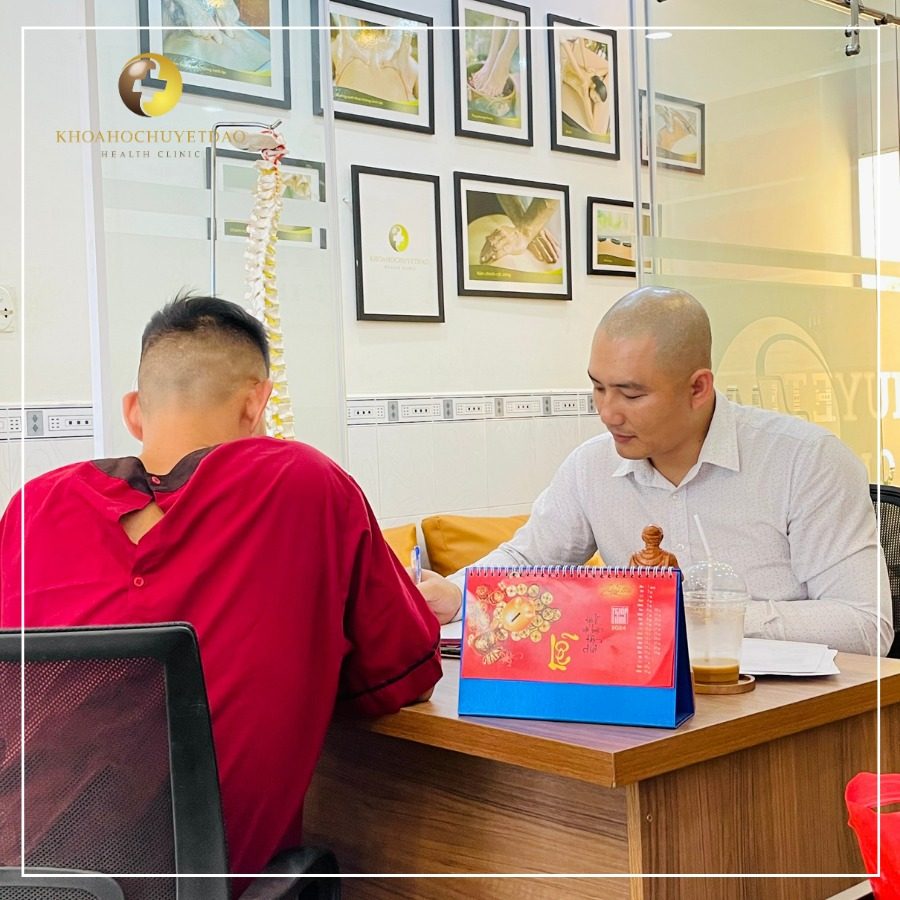
If you have been teaching yourself online for a while, the free trial class is a good chance to find out where your hands are. The trial class runs 9:00 to 12:00 every Sunday morning, with 10 places per session. Lương Y checks your hand skill and then suggests the right level.
The L1 Introduction to Y Tướng Học class opens on a schedule; register via the hotline 0917 945 259.
Frequently asked questions
Can learning therapeutic-style massage online give you a trade? Hardly. Online you can learn background knowledge and safety principles, but feeling the muscle, using pressure and reading the receiver's response need in-person learning with someone correcting your hands.
Is it safe to watch massage videos online and then work on family members? Use light pressure, avoid pressing hard on bone and tendon, and do not work when your relative has persistent pain, numbness or weakness that keeps getting worse, or an underlying condition. In those cases they should see a doctor at a medical facility.
Does Tong Gia teach therapeutic-style massage online? Tong Gia teaches the hand skills in person at the class in the Manhattan area of Vinhomes Grand Park, with about 70% of the time spent practising on real people.
If I have already taught myself online, do I have to start again from scratch at Tong Gia? Not necessarily. Lương Y looks at your hand skill at the Sunday-morning trial class and then suggests a suitable level for you.
Which parts of therapeutic-style massage should I learn online first? Muscle areas, the general location of a few common acupoints, safety principles and everyday wellness are the parts you can learn first from materials.
Do you get any paper from an online massage course? It depends on the place. Tong Gia teaches in person; for the kind of paper given after the course and its legal value, ask the front desk directly before you pay the fee.
Related articles
- What is acupressure? Principles, limits and a structured path to an acupressure course in Vietnam
- Acupressure and acupuncture: what is the difference for learners
- Acupressure vs massage: how they differ, and where to start if you want to learn the trade
- Acupoint map of the human body: how to read the meridian map and what order to learn it in
- All articles about learning the trade
Reserve a free Sunday-morning trial class or ask about the learning path: message Zalo 0917 945 259.

Founder of Tong Gia Acupoint Wellness (Huyệt Đạo Tống Gia), with more than 13 years in Eastern wellness practice, Y Tướng Học (face reading for wellness) and spinal nerve-reflex balancing. Lương Y's story
417 customers have reviewed Tong Gia on Google Maps
Reviews are written by customers themselves on Google; tap to read them before you visit.
Huyệt Đạo Tống Gia Quận 12
225 Dương Thị Mười, Phường Tân Chánh Hiệp (District 12, Ho Chi Minh City). 8:00 – 19:00 daily.
See reviews on Google MapsHuyệt Đạo Tống Gia Quận 9
Căn T16-21 khu Manhattan, Vinhomes Grand Park, Phường Long Bình (Thủ Đức City, Ho Chi Minh City). 9:00 – 20:00 daily.
See reviews on Google MapsWant to be observed in person?
A 90-minute session starts with observation, and only then moves on to muscle release and acupressure on the right areas. Two branches: District 12 and Vinhomes Grand Park.