Massage course in Vietnam for overseas Vietnamese: make the most of a short trip home and keep practising after you leave
Lương Y (traditional healer) Tống Văn Huynh · Tong Gia Acupoint Wellness (Huyệt Đạo Tống Gia) · 27/10/2026
Quick summary: A massage course in Vietnam for overseas Vietnamese on a short trip home works when you get in touch before you fly, come to the Sunday-morning trial class in your very first week so your hands can be assessed, then plan an intensive schedule with the front desk that fits your return date. Just as important is a self-practice plan for when you go back abroad, because skill only becomes solid through repetition. As for the paperwork after the course and what it is worth, ask the front desk before paying the tuition.
Questions learners often ask about massage courses for overseas Vietnamese
Can an overseas Vietnamese use massage skills learned in Vietnam abroad?
The hand skills travel anywhere, but working abroad depends on that country's licensing rules, so check with local authorities. Tống Gia teaches muscles, the spine and the idea that outer signs reflect inner organs; ask reception about post-course paperwork before paying. This is wellness care, not medical care; lasting pain needs a medical check. Classes: căn T16-21 khu Manhattan, Vinhomes Grand Park, TP. Thủ Đức; Zalo/WhatsApp +84 917 945 259.
Massage course in Vietnam for overseas Vietnamese: the short-time problem
Many people living abroad come home to visit family for a few weeks and want to use the time to learn a hands-on skill, to look after their own family or to prepare for a family-run salon. The hardest part is not the learning itself, but learning enough in so few days while still taking home something you can really use.
A sensible approach is to split the trip into three stages: preparing before you fly, learning intensively while in Vietnam, and practising on your own once you are back. This article goes through each stage in turn.
Before you fly: what you can do from abroad
- Ask about the schedule early: give your arrival and departure dates so the school knows how many days you have.
- Be clear about your goal: learning to care for family, or to work in a salon. A different goal means a different level to study.
- Ask about paperwork: what document you receive after the course and how far its legal value goes. At Tong Gia, ask the front desk directly before paying the tuition.
- Check the rules where you live yourself: if you plan to work in massage abroad, massage licensing rules differ from place to place. Ask the regulating authority where you live; do not rely on what other people say.
- Read the basics in advance: for example the article an introductory overview of Y Tướng Học (face reading for wellness), so the terms in class do not catch you off guard.
Your first week in Vietnam: come to the Sunday trial class
When you have only a few days, the trial class should come first. At Tong Gia, the free trial class runs every Sunday morning, 9:00 to 12:00, with 10 places. Lương Y Tống Văn Huynh looks at your current hand skills and suggests a suitable level. Someone who has done massage before may get a different suggestion from someone who has never laid hands on anyone.
The trial class also lets you see for yourself whether the class suits you before you book an intensive schedule. What happens in the trial class is described in the Sunday-morning trial class schedule.
Planning an intensive schedule: what to make clear with the front desk
Tuition, number of sessions and duration for levels L2 and above are given by the advisor when you register, so ask these questions directly:
- With the number of days I am staying, which level can I reach and really master?
- Can I take several sessions a week back to back, or do I have to follow the class timetable?
- If I have to fly before finishing, how do I continue the rest on my next trip home?
- Is the tuition paid in one go or level by level?
Do not try to cram too many levels into one trip. Mastering one level, going home to practise, and continuing on the next trip usually works better than rushing through two levels before your hands are used to them.
What to bring to class
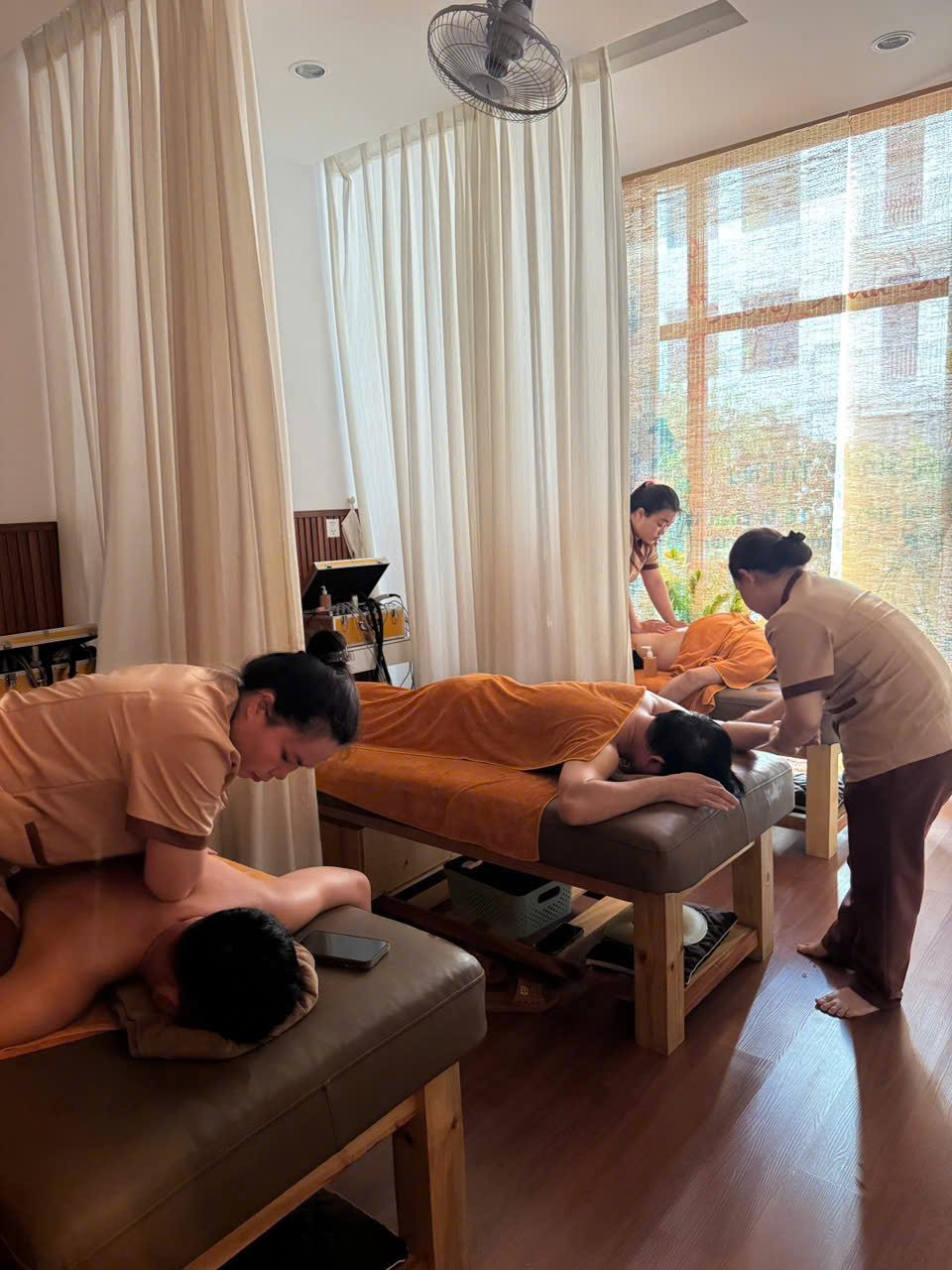
- Loose, comfortable clothes, because about 70% of class time is hands-on practice on real people, and you both give and receive.
- Short-cut nails and no rings.
- A notebook to write down the order of the routine, point locations and the corrections Lương Y gives you personally.
- If you want to film the moves for review, ask the class first, because a classmate is acting as the model.
Back home abroad: how to practise on your own
This is the stage that decides everything. Without a teacher beside you, your hands easily slip back into old habits.
- Practise regularly, not in bursts: a little every day on family members is better than doing nothing all week and then one very long session.
- Follow the routine in the order you learned it; do not drop steps because they seem fussy.
- Ask the person receiving about the pressure after each session: where it was too strong, where it did not reach.
- Review point locations by finding them on yourself; the article learning to locate acupoints explains how to find them.
- Keep a hands-on practice log: which days you practised, on whom, which areas still feel awkward, so you can ask Lương Y on your next trip home.
Know when not to do it
Therapeutic-style massage as Tong Gia teaches it is wellness care and relaxation with the hands, not a medical service. If the person receiving has long-lasting pain, numbness or weakness that keeps getting worse, pain after a fall, or an underlying condition such as a heart or spine problem that a doctor has not cleared, stop and advise them to get checked at a medical facility. This matters even more when you are working on elderly parents.
What to learn at Tong Gia in one trip home
Tong Gia Acupoint Wellness (Huyệt Đạo Tống Gia) was founded by Lương Y Tống Văn Huynh, with more than 13 years in Eastern wellness practice, Y Tướng Học (face reading for wellness) and spinal nerve-reflex balancing. Lương Y teaches the classes in person, in small groups, guiding each learner one by one.
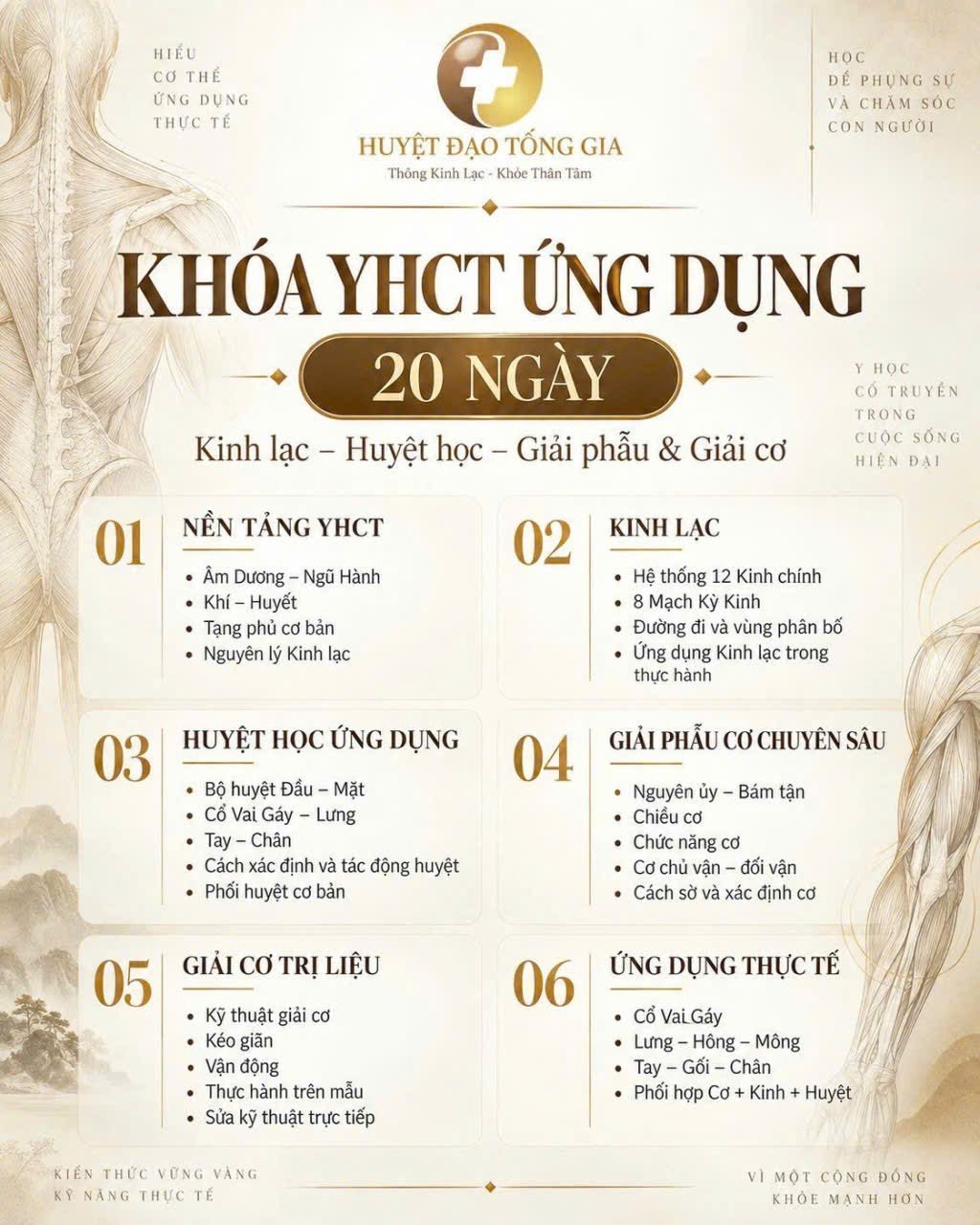
People who want to care for their family usually start with L1 Introduction to Y Tướng Học (1.500.000đ): reading complexion, Five Elements body types, the three zones of the face, daily wellness habits and a few safe self-care points. People planning to work in a salon will need L2 Basic Trade, with muscle release, acupressure for the neck, shoulders and upper back, the back and the legs, and the 90-minute session routine. The two pillars throughout are reading the signs to understand the organs before laying hands on the body, and cross-checking by hand along the spine. As Lương Y often says, “A person's finest feng shui is health.”
Tong Gia does not promise a job or income after the course. If you already run a salon abroad, see the page for nail salon and spa owners.
How to register
Message Zalo 0917 945 259 (WhatsApp +84 917 945 259) with your arrival and departure dates to be booked into the nearest Sunday-morning trial class. Class address: căn T16-21 khu Manhattan, Vinhomes Grand Park, Phường Long Bình, TP. Thủ Đức (unit T16-21, Manhattan area, Vinhomes Grand Park, Thủ Đức City, Ho Chi Minh City).
The L1 Introduction to Y Tướng Học class runs on a set schedule. Register via hotline 0917 945 259.
Frequently asked questions
I'm overseas Vietnamese and only home for a few weeks. Can I still take a massage course? Yes, if you get in touch before you come, attend the trial class in your first week and plan an intensive schedule with the front desk. It is wise to master one level, go home to practise, and continue on the next trip.
If I learn massage in Vietnam, can I work in massage abroad? It depends on the rules of each country, state and city. You need to ask the authority that regulates massage where you live.
What paperwork do I get after a course at Tong Gia? For the type of document you receive after the course and its legal value, ask the front desk directly before paying the tuition.
How do I practise on my own after going back abroad? Practise a little every day on family members, follow the routine in order, ask the person receiving about the pressure, and log the spots that still feel awkward so you can ask the teacher again.
When is the trial class at Tong Gia? Every Sunday morning, 9:00 to 12:00, free, 10 places, at Vinhomes Grand Park, Thủ Đức City. Message Zalo 0917 945 259 to hold a place.
Related articles
- 30 basic massage techniques learners should know: learn them in groups, not as a list of names
- 8 principles of spinal wellness massage: the rules of the hands for Tong Gia learners
- How much pressure in acupressure: gauging force by how the receiver feels
- Hands for wellness massage: soft hands, hard hands and 6 things you must train
- All articles about learning the trade
Reserve a free Sunday-morning trial class or ask about the learning path: message Zalo 0917 945 259.

Founder of Tong Gia Acupoint Wellness (Huyệt Đạo Tống Gia), with more than 13 years in Eastern wellness practice, Y Tướng Học (face reading for wellness) and spinal nerve-reflex balancing. Lương Y's story
417 customers have reviewed Tong Gia on Google Maps
Reviews are written by customers themselves on Google; tap to read them before you visit.
Huyệt Đạo Tống Gia Quận 12
225 Dương Thị Mười, Phường Tân Chánh Hiệp (District 12, Ho Chi Minh City). 8:00 – 19:00 daily.
See reviews on Google MapsHuyệt Đạo Tống Gia Quận 9
Căn T16-21 khu Manhattan, Vinhomes Grand Park, Phường Long Bình (Thủ Đức City, Ho Chi Minh City). 9:00 – 20:00 daily.
See reviews on Google MapsWant to be observed in person?
A 90-minute session starts with observation, and only then moves on to muscle release and acupressure on the right areas. Two branches: District 12 and Vinhomes Grand Park.