Massage course for working people in Saigon: from neck-and-shoulder self-care to an unhurried career change
Lương Y (traditional healer) Tống Văn Huynh · Tong Gia Acupoint Wellness (Huyệt Đạo Tống Gia) · 25/10/2026
Quick summary: A massage course for working people in Saigon works well step by step: first learn to understand and care for your own body, then practise on people you know, and only think about a career change once your hands are truly skilled, with no need to quit your job at the start. People who have sat at an office desk for years usually need to rebuild hand strength, wrist control and standing posture before they can work on others. Tong Gia runs a free trial class on Sunday mornings so you can test yourself without taking time off work.
Why working people learn wellness massage
Working people who come to a massage and acupressure class usually have one of three reasons. First, they sit at a computer all day themselves, their neck and shoulders ache, their hands go numb, and they want to understand their own body. Second, they want a skill to care for their family after work. Third, they are thinking about changing careers and want work that is closer to people, done with their own hands.
These three reasons call for three different ways of learning. When you look into a massage course as a working person, the most important thing is not to jump straight to the third reason before you have gone through the first two.
Massage course for working people: a three-step path without quitting your job
Step 1: understand and care for yourself
Starting with your own body is the easiest way to learn. You learn to read complexion and body build, a few acupoints that are safe for self-care, and simple daily wellness habits. At this step you do not work on anyone yet; you only observe and feel. Many people stop here and find it is enough.
Step 2: work on friends and family
Once you have learned muscle release for the neck, shoulders, back and legs, you start working on your family. This is when you find out whether the trade suits you: can you stay on your feet working for a long time without losing your calm, do you enjoy listening to someone describe where they ache, and do your hands have enough strength?
Step 3: consider a career change
Only when your hands are steady and you have given complete sessions, start to finish, to many different people should you think about working with clients. Even then, many people keep their main job for a while and work extra hours on the side as a trial. Tong Gia does not promise a job or income after the course, so quitting your job is a decision to weigh very carefully with your family.
What office workers' hands need to prepare
Long-time office workers usually have hands used to typing: nimble fingers but weak wrists, shoulders that tend to hunch up, and a back that tires after standing for long. None of this stops you from learning, but you need to know it so you can train:
- Force does not come from the fingers. Beginners tend to load all the force into the thumb and are tired after a few minutes. Good force comes from body weight, from how you stand and how you set your shoulders.
- Keep the wrist straight when pressing. A bent wrist under load is the shortest road to wrist pain for the person giving the massage.
- Standing posture. Feet shoulder-width apart, knees slightly bent, back straight. People used to sitting all day need time before they can stand and work for long without tiring.
- Breathing. Steady breath, steady force. Holding your breath while pressing is a sign you are tensing up.
Hand numbness: a familiar lesson for office workers
Tong Gia classes include sessions on hand numbness, something people who spend long hours at a computer often complain about. Learners practise reading posture, feeling the neck, shoulders and forearms to find tight muscles, and releasing those areas gently.
What learners must remember: hand numbness has many causes and is not always muscular. Anyone with long-lasting numbness, numbness and weakness that keep getting worse, frequently dropping things, numbness with neck pain spreading down the arm, or an underlying health condition should get checked at a medical facility. Tong Gia is a wellness care service for relaxation and well-being through the hands, not a medical service. Someone learning the trade must know when not to work and advise the person in their care to see a doctor.
If you are only interested in the neck and shoulders, Tong Gia has a separate article on the acupressure course for the neck and shoulders.
Questions to answer for yourself before you enrol
- Am I learning for self-care, to care for my family, or to change careers?
- How much time each week can I spend practising outside class?
- Do I enjoy physical contact with strangers and listening to them?
- If I change careers, will my family accept a period of unstable income?
There are no right or wrong answers. These are the four questions Tong Gia usually asks back when someone messages about a massage course for working people. Just answer honestly so you choose the right level and do not spend money on parts you do not need yet.
Tong Gia's 4-level training ladder
- L1 Introduction to Y Tướng Học (face reading for wellness) (1.500.000đ): reading complexion, Five Elements body types, the 3 zones of the face, daily wellness habits, a few acupoints safe for self-care, practice in pairs. Suits step 1.
- L2 Core Trade Skills: muscle release and acupressure for the neck, shoulders, back and legs; Tong Gia's standard 90-minute session routine; communicating with clients. Suits step 2 and prepares you for step 3.
- L3 Specialist: spinal nerve-reflex balancing, advanced Y Tướng Học.
- L4 Master and Transfer: transfer of the routine, SOPs, and how to train staff for business owners.
Lương Y Tống Văn Huynh, the founder, with more than 13 years in Eastern wellness practice, teaches the classes in person. The teaching rests on two pillars: Y Tướng Học, reading the signs to understand the organs before laying a hand on the body; and therapeutic-style massage with spinal nerve-reflex balancing, where every reading from the face must be cross-checked by hand on the spine. For working people the first pillar feels very familiar: even sitting in a meeting room, you can practise observing your colleagues' complexion and sitting posture. About 70% of class time is hands-on practice on real people, classes are small, and Lương Y coaches each learner individually. Fees for L2 to L4, the number of sessions and their length are given by a consultant when you register. As for paperwork, ask reception directly about the type of document issued after the course and its legal standing before you pay the fee.
If you are thinking of switching careers completely, you can also read the article what you can do after learning a wellness care trade.
How to register
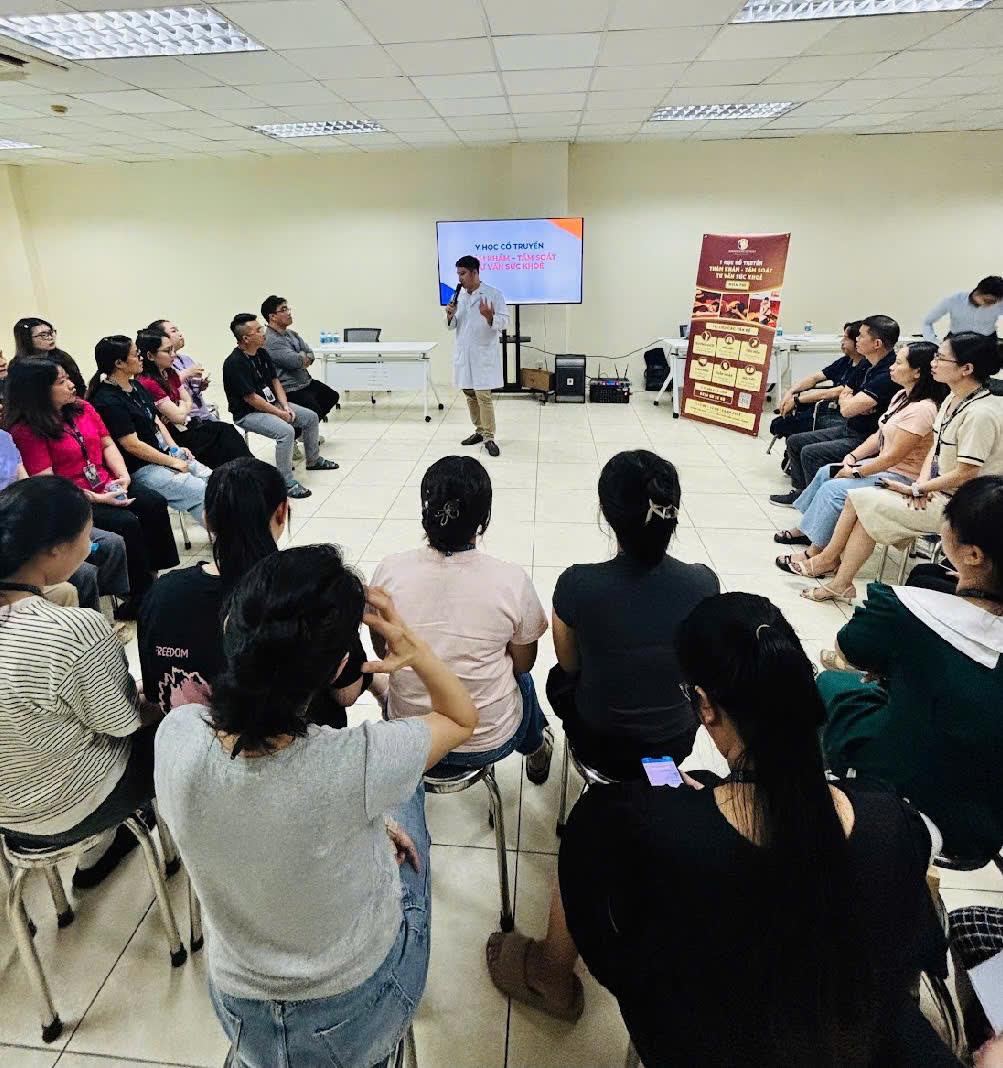
You do not need to take time off work to try. The free trial class runs from 9:00 to 12:00 every Sunday morning, 10 places per session, at căn T16-21 khu Manhattan, Vinhomes Grand Park, Phường Long Bình, TP. Thủ Đức (Unit T16-21, Manhattan zone, Vinhomes Grand Park, Thủ Đức City). Lương Y looks at your hands and suggests the right level. See general information on the massage course in Ho Chi Minh City page.
The L1 Introduction to Y Tướng Học class runs on a set schedule. Register via hotline 0917 945 259.
Frequently asked questions
I work in an office. Should I take a massage course? Yes, if you learn step by step: care for yourself first, work on your family next, and only think about changing careers once your hands are truly skilled. You do not need to quit your job to start.
My hands are weak and I rarely exercise. Can I still learn? Yes. Good force comes from posture and body weight, not just from the fingers, so people with weak hands need to train how they stand, how they set their shoulders and how they keep the wrist straight.
Will learning massage help with my hand numbness from computer work? Understanding your body and knowing gentle muscle release help you relax the neck, shoulders and forearms. But long-lasting numbness, or numbness and weakness that keep getting worse, need a check-up at a medical facility.
After the course, should I quit my job to do massage? Tong Gia does not promise a job or income after the course. Many people keep their main job for a while and work extra hours on the side as a trial before deciding.
Which level should a working person start with? Most beginners start with L1 or the Sunday-morning trial class. Lương Y looks at your hands and suggests the right level.
Related articles
- 30 basic massage techniques learners should know: learn them in groups, not as a list of names
- 8 principles of spinal wellness massage: the rules of the hands for Tong Gia learners
- How much pressure in acupressure: gauging force by how the receiver feels
- Hands for wellness massage: soft hands, hard hands and 6 things you must train
- All articles about learning the trade
Reserve a free Sunday-morning trial class or ask about the learning path: message Zalo 0917 945 259.

Founder of Tong Gia Acupoint Wellness (Huyệt Đạo Tống Gia), with more than 13 years in Eastern wellness practice, Y Tướng Học (face reading for wellness) and spinal nerve-reflex balancing. Lương Y's story
417 customers have reviewed Tong Gia on Google Maps
Reviews are written by customers themselves on Google; tap to read them before you visit.
Huyệt Đạo Tống Gia Quận 12
225 Dương Thị Mười, Phường Tân Chánh Hiệp (District 12, Ho Chi Minh City). 8:00 – 19:00 daily.
See reviews on Google MapsHuyệt Đạo Tống Gia Quận 9
Căn T16-21 khu Manhattan, Vinhomes Grand Park, Phường Long Bình (Thủ Đức City, Ho Chi Minh City). 9:00 – 20:00 daily.
See reviews on Google MapsWant to be observed in person?
A 90-minute session starts with observation, and only then moves on to muscle release and acupressure on the right areas. Two branches: District 12 and Vinhomes Grand Park.