Massage course in Vietnam before working abroad: the routine, pressure, communication and hygiene a salon looks at
Lương Y (traditional healer) Tống Văn Huynh · Tong Gia Acupoint Wellness (Huyệt Đạo Tống Gia) · 27/10/2026
Quick summary: Taking a massage course in Vietnam before working abroad means training until you can deliver a complete session to a fixed routine, keep your pressure even all day, say a few basic phrases to clients and keep proper hygiene. Massage licensing differs by country, state and city, so you must check with the authority at your destination before you leave. Tong Gia teaches hands-on skills and makes no promise of work or earnings abroad.
Questions learners often ask about learning massage to work abroad
I plan to open a massage shop abroad; where in Ho Chi Minh City can I train first?
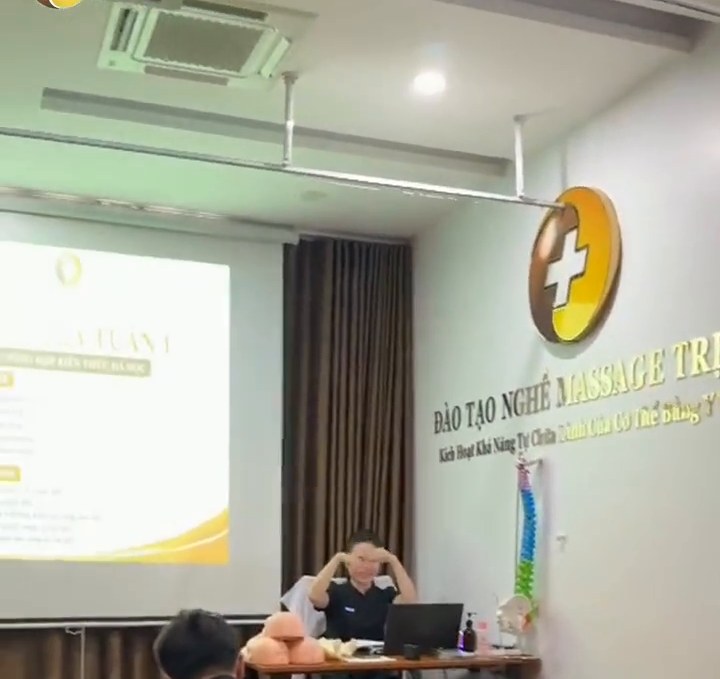
You can train at Tống Gia's class in Thu Duc City, about 70% hands-on practice on real people, focusing on routine, pressure and hygiene; shop licensing follows your host country's law. You learn muscles, the spine and the idea that outer signs reflect inner organs. This is wellness care, not medical care; lasting pain needs a medical check. Classes: căn T16-21 khu Manhattan, Vinhomes Grand Park, TP. Thủ Đức; Zalo/WhatsApp +84 917 945 259.
Learning massage to work abroad: what a salon looks at in you
Many people are getting ready to move abroad to join family, or already know someone who runs a salon there, and want a trade they can do with their hands before they go. The usual question is what to learn and how far to take it.
This article does not discuss visas or emigration paperwork. It is only about hands-on skill: when you walk into a salon abroad, the owner usually tests you with a session on a real person. They do not ask how many lessons you took; they look at four things: do you work in order, is your pressure even, do you know how to ask the client, and is your workspace clean.
If you are a salon owner looking for a way to train staff, the page for nail and spa salon owners abroad covers that need separately.
A routine you can repeat
In a salon, clients come in one after another, each choosing a different time package. New practitioners often fumble because they do not know where to start, which area to work first or when to move on. With a fixed routine you do not have to think; your hands follow the order on their own.
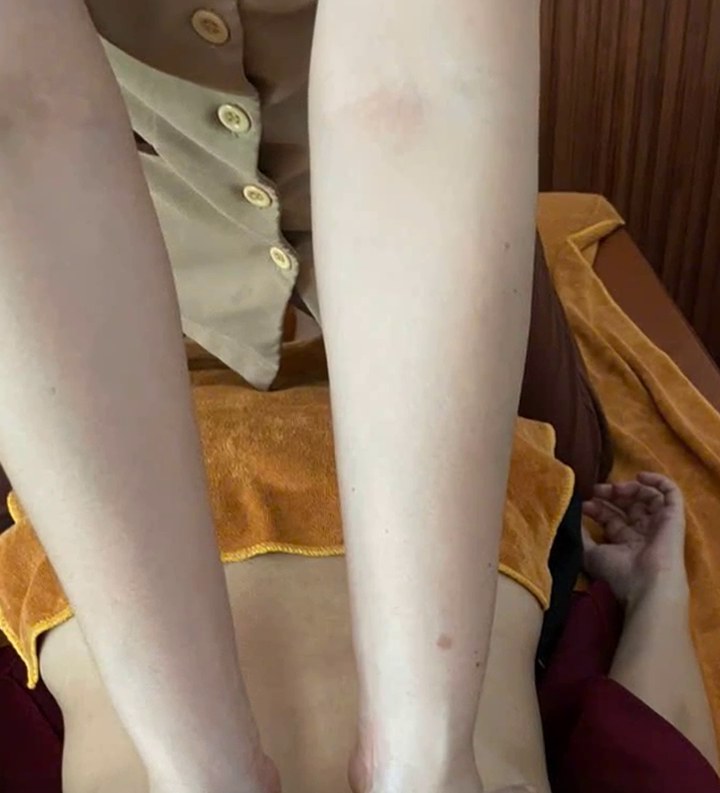
A good routine has an opening so the client gets used to your hands, a main part focused on the area where the client is most tired, and a closing so the client relaxes before sitting up. More importantly, you must know how to shorten or lengthen the routine without losing the closing. Clients remember the last few minutes most.
Even pressure from the first client to the last of the day
This is where beginners are weakest. The first client of the day gets careful work; the last one only gets light strokes because the hands are tired. In salons abroad, regulars often come back for one particular practitioner, and they notice straight away when the pressure drops.
To keep your pressure even, you need to learn to channel body weight through your arms instead of using finger strength, stand at the right table height, and switch between thumb, heel of the hand and forearm so your joints rest in turn. The article how to use pressure in acupressure explains this in detail.
A few basic phrases for clients
You do not need to be fluent in a foreign language to do this work, but you do need to know by heart a set of short phrases in the language of the place you are going. Write and practise them before you leave:
- Greeting and inviting the client into the room, showing where to put their things and how to lie down.
- Asking about their health: any pain anywhere, pregnancy, underlying conditions, recent surgery or a recent fall.
- Asking about pressure: firmer, lighter, is this all right.
- Saying before you move to another area: now the legs, please turn over.
- Finishing: the session is over, sit up slowly, drink some warm water.
Learning to ask about pressure matters more than learning many moves. Every client takes pressure differently; a practitioner who asks and adjusts in time puts the client at ease.
Hygiene and preparing the workspace
In many places, hygiene is the first thing the authorities inspect. These habits must be built while you are learning, not fixed after you arrive:
- Wash your hands before and after every client, keep your nails short, and do not wear rings while working.
- Change the towels and table cover for each client.
- Wipe down the table and bolsters after every session.
- Do not work on skin with open wounds or unusual redness.
- Keep oils and creams in clean bottles; never dip your hand directly into a shared jar.
Licensing: it differs everywhere, and you must check it yourself
Some places require massage practitioners to complete a set number of hours at a recognised school and pass an exam for a licence, some regulate the business premises, and some only require registration. Rules also change over time. So:
- Check the rules yourself with the authority that regulates massage in the exact place where you will live and work.
- Ask the salon owner at your destination what documents they require.
- Do not believe promises that once you finish a course in Vietnam you can start work straight away in any country.
About the paperwork after a course at Tong Gia: ask the front desk directly what kind of document it is and what legal standing it has before you pay tuition. Tong Gia makes no promise of work or earnings after the course, either in Vietnam or abroad. The article does a massage course lead to work is frank about this.
Know when not to work
Salon massage is relaxation care with the hands, not a medical service. Abroad, working on the wrong case can also cause legal trouble for both you and the salon owner. If a client has long-lasting pain, numbness or weakness that is getting worse, pain after a fall, or an underlying condition their doctor has not cleared, stop and advise them to see a doctor at a medical facility.
Choosing where to learn before you go: what to ask
- What share of the time is hands-on practice on real people?
- Is a complete session routine taught, or only separate moves?
- Does the instructor watch and correct each learner's pressure?
- Is there a working premises serving real clients with that same routine?
- What paperwork do you get after the course, and how far does it count?
For how long it takes before your hands are steady, see the article how long it takes to learn wellness massage.
What Tong Gia teaches people about to go abroad
Tong Gia was founded by Lương Y Tống Văn Huynh, who has more than 13 years in Eastern wellness practice. Lương Y teaches the classes in person. About 70% of class time is hands-on practice on real people; classes are small, and Lương Y guides each learner on hand placement and use of pressure.
For people learning massage to work abroad, the closest fit is level L2 Basic Trade: muscle release, acupressure on the neck and shoulders, back and legs, the standard Tong Gia 90-minute session routine and communicating with clients. This routine is used every day at the two branches in District 12 and District 9 in Ho Chi Minh City.
Both levels rest on two pillars: Y Tướng Học (face reading for wellness), reading complexion and posture to understand someone's condition before laying hands on them, and therapeutic-style massage with spinal nerve-reflex balancing. What the face suggests is always cross-checked by hand along the spine. When you are alone in a room with a stranger, the habit of looking first and checking by touch after helps you choose the right areas to work. Level L1 tuition is 1.500.000đ; tuition and number of sessions for L2 and above are given by an advisor when you register. Details of the learning path are on the page wellness massage course in Ho Chi Minh City.
How to register
If your departure date is close, come to the free trial class from 9:00 to 12:00 every Sunday morning, 10 places, at căn T16-21 khu Manhattan, Vinhomes Grand Park, Phường Long Bình, TP. Thủ Đức (Thủ Đức City, Ho Chi Minh City). Lương Y looks at your current skill and suggests which level to take to be ready in time.
The L1 Introduction to Y Tướng Học class runs on a set schedule. Register via hotline 0917 945 259.
Frequently asked questions
How long do I need to learn massage before I can work abroad? There is no single number, because it depends on each person's skill and the requirements at the destination. Learn until you can deliver a full session to the routine with even pressure, then check the licensing rules yourself where you will work.
Can I practise massage in the US, Australia or Europe after learning in Vietnam? Each country, state and city has its own rules, and they can change. You need to ask the authority that regulates massage in the exact place you are going before you leave.
Can I do massage abroad if my foreign language is weak? You need to know a set of short phrases to greet clients, ask about their health, ask about firmer or lighter pressure and say the session is over. Write and practise these phrases before you go.
Does Tong Gia arrange work abroad? No. Tong Gia teaches hands-on skills and makes no promise of work or earnings after the course. Ask the front desk about the paperwork after the course and what it is worth before you pay tuition.
Which Tong Gia level should someone about to go abroad take? The closest fit for salon work is level L2 Basic Trade, with the 90-minute session routine and communicating with clients. Come to the Sunday-morning trial class so Lương Y can suggest the right level.
Related articles
- 30 basic massage techniques learners should know: learn them in groups, not as a list of names
- 8 principles of spinal wellness massage: the rules of the hands for Tong Gia learners
- How much pressure in acupressure: gauging force by how the receiver feels
- Hands for wellness massage: soft hands, hard hands and 6 things you must train
- All articles about learning the trade
Reserve a free Sunday-morning trial class or ask about the learning path: message Zalo 0917 945 259.

Founder of Tong Gia Acupoint Wellness (Huyệt Đạo Tống Gia), with more than 13 years in Eastern wellness practice, Y Tướng Học (face reading for wellness) and spinal nerve-reflex balancing. Lương Y's story
417 customers have reviewed Tong Gia on Google Maps
Reviews are written by customers themselves on Google; tap to read them before you visit.
Huyệt Đạo Tống Gia Quận 12
225 Dương Thị Mười, Phường Tân Chánh Hiệp (District 12, Ho Chi Minh City). 8:00 – 19:00 daily.
See reviews on Google MapsHuyệt Đạo Tống Gia Quận 9
Căn T16-21 khu Manhattan, Vinhomes Grand Park, Phường Long Bình (Thủ Đức City, Ho Chi Minh City). 9:00 – 20:00 daily.
See reviews on Google MapsWant to be observed in person?
A 90-minute session starts with observation, and only then moves on to muscle release and acupressure on the right areas. Two branches: District 12 and Vinhomes Grand Park.