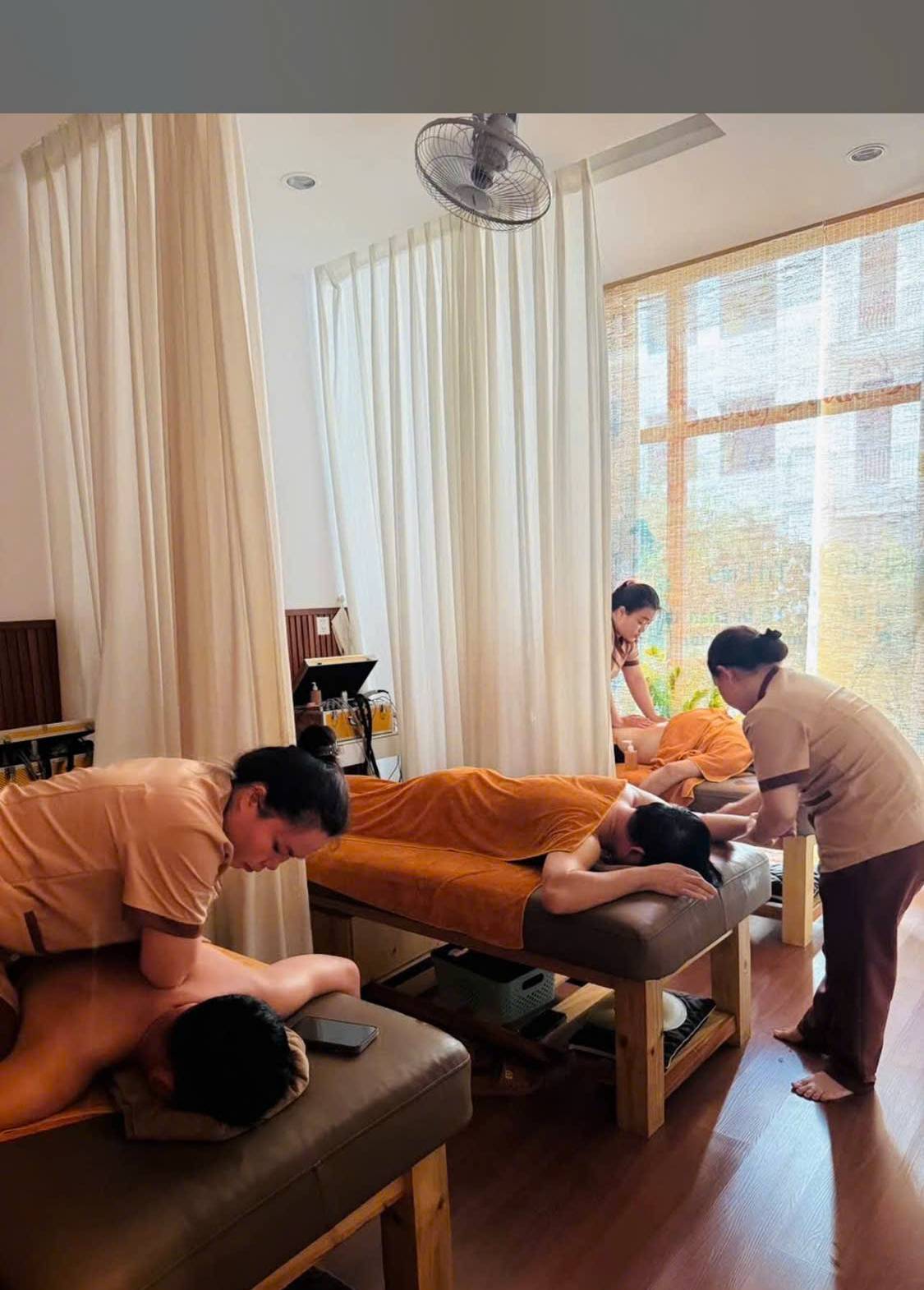
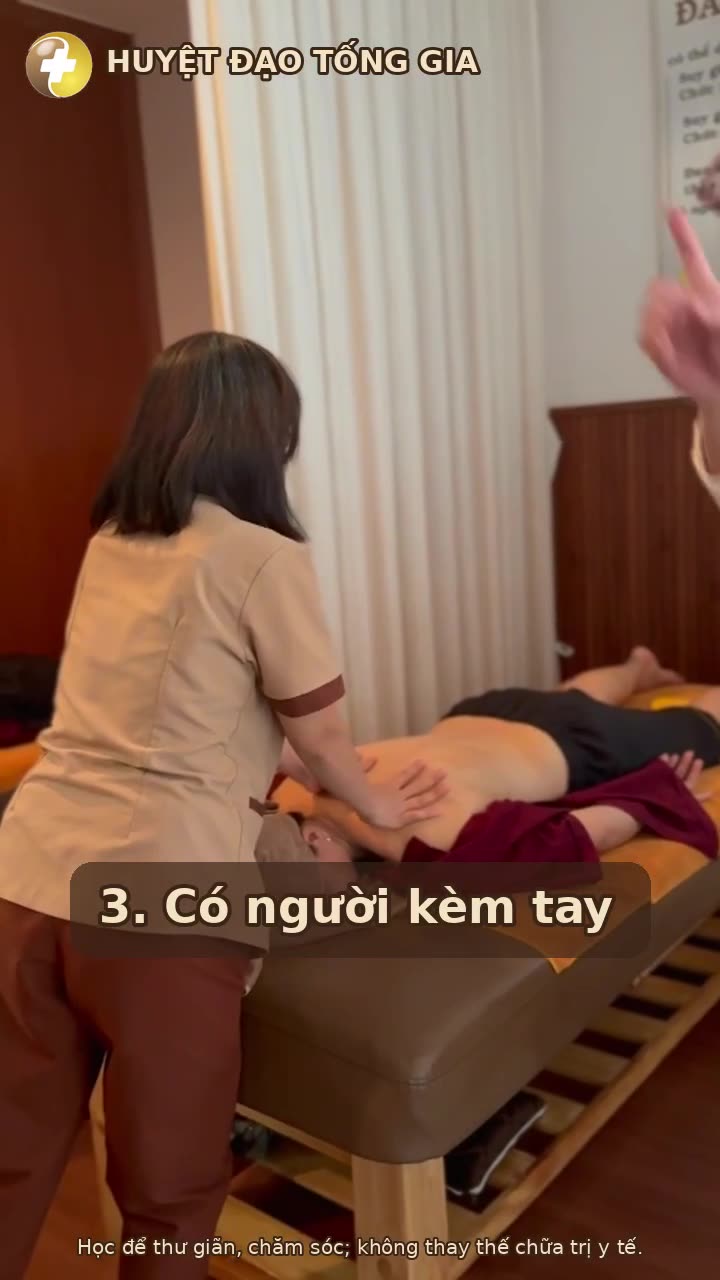
Massage client consultation before a wellness massage: what Tong Gia learners ask, what they listen for, and when they stop
Lương Y (traditional healer) Tống Văn Huynh · Tong Gia Acupoint Wellness (Huyệt Đạo Tống Gia) · 13/11/2026
A massage client consultation before a wellness massage uses open questions about the tired area, how long it has lasted, sleep, existing health conditions and anything taken on a doctor's prescription. At Tong Gia in Ho Chi Minh City, learners ask to know what is safe to do, never name a disease, then check by hand on the spine.
Questions learners often ask about client consultation before a wellness massage
I just started working at a spa in District 9. What should I ask clients before a wellness massage without making them uncomfortable?
Ask five things with open questions: where it feels tired, since when, how they sleep, any existing health conditions, and anything taken on a doctor's prescription. Lương Y Tống Văn Huynh at Tong Gia teaches learners to keep questions short and listen fully before the next one. Classes are at Vinhomes Grand Park, Thu Duc City; hotline 0917 945 259.
I'm a massage practitioner in Thu Duc. When I ask clients about health conditions, am I doing a doctor's job? How far should I go?
No. A doctor asks in order to name a disease; a practitioner asks to know what can and cannot be done today. Tong Gia teaches questions up to the level of a safety screen: heart disease, stents, blood pressure, blood thinners, pregnancy. If there are warning signs, do not work, and advise a check at a medical facility.
I'm an expat in Ho Chi Minh City. Where can I learn client consultation and face reading before massage, and at which level?
At Tong Gia, căn T16-21 khu Manhattan, Vinhomes Grand Park, TP. Thủ Đức (unit T16-21, Manhattan block, Thu Duc City). Asking clients is taught in L2 Basic Trade; face reading, screening by the 5 organs and reading the spine are taught in the Specialist Course (L3). Sunday morning trial class with no fee, hotline 0917 945 259.
Five minutes before the hands go on, in a Tong Gia class
Before practice time, two learners sit facing each other: one plays the client, the other holds the intake form. A new learner's first question is often: "Do you have a herniated disc?" The "client" gets flustered and starts to worry.
Lương Y Tống Văn Huynh listens, then tells the learner to ask again: "Where do you feel tired today, and what kind of tiredness is it?" The "client" answers straight away: the right shoulder aches, it gets heavier after long hours at the computer, and sleep has been shallow for the past few nights. Change one question, and the practitioner has all the information needed. That is the core of a massage client consultation before a wellness massage.
Massage client consultation before a wellness massage: 5 things to know before you start
1. The tired area
"Where do you feel it most?", then let the client point. One small spot or a sweep across a whole area are two different pieces of information.
2. Timing
"Since when? When does it get worse, and when does it ease?" A few days of tiredness is different from pain lasting several weeks, or pain at night.
3. Sleep
"How have you been sleeping lately?" Poor sleep often comes with tight neck and shoulder muscles, which points to a slow hand rhythm and light pressure at the start of the session.
4. Existing health conditions
"Do you have any condition a doctor is monitoring?" The Tong Gia curriculum requires asking clearly about heart disease, a stent, a pacemaker, high blood pressure, kidney disease, diabetes, pregnancy and recent surgery.
5. Anything taken on a doctor's prescription
"Are you taking anything prescribed by a doctor?" People on blood thinners bruise easily, so only light pressure is allowed, and bruised areas are avoided. Write it down, do not comment, and never advise a client to stop anything a doctor has prescribed.
Don't question like a doctor, don't name a disease
A doctor asks to find a disease. A wellness massage practitioner asks to know what their hands may do today, where to go lighter, and whether to stop. So:
- Don't use disease names in questions ("do you have degeneration?"); ask about the client's sensation ("is it heavy, sharp or numb?").
- Don't fire five questions at once; ask one, listen to the end, then ask the next.
- Don't state a conclusion after listening ("so you have…"); just repeat back what the client said so they can confirm it.
How to talk throughout the session, from greeting the client to the final advice, is covered in client communication skills for practitioners.
Open questions and listening
A closed question only gets "yes" or "no" back. An open question lets clients tell it in their own words, and they often mention things they had not thought of: a new job, nights up with a small child. While the client talks, the learner looks at them instead of writing head-down, then sums up in one sentence: "So it's mainly the right shoulder, and it gets heavier when you sit for long, right?" Fill in the form after listening; see keeping client cards in a wellness spa.
Read the signs first, ask to clarify, check by hand afterwards
The Specialist curriculum orders a session like this: read the signs, ask and screen for safety, read the spine by hand, work in sequence, care for the organs, give advice. Y Tướng Học (face reading for wellness) comes before the questions: a dull complexion or dark circles under the eyes prompt a question about sleep; uneven shoulders prompt a question about working posture. The signs only suggest what to ask; they are not for judging the client.
Then the hands confirm. What the eyes see and what the client says must both be checked again on the spine, through skin temperature, the cushioning muscle layer, the shape of the vertebrae and sensation. See also reading the complexion to understand the organs.
Lương Y Tống Văn Huynh teaches learners to ask so they know the limits of their hands
Lương Y Tống Văn Huynh, founder of Tong Gia, with more than 13 years in the craft, reminds learners before every practice session: "You don't ask clients to find out what is wrong with them; you ask to know what your hands may and may not do today." Learners practise asking out loud and are corrected on every question on the spot.
When to advise a client to get a medical check
The pre-session questions are also a filter. In the following cases the learner does not work, or works only after the client has been checked at a medical facility and has a doctor's opinion:
- Pain lasting several weeks, pain at night, numbness or weakness in the arms and legs that keeps increasing.
- Fever, unexplained weight loss, a recent fall or knock, or recent surgery.
- Heart disease, a stent, a pacemaker: a doctor's opinion is needed before any work.
- Pregnancy: no work on the abdomen, and avoid the points the curriculum forbids.
- Chest pain, shortness of breath or signs of a stroke while you are asking: do not work, call 115 (Vietnam's emergency number).
Tong Gia offers wellness care, not a medical service. Cases where a practitioner should decline are covered in when a practitioner must decline a session.
Which level teaches this?
Asking clients, filling in client cards and communicating during a 90-minute session are learned in L2 Basic Trade. Reading the signs, screening by the 5 organs and the 6-step process that joins all three parts are learned in the Specialist Course (L3). Read more about the teacher: Lương Y Tống Văn Huynh.
How to sign up
If you want to place your own hands and have them corrected in person, come to the trial class on Sunday morning, 9:00–12:00, with no fee; the Y Tướng Học session runs on Sunday. Classes are held at căn T16-21 khu Manhattan, Vinhomes Grand Park, TP. Thủ Đức (unit T16-21, Manhattan block, Thu Duc City). The L1 fee is 1.500.000đ; staff give the L2–L4 fees when you register. Tong Gia does not promise jobs or income after the course. Book a trial class or call the training hotline 0917 945 259.
Frequently asked questions
What is the right way to consult a client before a wellness massage? Ask open questions about the tired area, how long it has lasted, sleep, existing health conditions and anything taken on a doctor's prescription; listen to the end before the next question, and never name a disease.
Should I use disease names when asking clients? No. Ask about the client's sensation, such as heavy, sharp or numb, so the client does not worry and answers more accurately.
What if a client takes blood thinners on prescription? Note it on the client card, use only light pressure, avoid bruised areas, and never advise the client to stop anything a doctor has prescribed.
Where can I learn client consultation before massage? At Tong Gia, Vinhomes Grand Park, Thu Duc City: this part sits in L2 Basic Trade and the Specialist Course (L3). Training hotline 0917 945 259.
Related articles
- 30 basic massage techniques learners should know: learn them in groups, not as a list of names
- 8 principles of spinal wellness massage: the rules of the hands for Tong Gia learners
- How to use the right pressure in acupressure: measuring force by how the receiver feels
- Hands for wellness massage: soft hands, hard hands and 6 things you must train
- All articles about learning the trade
Reserve a free Sunday-morning trial class or ask about the learning path: message Zalo 0917 945 259.

Founder of Tong Gia Acupoint Wellness (Huyệt Đạo Tống Gia), with more than 13 years in Eastern wellness practice, Y Tướng Học (face reading for wellness) and spinal nerve-reflex balancing. Lương Y's story
417 customers have reviewed Tong Gia on Google Maps
Reviews are written by customers themselves on Google; tap to read them before you visit.
Huyệt Đạo Tống Gia Quận 12
225 Dương Thị Mười, Phường Tân Chánh Hiệp (District 12, Ho Chi Minh City). 8:00 – 19:00 daily.
See reviews on Google MapsHuyệt Đạo Tống Gia Quận 9
Căn T16-21 khu Manhattan, Vinhomes Grand Park, Phường Long Bình (Thủ Đức City, Ho Chi Minh City). 9:00 – 20:00 daily.
See reviews on Google MapsWant to be observed in person?
A 90-minute session starts with observation, and only then moves on to muscle release and acupressure on the right areas. Two branches: District 12 and Vinhomes Grand Park.