What is movement rehabilitation, and do massage learners need it? Knowing the boundary with medical rehabilitation
Lương Y (traditional healer) Tống Văn Huynh · Tong Gia Acupoint Wellness (Huyệt Đạo Tống Gia) · 22/11/2026
What is movement rehabilitation (vận động trị liệu), and do massage learners need it? Movement rehabilitation, also called exercise-based rehabilitation, uses purposeful exercises to restore joint range, muscle strength and walking; it belongs to the rehabilitation branch of medicine and is carried out by people with formal training and a licence. Massage learners do not need to learn it in order to practise it, but they must understand the boundary: at Tong Gia Acupoint Wellness (Huyệt Đạo Tống Gia), learners use only gentle passive movement during muscle release and know when to advise a client to see a medical professional.
Questions learners often ask about movement rehabilitation and massage
I am 27, studying massage in Thu Duc. What exactly is movement rehabilitation, and am I allowed to coach clients through exercises myself?
You should not coach clients through rehabilitation exercises yourself. Movement rehabilitation uses purposeful exercises to restore joint range and muscle strength; that is the job of medical rehabilitation. Eastern medicine holds that the Liver governs the sinews, which need gradual nourishing. Fresh injuries or growing numbness mean a medical visit. Tong Gia teaches this boundary; 0917 945 259.
My mother is 62, lives in District 9 and just had her wrist cast removed. Can a massage learner stretch it for her?
Do not stretch a joint that has just come out of a cast. After immobilisation, muscles shrink and joints stiffen, so exercises should follow guidance from a medical facility; Eastern medicine sees qi and blood not yet flowing freely. Only rub healthy areas lightly with approval. Swelling or rising pain means a medical visit. Lương Y Tống Văn Huynh teaches learners when to stop.
I am 40, live in Vinhomes Grand Park and want to learn muscle release with some gentle movement. Where can I study with hands-on correction?
You can study at Tong Gia Acupoint Wellness, unit T16-21, Manhattan block, Vinhomes Grand Park, Thu Duc City. Gentle passive movement stays within the client’s comfortable range to soften muscles further; Y Tuong Hoc reads body type to choose pressure. This is wellness care, not a medical profession. About 70% of class time is practice; 0917 945 259.
What is movement rehabilitation?
What is movement rehabilitation, and do massage learners need it? Learners often ask this after meeting a client who was told to “do movement exercises at home” following an injury or surgery. Movement rehabilitation, or exercise-based rehabilitation, uses purposeful exercises to help the body regain joint range, muscle strength, balance and the ability to walk. It belongs to the rehabilitation branch of medicine. It is carried out by people with formal training and a licence to practise, working from an assessment made by a medical facility.
So do massage learners need to study it? The short answer: not in order to do it, but to understand it and keep the boundary. Anyone doing wellness massage must know which work is theirs, which belongs to medical rehabilitation, and when to advise a client to see a medical professional.
What medical rehabilitation involves
In rehabilitation, exercises are chosen only after a qualified professional assesses the person: how far a joint bends and straightens, which muscles are weak, how the gait is off. There are active exercises (the person moves alone), assisted exercises, resistance exercises, balance work and gait training. The amount of exercise rises step by step through each stage of recovery, with monitoring and records. This needs knowledge of anatomy, movement physiology and the legal right to practise, which no massage course can replace.
How gentle passive movement in muscle release differs
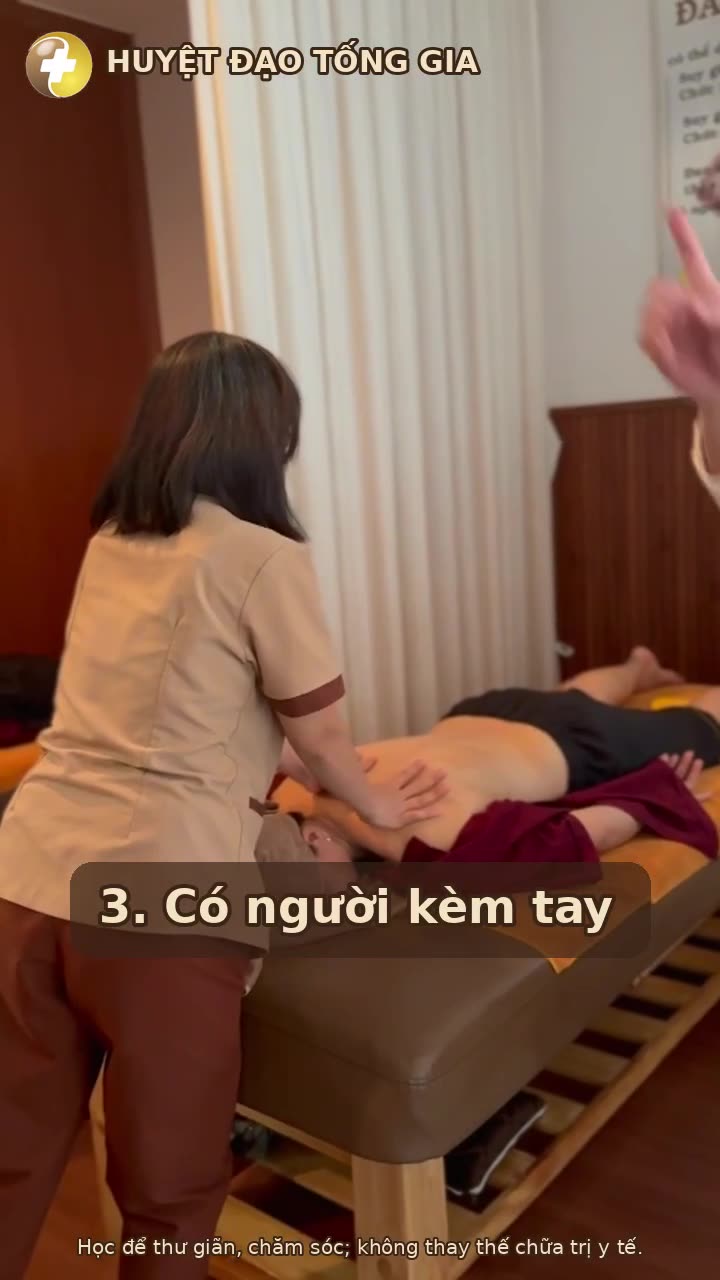
During a massage session, Tong Gia learners use a few gentle passive movements: supporting the client’s arm through small circles at the shoulder, slowly bending and straightening the knee, tilting the neck within a range the client finds comfortable. The client lies still while the practitioner supports and guides. The only aim is to soften muscles that have just been released and help the client feel lighter, not to restore lost function. See passive movement in muscle release for details.
Tong Gia teaches three rules for this part: work only within the client’s comfortable range and never push past the point of tension; no rough force and no cracking joints; stop at once if the client grimaces, holds their breath or pulls the limb back. Following Y Tuong Hoc (Vietnamese physiognomy), learners also look at complexion and body type first: a thin person with a pale complexion and short breath needs even lighter pressure and a smaller range. Deeper stretching is covered in stretching in massage.
Comparison table: two different jobs
| Point of comparison | Movement rehabilitation (medical rehabilitation) | Gentle passive movement in wellness massage |
|---|---|---|
| Belongs to | Medicine, the rehabilitation branch | Wellness care |
| Who does it | People with formal training and a licence | Massage learners who have been taught |
| Starts from | An assessment by a medical facility | Asking the client, reading the face, reading the spine by hand |
| Aim | Restore joint range, muscle strength, gait | Soften released muscles further, help the client relax |
| The person cared for | Exercises actively, with gradually increasing load | Lies still while the practitioner supports and guides lightly |
| Limits | A monitored rehabilitation plan | Within the comfortable range, no forcing, no cracking joints |
When to refer a client to a medical professional
- The client has a fresh injury, recent surgery, wears a brace or has been told to do rehabilitation exercises.
- Pain that lasts, pain that worsens at night, numbness or weakness in the limbs that keeps increasing.
- A hot, swollen joint, fever, or an uncontrolled underlying condition.
- The client cannot lift their arm unaided or stand as steadily as before.
In these cases the massage learner advises the client to visit a medical facility and does not hand out rehabilitation exercises. Read more in when a practitioner must decline to work. If the client already has exercise guidance from a medical facility, ask which areas may be massaged and do only gentle wellness work there.
A small exercise: sort five situations
Write down the five situations below and mark each one “I can work gently” or “advise a medical visit first”:
- An office worker with a stiff neck and shoulders after a week of deadlines.
- Someone whose wrist cast came off last week.
- A runner with tight calves after a race, no swelling, no sharp pain.
- An older person who often wobbles when standing up.
- Someone with back pain spreading down the leg and numb toes.
The answer as Tong Gia teaches it: situations 1 and 3 are wellness work and can be done gently (see sports stretching massage); situations 2, 4 and 5 call for a medical visit first. If you got one wrong, note your reasoning and ask Lương Y in class.
How Tong Gia teaches this
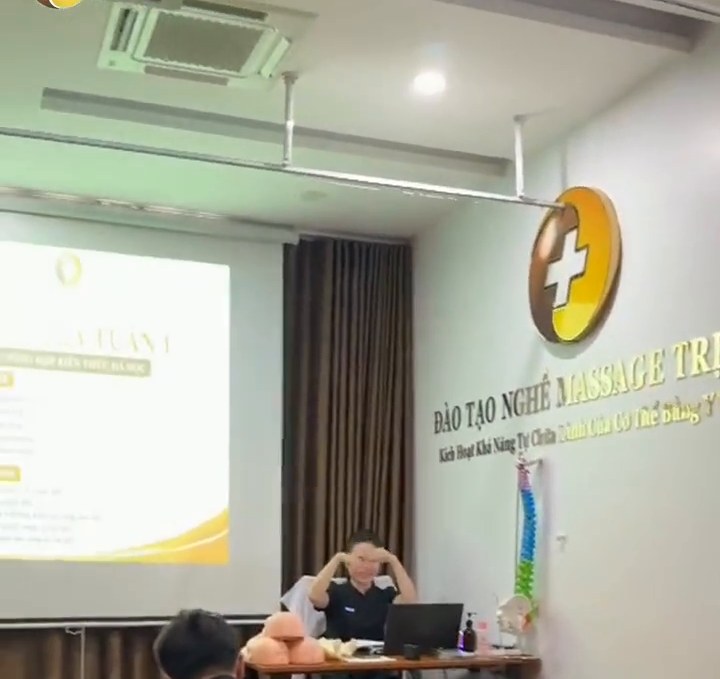
Lương Y Tống Văn Huynh, with more than 13 years in Eastern-medicine wellness, teaches gentle passive movement in L2 Core craft and in more depth in L3 Specialist, together with reading the spine by touch and five levels of pressure. Learners practise on real people under guidance; about 70% of class time is practice. Tong Gia does not teach needling, does not use rough force, and does not teach learners to take over the work of medical rehabilitation.
How to register
The Sunday morning trial class 9:00–12:00 (10 places) and the Sunday Y Tuong Hoc session with no fee are open sessions for beginners, at unit T16-21, Manhattan block, Vinhomes Grand Park, Thu Duc City, Ho Chi Minh City. Book a trial class or call the training hotline 0917 945 259.
Frequently asked questions
What is movement rehabilitation? It uses purposeful exercises to restore joint range, muscle strength, balance and gait, and it belongs to the rehabilitation branch of medicine.
Can massage learners carry out movement rehabilitation? No. It is done by people with formal training and a licence. Massage learners use only gentle passive movement during muscle release.
What is gentle passive movement in muscle release? The client lies still while the practitioner supports and guides the joint within a comfortable range to soften released muscles, without forcing or cracking joints.
When should I advise a client to see a medical professional instead of working? When there is a fresh injury or recent surgery, lasting pain, numbness or weakness that keeps increasing, a hot swollen joint, fever or an uncontrolled underlying condition.
At which Tong Gia level is this gentle movement taught? In L2 Core craft and in more depth in L3 Specialist; fees and sessions are given by the advisor at enrolment, call 0917 945 259.
Related articles
- What is acupressure? Principles, limits and a structured path to an acupressure course in Vietnam
- Acupressure and acupuncture: what is the difference for learners
- Acupressure vs massage: how they differ, and where to start if you want to learn the trade
- Acupoint map of the human body: how to read the meridian map and what order to learn it in
- All articles about learning the trade
Reserve a free Sunday-morning trial class or ask about the learning path: message Zalo 0917 945 259.

Founder of Tong Gia Acupoint Wellness (Huyệt Đạo Tống Gia), with more than 13 years in Eastern wellness practice, Y Tướng Học (face reading for wellness) and spinal nerve-reflex balancing. Lương Y's story
417 customers have reviewed Tong Gia on Google Maps
Reviews are written by customers themselves on Google; tap to read them before you visit.
Huyệt Đạo Tống Gia Quận 12
225 Dương Thị Mười, Phường Tân Chánh Hiệp (District 12, Ho Chi Minh City). 8:00 – 19:00 daily.
See reviews on Google MapsHuyệt Đạo Tống Gia Quận 9
Căn T16-21 khu Manhattan, Vinhomes Grand Park, Phường Long Bình (Thủ Đức City, Ho Chi Minh City). 9:00 – 20:00 daily.
See reviews on Google MapsWant to be observed in person?
A 90-minute session starts with observation, and only then moves on to muscle release and acupressure on the right areas. Two branches: District 12 and Vinhomes Grand Park.