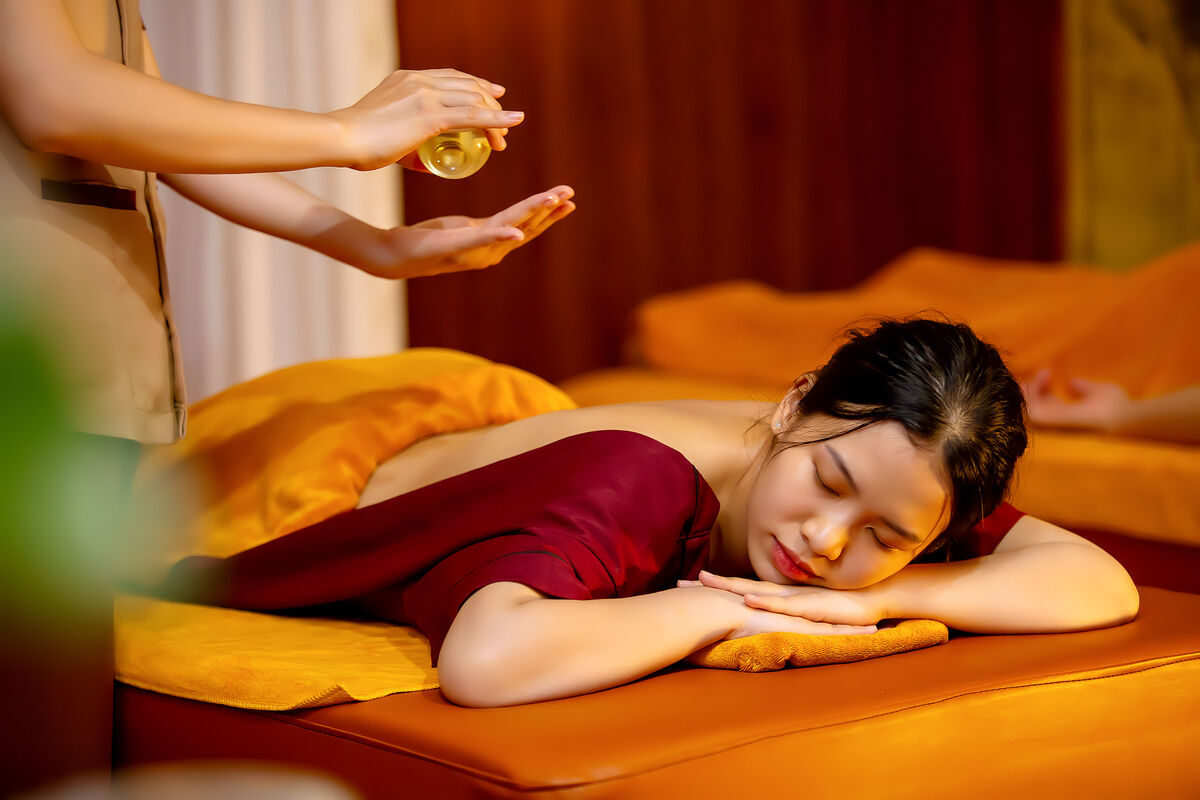
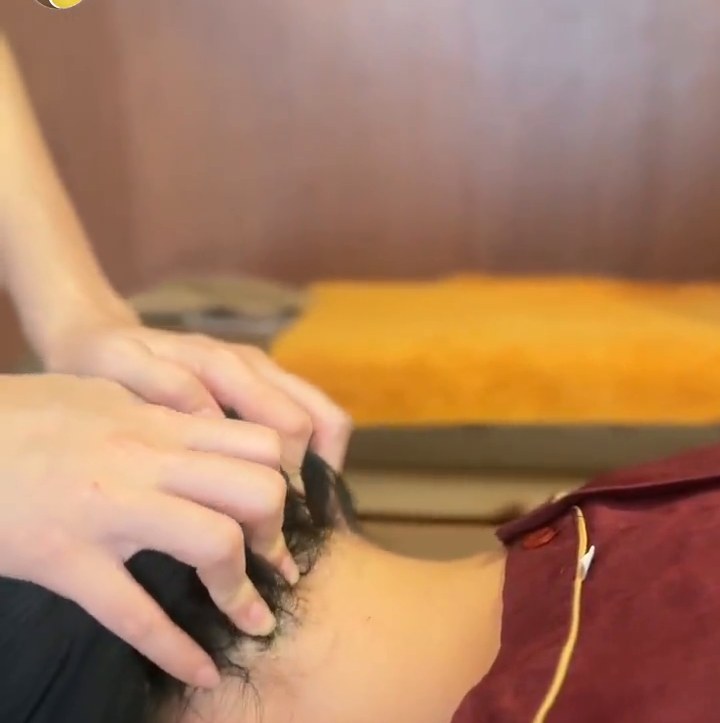
Partner practice between learners in massage class: why the class works in pairs and how to learn from every turn
Lương Y (traditional healer) Tống Văn Huynh · Tong Gia Acupoint Wellness (Huyệt Đạo Tống Gia) · 29/11/2026
Partner practice between learners in massage class means two people take turns working on and lying down for each other so the hands train on a real body. The person lying down reports whether pressure is heavy or light, the one working adjusts at once, and the teacher goes from pair to pair correcting hands. At Tong Gia Acupoint Wellness (Huyệt Đạo Tống Gia), about 70% of class time is practice in pairs, with clear safety and privacy rules.
Questions learners often ask about partner practice
I am uneasy about strangers touching me. In a massage class, do I have to lie down as a model for classmates?
Lying down is half the lesson, because only then do you know which pressure feels good and which hurts. You may say stop at any time, you are covered with a towel and only the area being worked is uncovered. If you feel uneasy, tell the teacher at the start so you are paired suitably. Tong Gia Acupoint Wellness spends about 70% of time on practice in pairs.
My partner is also a beginner. If they do it wrong, what do I learn, and will it hurt?
You learn a lot: you feel the wrong pressure on your own body, so you know what to avoid on your turn. Beginners start light, increase gradually and keep asking. With sharp pain, numbness or dizziness, stop and tell the teacher. Anyone with an underlying illness, pregnancy or a recent injury should say so before class.
Can learning massage from videos at home replace a pair-practice class in Thu Duc?
Video shows the movement but not the pressure, and nobody corrects your hands. Pair practice gives immediate feedback from the person lying down and from the teacher. At Tong Gia Acupoint Wellness, classes are at unit T16-21, Manhattan block, Vinhomes Grand Park; trial class Sunday morning 9:00–12:00; training hotline 0917 945 259.
What partner practice is and why the class works in pairs
Partner practice between learners in massage class means two people form a pair: one works, one lies down, then they swap roles. At Tong Gia, about 70% of class time is practice in pairs like this. The reason is not a shortage of models; it is that hand work can only be learned on a real body:
- The hand needs real skin, muscle and bone to know where it is soft and where it is hard.
- The person lying down can say at once whether pressure is heavy or light, which a practice cushion or dummy cannot.
- Only by lying down do you understand what a client feels when your hand lands.
- The teacher goes from pair to pair, correcting posture and direction of pressure on the spot.
- Changing partners across sessions gets the hands used to many different body shapes.
What the giver learns, what the receiver learns
| Role | What is learned | What to do |
|---|---|---|
| Giver | Finding landmarks, placing hands, keeping rhythm, using body weight | Ask about pressure, watch the partner's face and breathing |
| Receiver | The client's experience: pressure, rhythm, warmth of the hands | Speak honestly and specifically, do not just put up with it |
| Both | How to talk during a care session | Note one thing to correct after each turn |
The person lying down is not resting. Half the lesson is in this turn: the next time you place your hands on a client, you already know how it feels on the other side.
How to give and receive pressure feedback
Feedback like "fine" or "a bit sore" gives the giver nothing to correct. A compact routine for each pair:
- Before starting, the two agree on a numbered pressure scale, from lightest to heaviest.
- The giver asks after each change of area or technique, not only at the end of the turn.
- The receiver answers three things: where, which number, and whether it is a pleasant ache or a sharp pain.
- The giver adjusts, then asks once more to be sure it is right.
- At the end of the turn, the receiver names one thing done well and one thing to correct.
Safety and privacy rules for pair work
- Say before class if you are pregnant, have an underlying illness, a recent injury or operation, or a skin problem.
- Everyone may say "stop" at any time, with no explanation needed.
- Stay covered with a towel, uncover only the area being worked; no work on sensitive areas.
- If you feel uneasy with a partner, tell the teacher at the start of class so you are paired suitably.
- Wash hands, trim nails, and remove rings, watches and bracelets before working.
- No filming or photographing a partner without consent.
- With sharp pain, numbness, dizziness or shortness of breath, stop at once and tell the teacher.
This is a class for a wellness care trade, not a place providing medical services. If a partner has lasting unusual signs, advise a check at a medical facility.
How it differs from learning by video
| Point compared | Learning by video | Partner practice in class |
|---|---|---|
| Seeing the movement | Yes, can be replayed many times | Yes, seen directly from many angles |
| Knowing the pressure | No | Yes, felt on your own body when lying down |
| Feedback | None | From partner and teacher, while you work |
| Posture correction | Guesswork | Hands-on correction |
| Safety | On your own | Someone watching, with stop rules |
Video is still useful for reviewing the sequence after class. Pressure and hand feel need a real person. See also can massage be learned online.
Common mistakes in pair work
- The receiver is too polite, feels pain and says nothing, so the giver thinks it is right.
- The giver stares at their own hands and forgets to watch the partner's face.
- The pair chats about other things for the whole turn and runs out of time with nothing corrected.
- Working only with one familiar partner, so the hands never meet another body shape.
Partner practice within the Tong Gia path
Classes are taught by Lương Y Tống Văn Huynh, with over 13 years in the trade, in the massage approach of balancing the spinal nerve reflex system combined with Y Tuong Hoc (Vietnamese medical face reading). Beginners start with L1 Introduction to Y Tuong Hoc (1,500,000 VND); for L2 Basic Trade, L3 Specialist and L4, fees and length are given by the advisor at registration. Whether you study to work in the trade, to care for family or to help others, the pair work is the same. Tong Gia does not promise jobs or income after the course. To picture the classroom, read a practice session in massage class.
How to register
The class schedule for beginners: the Sunday morning trial class 9:00–12:00 (10 places) and the Sunday Y Tuong Hoc session with no fee, at unit T16-21, Manhattan block, Vinhomes Grand Park, Thu Duc City, Ho Chi Minh City. At the trial class you are paired up and try it straight away. Book a trial class or call the training hotline 0917 945 259.
Frequently asked questions
What is partner practice between learners in massage class? Two learners form a pair, one works and one lies down, then they swap, so the hands train on a real body and get pressure feedback at once.
Why work in pairs instead of on a dummy? A dummy cannot say whether pressure is heavy or light and has no real skin, muscle or bone. A partner gives immediate feedback, and the turn lying down shows what a client feels.
Can I refuse a movement while lying down? Yes. Everyone may say stop at any time with no explanation, and should tell the teacher about sharp pain, numbness or dizziness.
Who needs to speak up before pair work? Anyone who is pregnant, has an underlying illness, a recent injury or operation, or a skin problem should say so before class to get suitable guidance.
How much of a Tong Gia class is practice? About 70% of class time is practice in pairs. The trial class is Sunday morning 9:00–12:00 at Vinhomes Grand Park; call 0917 945 259 to hold a place.
Related articles
- 30 basic massage techniques learners should know: learn them in groups, not as a list of names
- 8 principles of spinal wellness massage: the rules of the hands for Tong Gia learners
- How to use the right pressure in acupressure: measuring force by how the receiver feels
- Hands for wellness massage: soft hands, hard hands and 6 things you must train
- All articles about learning the trade
Reserve a free Sunday-morning trial class or ask about the learning path: message Zalo 0917 945 259.

Founder of Tong Gia Acupoint Wellness (Huyệt Đạo Tống Gia), with more than 13 years in Eastern wellness practice, Y Tướng Học (face reading for wellness) and spinal nerve-reflex balancing. Lương Y's story
417 customers have reviewed Tong Gia on Google Maps
Reviews are written by customers themselves on Google; tap to read them before you visit.
Huyệt Đạo Tống Gia Quận 12
225 Dương Thị Mười, Phường Tân Chánh Hiệp (District 12, Ho Chi Minh City). 8:00 – 19:00 daily.
See reviews on Google MapsHuyệt Đạo Tống Gia Quận 9
Căn T16-21 khu Manhattan, Vinhomes Grand Park, Phường Long Bình (Thủ Đức City, Ho Chi Minh City). 9:00 – 20:00 daily.
See reviews on Google MapsWant to be observed in person?
A 90-minute session starts with observation, and only then moves on to muscle release and acupressure on the right areas. Two branches: District 12 and Vinhomes Grand Park.