Face reading for wellness: firm flesh (nhục thực bất phù), recognising it by hand and knowing its limits
Lương Y (traditional healer) Tống Văn Huynh · Tong Gia Acupoint Wellness (Huyệt Đạo Tống Gia) · 08/11/2026
In face reading for wellness, firm flesh (nhục thực bất phù) is flesh that is dense and solid, springy, not puffy and not flabby: press with the thumb and let go, and it pushes back at once. Eastern wellness tradition sees it as a sign of ample qi and blood; at Tong Gia Acupoint Wellness (Huyệt Đạo Tống Gia), learners touch and cross-check further, and never use it to judge illness.
What does nhục thực bất phù mean?
The four words are compact: “nhục” is flesh, “thực” is dense, solid, “bất phù” is not puffy, not bloated. Put together: flesh that is dense and solid but not puffy. It is one of the flesh signs in the flesh-reading part (nhục tướng) of Y Tướng Học, used together with bone signs (cốt tướng) so learners can see a person as a whole.
The key point to remember is “bất phù”. Some people look full and solid, but when you press a finger in, the dent takes a long time to come back: that is puffiness, not firmness. Firm flesh, by contrast, pushes back straight away when pressed, and the skin keeps no mark.
How to recognise firm flesh by hand
- Look: the flesh sits neatly on the frame, does not sag into folds, and the skin colour is fresh.
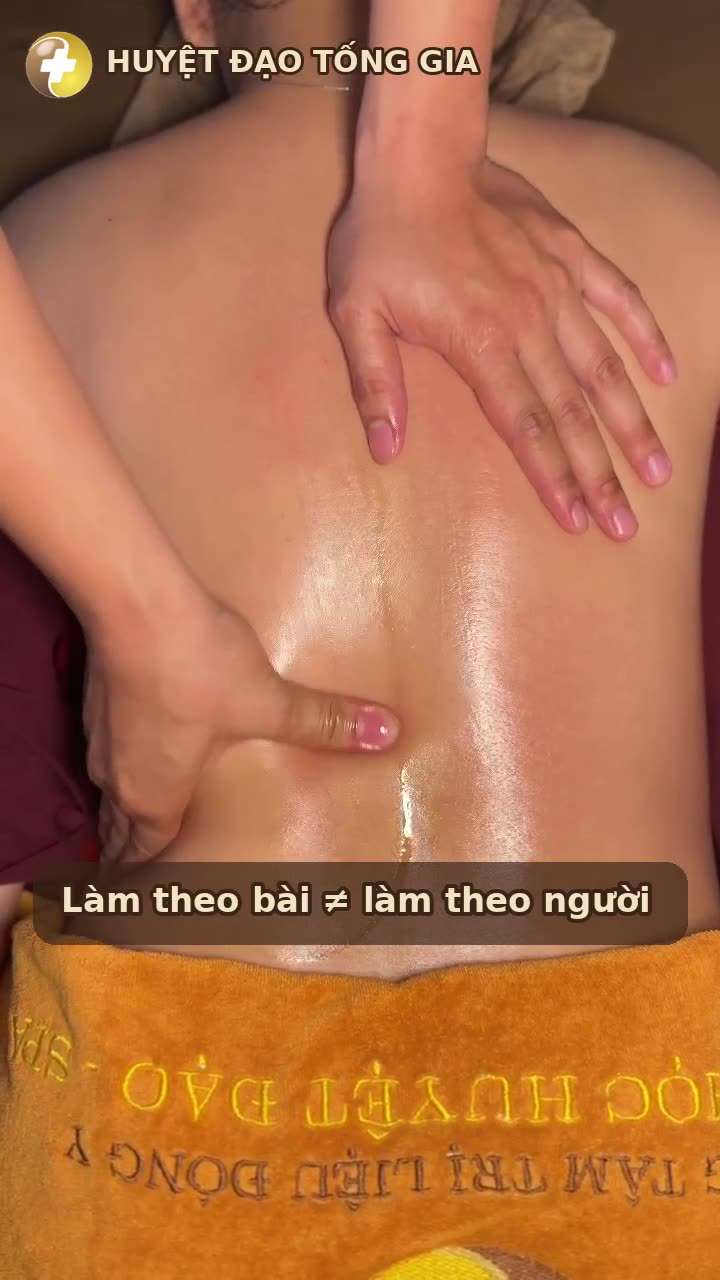
- Press: press lightly with your thumb on the upper arm or lower leg for 2–3 seconds, then release. Firm flesh pushes back at once and leaves no dent.
- Squeeze: gently grasp the shoulder muscle or calf. Firm flesh is elastic and solid in the hand, yet still soft when the person relaxes.
- Compare both sides: the flesh is even on the left and right, with no area swollen on one side.
Beginners often confuse firm flesh with tight, contracted muscle. Muscle that is tight from stress or poor working posture feels hard like a cord, feels sore to the customer when pressed, and stays hard even when the customer is lying relaxed. That is a job for muscle release, not a good flesh sign.
How is firm flesh different from soft-as-cotton flesh?
In the article on soft-as-cotton flesh (nhục nhuyễn như miên), Tong Gia discussed the soft, smooth flesh sign. These two signs are not good versus bad; they are two different body types:
- Nhục thực (firm): solid and elastic, often seen in people who move regularly and eat in moderation. The care session can use deeper pressure, still increased gradually.
- Nhục nhuyễn (soft): soft and smooth, felt with a light touch. The care session needs to be light and slow, paying attention to the customer's reactions.
- Nhục phù (puffy): flabby, stays dented for a long time after pressing. Practitioners reduce pressure, ask carefully about the person's health, and when the puffiness lasts, advise them to see a doctor.
So reading flesh signs helps learners choose the right hand pressure before laying hands on someone, true to Tong Gia's spirit of reading outer signs to understand the organs.
Why does Y Tướng Học look at flesh signs?
In Eastern wellness theory, the Spleen governs the muscles and flesh: food is transformed by the Spleen into qi and blood that nourish the flesh. So flesh signs are seen as one cue for understanding the Spleen, together with lip colour, skin colour and eating habits. The saying “the organs are the cause, the signs are the effect” here means: look at the flesh (the effect) in order to ask more about eating and movement (the cause).
Learners do not use flesh signs to pronounce on illness or fate. Every reading from outer signs must be cross-checked by hand on the spine using spinal nerve-reflex balancing, and by asking the person being cared for. With swelling on one side, long-lasting puffiness, rapid unexplained weight loss or gain, or heavy fatigue, practitioners advise the customer to see a doctor at a medical facility.
Where can you learn flesh signs?
Flesh signs, bone signs and how to match outer signs with the spine are covered in the advanced Y Tướng Học part of the Specialist Course (L3) at Tong Gia. Lương Y Tống Văn Huynh has learners touch many different people right in class, comparing firm, soft and puffy flesh so their hands gradually get used to them. Beginners can start with the Sunday Y Tướng Học session.
How to sign up
The weekly Sunday trial class, 9:00–12:00, and the free Sunday Y Tướng Học session are the open schedule for newcomers, at căn T16-21 khu Manhattan, Vinhomes Grand Park, TP. Thủ Đức (Thủ Đức City, Ho Chi Minh City). Sign up for a trial class or call the training hotline 0917 945 259.
Frequently asked questions
What is firm flesh (nhục thực bất phù)? It is flesh that is dense and solid and springs back well, without swelling or flabbiness. Press a finger into it and the flesh pushes back at once, leaving no dent.
How do you tell firm flesh from puffy flesh? Press with your thumb for 2–3 seconds, then release. Firm flesh returns at once; puffy flesh leaves a dent that takes a while to fill back in.
Is firm flesh the same as stiff muscle? No. Firm flesh is still soft when relaxed. Contracted muscle stays hard like a cord even when the person is lying relaxed; that is a job for muscle release.
Why does Y Tướng Học look at flesh signs? Because Eastern wellness theory holds that the Spleen governs the muscles and flesh. Flesh signs help learners choose suitable hand pressure and ask more about eating and movement; they are not used to pronounce on illness.
Where can I learn Y Tướng Học in Ho Chi Minh City? Tong Gia at Vinhomes Grand Park, TP. Thủ Đức runs a free Sunday Y Tướng Học session for beginners. Call 0917 945 259 to sign up.
Related articles
- 30 basic massage techniques learners should know: learn them in groups, not as a list of names
- 8 principles of spinal wellness massage: the rules of the hands for Tong Gia learners
- How much pressure in acupressure: gauging force by how the receiver feels
- Hands for wellness massage: soft hands, hard hands and 6 things you must train
- All articles about learning the trade
Reserve a free Sunday-morning trial class or ask about the learning path: message Zalo 0917 945 259.

Founder of Tong Gia Acupoint Wellness (Huyệt Đạo Tống Gia), with more than 13 years in Eastern wellness practice, Y Tướng Học (face reading for wellness) and spinal nerve-reflex balancing. Lương Y's story
417 customers have reviewed Tong Gia on Google Maps
Reviews are written by customers themselves on Google; tap to read them before you visit.
Huyệt Đạo Tống Gia Quận 12
225 Dương Thị Mười, Phường Tân Chánh Hiệp (District 12, Ho Chi Minh City). 8:00 – 19:00 daily.
See reviews on Google MapsHuyệt Đạo Tống Gia Quận 9
Căn T16-21 khu Manhattan, Vinhomes Grand Park, Phường Long Bình (Thủ Đức City, Ho Chi Minh City). 9:00 – 20:00 daily.
See reviews on Google MapsWant to be observed in person?
A 90-minute session starts with observation, and only then moves on to muscle release and acupressure on the right areas. Two branches: District 12 and Vinhomes Grand Park.