What a massage practice classroom needs: what to look at when you visit a class before choosing where to learn
Lương Y (traditional healer) Tống Văn Huynh · Tong Gia Acupoint Wellness (Huyệt Đạo Tống Gia) · 29/11/2026
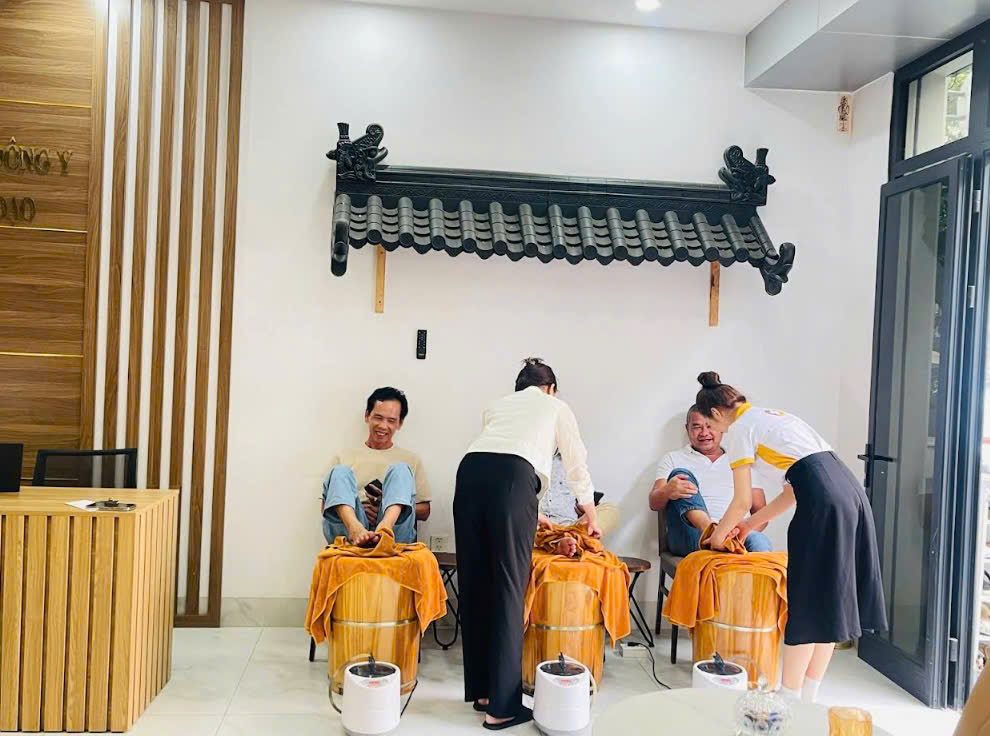
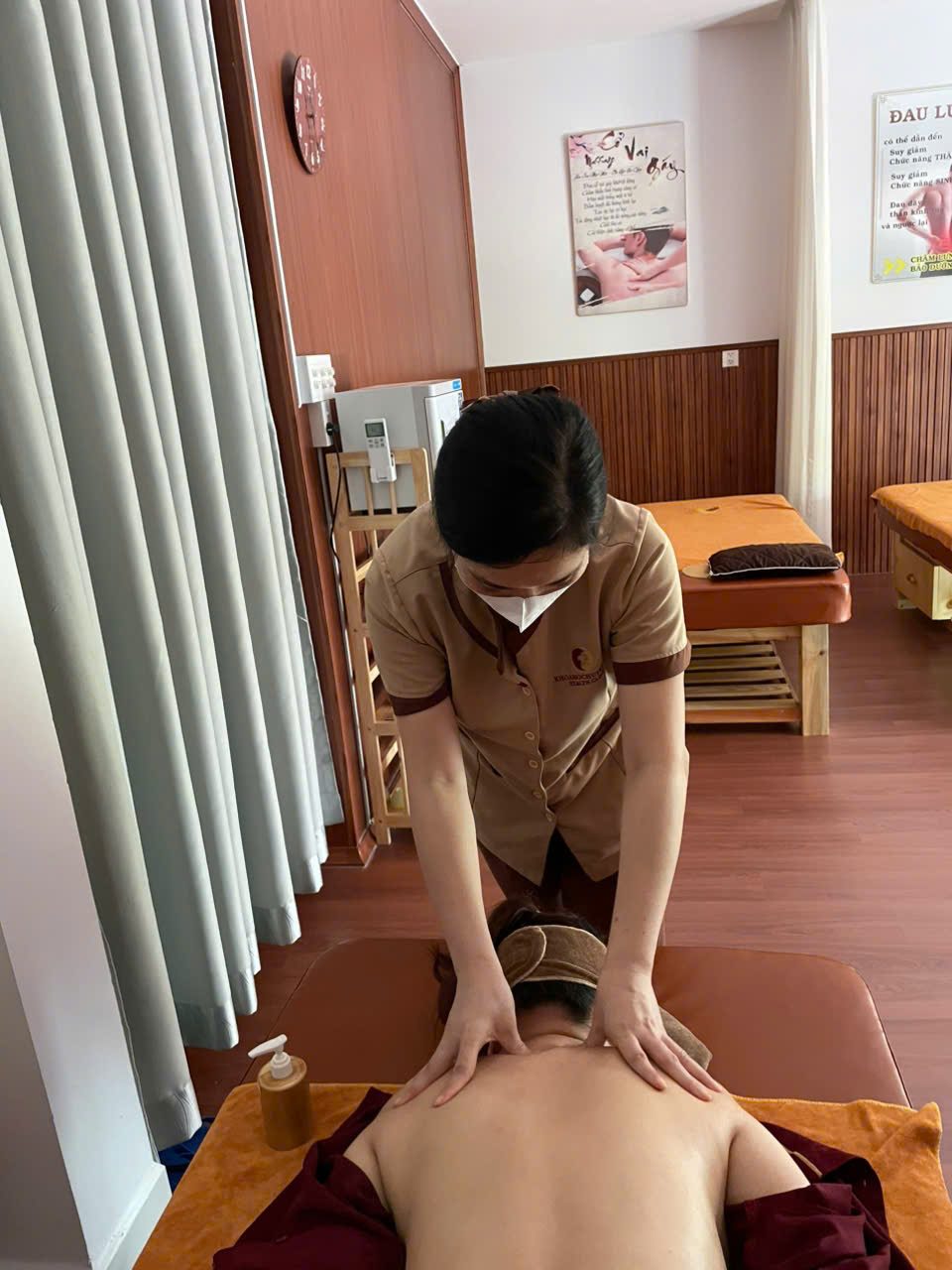
What a massage practice classroom needs: enough sturdy tables for every pair, clean towels changed for each person, clear light, a place to wash hands, room between tables for the instructor to stand and correct hands, and anatomy models. More important than equipment is how many learners each instructor looks after. Tong Gia Acupoint Wellness (Huyệt Đạo Tống Gia) invites you to visit a class before registering.
Questions learners often ask about the practice classroom
I am about to visit a massage class in Ho Chi Minh City and know nothing about the trade. What should I check in the practice room?
Come while a class is running, count tables against learners, see whether towels are changed for each person, whether there is a place to wash hands, whether there is room around the tables to change sides, and whether the instructor puts hands on each learner to correct them. Tong Gia Acupoint Wellness welcomes visits at Vinhomes Grand Park, Zalo 0917 945 259.
Should I sign up for a massage class with many learners but only a few tables? How many people per table is reasonable?
In practice time there should be one table per pair, with the two people swapping roles. With three or four people waiting for one table, each person gets far less hands-on time. Ask directly about the maximum class size and the number of instructors, then sit in on one session before paying fees.
Does a massage classroom need a skeleton model and anatomy charts, or are tables enough to learn the trade in Thu Duc?
It should have them. A spine model, muscle and bone charts and point maps help learners match what the hand has just felt with the structure underneath. At Tong Gia Acupoint Wellness, Lương Y Tống Văn Huynh teaches massage that balances the spinal nerve reflex system; come to unit T16-21, Vinhomes Grand Park, to see it in person.
The practice room decides how much you actually learn
Massage is a trade of the hands, so most of the learning time has to happen beside a table, not on a chair listening to a talk. The question of what a massage practice classroom needs should therefore come even before the fee: in a cramped room with too few tables and nobody to correct your hands, however good the curriculum is, you only get to stand and watch.
This article is written from the side of the person choosing where to learn. You can check these things yourself without knowing the trade; just come in person while a class is running and look at the eight points below.
Eight things a practice room should have
| Item | Should have | Signs worth asking about |
|---|---|---|
| Tables | Sturdy, no wobble, at a height that does not force the person working to bend the back | Learning on chairs, on the floor or on makeshift beds |
| Number of tables | One table per pair of learners during practice time | Three or four people waiting for one table |
| Towels, sheets | Clean, changed for each person who lies down | One towel used for the whole session |
| Light | Bright enough to see skin colour and hand position clearly | A dim room like a service room |
| Hygiene | A place to wash hands near the room, floor and tables wiped, fresh air | A damp smell, nowhere to wash hands |
| Space between tables | The person working can walk around the table and the instructor can stand beside them | Tables pushed together, only one side usable |
| Instructor | Goes from table to table and puts hands on each learner to correct them | Demonstrates at the front while learners manage alone |
| Anatomy aids | A spine model, muscle and bone charts, point maps to check against | Only projected slides |
Why tables and walking space matter more than how the room looks
Beginners often notice whether the room is pretty. People in the trade look at table height first, because a table that is too low forces the back to bend, and one that is too high stops you using your body weight. A wrong posture repeated through a whole course becomes a habit that is hard to correct. The same goes for space around the table: many moves need you to change sides and change where you stand; with tables against a wall or against each other you only practise half the routine.
Clear light may sound like the opposite of what people imagine for a massage room, but a classroom is not a service room. Learners need to see the skin change colour, the muscle rise and the position of the instructor's fingers. In a class that includes Y Tuong Hoc (Vietnamese medical face reading), light is also needed to practise observing facial colour.
Towels, hygiene and the learner's own safety
In class you are both the person working and the person lying down for your partner. Clean towels changed for each person, hand washing before and after touching and wiped tables are in your direct interest, not just a formality. A place that teaches this part carefully is also building the right habits for when you later look after clients or family. You can read more in hygiene and safety in the massage room.
The instructor-to-learner ratio: ask for the number
There is no single number for every class, but the principle is clear: the more learners per instructor, the less hand correction each one gets. Ask three questions:
- What is the maximum class size, and how many instructors and assistants are there?
- In one session, how many times does each learner get direct hand correction?
- What share of the time is practice on real people?
A vague answer is a sign in itself. The easiest way is still to sit in on one session, as described in a practice session in a massage class.
A checklist to bring when you visit a class
- Come while a class is running, not just to see an empty room.
- Count the tables and the learners who are practising.
- See whether the instructor puts hands on each learner to correct them.
- Look at the towels, the hand-washing place and the floor.
- Try standing beside a table: is there room to turn and change sides?
- Ask about models, anatomy charts and the materials learners may use.
- Ask clearly about the fee for each level and the documents issued after the course before paying.
Visiting a class at Tong Gia
Rather than describing the classroom in words, Tong Gia Acupoint Wellness invites you to come in person and check with the list above. The class teaches massage by the method of balancing the spinal nerve reflex system together with Y Tuong Hoc, led by Lương Y Tống Văn Huynh, with over 13 years in the trade; about 70% of the time is practice in pairs. L1 Introduction to Y Tuong Hoc costs 1,500,000 VND; for L2 Basic Trade, L3 Expert and L4, the advisor gives fees and length at registration. This is a wellness care trade, not a medical profession, and Tong Gia does not promise jobs or income after the course.
How to register
The Sunday morning trial class 9:00–12:00 (10 places) and the Sunday Y Tuong Hoc session with no fee are open sessions for beginners, and also a chance to see the practice room while a class is running, at unit T16-21, Manhattan block, Vinhomes Grand Park, Thu Duc City, Ho Chi Minh City. Book a trial class or call the training hotline 0917 945 259.
Frequently asked questions
What does a massage practice classroom need? Sturdy tables for every pair, clean towels changed for each person, clear light, a place to wash hands, space around the tables, an instructor who corrects each learner by hand, and anatomy models and charts.
How many learners per table is reasonable? During practice there should be one table per pair so the two can swap roles. When many people wait for one table, each gets less hands-on time.
Why should a massage classroom be bright instead of dim? Learners need to see skin colour and the hand positions of the instructor and of themselves clearly. This is where a classroom differs from a service room.
What should I ask about the instructor-to-learner ratio? Ask about the maximum class size, the number of instructors and assistants, how many times per session you get direct hand correction, and what share of the time is practice on real people.
Where and when can I see the Tong Gia practice room? Sunday morning 9:00–12:00 during the trial class at unit T16-21, Manhattan block, Vinhomes Grand Park, Thu Duc City. Call 0917 945 259 to hold a place.
Related articles
- 30 basic massage techniques learners should know: learn them in groups, not as a list of names
- 8 principles of spinal wellness massage: the rules of the hands for Tong Gia learners
- How to use the right pressure in acupressure: measuring force by how the receiver feels
- Hands for wellness massage: soft hands, hard hands and 6 things you must train
- All articles about learning the trade
Reserve a free Sunday-morning trial class or ask about the learning path: message Zalo 0917 945 259.

Founder of Tong Gia Acupoint Wellness (Huyệt Đạo Tống Gia), with more than 13 years in Eastern wellness practice, Y Tướng Học (face reading for wellness) and spinal nerve-reflex balancing. Lương Y's story
417 customers have reviewed Tong Gia on Google Maps
Reviews are written by customers themselves on Google; tap to read them before you visit.
Huyệt Đạo Tống Gia Quận 12
225 Dương Thị Mười, Phường Tân Chánh Hiệp (District 12, Ho Chi Minh City). 8:00 – 19:00 daily.
See reviews on Google MapsHuyệt Đạo Tống Gia Quận 9
Căn T16-21 khu Manhattan, Vinhomes Grand Park, Phường Long Bình (Thủ Đức City, Ho Chi Minh City). 9:00 – 20:00 daily.
See reviews on Google MapsWant to be observed in person?
A 90-minute session starts with observation, and only then moves on to muscle release and acupressure on the right areas. Two branches: District 12 and Vinhomes Grand Park.