What frown lines between the eyebrows mean: the Yintang area through the eyes of a wellness massage learner
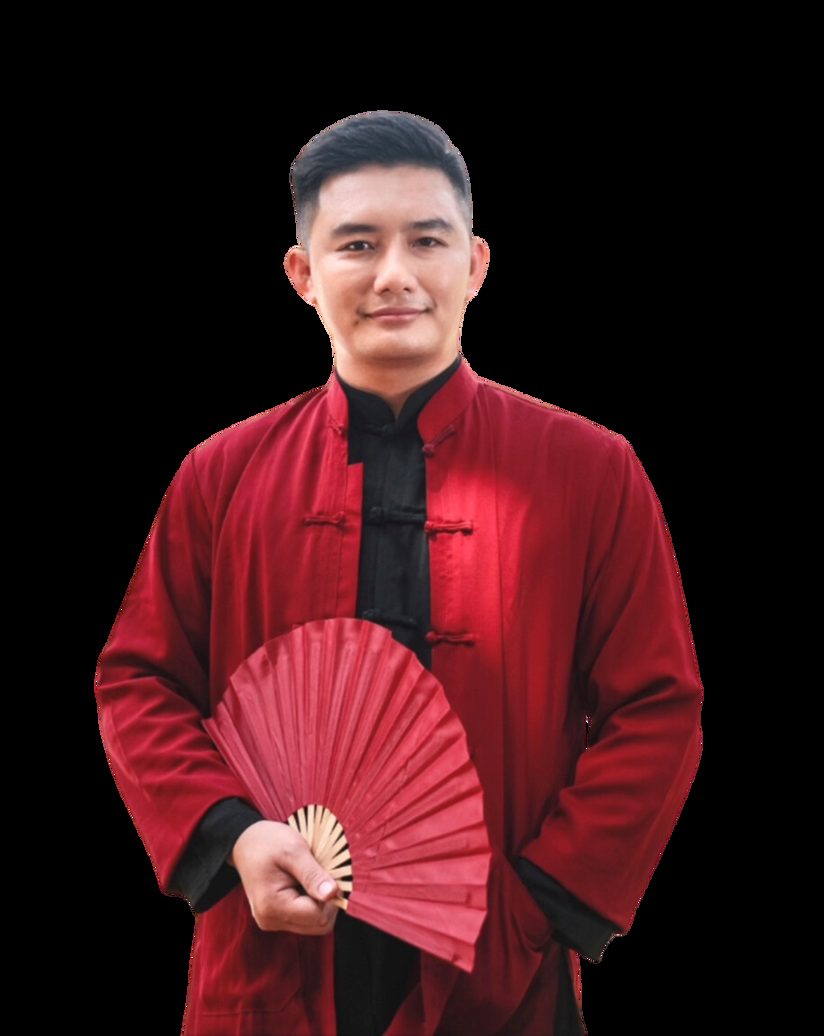
Lương Y (traditional healer) Tống Văn Huynh · Tong Gia Acupoint Wellness (Huyệt Đạo Tống Gia) · 13/11/2026
What do frown lines between the eyebrows mean? They show the corrugator contracts often from squinting, long focus or stress. At Tong Gia Acupoint Wellness (Huyệt Đạo Tống Gia) in Ho Chi Minh City, learners read Yintang (EX-HN3, 印堂) as a hint that Liver qi, Heart and Lung need care, then ask the client and relax the forehead without judging.
Questions learners often ask about what frown lines between the eyebrows mean
I'm learning massage in Ho Chi Minh City. Do frown lines between the eyebrows really show a tired organ? What's the Eastern medicine basis?
Only as a hint. The vertical lines come from the corrugator muscle contracting a lot through squinting, focus and stress. Eastern medicine links the Yintang area with the Heart, the Lung and Liver qi: the signs show outside, the organs lie inside. Tong Gia teaches learners to ask the client and cross-check by hand on the spine.
I work as a massage practitioner in District 12. A client has deep lines between the brows: how do I relax the forehead safely?
Warm your hands, stroke lightly from Yintang to the temples with the breath, loosen the neck first, and never knead hard near the eyes. Severe headache or blurred vision: advise a check at a medical facility. Tong Gia teaches this at Vinhomes Grand Park, Thu Duc City; the District 12 branch does not run classes. Zalo 0917 945 259.
I'm in Thu Duc and want to learn to read the Yintang area and eyebrows. Which level covers it, and is there a trial class?
Yes, there is a Sunday-morning trial class with no fee. The Yintang area and eyebrow signs belong to advanced Y Tướng Học (face reading for wellness) in the Specialist Course (L3) at Tong Gia, taught by Lương Y Tống Văn Huynh at Vinhomes Grand Park. Staff give the fee when you register, Zalo 0917 945 259.
What is the Yintang point between the eyebrows used for?
Yintang (EX-HN3) is used to relax the brow and forehead muscles that tighten with squinting, focus and stress. Eastern face reading also sees this zone as a hint about Liver qi and Heart-Lung balance. Rub gently for 1–2 minutes. Headache with blurred vision needs urgent medical care. Huyệt Đạo Tống Gia teaches safe forehead work; Zalo/WhatsApp +84 917 945 259.
Where exactly is the Yintang point on the face?
Yintang sits exactly midway between the inner ends of the eyebrows, on thin skin directly over bone. Use light circles and a slow release; hard rubbing reddens the skin and tightens the brow muscle further. Eastern reading links this spot to Liver qi. A lasting headache needs a medical check. Huyệt Đạo Tống Gia teaches it hands-on; Zalo/WhatsApp +84 917 945 259.
Hands on a practice partner's forehead
In class, a learner places both thumbs on the area between a practice partner's eyebrows and kneads down hard. The partner grimaces, and the vertical line between the brows gets deeper. Lương Y Tống Văn Huynh lifts the learner's hands away, places them back more lightly, and simply strokes from between the brows out to both temples in time with the breathing of the person lying down. After a few passes, the line softens. That small exercise is how Tong Gia answers the question what frown lines between the eyebrows mean: they speak of a muscle that keeps contracting, of habits, and of the job of the learner's hands, which is to let that muscle relax.
What frown lines between the eyebrows mean in anatomy
Between the eyebrows lies the corrugator supercilii muscle, deep under the inner end of the brows. When it contracts, it pulls the inner ends of the brows inward and down, creating vertical lines. Right at the root of the nose, the procerus muscle pulls the skin down, creating horizontal lines. Every frown folds the skin once more; after years of folding, the skin slowly loses elasticity and the lines remain even when the face is at rest.
Habits that often make the corrugator contract:
- Squinting: looking at a screen up close, harsh sunlight, glaring lights, or eyes that do not see clearly without the right glasses.
- Long periods of focus: reading, calculating, long-distance driving.
- Stress and worry: facial muscles contract with emotions, often together with jaw clenching and raised shoulders.
- Headaches and lack of sleep: tired people often frown without noticing.
That is why the lines here are a flesh sign, the part that changes with how a person lives, unlike inborn bone signs. Telling these two layers apart is covered in the article how bone signs and flesh signs differ.
The Yintang area in Y Tướng Học and Eastern medicine
Y Tướng Học calls the area between the eyebrows Yintang, which is also the location of the Yintang acupoint (EX-HN3, 印堂). Tong Gia's curriculum notes that this area reflects the Heart and Lung systems. When Yintang shows vertical lines and the muscle feels tight, the curriculum suggests paying attention to: shallow breathing, frequent sighing, a chest that feels pressed down, and deep-seated stress that tightens the facial muscles and the neck and shoulder area.
Eastern medicine also links this area with Liver qi. The Liver governs smooth flow, keeping qi moving and emotions steady; long-lasting anger and irritation cause Liver qi stagnation, and the person finds it hard to relax. The curriculum describes Liver qi stagnation as qi being locked at Yintang, with the facial muscles constantly tense. Read more: what "the Liver governs smooth flow" means.
This is a hint for asking and caring, not a comment on personality. Someone who frowns a lot may simply work in accounting, ride a motorbike in the sun or need new glasses.
What learners observe and ask
Observing with the eyes
- Do the lines appear only when the client talks, or also when the face is at rest?
- One line or two, and does it lean to one side?
- Does it come with tight temples, a clenched jaw, raised shoulders or short breathing?
Asking the client
"Does your work involve a lot of screen time?", "Have you had headaches or trouble sleeping lately?", "Do you need to squint to see clearly?". The answers tell the learner which area to care for and what advice to give.
Cross-checking by hand
The learner uses hand feel to check the neck at C1–C7, the upper back at D1–D3 (the Feishu area, BL13, 肺俞, at D3) and the Ganshu area (BL18, 肝俞). If the hands find knotted, contracted muscle or skin warmer than on the opposite side, the reading from the face has a basis; if the hands find nothing, drop the reading.
Relaxing the forehead and head during a care session
- Warm your hands and rest them still on the forehead for a few breaths before stroking.
- Stroke lightly from Yintang out to both temples, then from the eyebrows up to the hairline, with light pressure and a slow rhythm.
- Loosen the neck and shoulders before or after the forehead; the forehead hardly relaxes while the back of the neck is still stiff. See also headaches from neck muscle tension.
- Suggestions at the end of the session: rest the eyes after each stretch of work, adjust screen brightness, wear sunglasses in the sun, and get the eyes tested if squinting is frequent.
Do not: knead hard, press close to the eyes, promise to erase wrinkles, or tell a client "this line is the sign of a difficult person".
Lương Y Tống Văn Huynh teaches learners to let the forehead relax
Lương Y Tống Văn Huynh, founder of Tong Gia, with more than 13 years in the craft and hundreds of learners trained, reminds learners: "The line between the brows is the trace of many frowns, not a verdict on the person; our hands let the forehead relax, and our advice gives the client fewer reasons to frown again."
When to advise a client to see a doctor
Tong Gia offers wellness care, not a medical service. Advise the client to get checked at a medical facility when there is: a severe, sudden or steadily worsening headache; blurred or double vision; headache with fever, a stiff neck or vomiting; or a need to squint a lot to see clearly. A drooping mouth, slurred speech or weakness on one side of the body: stop immediately and call 115 (Vietnam's emergency number).
Which level covers this?
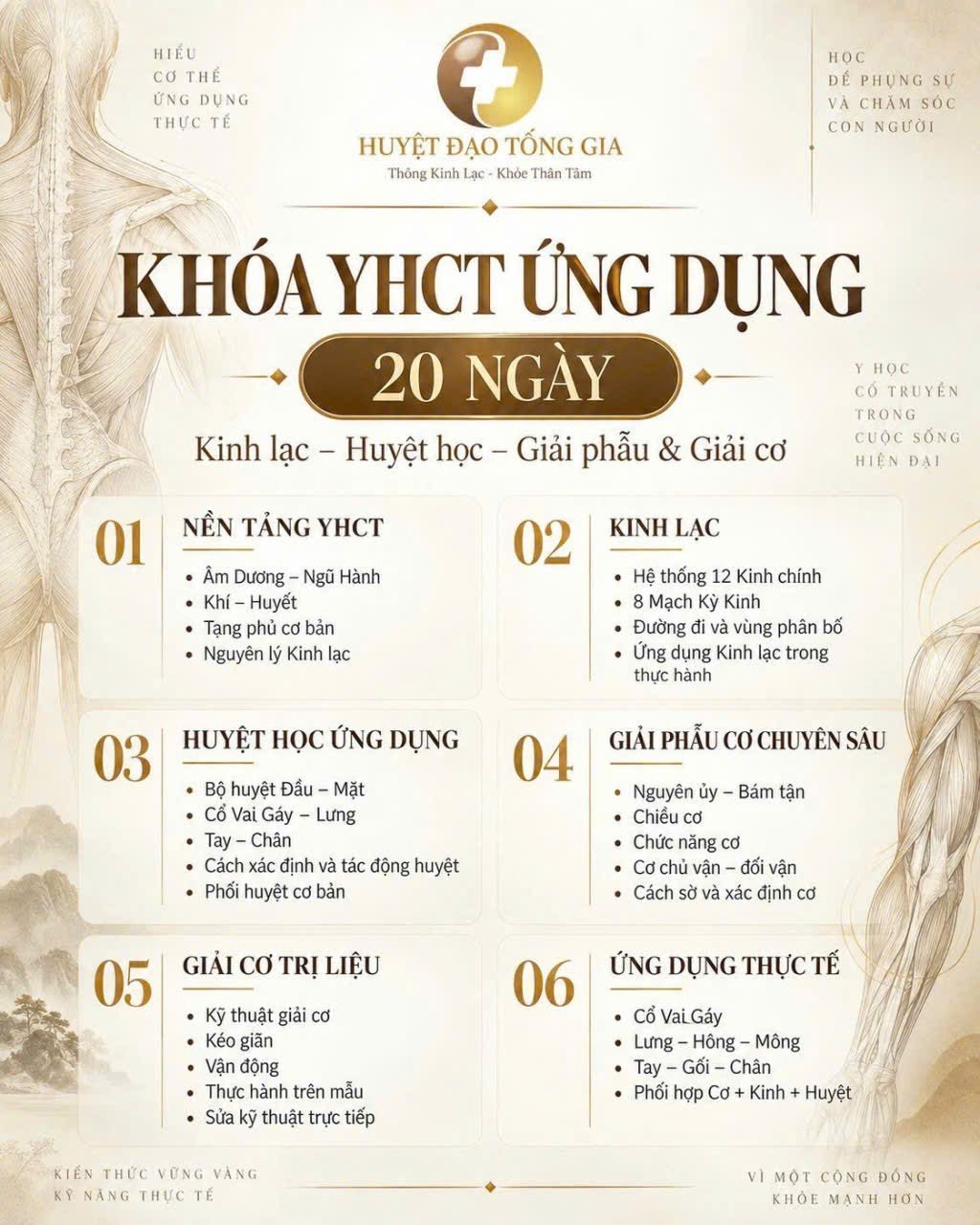
The three facial zones and reading the complexion are taught in L1 Introduction to Y Tướng Học (1.500.000₫). Yintang, eyebrow signs and how to combine facial signs with the spine are taught in the advanced Y Tướng Học part of the Specialist Course (L3); staff give the fee when you register. Teacher: Lương Y Tống Văn Huynh.
How to sign up
The Sunday-morning trial class, 9:00–12:00, with no fee, and the Sunday Y Tướng Học class are open to beginners at căn T16-21 khu Manhattan, Vinhomes Grand Park, TP. Thủ Đức (unit T16-21, Manhattan block, Thu Duc City). Tong Gia does not promise jobs or income after the course. Book a trial class or call the training hotline 0917 945 259.
Frequently asked questions
What do frown lines between the eyebrows mean? They show that the corrugator muscle contracts often from squinting, long focus or stress. Y Tướng Học reads the Yintang area as a hint to care for the Heart, Lung and Liver qi, not as a comment on personality.
What is the corrugator muscle? It is the muscle under the inner end of the eyebrows; when it contracts, it pulls the inner ends of the brows inward and down, creating vertical lines between the brows.
Does forehead massage remove wrinkles? Tong Gia does not promise to erase wrinkles. Relaxing the forehead helps the muscle let go during the session; habits such as squinting and stress decide whether the lines get deeper or shallower.
Where can I learn to read the Yintang area? At Tong Gia, Vinhomes Grand Park, Thu Duc City, in the advanced Y Tướng Học part of the Specialist Course (L3). Training hotline 0917 945 259.
Related articles
- 30 basic massage techniques learners should know: learn them in groups, not as a list of names
- 8 principles of spinal wellness massage: the rules of the hands for Tong Gia learners
- How much pressure in acupressure: gauging force by how the receiver feels
- Hands for wellness massage: soft hands, hard hands and 6 things you must train
- All articles about learning the trade
Reserve a free Sunday-morning trial class or ask about the learning path: message Zalo 0917 945 259.

Founder of Tong Gia Acupoint Wellness (Huyệt Đạo Tống Gia), with more than 13 years in Eastern wellness practice, Y Tướng Học (face reading for wellness) and spinal nerve-reflex balancing. Lương Y's story
417 customers have reviewed Tong Gia on Google Maps
Reviews are written by customers themselves on Google; tap to read them before you visit.
Huyệt Đạo Tống Gia Quận 12
225 Dương Thị Mười, Phường Tân Chánh Hiệp (District 12, Ho Chi Minh City). 8:00 – 19:00 daily.
See reviews on Google MapsHuyệt Đạo Tống Gia Quận 9
Căn T16-21 khu Manhattan, Vinhomes Grand Park, Phường Long Bình (Thủ Đức City, Ho Chi Minh City). 9:00 – 20:00 daily.
See reviews on Google MapsWant to be observed in person?
A 90-minute session starts with observation, and only then moves on to muscle release and acupressure on the right areas. Two branches: District 12 and Vinhomes Grand Park.