Massage course Vietnam for experienced practitioners: still getting complaints after years? 4 skills people in the trade often miss
Lương Y (traditional healer) Tống Văn Huynh · Tong Gia Acupoint Wellness (Huyệt Đạo Tống Gia) · 08/11/2026
Massage course Vietnam for experienced practitioners: still getting complaints after years, what should you learn next? Learn to observe and read the client's body before laying hands on it, rather than adding more moves: observe the complexion, read the spine by hand, and choose the areas and pressure level for each person. Tong Gia teaches these skills in the Specialist course.
What are you noticing?
Five, seven years in the trade, your hands are used to it and you know every move by heart. Yet some clients still say “too hard”, “not the right spot”, or worse, only say “that was nice” and never come back. Many practitioners assume their technique isn't good enough, so they go and learn a few new moves. After the course, nothing changes.
The most common reason: the practitioner follows a routine, not the person. The same 60-minute routine for an office worker, a manual laborer, an elderly person, someone who is exhausted. Clients feel that within the first 10 minutes.
What should an experienced massage practitioner learn if clients still complain?
From Lương Y Tống Văn Huynh's teaching experience, there are 4 skills that long-time practitioners often overlook.
1. Look before you touch
When a client walks in, their gait, the way they sit, their complexion and the area under the eyes already say a lot. Y Tướng Học (face reading for wellness) teaches practitioners to observe systematically instead of glancing. This is an observation guide for choosing how to care for someone, not a judgment of the client. As Tong Gia often says: “the inner constitution is the cause, the outer appearance is the effect”.
2. Read the spine by hand
Most practitioners use their hands to work; few use them to read. Place your palms along both sides of the spine and feel where it is tense, where it is cold, where the client flinches. This skill is called cảm thủ (hand sensing), the foundation of spinal nerve-reflex balancing. See also the article hand sensing in therapeutic-style massage.
3. Choose pressure for each person
“Too hard” and “too soft” are the two most common complaints. Long-time practitioners usually have one habitual level of pressure. Relearning how to grade pressure and adjust it to the client's response is what changes the experience most noticeably.
4. Ask and advise
Ask briefly before the session: where do you feel tired today, how have you been sleeping, any underlying conditions? Advise after the session: drink warm water, rest, when to come back. Clients remember the person who looked after them more than the moves. Conversation skills are covered in detail in the article client communication skills for massage practitioners.
Try it now: a 3-minute exercise with a regular client
- Before starting, look at the client for 30 seconds: is the complexion rosy, pale or dull; are the shoulders uneven? Write it down.
- Place both palms along the sides of the spine from the shoulders down to the lower back, just resting, no pressing yet. Note 2 spots that feel different from the surroundings (warm, cold, tense, stiff).
- Work as usual, but spend extra time on those 2 spots.
- At the end, ask the client: what felt different today compared with last time?
Write down the answers. After 5 clients, you will clearly see how reading before working changes the session.
When not to work, even if the client asks?
Experienced practitioners also need to remind themselves: if a client has long-lasting pain, numbness or weakness that keeps getting worse, underlying conditions such as heart problems or unstable blood pressure, or a recent injury… advise them to see a doctor at a medical facility first. Massage and acupressure are wellness care and do not replace a medical check-up. Knowing when to say no is also a way to keep clients.
Note it down: learn more moves or learn how to look?
Learning new moves makes your routine richer. But if the root problem is not being able to read the client's body, extra moves only make the routine longer. Practitioners who already have a trade should prioritize learning a system: face reading, asking, reading the spine, choosing areas, working, advising. These six steps are the flow of a Tong Gia care session.
Where can you learn this?
At Tong Gia, these 4 skills are part of the L3 Specialist course, for practitioners already working in the trade: 60 sessions, theory in the morning, hands-on practice on real people in the afternoon with Lương Y guiding. Spine reading is covered in therapeutic-style massage with spinal nerve-reflex balancing, face reading in advanced Y Tướng Học. Tuition is quoted by a consultant when you register. Tong Gia does not promise jobs or income after the course.
How to register
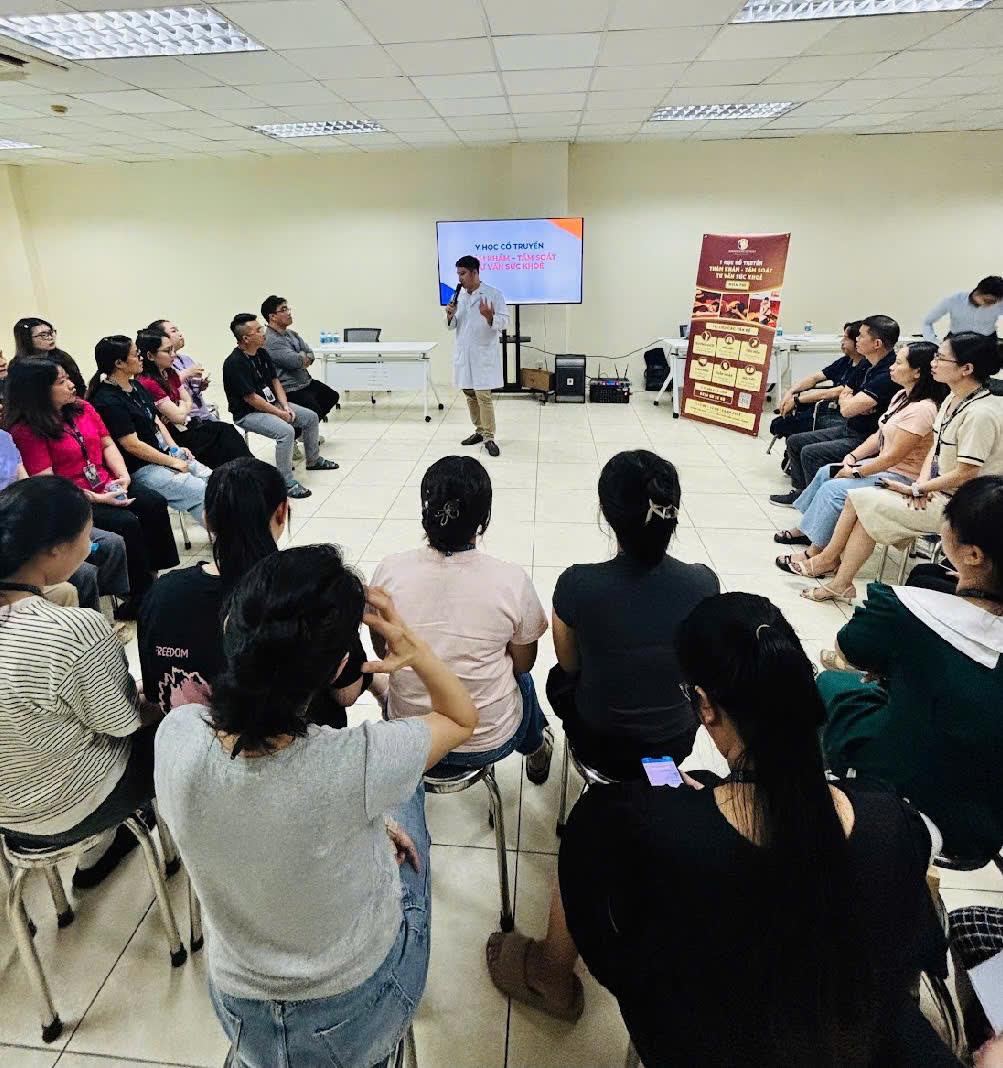
The free Sunday trial class, 9:00–12:00 every week, and the free Sunday Y Tướng Học session are open to newcomers, at căn T16-21 khu Manhattan, Vinhomes Grand Park, TP. Thủ Đức (Thủ Đức City, Ho Chi Minh City). Lương Y assesses your hands-on skills at the trial class and suggests what to learn. Register for a trial class or call the training hotline 0917 945 259.
Frequently asked questions
Why don't clients come back even after years of doing massage? Usually because the same routine is used for every client, without reading each person's body first. Clients can feel that the session isn't tailored to them.
Still getting complaints after years as a massage practitioner: what should you learn next? Prioritise learning to observe and read the client's body: observe the complexion, read the spine by hand, choose the areas and pressure level for each person, and only then add new moves.
How do you fix it when clients say the pressure is too hard? Ask the client before the session, start light, increase gradually according to their response, and grade the pressure by area instead of using one habitual level.
Who is the Tong Gia Specialist course for? For practitioners working in spas, massage, wellness hair washing, or shop owners who want to raise their skill level. Tuition is quoted by a consultant when you register.
Related articles
- What is acupressure? Principles, limits and a structured path to learning acupressure
- How acupressure differs from acupuncture, and what people outside healthcare should learn
- How acupressure differs from massage, and where trade learners should start
- Human acupoint map: how to read it and in what order to learn without getting confused
- All articles on learning the trade
Reserve a spot in the free Sunday morning trial class or ask about the learning path: message Zalo 0917 945 259.

Founder of Tong Gia Acupoint Wellness (Huyệt Đạo Tống Gia), with more than 13 years in Eastern wellness practice, Y Tướng Học (face reading for wellness) and spinal nerve-reflex balancing. Lương Y's story
417 customers have reviewed Tong Gia on Google Maps
Reviews are written by customers themselves on Google; tap to read them before you visit.
Huyệt Đạo Tống Gia Quận 12
225 Dương Thị Mười, Phường Tân Chánh Hiệp (District 12, Ho Chi Minh City). 8:00 – 19:00 daily.
See reviews on Google MapsHuyệt Đạo Tống Gia Quận 9
Căn T16-21 khu Manhattan, Vinhomes Grand Park, Phường Long Bình (Thủ Đức City, Ho Chi Minh City). 9:00 – 20:00 daily.
See reviews on Google MapsWant to be observed in person?
A 90-minute session starts with observation, and only then moves on to muscle release and acupressure on the right areas. Two branches: District 12 and Vinhomes Grand Park.