Designing the client experience for a wellness centre: clients return because they feel understood, not because of discounts
Lương Y (traditional healer) Tống Văn Huynh · Tong Gia Acupoint Wellness (Huyệt Đạo Tống Gia) · 22/11/2026
Learning to design the client experience for a wellness centre means designing 7 touchpoints, from the first message, welcome, condition questions, the care session and advice, to a follow-up message after the session, then writing them into a procedure so every practitioner works the same way. At Tong Gia Acupoint Wellness (Huyệt Đạo Tống Gia), this is part of L4 Master and Transfer for centre owners, built on L2 hand skills and reading clients through Y Tuong Hoc.
Questions learners often ask about designing the client experience
I am 40 and about to open a wellness centre in Thu Duc. Where can I learn to design the client experience and a procedure for my staff?
Learn where a real centre is being run. Psychologically, clients remember most the feeling of being heard; Eastern medicine stresses asking carefully about condition before touching. This is wellness care, not a medical service. Tong Gia teaches this in L4, at unit T16-21, Vinhomes Grand Park, Thu Duc City; Zalo 0917 945 259.
Can an owner with no hands-on skill learn this, and how long does it take?
Yes, but L1 and L2 first help you understand what practitioners do in a session. L4 sessions are given by an advisor at registration. A good procedure includes advising a medical check for lasting pain or growing numbness. Tong Gia does not promise revenue or payback time.
How do I choose a course on running a wellness centre in Ho Chi Minh City without wasting money?
Ask whether the teacher runs a real centre, has concrete procedure templates and practises scenarios. Tong Gia has two care branches serving clients daily in District 12 and District 9. Ask reception about the paperwork before paying.
What client experience means in a wellness centre
Clients do not come to a wellness centre just to buy 90 minutes of massage. They buy the feeling of being understood: someone asks about the exact tired spot, remembers what they said last time, gives one piece of advice that suits their lifestyle. Client experience is the sum of those touchpoints. If every practitioner works differently, clients return when they meet the skilled one and not otherwise.
Learning to design the client experience means turning that feeling into concrete, ordered actions anyone in the centre can do.
7 touchpoints to design
| Touchpoint | What to standardise |
|---|---|
| 1. Client messages or calls | Response time, a first question about the tired area, clear free slots |
| 2. Welcome | Greet by name, offer warm water, briefly introduce the session |
| 3. Condition questions | Intake form: where it hurts, how long, underlying conditions, pregnancy, medication |
| 4. Observation and spine reading | Read complexion and posture; read the spine by hand; tell the client which areas will be worked |
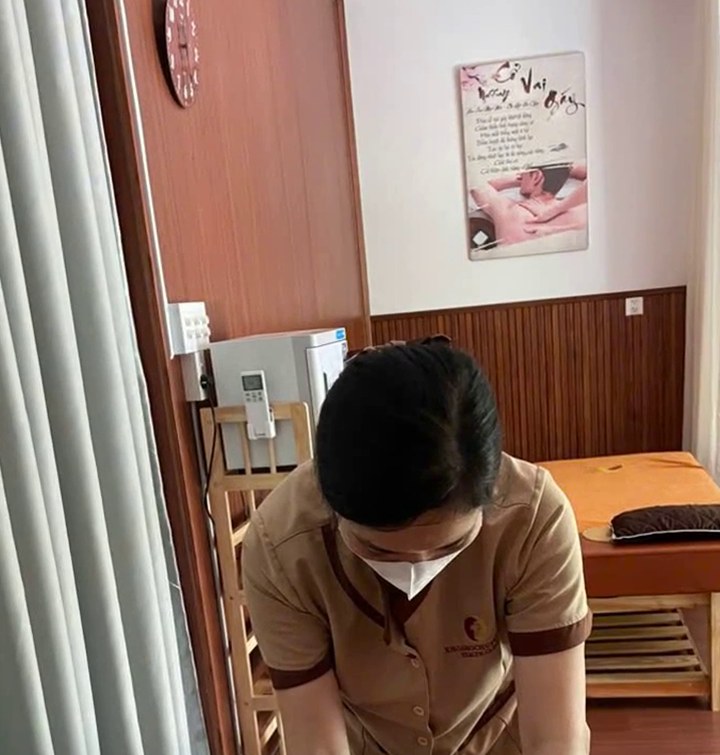
| 5. During the session | Check pressure 2–3 times, keep quiet when the client wants to rest, room temperature |
| 6. Ending and advice | One concrete piece of advice that fits their life; say clearly when to see a medical facility |
| 7. After the session | A follow-up message the next day, notes in the client record for next time |
Three mistakes that stop clients returning
- Starting without asking: the client feels like one more back in the queue. See how to ask clients before a session.
- Overpromising: "a few sessions and the pain is gone". A wellness centre must not say this; clients with lasting pain or growing numbness must be advised to get a medical check.
- Selling packages at the first visit: the client is asked to buy before feeling any value. A good experience lets the client ask for the next appointment themselves.
How Y Tuong Hoc helps the client experience
In the Tong Gia curriculum, reading the signs before touching is how clients feel truly cared for. The practitioner looks at complexion, sitting posture and shoulders, then says one accurate sentence: "You often lean to the left, don't you?" Then they check by hand on the spine. That accurate sentence builds more trust than any introduction. For difficult or impatient clients see client psychology in spa massage.
From experience to a staff procedure
- Record how the most skilled practitioner in the centre handles the 7 touchpoints.
- Write it as short, ordered sentences posted at the desk and in care rooms.
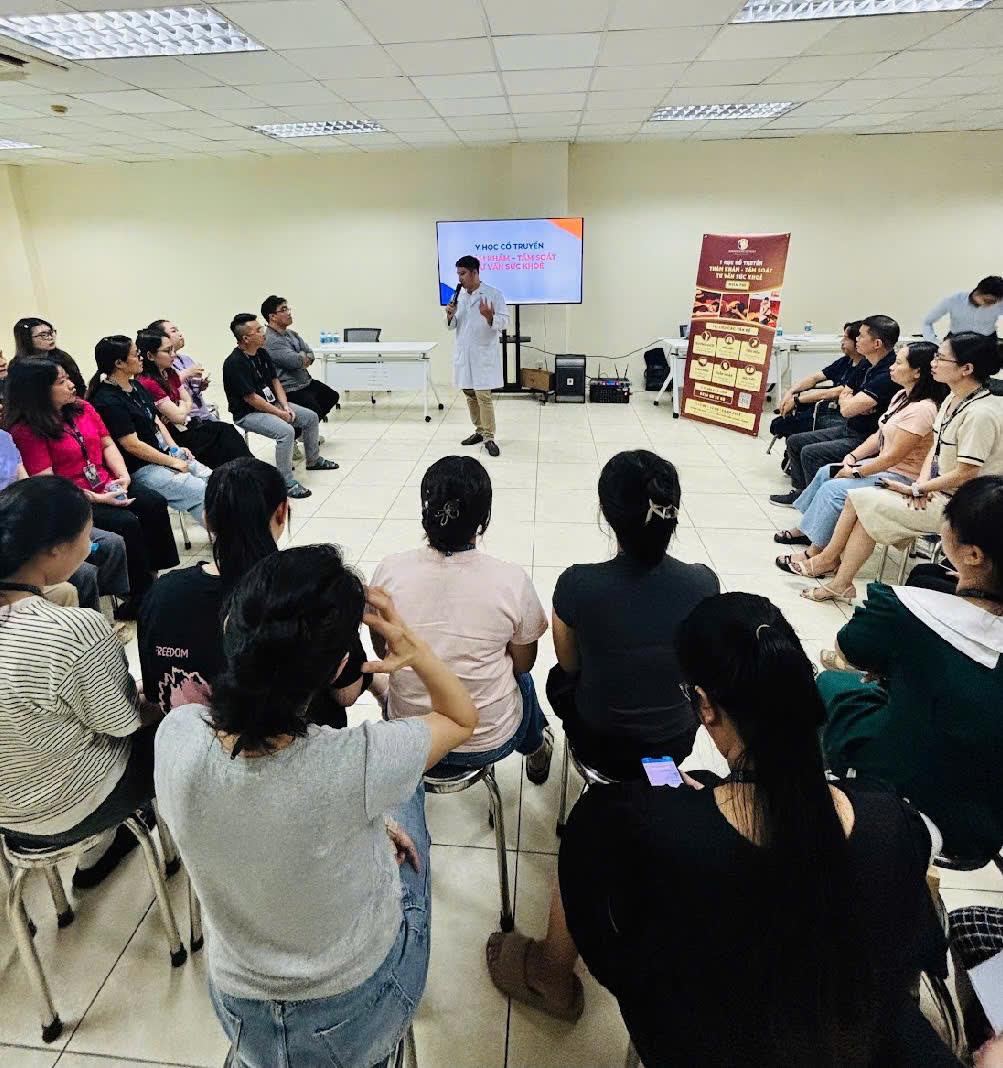
- Practise scenarios: a late client, a client who does not want to talk, a client with unusual pain.
- Each month review client records and Google Maps reviews, and fix weak touchpoints.
The boundary does not change: a wellness centre is not a medical service. The procedure must include stopping and advising a medical facility when pain lasts, numbness or weakness grows, or an underlying condition is unstable.
Which level
Client experience, operating procedures and staff training are part of L4 Master and Transfer, for centre owners. Owners without hands-on skill should take L1 Introduction to Y Tuong Hoc (1,500,000 VND) and L2 Basic Trade first. L4 sessions and fees are given by an advisor at registration. The procedure is used daily at Tong Gia's two care branches in District 12 and District 9. Tong Gia does not promise revenue or payback time.
How to register
The Sunday morning trial class 9:00–12:00 (10 places) and the Sunday Y Tuong Hoc session with no fee are open sessions for beginners, at unit T16-21, Manhattan block, Vinhomes Grand Park, Thu Duc City, Ho Chi Minh City. Book a trial class or call the training hotline 0917 945 259.
Frequently asked questions
What does client experience in a wellness centre include? 7 touchpoints: first contact, welcome, condition questions, observation and spine reading, the session, advice, and follow-up.
Why do clients visit a wellness centre once and never return? Usually because they were not asked properly, the practitioner overpromised, or they were pushed to buy a package at the first visit.
How can every practitioner serve clients the same way? Record how the most skilled one works, write a short ordered procedure, practise scenarios and review it monthly.
Can an owner without hands-on skill learn this? Yes, but L1 and L2 first help them understand what practitioners do in a session.
Which Tong Gia level teaches client experience design? L4 Master and Transfer for centre owners; sessions and fees are given at registration.
Related articles
- 30 basic massage techniques learners should know: learn them in groups, not as a list of names
- 8 principles of spinal wellness massage: the rules of the hands for Tong Gia learners
- How to use the right pressure in acupressure: measuring force by how the receiver feels
- Hands for wellness massage: soft hands, hard hands and 6 things you must train
- All articles about learning the trade
Reserve a free Sunday-morning trial class or ask about the learning path: message Zalo 0917 945 259.

Founder of Tong Gia Acupoint Wellness (Huyệt Đạo Tống Gia), with more than 13 years in Eastern wellness practice, Y Tướng Học (face reading for wellness) and spinal nerve-reflex balancing. Lương Y's story
417 customers have reviewed Tong Gia on Google Maps
Reviews are written by customers themselves on Google; tap to read them before you visit.
Huyệt Đạo Tống Gia Quận 12
225 Dương Thị Mười, Phường Tân Chánh Hiệp (District 12, Ho Chi Minh City). 8:00 – 19:00 daily.
See reviews on Google MapsHuyệt Đạo Tống Gia Quận 9
Căn T16-21 khu Manhattan, Vinhomes Grand Park, Phường Long Bình (Thủ Đức City, Ho Chi Minh City). 9:00 – 20:00 daily.
See reviews on Google MapsWant to be observed in person?
A 90-minute session starts with observation, and only then moves on to muscle release and acupressure on the right areas. Two branches: District 12 and Vinhomes Grand Park.