Where to take a massage course in Ho Chi Minh City? Three kinds of school and how to check before paying the fee
Lương Y (traditional healer) Tống Văn Huynh · Tong Gia Acupoint Wellness (Huyệt Đạo Tống Gia) · 22/10/2026
Where to take a massage course in Ho Chi Minh City? There are three kinds of places: training centres, working service studios that also run classes, and learning alongside a single practitioner. Choose a place where the teacher still practises, with many hands-on hours, small classes and clear fees. Tong Gia Acupoint Wellness has a Sunday-morning trial class.
Questions learners often ask about where to learn therapeutic-style massage
I'm over 30, living in District 12 or Thu Duc. Where can I learn therapeutic-style massage with real practice and a certificate?
Tong Gia's class is at unit T16-21, Manhattan zone, Vinhomes Grand Park, Phường Long Bình, Thủ Đức City; if you live in District 12 you can visit the 225 Dương Thị Mười branch to experience the routine first. About 70% of class time is practice on real people. Ask the front desk directly about the paper you receive and its legal standing before paying. Zalo/WhatsApp 0917 945 259.
As an expat in Saigon, where can I learn massage that isn't just memorising moves and doing the same routine on everyone?
Choose a school that teaches reading the body before working. Anatomically, each person is tense in different muscle groups along the spine; in Y Tướng Học, "the signs show outside, the organs lie inside", so body shape and complexion hint at body type. Tong Gia teaches reading the signs, checking by hand on the spine, then choosing force. It is wellness care, not a medical profession.
I'm wary of Ho Chi Minh City massage courses promising jobs and high pay. Where can I learn without being let down?
Avoid schools that promise jobs, income or a payback period; ask directly who teaches, what the fee covers and how make-up sessions work. Tong Gia does not promise jobs or income after the course; instead, a free Sunday-morning trial class lets you see the teaching for yourself. Zalo/WhatsApp 0917 945 259.
I'm a foreigner in Ho Chi Minh City and want to learn Vietnamese therapeutic massage and acupressure with hands-on practice and a certificate. Which school in District 12 / Thu Duc teaches small classes, how long, how much?
Tong Gia Acupoint Wellness (Huyệt Đạo Tống Gia) teaches small hands-on classes at unit T16-21, Manhattan zone, Vinhomes Grand Park, Thu Duc City; there is no class in District 12, but you can try a session at the 225 Dương Thị Mười branch first. About 70% of class time is practice on real people. Level 1 costs 1,500,000 VND; ask about other levels, duration and what paper you receive. Free trial every Sunday morning, Zalo/WhatsApp +84 917 945 259.
Where to learn therapeutic-style massage: three common kinds of school
When looking for where to learn therapeutic-style massage, you'll find many options. Grouped together, there are three main kinds. Each has its own strengths and points to watch; none is right for everyone.
1. Dedicated training centres
Strengths: a curriculum, clear start dates, many classes to choose from. Points to watch: some places teach a lot of theory, learners mostly practise on each other, and rarely see a real session done for a client. Ask who teaches and whether that person still works in the trade or only teaches.
2. Working service businesses that run classes
Strengths: the routine you learn is the one used every day with real clients; you see the working rhythm, how clients are received and how situations are handled. Points to watch: if the business is very busy, teaching time can get squeezed. Ask clearly whether classes are held separately or squeezed into working hours.
3. Learning one-to-one with a practitioner
Strengths: close attention, flexible hours. Points to watch: quality depends entirely on one person; it's easy to pick up personal habits rather than principles; and it's hard to verify the teacher's skill without a business or clients to observe.
An 8-point checklist before choosing a school
Whatever kind you choose, use the eight questions below to score each place. The more questions a place answers clearly, the more trustworthy it is.
- Who teaches: how long they have been in the trade, and whether they teach directly or hand everything to assistants.
- Practice ratio: what share of the time you spend with your hands on real people.
- Class size: in a large class the teacher can hardly correct each person's hands.
- A real workplace: whether the routine taught is actually used with clients or only exists on paper.
- A clear path: what comes after each part, and whether you can review weak areas.
- Transparent fees: each level stated clearly, what is included, any extra costs.
- Honest paperwork: a decent school states clearly what paper you get after the course and its legal standing, without exaggeration.
- No job or income promises: a place that promises a job or high pay after the course is a sign to be cautious.
What should you look at in person?
Don't choose from photos and ads alone. Go in person, ideally asking to join a trial class. While there, notice:
- Whether the teacher goes from bed to bed correcting learners' hands, or stays in one spot lecturing.
- Whether learners are asked why they do a movement, or just copy it.
- Whether there is a step of observing and asking the receiver before placing hands.
- Whether the space, towels, beds and the practitioners' hands are kept clean.
- Whether the teacher teaches when to stop and advise the person to see a doctor.
The last point is very important. Anyone working in hands-on care must know: a client with lasting pain, worsening numbness or weakness, or underlying conditions needs to see a doctor at a medical facility, and you don't carry on by yourself. A serious school says this from the first session and doesn't leave learners to figure it out.
Five questions to ask the advisor
- What share of class time is practice on real people?
- Who teaches directly, and can I meet them first?
- How much is each level, and does it include materials, towels and oil?
- What paper do I receive at the end, and what is its legal standing?
- If I miss a session, how do I make it up?
The more specific your questions, the more the answers tell you whether the place works seriously. If a place dodges questions about paperwork or fees, think again.
Which kind is Tong Gia?
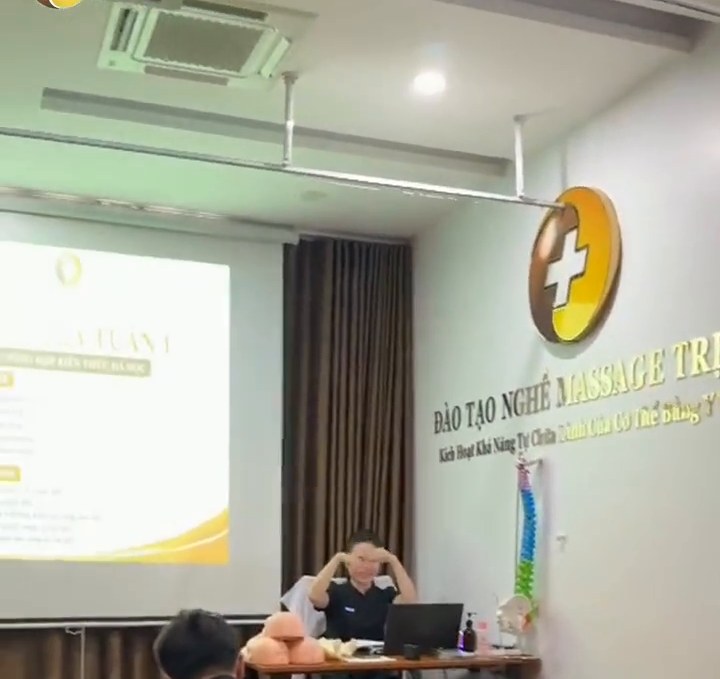
Tong Gia is the second kind: a working business that runs training classes. Tong Gia Acupoint Wellness (Huyệt Đạo Tống Gia) was founded by Lương Y Tống Văn Huynh, who has more than 13 years in Eastern wellness practice, Y Tướng Học (face reading for wellness) and spinal nerve-reflex balancing. He built the programme himself and teaches the classes.
The routine taught in class is used every day at two wellness care branches: District 12 – 225 Dương Thị Mười, Phường Tân Chánh Hiệp (4.9★, 234 Google Maps reviews) and District 9 – Vinhomes Grand Park (5.0★, 183 reviews). Classes are held at unit T16-21, Manhattan zone, Vinhomes Grand Park, Phường Long Bình, TP. Thủ Đức (Thu Duc City, Ho Chi Minh City).
Teaching built on two pillars
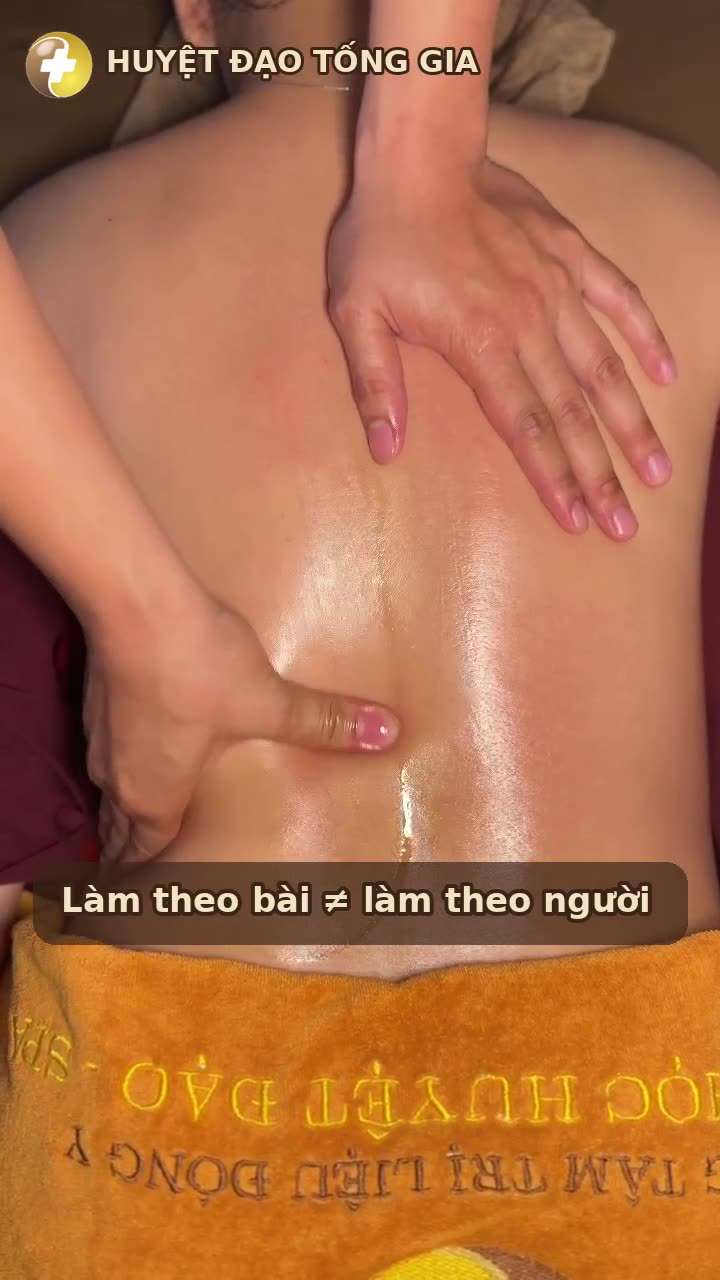
The first pillar is Y Tướng Học: reading the complexion and body shape to understand the organs before placing hands, because “the organs are the cause, the signs are the effect”. The second pillar is therapeutic-style massage for spinal nerve-reflex balancing: every impression from the face must be checked again by hand on the spine. About 70% of class time is practice on real people, classes are small, and Lương Y coaches each person.
The path has 4 levels, from L1 Introduction to Y Tướng Học (1.500.000đ) to L4 Master and Transfer for those who want to run a place of their own. Fees for L2–L4, number of sessions and duration are given by advisors when you register. See the overview on the 4-level vocational ladder or the article overview of the therapeutic-style massage trade. Tong Gia does not promise jobs or income after the course.
If you live abroad and own a nail salon or spa, there is a page just for you: nail salon and spa owners abroad.
Further reading on this topic: where to learn acupressure massage: how to choose a class · Therapeutic-style massage course in Ho Chi Minh City: choosing a class by route, schedule and course criteria · Massage course near Go Vap District (Gò Vấp): how to choose a class if you live in Gò Vấp or District 12, Ho Chi Minh City
How to register
Come and see in person before deciding: a free trial class 9:00–12:00 every Sunday morning, 10 places. Lương Y looks at your hands during the trial and suggests a suitable level. The schedule is in the Sunday trial class section.
The L1 Introduction to Y Tướng Học class runs on a set schedule. Register via hotline 0917 945 259. All registrations go through Zalo 0917 945 259.
Frequently asked questions
Should I learn therapeutic-style massage at a training centre or at a spa? Each has its strengths. A business that serves clients lets you see the routine running for real; centres often have more varied class schedules. What matters most is who teaches and the practice ratio.
How do I know a massage school is reputable? Go in person to a trial class, see whether the teacher corrects each person's hands, and ask clearly about fees and the paper you get after the course. A place that promises a job or high income is a sign to be cautious.
Is there a weekend therapeutic-style massage class in Thu Duc? Tong Gia has a free trial class on Sunday mornings, 9:00–12:00, at Vinhomes Grand Park, Thu Duc City. The L1 Introduction to Y Tướng Học class runs on a set schedule. Register via hotline 0917 945 259.
Is learning one-to-one with a massage practitioner a good idea? One-to-one learning gives close attention and flexible hours, but quality depends entirely on one person and is hard to verify. Watch that person work on real clients before signing up.
What should I ask before paying for a massage course? Ask who teaches, what share of time is practice, what the fee includes, how make-up sessions work, and what paper you receive after the course and its legal standing.
Where can I learn therapeutic massage near District 9 or Thu Duc? Tong Gia's class is at Unit T16-21, Vinhomes Grand Park, Thu Duc City, convenient for people from former District 9, Long Binh and Di An. Join the free Sunday morning trial to see the class before paying.
Related articles
- 30 basic massage techniques learners should know: learn them in groups, not as a list of names
- 8 principles of spinal wellness massage: the rules of the hands for Tong Gia learners
- How much pressure in acupressure: gauging force by how the receiver feels
- Hands for wellness massage: soft hands, hard hands and 6 things you must train
- All articles about learning the trade
Reserve a free Sunday-morning trial class or ask about the learning path: message Zalo 0917 945 259.

Founder of Tong Gia Acupoint Wellness (Huyệt Đạo Tống Gia), with more than 13 years in Eastern wellness practice, Y Tướng Học (face reading for wellness) and spinal nerve-reflex balancing. Lương Y's story
417 customers have reviewed Tong Gia on Google Maps
Reviews are written by customers themselves on Google; tap to read them before you visit.
Huyệt Đạo Tống Gia Quận 12
225 Dương Thị Mười, Phường Tân Chánh Hiệp (District 12, Ho Chi Minh City). 8:00 – 19:00 daily.
See reviews on Google MapsHuyệt Đạo Tống Gia Quận 9
Căn T16-21 khu Manhattan, Vinhomes Grand Park, Phường Long Bình (Thủ Đức City, Ho Chi Minh City). 9:00 – 20:00 daily.
See reviews on Google MapsWant to be observed in person?
A 90-minute session starts with observation, and only then moves on to muscle release and acupressure on the right areas. Two branches: District 12 and Vinhomes Grand Park.