Learning massage in Saigon: how fit do you need to be? A self-check before you start
Lương Y (traditional healer) Tống Văn Huynh · Tong Gia Acupoint Wellness (Huyệt Đạo Tống Gia) · 04/11/2026
Quick answer: To learn massage in Saigon, the health you need is being able to stand for 60–90 minutes, no currently painful injury in your back or wrists, and hands durable enough to keep even pressure; you do not need to be tall, big or muscular. Pressure in this trade comes from posture and body weight more than arm strength, so petite people can still learn if they train correctly from the start.
How much health do you need to learn therapeutic-style massage
Many people hesitate to enter the trade because they think you have to be very strong to do it. In reality, experienced practitioners do not rely mainly on arm strength. They stand in the right posture, lock the elbow and let their body weight drop through the palm or the thumb. The arm is only the channel for the pressure. So the right question is not “am I strong?” but “can my body handle the working rhythm of this trade?”
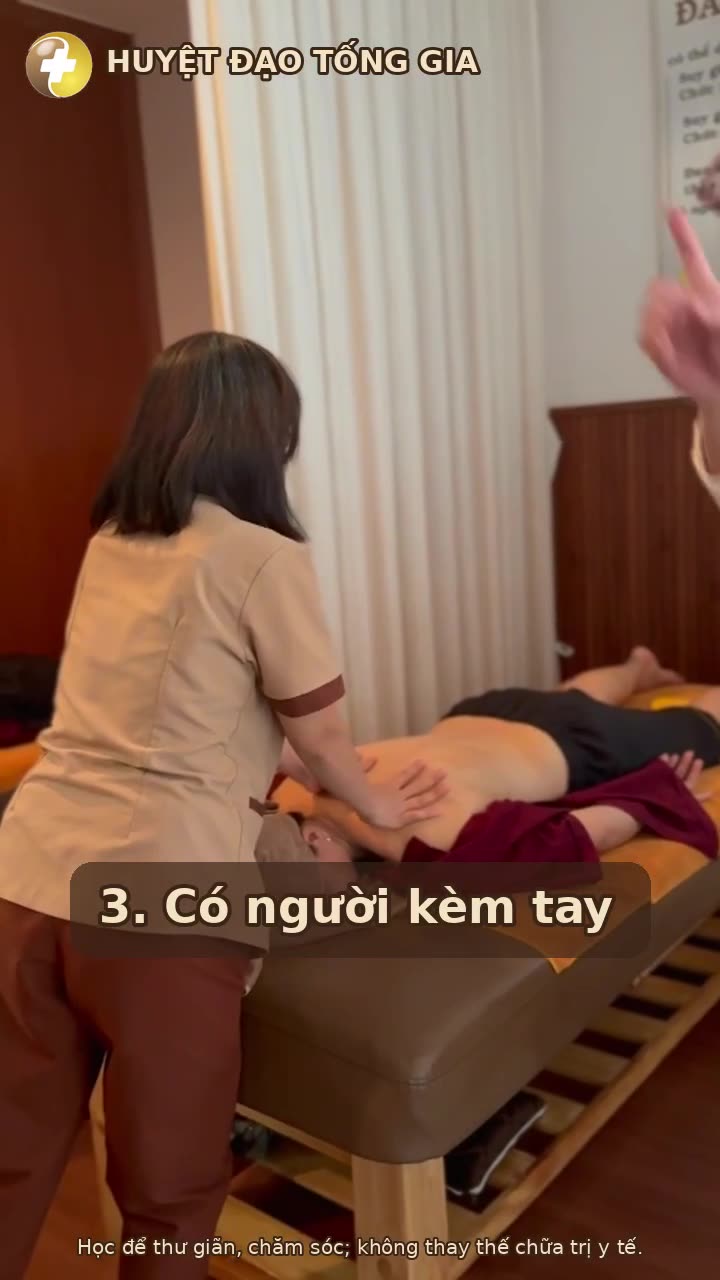
A care session at a wellness centre usually lasts 60–90 minutes. The practitioner stands almost the whole time, bends moderately and changes position constantly. A day may include several clients. The health this trade needs is therefore endurance and stability, not raw power.
5 things to check yourself before you start
- Standing for long periods: after standing for an hour cooking or selling, are you completely worn out? Normal tiredness is fine; sharp heel pain or knee pain means you should ask a doctor first.
- Back: if you currently have acute back pain or have just injured your spine, do not start yet.
- Wrists and thumbs: if your thumb joint hurts or your wrist is swollen, let it settle before you study. The thumb is the main “tool” in acupressure.
- Skin on the hands: dermatitis, fungal infection or open wounds on the hands must clear up completely before you work on another person.
- Breathing: people who get short of breath when bending for a long time should practise steady breathing first, because this work follows the rhythm of the breath.
Not meeting one of these points does not mean you cannot learn. Many people learn to care for their family, see few clients and work at a much lighter pace than full-time practitioners.
How the learner’s own health changes after the course
People who learn correctly usually find their hands stronger and more durable after a few weeks, because the forearm and hand muscles are trained evenly. People who learn the wrong way, using arm strength and pressing with stiff, straight fingertips, get sore wrists and shoulders within the first month. That is why the first class always teaches standing posture, foot placement and how to shift body weight before any technique. See more on looking after your hands in protecting a massage practitioner’s hands.
Can petite people and women learn
Yes. Petite people need to stand closer to the bed, lower it a little, and use the elbow or the thenar pad (the base of the thumb) on thick muscle areas such as the back, buttocks and thighs. Big, strong people, on the other hand, must learn to keep pressure light, because their common mistake is pressing too hard. Every body type has its own way of using force. The article learning therapeutic-style massage for women goes into hand strength and safety in more detail.
How Tong Gia looks at a learner’s health
Lương Y Tống Văn Huynh teaches learners to look at themselves before looking at the client. According to Y Tướng Học (face reading for wellness), complexion, stance and the shoulders show whether a learner is tired or well, and whether they should take on a long session. When practising spinal nerve-reflex balancing, only a learner who stands steady and breathes evenly has hands that can read the muscles of the person lying down. A tired, tense learner has stiff hands and cannot feel anything.
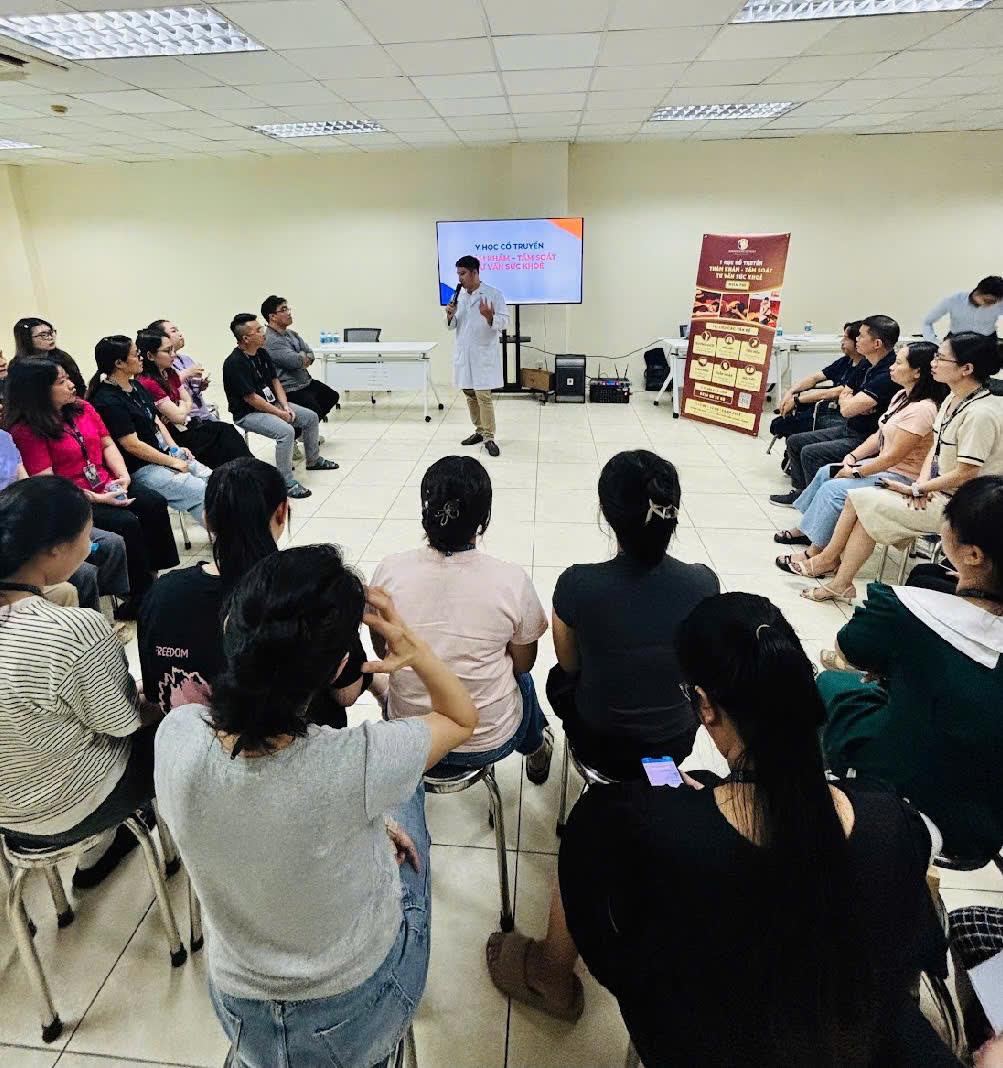
About 70% of class time is hands-on practice on real people, in small classes, with someone guiding each posture. The trial class is a good moment to test yourself: stand and work for a while, see how your body reacts, and ask the instructor directly about your own condition. Tong Gia does not promise a job or income after the course.
When a practitioner should stop
- Wrist or thumb pain that lingers after every session.
- Numbness in the hands at night, spreading up the forearm.
- Back pain that keeps getting worse even after correcting posture.
Lasting pain, increasing numbness or weakness, or an underlying health condition means you need to see a doctor at a medical facility. Tong Gia offers hands-on traditional wellness care and is not a medical service.
How to sign up
The trial class runs on Sunday mornings, 9:00–12:00; the free Sunday Y Tướng Học session is for people who want to learn about it first. Location: căn T16-21 khu Manhattan, Vinhomes Grand Park, TP. Thủ Đức (Thu Duc City, Ho Chi Minh City). Sign up for a trial class or call the training hotline 0917 945 259 (Zalo/WhatsApp +84 917 945 259) to get the schedule and a suitable level.
Frequently asked questions
Can a thin, not very strong person learn therapeutic-style massage? Yes, as long as there is no currently painful injury. Pressure comes from posture and body weight; thin learners learn to stand close and use the elbow on thick muscle areas.
Will learning massage hurt my hands? Your hands usually feel tired in the first week. Lasting pain is a sign of wrong posture, and the instructor needs to correct it.
Should I learn massage while I have back pain? Wait until it settles and ask a doctor first. The trade involves a lot of standing and bending.
How many massage clients a day can I see without harming my health? It depends on each person’s fitness. Beginners should start with few clients, rest between sessions and build up gradually.
Related articles
- What is acupressure? Principles, limits and a structured path to an acupressure course in Vietnam
- Acupressure and acupuncture: what is the difference for learners
- Acupressure and massage: how they differ and how they combine
- Acupoint map of the human body: how to read the meridian map and what order to learn it in
- All articles about learning the trade
Reserve a free Sunday-morning trial class or ask about the learning path: message Zalo 0917 945 259.

Founder of Tong Gia Acupoint Wellness (Huyệt Đạo Tống Gia), with more than 13 years in Eastern wellness practice, Y Tướng Học (face reading for wellness) and spinal nerve-reflex balancing. Lương Y's story
417 customers have reviewed Tong Gia on Google Maps
Reviews are written by customers themselves on Google; tap to read them before you visit.
Huyệt Đạo Tống Gia Quận 12
225 Dương Thị Mười, Phường Tân Chánh Hiệp (District 12, Ho Chi Minh City). 8:00 – 19:00 daily.
See reviews on Google MapsHuyệt Đạo Tống Gia Quận 9
Căn T16-21 khu Manhattan, Vinhomes Grand Park, Phường Long Bình (Thủ Đức City, Ho Chi Minh City). 9:00 – 20:00 daily.
See reviews on Google MapsWant to be observed in person?
A 90-minute session starts with observation, and only then moves on to muscle release and acupressure on the right areas. Two branches: District 12 and Vinhomes Grand Park.