Massage course in Vietnam: training center or private tutor? A comparison to help you choose
Lương Y (traditional healer) Tống Văn Huynh · Tong Gia Acupoint Wellness (Huyệt Đạo Tống Gia) · 28/10/2026
Quick summary: Massage course in Vietnam: training center or private tutor? It depends on what you need most. A training center has a leveled program, practice partners and a steady class rhythm; a private tutor gives flexible hours and close hand correction, but you depend almost entirely on one teacher. The safe choice is a small class with many hours of hands-on practice on real people and a teacher who coaches each learner, and to attend a trial class before you pay the course fee.
Many people message Tong Gia with the same question: they want to learn a hands-on trade, but they are not sure whether to join a proper training center or find an experienced practitioner to learn from one-on-one. Each path has strengths and gaps. This article puts the two side by side so you can weigh them yourself, wherever you end up studying.
Wellness massage course: training center or private tutor, the root difference
The biggest difference is not price or location but structure. A training center usually has a leveled program, written course material, a fixed schedule and several people learning together. With a private tutor you learn from one person, the way that person works, at a pace the two of you agree on.
Wellness massage needs three things together: understanding the body, hands that know how to use pressure, and knowing when to stop. Whichever way of learning gives you all three is the one that suits you.
Studying at a training center: what you gain, what is missing
What you gain
- A path from easy to hard, so you know where you are and what the next step is.
- Practice partners to swap roles with: today you work, tomorrow you lie down for someone else, so you feel for yourself whether the pressure is right or wrong.
- Many body types to practice on, so your hands do not get used to just one body.
- If the center has a service branch serving real customers, you see the procedure actually running, not just on paper.
What is missing
- In a large class the teacher can hardly correct each person's hands, and many people finish the course still unsure of their pressure.
- A fixed schedule is hard to follow for shift workers or people who live far away.
- Some places are heavy on theory, with little time putting hands on real people.
Private one-on-one tutoring: what you gain, what is missing
What you gain
- Flexible hours, good for people with jobs or busy shop owners.
- The teacher watches your hands closely and corrects each movement right away.
- Progress at your own pace; weak spots get more practice time.
What is missing
- You depend entirely on one person: you gain what that person is good at, and you inherit the gaps that person has.
- There is usually no written course material, so it is hard to review on your own afterwards.
- Few practice partners and few body types; often you practice on the teacher or your own family.
- It is hard to verify how long the teacher has worked in the trade, whom they have taught and where they work.
A quick 6-point comparison to make the choice easier
- Learning path: usually clearer at a center; with a tutor it depends on the person.
- Hand correction: closer with a tutor; a center can be just as close if the class is small.
- Practice on real people: a center has more practice partners; private tutoring often lacks people to practice on.
- Schedule: private tutoring is more flexible.
- Verification: a center has an address, a premises and public reviews that are easier to check.
- Moving up: a center has further levels to continue with; private tutoring usually stops at what one person knows.
Neither option wins outright. What matters most is the number of practice hours and whether someone corrects your hands.
Who suits which option
Complete beginners who have never put their hands on anyone
Choose a place with a leveled program and a small class first. Beginners need a foundation: where each muscle area is, how much pressure is enough, which signs mean you must stop. Private tutoring without that foundation easily turns into copying movements without understanding why.
People already in the trade who want to fix their technique or add one skill
Private tutoring or a very small class can suit you, because you already have the foundation and only need someone to spot your mistakes. Even so, choose a teacher who runs a real working premises you can check.
Nail salon and spa owners who want to add a care service
Beyond hand skills you also need a session procedure, a way of talking with customers and a way to retrain staff. One private tutor can hardly cover all of that. You can also read the page for nail salon and spa owners.
Whichever you choose, check 4 things before you pay
- Can you take a trial class or watch a real lesson, or do you only get a sales talk?
- What share of the time is practice on real people, and who corrects your hands?
- Where does the teacher currently work, and is there a premises serving real customers that you can visit?
- What paperwork do you receive after the course and what is its legal standing: ask directly, and ask before you pay the course fee.
The article how to choose a reputable massage training center goes deeper into each of these criteria.
One more thing, wherever you study: someone learning this trade must know when not to work. If a customer has long-lasting pain, numbness or weakness that keeps getting worse, an underlying illness or a recent injury, advise them to see a doctor at a medical facility first. A decent school teaches this from the very first lesson.
Where the Tong Gia class sits between the two options
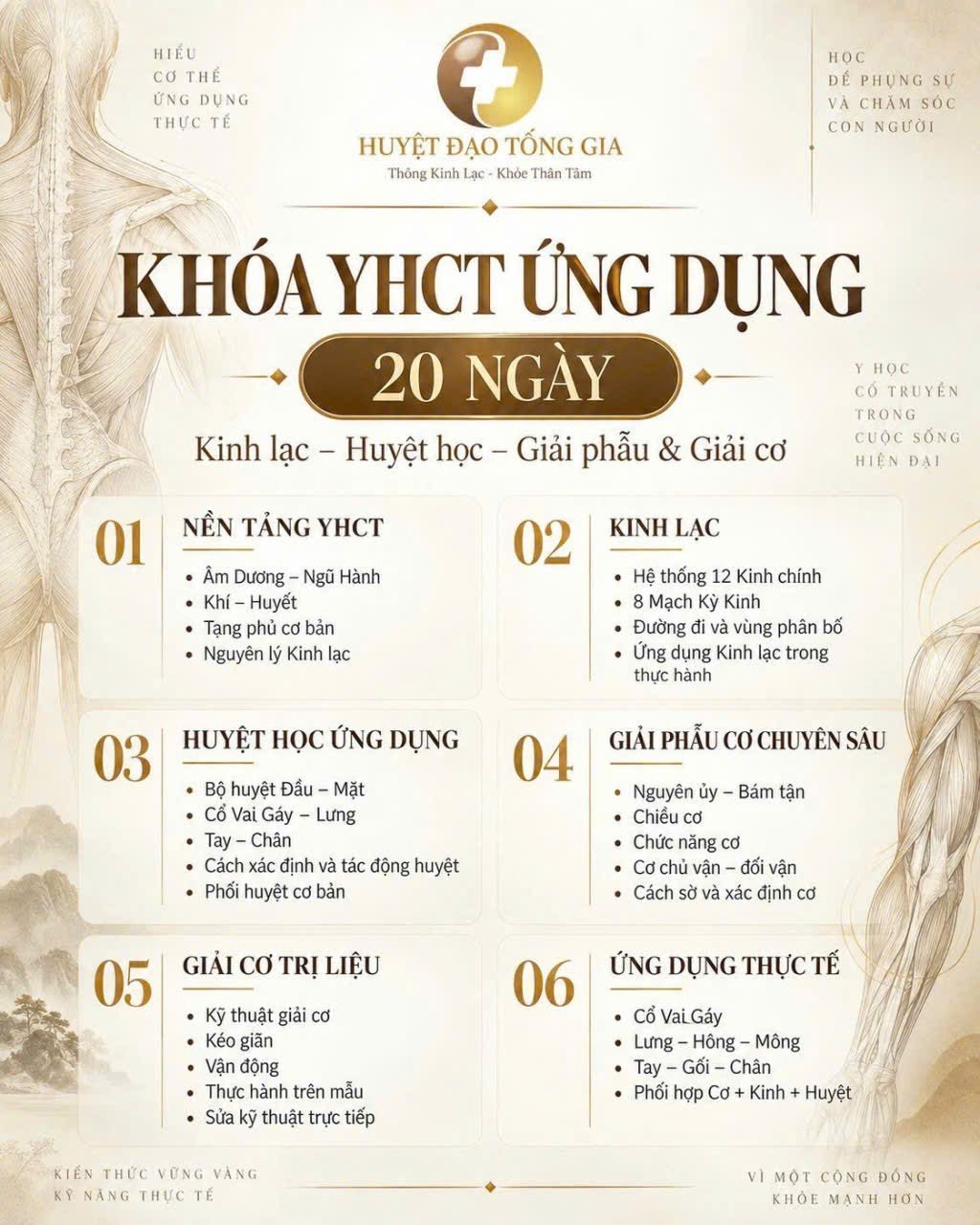
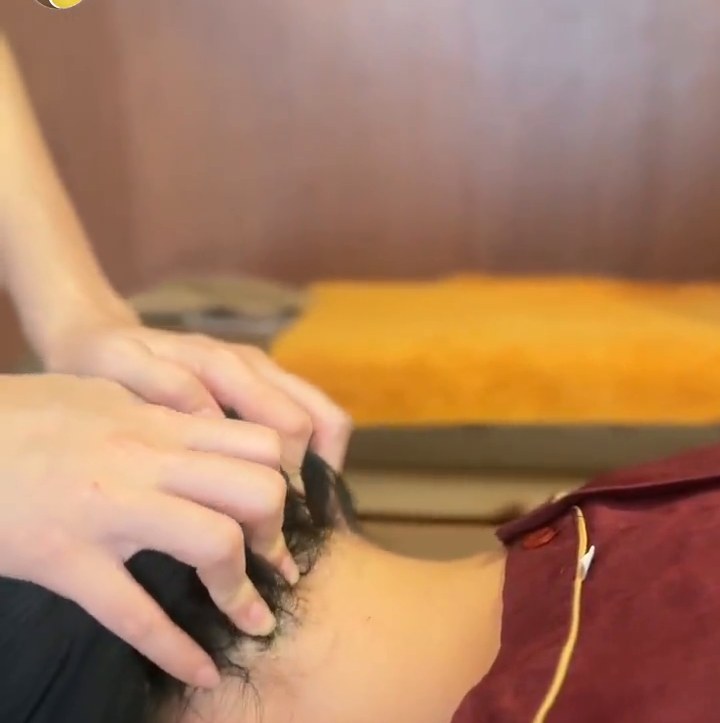
Tong Gia chose small classes to keep the strengths of both. Lương Y Tống Văn Huynh, with more than 13 years in Eastern wellness practice, builds the program himself and teaches the class in person, coaching each learner. About 70% of class time is hands-on practice on real people: placing the hands, using pressure, finding the muscle areas to work on.
The program follows a 4-level training ladder, from L1 Introduction to Y Tướng Học (face reading for wellness) to L4 for premises owners. Two pillars run through it all: Y Tướng Học, reading the face to understand the organs before placing your hands, and wellness massage based on spinal nerve-reflex balancing. The class rule: every observation from the face must be cross-checked by hand along the spine. As Lương Y often says, the organs are the cause, the signs are the effect.
The procedure taught in class is the same one used every day at the two care service branches in District 12 and District 9, so you learn something that is actually running. The L1 course fee is 1.500.000đ. Fees for the later levels, the number of sessions and payment options will be given by a consultant when you register. Tong Gia does not promise a job or income after the course.
If you are still torn between a class and private lessons, read the article one-on-one wellness massage lessons for a clearer picture.
How to register
The surest way to know whether a training center or a private tutor is right for your massage course is to sit in on a real lesson. Tong Gia runs a free trial class 9:00–12:00 every Sunday morning, 10 places, at căn T16-21 khu Manhattan, Vinhomes Grand Park, Phường Long Bình, TP. Thủ Đức (Thủ Đức City, Ho Chi Minh City). Lương Y looks at your hand skills during the trial class and then suggests a suitable level.
- The L1 Introduction to Y Tướng Học class runs on a set schedule. Register via hotline 0917 945 259.
- Book a trial class or ask more: Zalo 0917 945 259.
Frequently asked questions
Will I get good with my hands faster at a training center or learning privately with a teacher? How fast your hands improve depends on practice hours and having someone correct your hands, not on what the place is called. A small class where the teacher coaches each person usually gives good results while still giving you practice partners to swap roles with.
Should a total beginner take private massage lessons? Beginners should build a foundation first: muscle areas, hand pressure, the signs that mean you must stop. A place with a leveled program makes that foundation easier to build than private lessons based on copying movements.
What are the risks of private massage tutoring? The main risks are depending on one person, finding it hard to verify the teacher's skill, having few people to practice on, and usually no course material to review.
I work office hours. How can I learn wellness massage? You can choose a weekend class. Tong Gia has a Sunday-morning trial class so you can see the class rhythm first; a consultant will give you the schedule for each level when you register.
Do I get any paperwork after a massage course at a training center? Ask the front desk directly about the type of paperwork after the course and its legal standing before you pay the course fee.
Related articles
- 30 basic massage techniques learners should know: learn them in groups, not as a list of names
- 8 principles of spinal wellness massage: the rules of the hands for Tong Gia learners
- How much pressure in acupressure: gauging force by how the receiver feels
- Hands for wellness massage: soft hands, hard hands and 6 things you must train
- All articles about learning the trade
Reserve a free Sunday-morning trial class or ask about the learning path: message Zalo 0917 945 259.

Founder of Tong Gia Acupoint Wellness (Huyệt Đạo Tống Gia), with more than 13 years in Eastern wellness practice, Y Tướng Học (face reading for wellness) and spinal nerve-reflex balancing. Lương Y's story
417 customers have reviewed Tong Gia on Google Maps
Reviews are written by customers themselves on Google; tap to read them before you visit.
Huyệt Đạo Tống Gia Quận 12
225 Dương Thị Mười, Phường Tân Chánh Hiệp (District 12, Ho Chi Minh City). 8:00 – 19:00 daily.
See reviews on Google MapsHuyệt Đạo Tống Gia Quận 9
Căn T16-21 khu Manhattan, Vinhomes Grand Park, Phường Long Bình (Thủ Đức City, Ho Chi Minh City). 9:00 – 20:00 daily.
See reviews on Google MapsWant to be observed in person?
A 90-minute session starts with observation, and only then moves on to muscle release and acupressure on the right areas. Two branches: District 12 and Vinhomes Grand Park.