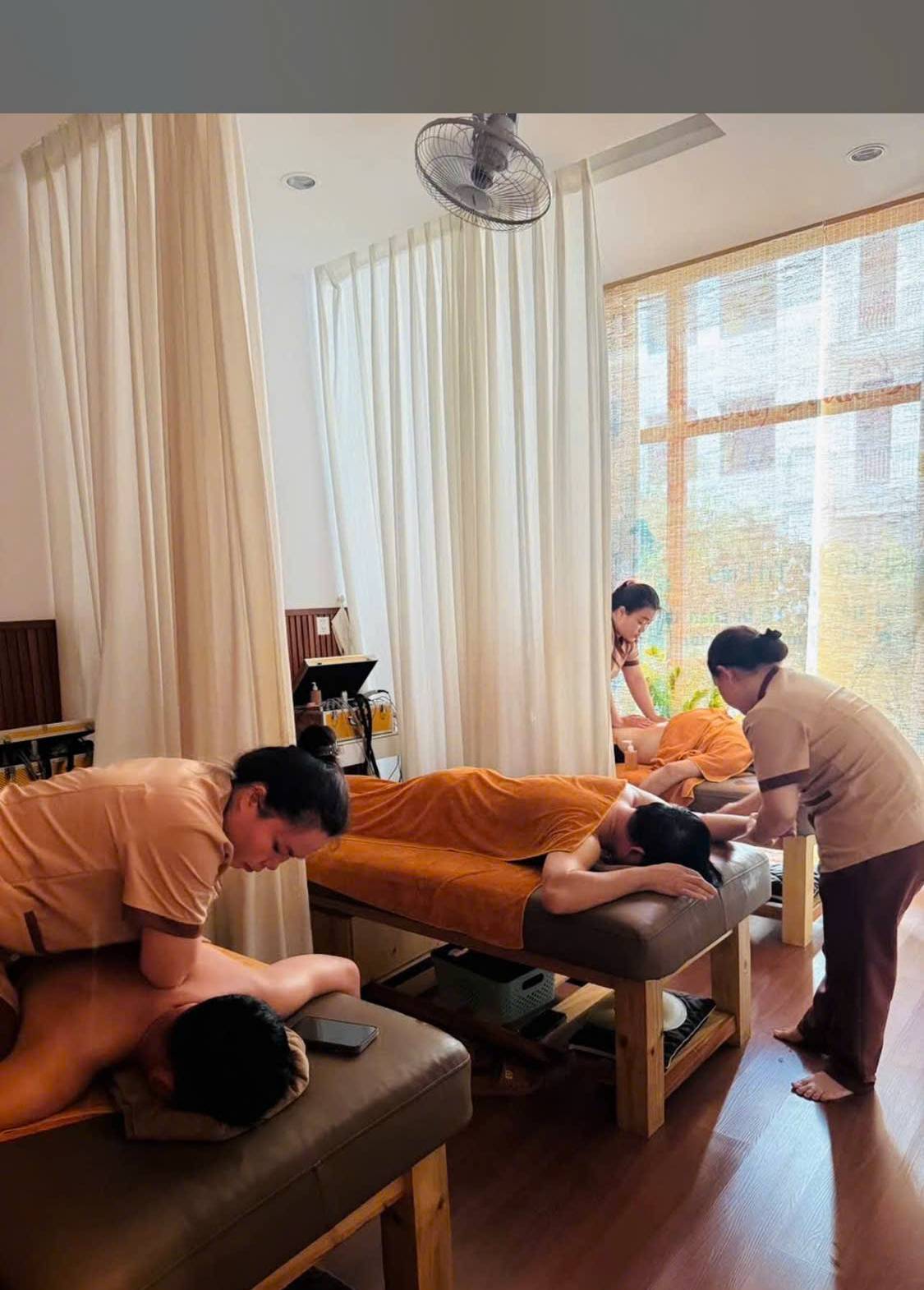
Learning massage to become an instructor: 4 foundations and the path from skilled practitioner to teacher of the trade
Lương Y (traditional healer) Tống Văn Huynh · Tong Gia Acupoint Wellness (Huyệt Đạo Tống Gia) · 22/11/2026
Learning massage to become an instructor needs four foundations: solid hands built over many real sessions, understanding the reason for each move, the skill of observing and correcting other people’s hands, and the ability to write procedures so others can repeat your work. At Tong Gia Acupoint Wellness (Huyệt Đạo Tống Gia), passing on the trade is taught in L4 Master and Transfer — standard procedures, SOPs and how to train practitioners — after learners have completed L2 and L3.
Questions learners often ask about becoming a massage instructor
I am 38 and have worked as a massage practitioner in District 9 for years. I want to learn to teach. Where do I start?
Start by standardising your own skill into a clear step-by-step procedure, then learn to observe and correct other people’s hands. Tong Gia teaches this in L4 Master and Transfer: SOPs and how to train practitioners. Classes at unit T16-21, Vinhomes Grand Park, Zalo 0917 945 259.
How long does it take to become a massage instructor, how much Eastern medicine and anatomy do I need, and is a teaching job promised?
There is no single figure; you need to be solid enough to explain each move through anatomy and Eastern medicine. Instructors must also teach the boundary: wellness is not medicine, and unusual cases are referred for a medical check. Tong Gia does not promise jobs or income; the advisor explains the L2–L4 path at registration.
How do I choose a massage instructor course in Ho Chi Minh City without wasting money?
Ask whether the course lets you practise teaching, correct real learners’ hands and write procedures, or only adds more moves. Ask who teaches and how they have trained practitioners. At Tong Gia, Lương Y Tống Văn Huynh, over 13 years in the trade, teaches in person; Sunday morning trial.
A skilled practitioner is not always a skilled teacher
Many practitioners have beautiful technique and loyal clients, yet when guiding a newcomer they struggle: "just do it like me". The learner thinks it looks easy, then gets the pressure and direction wrong. Learning massage to become an instructor means learning a second trade: turning what your hands already know into something others can learn.
4 foundations every massage instructor needs
| Foundation | What it is | Self-check question |
|---|---|---|
| 1. Solid hands | Working evenly over very many sessions with many kinds of clients | Can I give a demanding client a complete session with even pressure from start to finish? |
| 2. Knowing why | Knowing why this move is done on this area, through anatomy and Eastern medicine | If a learner asks "why stroke along the spinal groove first", can I answer? |
| 3. Correcting others | Spotting errors in posture, pressure and direction and showing step-by-step fixes | Can I explain an error in a short sentence, not just demonstrate again? |
| 4. Writing procedures | Recording the session as steps, timings and safe stopping points | Can someone else follow my procedure and produce a session like mine? |
The path from practitioner to teacher
- Work a great deal. There is no shortcut: every body type and client teaches something. Take notes after every difficult session.
- Relearn the foundation theory. Spinal and musculoskeletal anatomy, basic nervous system, meridians, Y Tuong Hoc. An instructor must answer "why", not just "how". See does therapeutic massage work require spinal anatomy.
- Guide one person before a whole class. Take one learner, teach a full procedure, and see how far they get.
- Write the procedure and test it. Write it as steps, have others follow it, and fix what they misunderstand.
- Learn to teach the boundary. Learners must know when not to work: clients with underlying conditions, lasting pain or increasing numbness or weakness should be advised to see a medical facility. An instructor who skips this teaches incompletely.
Correcting hands: the hardest part
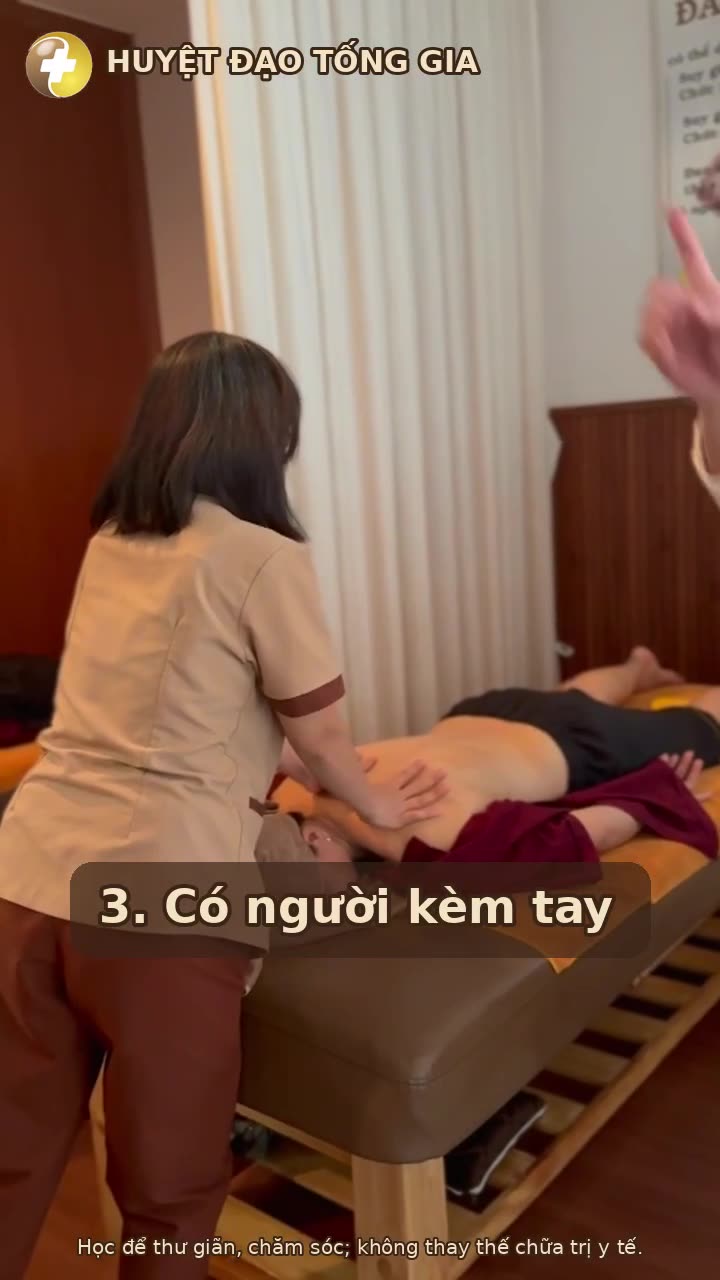
Correcting hands is not saying "harder" or "softer". A good instructor watches three things: the practitioner’s posture (shoulders, back, standing leg), the angle of the fingers to the muscle, and the client’s face and breathing. In Tong Gia classes the rule is one error at a time, one short sentence, then repeat immediately. Lương Y Tống Văn Huynh often reminds: every impression from the face must be checked by hand along the spine; an instructor must build this checking habit in learners too.
Which level teaches passing on the trade
The 4-level ladder at Tong Gia Acupoint Wellness: L1 Introduction to Y Tuong Hoc (1,500,000 VND), L2 Basic Trade (muscle release, acupressure for neck, shoulders, back and legs, the 90-minute session, client communication), L3 Expert (spinal nervous reflex balancing, advanced Y Tuong Hoc), and L4 Master and Transfer: transferring procedures, SOPs and how to train practitioners for centre owners. Those who want to teach usually complete L3 Expert first. The advisor gives L2–L4 fees and session numbers at registration. Tong Gia does not promise jobs, teaching positions or income after the course.
Centre owners who want to train their own team can also read training practitioners and running a wellness spa. Tong Gia Acupoint Wellness is a wellness care service, not a medical service; neither instructors nor learners practise medicine.
How to register
The Sunday morning trial class 9:00–12:00 (10 places) and the Sunday Y Tuong Hoc session with no fee are open sessions for beginners, at unit T16-21, Manhattan block, Vinhomes Grand Park, Thu Duc City, Ho Chi Minh City. Book a trial class or call the training hotline 0917 945 259.
Frequently asked questions
What does it take to become a massage instructor? Four foundations: solid hands, knowing why each move is done, correcting others’ hands and writing procedures.
Can a skilled practitioner teach a class straight away? Not necessarily. Teaching also needs explaining, observing and correcting hands, and writing procedures others can repeat.
Which Tong Gia level teaches training practitioners? L4 Master and Transfer: procedure transfer, SOPs and how to train practitioners; usually taken after L3 Expert.
Does completing L4 promise a teaching position? No. Tong Gia does not promise jobs, teaching positions or income after the course.
What must a massage instructor teach besides technique? The boundary: when not to work and to advise a medical check, because wellness care is not medicine.
Related articles
- 8 principles of spinal wellness massage: the rules of the hands for Tong Gia learners
- How to use the right pressure in acupressure: measuring force by how the receiver feels
- Hands for wellness massage: soft hands, hard hands and 6 things you must train
- All articles about learning the trade
Reserve a free Sunday-morning trial class or ask about the learning path: message Zalo 0917 945 259.

Founder of Tong Gia Acupoint Wellness (Huyệt Đạo Tống Gia), with more than 13 years in Eastern wellness practice, Y Tướng Học (face reading for wellness) and spinal nerve-reflex balancing. Lương Y's story
417 customers have reviewed Tong Gia on Google Maps
Reviews are written by customers themselves on Google; tap to read them before you visit.
Huyệt Đạo Tống Gia Quận 12
225 Dương Thị Mười, Phường Tân Chánh Hiệp (District 12, Ho Chi Minh City). 8:00 – 19:00 daily.
See reviews on Google MapsHuyệt Đạo Tống Gia Quận 9
Căn T16-21 khu Manhattan, Vinhomes Grand Park, Phường Long Bình (Thủ Đức City, Ho Chi Minh City). 9:00 – 20:00 daily.
See reviews on Google MapsWant to be observed in person?
A 90-minute session starts with observation, and only then moves on to muscle release and acupressure on the right areas. Two branches: District 12 and Vinhomes Grand Park.