Face reading for wellness with Y Tướng Học plus wellness massage: why a massage technician needs both
Lương Y (traditional healer) Tống Văn Huynh · Tong Gia Acupoint Wellness (Huyệt Đạo Tống Gia) · 10/11/2026
A course combining face reading for wellness (Y Tướng Học) and wellness massage teaches a massage technician to read the person before laying hands on them, then read the spine by touch to check what they have just seen, so every session has a clear reason. At Tong Gia, the two parts are combined into a 6-step process in the Specialist Course (L3).
Questions learners often ask about combining face reading for wellness and wellness massage
Is there a course combining face reading with therapeutic massage in Saigon?
Yes. Tong Gia (Huyệt Đạo Tống Gia) combines medical face reading with spinal nerve-reflex massage in its Expert course at Unit T16-21, Vinhomes Grand Park, Thu Duc City, HCMC. You read complexion and posture, then check the spine by hand. It supports wellness care, never a medical check. Lương Y Tống Văn Huynh teaches in person; Zalo/WhatsApp +84 917 945 259.
What are you noticing after years in the trade?
After a few years of massage, your hands are used to the work and clients still say it feels "nice". But many massage technicians share the same doubt: every client is different, yet they end up doing almost the same routine. When a client asks "why does my back keep aching right here?", they do not know how to answer in a way that makes sense.
Learning Y Tướng Học together with wellness massage is one way to answer that question: before working, know how to read the person; while working, know how to read the back by hand.
What do you learn when combining Y Tướng Học with wellness massage?
Y Tướng Học: looking to understand
Y Tướng Học looks at the complexion, posture and the areas of the face to suggest the condition of the organs according to Eastern medicine. Tong Gia's root saying: "the organs are the cause, the signs are the effect". This part helps the practitioner know whether to work light or medium, and which areas to pay attention to.
Therapeutic-style massage with spinal nerve-reflex balancing: the hands check again
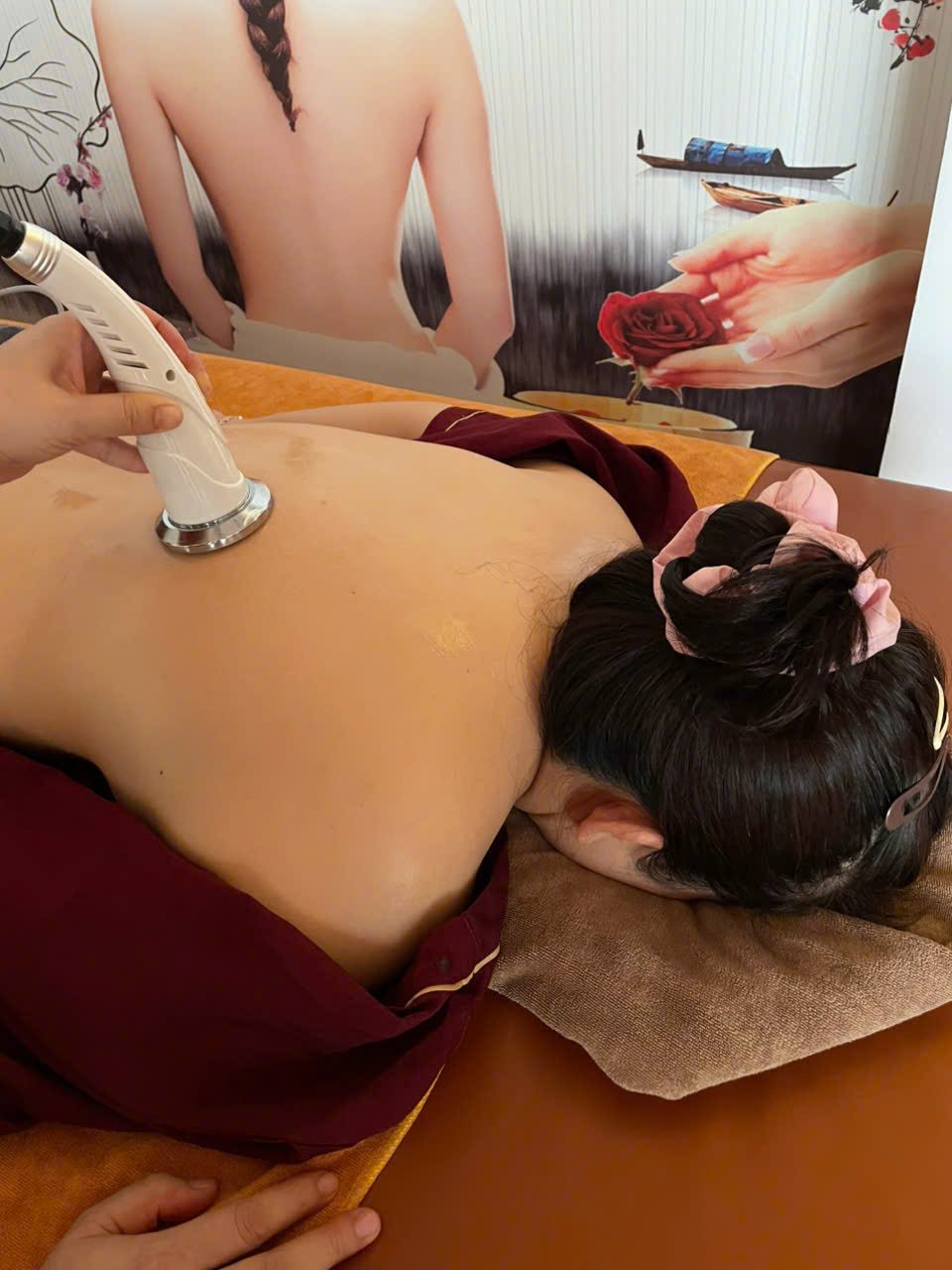
The hands read the spine: tight spots, cold spots, raised or hollow spots, spots where the client feels discomfort. Then they use pressing flat, stroking, pressing in, rolling and pushing techniques with suitable pressure. The rule at Tong Gia: every observation from the face must be cross-checked by hand along the spine.
One side looks, the other side touches. Without one of them, you are either guessing or working on habit.
The 6-step method when the two parts are combined
- Read the signs: complexion, standing and sitting posture as the client comes in.
- Ask: sleep, work, where it often aches, whether there are underlying health conditions.
- Read the spine by hand: go along the back and note any unusual areas.
- Choose the areas: which area to work first, which only lightly, which not at all.
- Work: techniques and pressure according to the chosen areas.
- Advise: daily habits, and when to see a doctor.
For details on each part, see the pages therapeutic-style massage with spinal nerve-reflex balancing and advanced Y Tướng Học.
Example: two clients who both complain of tired shoulders
The first client is thin, has a pale complexion and speaks softly. The second has thick shoulders, a rosy face and speaks quickly. Both say "my shoulders are tired". With massage skills alone, the practitioner might use the same pressure for both. With Y Tướng Học, the practitioner knows the first client should start very gently, while the second can take medium pressure. Then the hands reading the back will show which areas are truly tight in each person.
This is an observation guide, not a conclusion. No naming illnesses, no judging the client.
Try it now: a 3-line note for your next client
- Line 1: what you see in the face and posture (one sentence).
- Line 2: what your hands feel on the back (which areas are tight or cold).
- Line 3: whether these two match or not.
Do this with 10 clients and you will notice you are starting to observe more systematically.
Note: the limits of a practitioner
Therapeutic-style massage and Y Tướng Học at Tong Gia are wellness care, keeping the "3 no's": no needles, no medicines, no rough force. This is not a medical service. When meeting a client with long-lasting pain, numbness or weakness that keeps increasing, or underlying health conditions, the practitioner must know to stop and advise the client to see a doctor at a medical facility. Tong Gia does not promise a job or income after the course.
Where can you learn this?
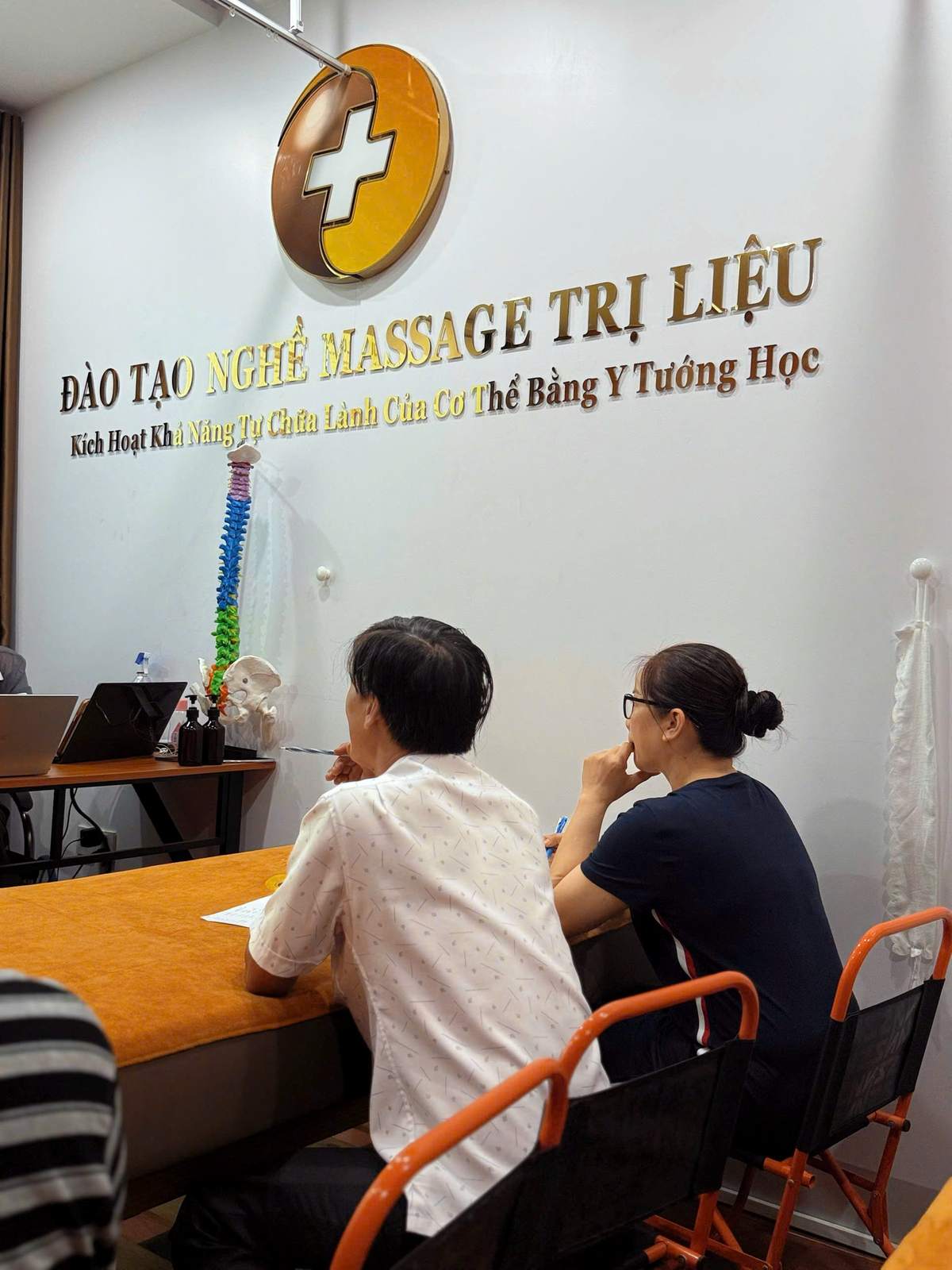
At Tong Gia, the combination of Y Tướng Học and therapeutic-style massage is taught in the Specialist Course (level L3): 1 month, 60 sessions, theory in the morning, supervised practice on real people in the afternoon. Lương Y Tống Văn Huynh teaches the class himself. The course is for working massage technicians and owners of spa, massage and herbal hair-wash shops. Tuition is quoted by a consultant when you register.
How to register
The trial class every Sunday morning, 9:00–12:00, and the free Sunday Y Tướng Học session are the open schedule for newcomers, at Căn T16-21 khu Manhattan, Vinhomes Grand Park, TP. Thủ Đức (Thu Duc City, Ho Chi Minh City). Register for a trial class or call the training hotline 0917 945 259.
Frequently asked questions
Why learn Y Tướng Học together with wellness massage? To read the person before placing a hand, then read the spine by hand to check, so that the choice of areas and pressure has a clear reason.
Can I join the Specialist Course without having studied Y Tướng Học? The Specialist Course is for people already working in the trade. The Lương Y looks at your hand skills in the trial class and then suggests a suitable level.
What does Tong Gia's 6-step method include? Read the signs, ask, read the spine by hand, choose the areas, work, advise.
How long is the Specialist Course? 1 month, 60 sessions, theory in the morning, supervised practice on real people in the afternoon. Tuition is quoted by a consultant when you register.
Where can I take a trial class in Ho Chi Minh City? Tong Gia at Vinhomes Grand Park, Thu Duc City runs a trial class on Sunday mornings, 9:00–12:00. Call 0917 945 259.
Related articles
- 30 basic massage techniques learners should know: learn them in groups, not as a list of names
- 8 principles of spinal wellness massage: the rules of the hands for Tong Gia learners
- How to use the right pressure in acupressure: measuring force by how the receiver feels
- Hands for wellness massage: soft hands, hard hands and 6 things you must train
- All articles about learning the trade
Reserve a free Sunday-morning trial class or ask about the learning path: message Zalo 0917 945 259.

Founder of Tong Gia Acupoint Wellness (Huyệt Đạo Tống Gia), with more than 13 years in Eastern wellness practice, Y Tướng Học (face reading for wellness) and spinal nerve-reflex balancing. Lương Y's story
417 customers have reviewed Tong Gia on Google Maps
Reviews are written by customers themselves on Google; tap to read them before you visit.
Huyệt Đạo Tống Gia Quận 12
225 Dương Thị Mười, Phường Tân Chánh Hiệp (District 12, Ho Chi Minh City). 8:00 – 19:00 daily.
See reviews on Google MapsHuyệt Đạo Tống Gia Quận 9
Căn T16-21 khu Manhattan, Vinhomes Grand Park, Phường Long Bình (Thủ Đức City, Ho Chi Minh City). 9:00 – 20:00 daily.
See reviews on Google MapsWant to be observed in person?
A 90-minute session starts with observation, and only then moves on to muscle release and acupressure on the right areas. Two branches: District 12 and Vinhomes Grand Park.