Temple headache: what therapeutic-style massage learners should understand before laying hands on a client
Lương Y (traditional healer) Tống Văn Huynh · Tong Gia Acupoint Wellness (Huyệt Đạo Tống Gia) · 12/11/2026
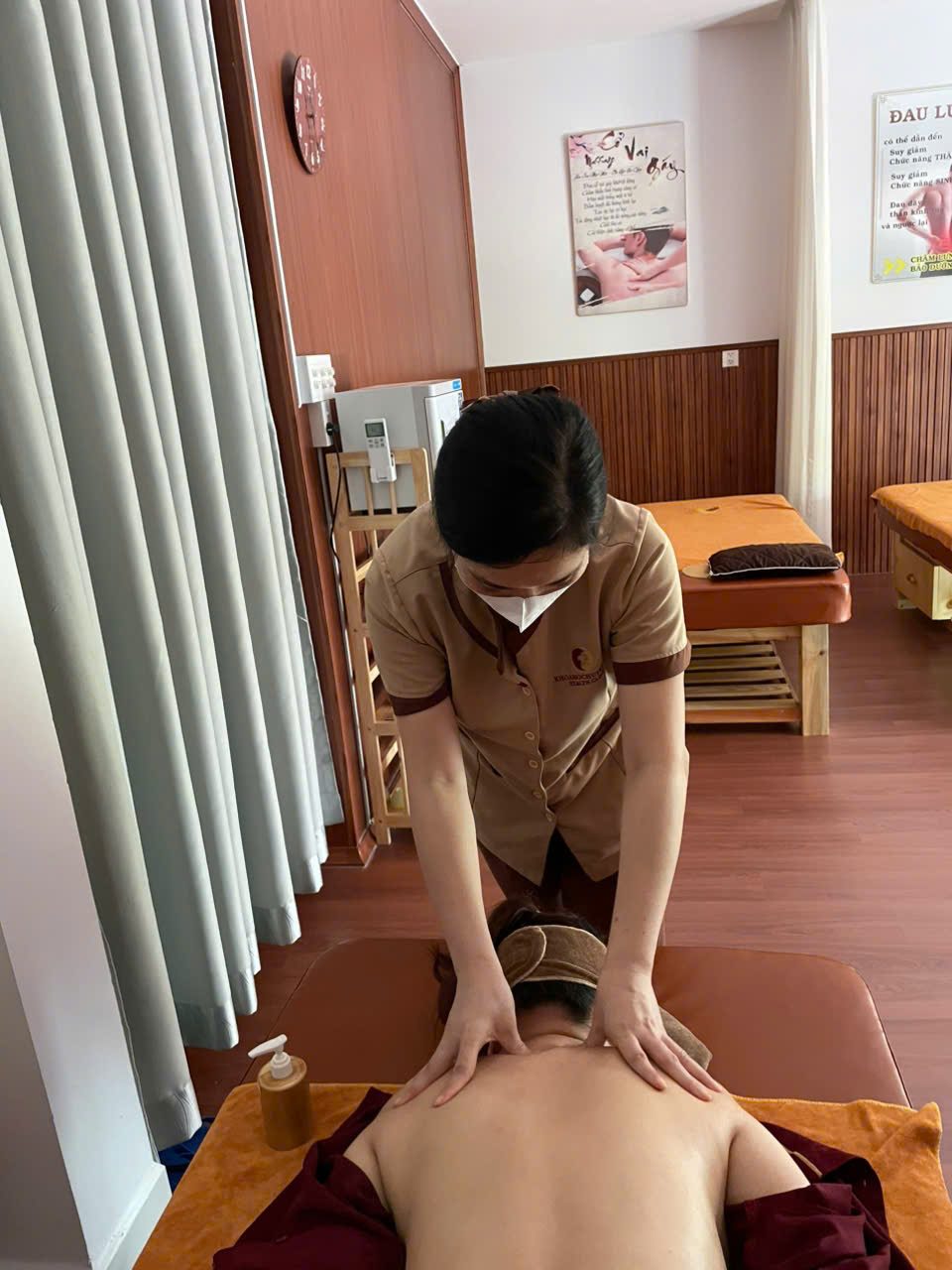
Temple headache, as clients describe it, usually comes with a tight temporalis muscle, tense neck and shoulders, teeth clenching and long screen hours. At Tong Gia Acupoint Wellness (Huyệt Đạo Tống Gia), massage learners practise recognising this muscle-tension pattern, working gently on the right area, and sending the client to a doctor when they notice unusual signs.
Questions learners often ask about temple headache
I'm a foreigner in Thu Duc learning massage. Clients often complain of pain at the temples. What can I safely do?
Ask first: since when, any teeth clenching, long screen time. If it is only muscle tension, work gently on the temporalis and the neck and shoulders. Sudden severe pain, blurred vision or trouble speaking means they must see a doctor at once. Tong Gia teaches this on real people at Vinhomes Grand Park, WhatsApp +84 917 945 259.
In traditional Vietnamese wellness, which meridians run through the temples, and which acupoints should a learner know?
Both temples lie on the Shaoyang Gallbladder and Triple Burner meridians; learners usually study Taiyang, Shuaigu (GB8) and Fengchi (GB20). The signs show outside, the organs lie inside: observe, then check by hand on the neck. This is wellness care, not medicine; Lương Y Tống Văn Huynh teaches it at Tong Gia.
Where in Ho Chi Minh City can I learn head, neck and shoulder work without wasting money, and how long does it take?
Pick a place with practice on real people, hands-on correction and clear rules on when not to work. Tong Gia starts at L1 for 1.500.000₫; neck and shoulder work is in L2, and the counsellor gives the number of sessions. Trial class Sunday 9:00–12:00 at T16-21 Manhattan, Vinhomes Grand Park, Thu Duc City.
What is a temple headache?
The temples are the two sides of the forehead, in front of and above the ears. When a client says "both temples hurt", they usually mean a tight, squeezing feeling, sometimes a light throbbing. The first thing a massage learner must remember: a headache is a sign, not a name for a condition. A wellness practitioner's job is to recognise the common muscle-tension pattern, do their own part properly, and know when to stop.
Why do the temples get tense?
The anatomy view
Under the skin of the temple lies the temporalis, a fan-shaped muscle running from the temporal bone down to the lower jaw. It is a chewing muscle. People who grind their teeth at night, clench their jaw under stress or chew mostly on one side often have a hard, thick temporalis. Tight muscles at the back of the neck and the sternocleidomastoid, from looking down at phones or sitting at a computer, also often bring a heavy feeling to both sides of the head.
The traditional Vietnamese wellness view
The sides of the head are where the Foot Shaoyang Gallbladder and Hand Shaoyang Triple Burner meridians pass. Traditional books often group pain on both sides of the head as "Shaoyang", common in stressed people, late sleepers, when the Liver and Gallbladder are not at ease. In class, Lương Y Tống Văn Huynh reminds learners: you learn the meridians to know where to place your hands, not to decide what the client has.
How a learner observes with the eyes and the hands
- With the eyes (Y Tướng Học, face reading for wellness): look for raised veins at the temples, deep lines at the outer corners of the eyes, a wide jaw from heavy chewing, raised shoulders. These are only hints.
- With the hands: rest both hands lightly on the temples, ask the client to bite gently and release, and feel the temporalis contract. Then feel along the back of the neck, the hairline and the upper cervical spine, comparing both sides.
- With questions: since when, any teeth grinding, how many hours of sleep, how long on screens, any background condition such as blood pressure.
The Tong Gia rule: every reading from the face must be checked again by hand on the spine and the back of the neck.
During the session: what to do, what not to do
You can
- Warm up the neck and shoulders first, because the head feels lighter when the neck lets go.
- Knead the temporalis in very small, light circles with the finger pads, following the client's breathing.
- Press Taiyang, Shuaigu and Fengchi with light to medium pressure, asking how it feels all the time.
- Remind the client to relax the jaw, drink water and rest the eyes.
You must not
- Press hard or long on the temples; the bone there is thin and an artery runs close to the surface.
- Crack or twist the neck quickly.
- Work when the client has a fever, has just hit their head or has high blood pressure at that moment.
Signs you must send the client to a doctor
A learner must know these by heart: a sudden, severe headache "like never before", with vomiting, blurred vision, trouble speaking, weakness on one side, high fever with a stiff neck, pain after a blow to the head, pain getting worse over weeks, or an older person with a new kind of headache. Then stop the session and advise the client to go to a medical facility straight away. Tong Gia is hands-on wellness care for health, not a medical service.
Which level covers this?
L1 Foundation teaches observing the complexion and a few safe self-care points. L2 Core Skills teaches muscle release and acupressure for the neck and shoulders and the standard session routine. L3 Specialist teaches spinal nerve-reflex balancing and deeper reading of the neck by hand. Read more: headache from neck muscle tension and learning neck and shoulder acupressure.
How to sign up
The trial class on Sunday morning, 9:00–12:00, and the Sunday Y Tướng Học session with no fee are open sessions for beginners, at unit T16-21, Manhattan block, Vinhomes Grand Park, Thu Duc City. Tong Gia does not promise jobs or income after the course. Book a trial class or call the training hotline 0917 945 259.
Frequently asked questions
What causes a temple headache? It is common in people with a tight temporalis from teeth grinding or jaw clenching, and tight neck and shoulders from long screen time. Unusual pain needs a medical check.
Can a massage practitioner work on a client with temple pain? Yes, if it is only muscle tension: warm up the neck and shoulders, knead the temples lightly. No hard pressing, no neck cracking.
When must a practitioner advise the client to see a doctor? Sudden severe pain, vomiting, blurred vision, trouble speaking, weak limbs, fever with a stiff neck, or pain after a blow to the head.
Which level teaches head, neck and shoulder work? L2 Core Skills; L3 Specialist goes deeper into reading the neck and spine. Trial class Sunday 9:00–12:00, hotline 0917 945 259.
Related articles
- What is acupressure? Principles, limits and a structured path to an acupressure course in Vietnam
- Acupressure and acupuncture: what is the difference for learners
- Acupressure and massage: how they differ and how they combine
- Acupoint map of the human body: how to read the meridian map and what order to learn it in
- All articles about learning the trade
Reserve a free Sunday-morning trial class or ask about the learning path: message Zalo 0917 945 259.

Founder of Tong Gia Acupoint Wellness (Huyệt Đạo Tống Gia), with more than 13 years in Eastern wellness practice, Y Tướng Học (face reading for wellness) and spinal nerve-reflex balancing. Lương Y's story
417 customers have reviewed Tong Gia on Google Maps
Reviews are written by customers themselves on Google; tap to read them before you visit.
Huyệt Đạo Tống Gia Quận 12
225 Dương Thị Mười, Phường Tân Chánh Hiệp (District 12, Ho Chi Minh City). 8:00 – 19:00 daily.
See reviews on Google MapsHuyệt Đạo Tống Gia Quận 9
Căn T16-21 khu Manhattan, Vinhomes Grand Park, Phường Long Bình (Thủ Đức City, Ho Chi Minh City). 9:00 – 20:00 daily.
See reviews on Google MapsWant to be observed in person?
A 90-minute session starts with observation, and only then moves on to muscle release and acupressure on the right areas. Two branches: District 12 and Vinhomes Grand Park.