Hand practice for massage at home for beginners: wrists, thumbs, even pressure and stamina week by week
Lương Y (traditional healer) Tống Văn Huynh · Tong Gia Acupoint Wellness (Huyệt Đạo Tống Gia) · 29/11/2026
Hand practice for massage at home for beginners means 15–20 minutes a day in four parts: loosening the wrists, training the thumbs, holding even pressure on a pillow and slowly building stamina. Beginners should work on a pillow first, then lightly on a family member. Practising alone gets the hands used to the work, but it does not replace a session where someone corrects your hands at Tong Gia Acupoint Wellness (Huyệt Đạo Tống Gia).
Questions learners often ask about practising hands at home
I am 29, have had two massage lessons and have no massage table at home. What should I practise on, and for how long each day?
No table is needed. Use a firm pillow or a rolled blanket for thumb work and a bathroom scale to train even pressure, 15–20 minutes a day. In week one only loosen the wrists and work on the pillow. Practising alone does not replace a session with hand correction; Tong Gia Acupoint Wellness classes are at Vinhomes Grand Park, Zalo 0917 945 259.
After a few days of thumb pressing at home the base of my thumb hurts. What am I doing wrong, and should I continue?
It usually comes from bending the thumb joint backwards or tensing the arm instead of leaning the body in. Rest a few days, restart with light pressure and keep the thumb in line with the forearm. If pain lasts, or there is swelling or numbness, see a medical facility. In class, Lương Y Tống Văn Huynh corrects each person's hand angle directly.
I want to practise massage on my 62-year-old mother to train my hands. Which areas are safe, and where can I learn more in Thu Duc City?
Work lightly on shoulders, upper arms and calves; leave the neck, spine, abdomen and joints for now. Keep asking how it feels, 10–15 minutes is enough, and do not practise when she has a fever or an underlying illness not yet discussed with a medical facility. Tong Gia Acupoint Wellness has a Sunday morning trial 9:00–12:00 at unit T16-21, Vinhomes Grand Park.
What home practice is for, and what it cannot replace
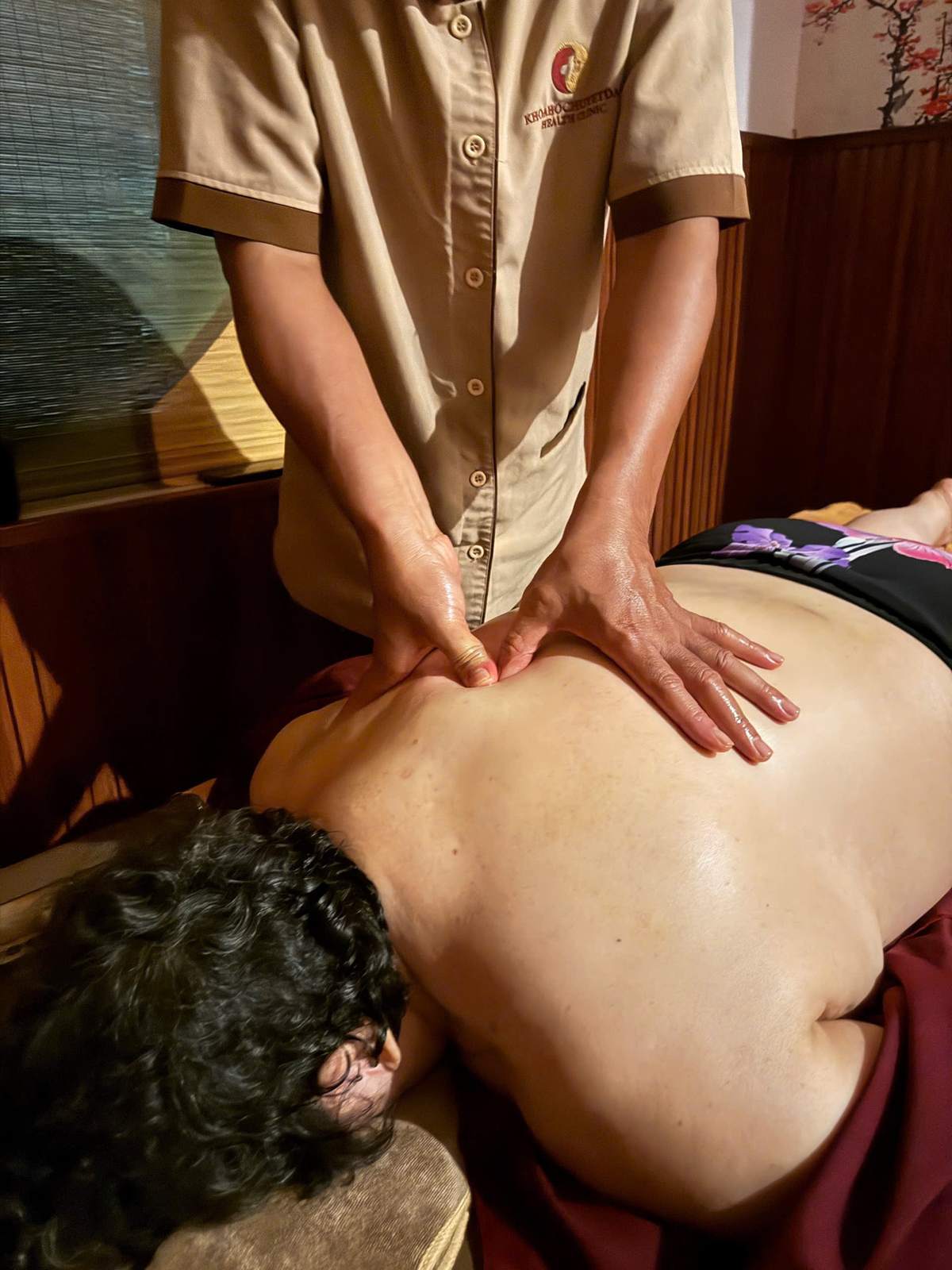
Hand practice for massage at home for beginners is not about learning new techniques. It gets the hands used to four basics: supple wrists, steady thumbs, even pressure going down and working for a long time without tiring. Technique, hand placement and pressure on a real person need someone standing beside you to correct them; at home you only reinforce what you were shown in class.
At Tong Gia Acupoint Wellness, about 70% of class time is practice in pairs, so home practice keeps the rhythm between two lessons. A regular 15–20 minutes a day is more useful than one long session at the weekend.
Four groups of basic drills
| Drill group | How to practise | What to watch |
|---|---|---|
| Loosening the wrists | Slow wrist circles both ways, gentle bending and stretching, shaking the hands loose | Never push into pain; let the shoulders drop |
| Thumbs | Place the pad of the thumb on a pillow, press down slowly, hold for a few breaths, release slowly | Thumb in line with the forearm, joint never bent backwards |
| Even pressure | Press on a bathroom scale through a folded towel and keep the needle still | Pressure comes from leaning the body in, not from tensing the upper arm |
| Stamina | Repeat a chain of rubbing, kneading and pressing on the pillow in time with the breath, slowly adding time | Stop when the hands shake or ache sharply |
A bathroom scale is an easy household tool that lets you see your own pressure: beginners often press hard, then soft, without noticing. The goal is not to press very hard but to hold one steady level and then release smoothly.
Pillow first, family members later
A firm pillow or a rolled blanket is the safest "model" in the first week, because you can be wrong many times and nobody gets hurt. When you move on to a family member, keep these rules:
- Work only on thick muscle such as shoulders, upper arms and calves; leave the neck, spine, abdomen and joints for now.
- Use light pressure and keep asking how it feels; stop at once if they say it is uncomfortable.
- Do not practise on someone with a fever, who is pregnant, recently injured, or who has an underlying illness not yet discussed with a medical facility.
- Keep each round to 10–15 minutes; do not try to do a full long session.
A family member is helping you practise, not someone to test new techniques seen online. Looking after your own joints matters just as much; read more in protecting the hands of a massage technician.
A suggested four-week plan
- Week 1: loosen the wrists and train the thumbs on a pillow, about 15 minutes a day; watch your stance and shoulders.
- Week 2: add the even-pressure drill on the scale; practise leaning the body in to pass pressure instead of tensing the arm.
- Week 3: join rubbing, kneading and pressing into a chain on the pillow in time with the breath; start light practice on a family member's shoulders and calves.
- Week 4: lengthen each chain and note where you tire quickly, so you can ask about it in class.
This plan is only a reference frame. People with small hands or little physical activity can go one step slower; the article can you learn massage with weak hands covers that case in more detail.
Common mistakes when practising alone
- Tensing the shoulders and holding the breath while pressing, so the nape aches after a few minutes.
- Bending the thumb joint backwards to get force, which makes the base of the thumb hurt over time.
- Overdoing it in the first few days, then stopping for a whole week.
- Pressing fast and releasing fast, with a jerky hand instead of going down and up slowly.
- Copying joint twisting and cracking moves from online clips; this part should not be self-taught.
If your wrist or thumb has lasting pain, numbness or swelling, stop practising and see a medical facility instead of pushing on.
Why a session with hand correction is still needed
Practising alone only tells you where your hands get tired, not where you are going wrong. Wrist angle, direction of pressure and where you stand relative to the table are things an outside eye sees at once, while the person practising rarely notices. In Tong Gia's massage class, based on the method of balancing the spinal nerve reflex system, Lương Y Tống Văn Huynh, with over 13 years in the trade, corrects each pair while they practise; at home you repeat exactly what was just corrected.
Whether you study to work in wellness care, to look after family or to help others, the order is the same: correct guidance first, then plenty of practice. This is a wellness trade, not a medical profession.
How to register
The Sunday morning trial class 9:00–12:00 (10 places) and the Sunday Y Tuong Hoc session with no fee are open sessions for beginners, at unit T16-21, Manhattan block, Vinhomes Grand Park, Thu Duc City, Ho Chi Minh City. Bring your questions about your own hands so they can be looked at in person. Book a trial class or call the training hotline 0917 945 259.
Frequently asked questions
What does hand practice for massage at home include for beginners? Four parts: loosening the wrists, thumb work on a pillow, even pressure on a bathroom scale and slowly building stamina, 15–20 minutes a day.
What can I practise on without a massage table? A firm pillow or rolled blanket on a table or a hard bed is enough for the first week. A bathroom scale shows whether your pressure is even.
What should I avoid when practising on family? Leave the neck, spine, abdomen and joints for now; do not practise on someone with a fever, who is pregnant, recently injured or has an underlying illness not yet discussed with a medical facility.
How long until the hands get used to it? It depends on your hands and how regularly you practise. The four-week frame is only a reference; people with small hands or little activity may go slower.
Can home practice replace learning in class? No. Home practice builds stamina and familiarity, while hand angle, direction of pressure and stance need someone beside you to correct them. Trial class Sunday morning 9:00–12:00, call 0917 945 259.
Related articles
- 30 basic massage techniques learners should know: learn them in groups, not as a list of names
- 8 principles of spinal wellness massage: the rules of the hands for Tong Gia learners
- How to use the right pressure in acupressure: measuring force by how the receiver feels
- Hands for wellness massage: soft hands, hard hands and 6 things you must train
- All articles about learning the trade
Reserve a free Sunday-morning trial class or ask about the learning path: message Zalo 0917 945 259.

Founder of Tong Gia Acupoint Wellness (Huyệt Đạo Tống Gia), with more than 13 years in Eastern wellness practice, Y Tướng Học (face reading for wellness) and spinal nerve-reflex balancing. Lương Y's story
417 customers have reviewed Tong Gia on Google Maps
Reviews are written by customers themselves on Google; tap to read them before you visit.
Huyệt Đạo Tống Gia Quận 12
225 Dương Thị Mười, Phường Tân Chánh Hiệp (District 12, Ho Chi Minh City). 8:00 – 19:00 daily.
See reviews on Google MapsHuyệt Đạo Tống Gia Quận 9
Căn T16-21 khu Manhattan, Vinhomes Grand Park, Phường Long Bình (Thủ Đức City, Ho Chi Minh City). 9:00 – 20:00 daily.
See reviews on Google MapsWant to be observed in person?
A 90-minute session starts with observation, and only then moves on to muscle release and acupressure on the right areas. Two branches: District 12 and Vinhomes Grand Park.