What tonifying and dispersing mean in acupressure: told apart by pressure, rhythm, meridian direction and time
Lương Y (traditional healer) Tống Văn Huynh · Tong Gia Acupoint Wellness (Huyệt Đạo Tống Gia) · 29/11/2026
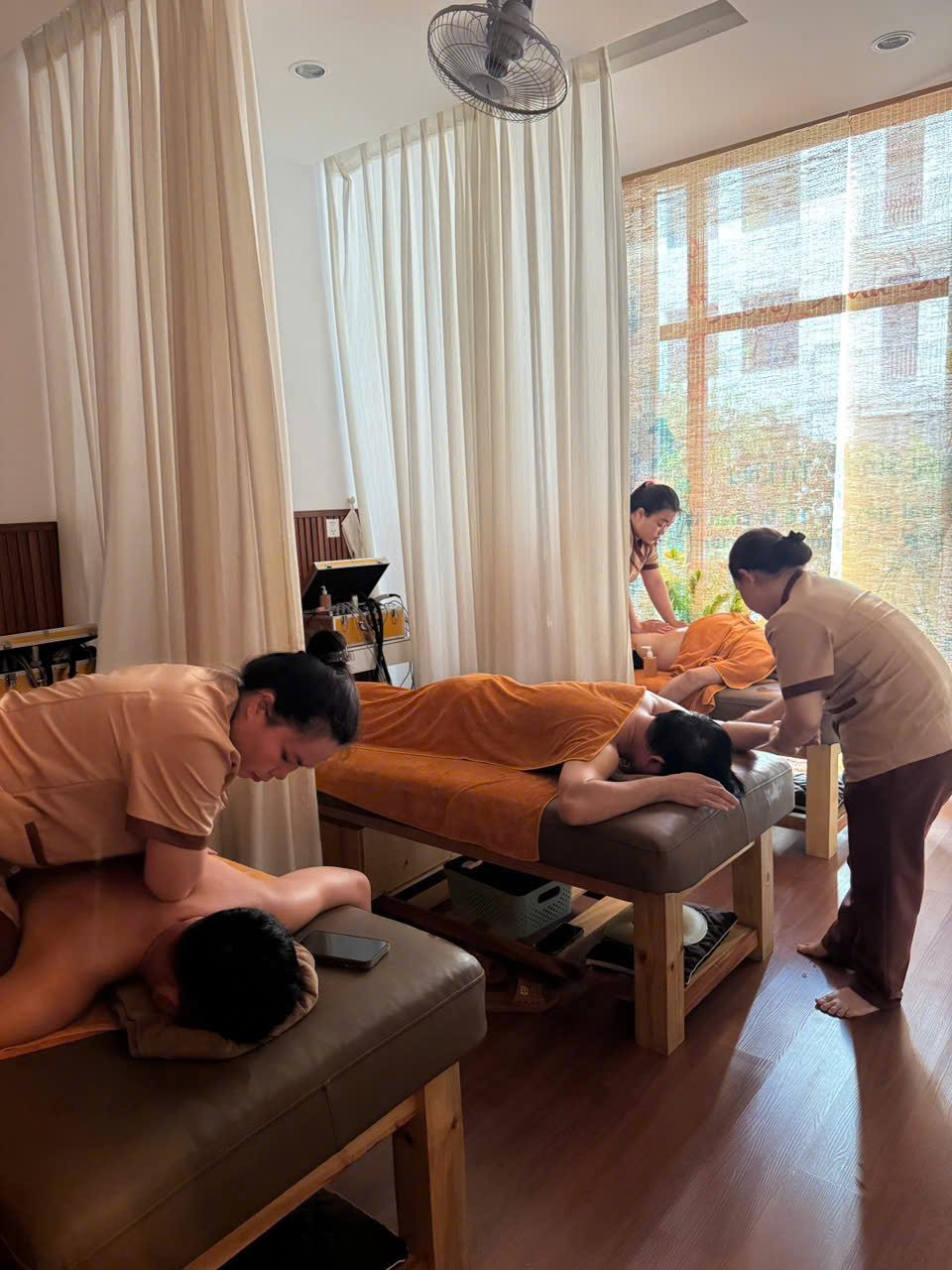
What tonifying and dispersing mean in acupressure: tonifying (bo) is a light, slow, longer technique along the meridian that supports a tired body; dispersing (ta) is a firmer, quicker, shorter technique against the meridian that releases tight muscle. At Tong Gia Acupoint Wellness (Huyệt Đạo Tống Gia), learners practise choosing between them by age and body condition and always ask how the client feels.
Questions learners often ask about tonifying and dispersing
What do tonifying and dispersing mean in acupressure, and how do they differ in pressure, rhythm, direction and time?
Tonifying is light, slow, held longer, along the meridian, with clockwise circles; dispersing is firmer, quicker, shorter and against the meridian. In wellness care this is a way of matching the hand to the person, not a way of concluding anything about illness. Tong Gia Acupoint Wellness teaches learners to start light and ask how the client feels.
My mother is 72, thin and often tired. When I press points for her at home, should I tonify or disperse, and how much pressure is right?
For an older, thin, tired person use the tonifying hand: light pressure, slow rhythm, longer holds, asking after each press whether it feels comfortable. Do not press hard on bone or right after a meal. Lasting pain, growing numbness or weakness, or dizziness mean a medical check. Lương Y Tống Văn Huynh teaches this at Vinhomes Grand Park; Zalo 0917 945 259.
Which level in Thu Duc teaches tonifying and dispersing, is there practice on real people, and what are the fees?
At Tong Gia Acupoint Wellness, pressure and rhythm are drilled in L2 Basic Trade, with about 70% of time practising in pairs on real people. Beginners start with L1 Introduction to Y Tuong Hoc at 1,500,000 VND; later levels are quoted at registration. Classes at unit T16-21, Manhattan block, Vinhomes Grand Park; trial class Sunday morning 9:00–12:00.
What tonifying and dispersing mean in acupressure, understood properly in wellness care
The question of what tonifying and dispersing mean in acupressure usually comes up in the very first week of technique practice. In Eastern medicine books, "bo" (tonifying) means adding where something is lacking, and "ta" (dispersing) means reducing where something is in excess or stuck. Carried into wellness massage and acupressure, the two words are not magic but a way of changing four things in the hand: pressure, rhythm, direction and time.
In short: tonifying means working lightly, slowly and smoothly so a tired body feels supported; dispersing means working more firmly and quickly so tight muscle lets go. This is a way of classifying technique in wellness care, not a medical profession. Learners use it to match the hand to the person, not to conclude anything about illness.
Four factors that separate tonifying from dispersing
| Factor | Tonifying technique | Dispersing technique |
|---|---|---|
| Pressure | Light to medium, comfortable for the client | Medium to firm, an ache the client can tolerate |
| Rhythm | Slow, even, smooth | Quicker, decisive |
| Direction | Along the flow of the meridian; clockwise circles | Against the flow of the meridian; counter-clockwise circles |
| Time | Longer on each point, pressure sinking in gradually | Shorter on each point, in quickly and out quickly |
| Feeling afterwards | Warm, at ease, sleepy | Lighter muscle, possibly slightly sore for a short while |
Conventions on meridian direction and circle direction differ slightly between books. In class, learners follow one consistent curriculum, and what matters more is the reason behind it: light, slow and long is something the body accepts; firm and quick is something that stimulates it. For the hand movements themselves, see acupressure hand techniques.
When learners should use a light technique
- Older people: thinner skin, less muscle, more fragile bones than the young.
- People who are tired, short of sleep for days or just recovering from illness.
- People who have just eaten a full meal or are very hungry: wait about an hour after eating and avoid firm pressure on the abdomen.
- People receiving acupressure for the first time, not yet used to the aching sensation.
- Thin, frail people who get dizzy when changing position.
For these people a strong hand does not make the session more useful; it easily leaves the client more tired, bruised or afraid. By contrast, a strong person with thick muscle, manual work and a tight neck and shoulders can receive the dispersing hand on large muscle areas, after warming up with gliding strokes.
In one session, tonifying and dispersing go together
In the massage method of balancing the spinal nerve reflex system combined with Y Tuong Hoc (Vietnamese medical face reading) that Lương Y Tống Văn Huynh teaches at Tong Gia Acupoint Wellness (Huyệt Đạo Tống Gia), learners look at facial colour and posture and talk with the client first, and only then decide on a heavy or light hand. A session is rarely only tonifying or only dispersing: it usually opens with a light hand so the client settles, moves to a firmer hand on tight muscle, then closes with a light, slow hand so the body calms down.
- Observe and ask: how last night's sleep was, when the last meal was, which area is uncomfortable.
- Test pressure at a light level, raise it step by step, asking as you go.
- Stay at the level the client calls "aching but comfortable"; holding the breath, tensing up or frowning means the hand has gone too far.
- Finish with light, slow strokes along the area just worked.
How to find the right pressure for each person is covered in more detail in how much pressure is right in acupressure.
Always ask how the client feels
No table replaces the question "how does this pressure feel?". The same pressure is just right for one person and painful for another. Learners practise asking at least three times in a session: at the start, when changing area and when raising pressure. If the client reports sharp pain, spreading numbness, dizziness or nausea, stop. Lasting pain or growing numbness or weakness means advising the client to go to a medical facility.
Common beginner mistakes
- Thinking stronger is always more useful and measuring by the client's cries of pain.
- Using finger strength instead of body weight, so pressure is jerky and the hands tire fast.
- Using one pressure for every client, without adjusting for age and body condition.
- Dispersing firmly from the start, before the muscle has been warmed.
- Concentrating on with-flow and against-flow and forgetting to watch the client's face.
- Using the words tonify and disperse to talk to clients about illness; that is not the job of someone in wellness care.
Which level teaches tonifying and dispersing
L1 Introduction to Y Tuong Hoc (1,500,000 VND) gives the foundation of reading facial colour and a few self-care points. Pressure and rhythm are drilled in L2 Basic Trade, with about 70% of time practising in pairs: everyone both gives and receives, feeling light and firm on their own body. Fees and length for L2, L3 Expert and L4 are given by the advisor at registration. Whether you study to work in the trade, to care for family or to help others, this part is needed.
How to register
The Sunday morning trial class 9:00–12:00 (10 places) and the Sunday Y Tuong Hoc session with no fee are open sessions for beginners, at unit T16-21, Manhattan block, Vinhomes Grand Park, Thu Duc City, Ho Chi Minh City. Lương Y Tống Văn Huynh, with over 13 years in the trade, checks your hands at the trial and suggests a suitable level. Book a trial class or call the training hotline 0917 945 259.
Frequently asked questions
What do tonifying and dispersing mean in acupressure? Tonifying is a light, slow, longer technique that supports a tired body; dispersing is a firmer, quicker, shorter technique that releases tight muscle.
In which factors do tonifying and dispersing differ? In four factors: light or firm pressure, slow or quick rhythm, along or against the meridian, and a longer or shorter hold.
Should older people receive tonifying or dispersing? The tonifying hand: light pressure, slow rhythm, no hard pressing on bone, and asking how it feels after each press.
Can firm acupressure be done right after a full meal? It is not advised. Wait about an hour after eating, use a light hand and avoid firm pressure on the abdomen.
Which level at Tong Gia teaches tonifying and dispersing? Beginners start with L1 Introduction to Y Tuong Hoc at 1,500,000 VND; pressure and rhythm are drilled in L2 Basic Trade, practising in pairs.
Related articles
- 30 basic massage techniques learners should know: learn them in groups, not as a list of names
- 8 principles of spinal wellness massage: the rules of the hands for Tong Gia learners
- How to use the right pressure in acupressure: measuring force by how the receiver feels
- Hands for wellness massage: soft hands, hard hands and 6 things you must train
- All articles about learning the trade
Reserve a free Sunday-morning trial class or ask about the learning path: message Zalo 0917 945 259.

Founder of Tong Gia Acupoint Wellness (Huyệt Đạo Tống Gia), with more than 13 years in Eastern wellness practice, Y Tướng Học (face reading for wellness) and spinal nerve-reflex balancing. Lương Y's story
417 customers have reviewed Tong Gia on Google Maps
Reviews are written by customers themselves on Google; tap to read them before you visit.
Huyệt Đạo Tống Gia Quận 12
225 Dương Thị Mười, Phường Tân Chánh Hiệp (District 12, Ho Chi Minh City). 8:00 – 19:00 daily.
See reviews on Google MapsHuyệt Đạo Tống Gia Quận 9
Căn T16-21 khu Manhattan, Vinhomes Grand Park, Phường Long Bình (Thủ Đức City, Ho Chi Minh City). 9:00 – 20:00 daily.
See reviews on Google MapsWant to be observed in person?
A 90-minute session starts with observation, and only then moves on to muscle release and acupressure on the right areas. Two branches: District 12 and Vinhomes Grand Park.