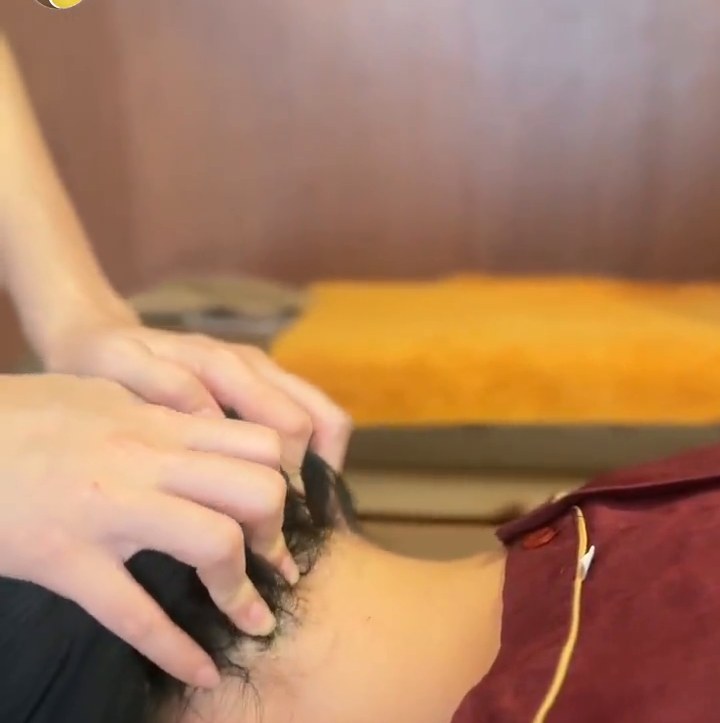
Why clients tense up during massage: how Lương Y Tống Văn Huynh teaches learners to read and respond
Lương Y (traditional healer) Tống Văn Huynh · Tong Gia Acupoint Wellness (Huyệt Đạo Tống Gia) · 13/11/2026
Why do clients tense up during massage? Usually because the pressure passes the threshold, the client is nervous on a first visit, or the hand lands right on a sore point. At Tong Gia Acupoint Wellness (Huyệt Đạo Tống Gia), learners are taught to spot tensing, lower pressure by one level and talk with the client before going on.
Questions learners often ask about why clients tense up during massage
When a client keeps tensing up during massage, should I press harder to make the muscles soften?
No. Tensing is the muscle protecting itself; pressing harder only makes it stiffer and painful. Tong Gia Acupoint Wellness (Huyệt Đạo Tống Gia) teaches learners to drop one of the 5 pressure levels, keep an even rhythm and ask again how it feels, waiting for the muscle to soften before building up.
I am a new massage technician in Ho Chi Minh City. How can I tell a client is tensing when they lie face down?
Watch the breath and the hands: the client holds the breath or breathes short, shoulders rise, hands clench, toes curl, and the muscle under your hand grows harder instead of softer. Tong Gia learners practise spotting these signs in pairs in class at Vinhomes Grand Park.
Where in Thu Duc can I learn to handle clients who tense up during massage?
Reading feedback by hand, the 5 pressure levels and the 8 principles are part of the Specialist Course (L3) at Tong Gia Acupoint Wellness, Vinhomes Grand Park, Thu Duc City, taught by Lương Y Tống Văn Huynh. Trial class Sunday 9:00–12:00, hotline 0917 945 259.
The hand goes down, the back goes stiff
During practice, a learner sometimes presses on the upper back and the person lying down holds the breath, both shoulders rise, the hands clench. New learners often carry on, thinking stiff muscle needs harder pressure. Lương Y Tống Văn Huynh stops the learner's hand right then: the client is tensing, and a session only helps when the body is willing to let go. So why do clients tense up during massage?
Three common reasons
1. Pressure past the threshold
When pressure is stronger than the muscle can take, the muscle contracts to shield itself. The hand is then pushing against a muscle that resists, and the harder it presses the stiffer it gets. The Tong Gia curriculum sets 5 pressure levels: one finger, the whole hand, bent arm, straight arm, whole-body strength. Learners start light and build up according to the client's response.
2. Client nerves, especially on the first visit
A first-time client does not know how intense it will be and cannot see the practitioner while lying face down, so they tense before the hand even touches. This is psychological, and the response starts with words, not with force.
3. The hand lands on the sore point
Of the 4 objective factors learners read by hand (skin temperature, cushioning muscle layer, spinal shape, sensation), sensation shows where there is localised pain, numbness or sharp discomfort. Clients tense strongly when the hand lands right there. That is information for locating the zone and the point, not a reason to press harder. See the 4 objective factors in spine reading.
Signs a client is tensing
- Holding the breath or breathing short and fast.
- Shoulders rising, neck pulled in.
- Hands clenched, toes curled.
- The muscle under the hand growing harder instead of softer.
- A clipped "it's fine" while the body stays tight.
How the learner responds
- Lower the pressure by one level, keep the same rhythm.
- Ask briefly: "Is this too strong?"
- Return to light resting and gliding strokes for a few beats so the muscle gets used to the hands.
- Create an even sensory wave on the out-breath, following the wave principle in the 8 principles of spinal wellness massage.
- Raise pressure only when the muscle has softened and the breath is even.
- If there is any unusual reaction, stop, with no exceptions.
How Lương Y Tống Văn Huynh teaches learners to listen to the client's body
Lương Y Tống Văn Huynh, who has passed the craft on to hundreds of learners, tells the class: "When a client tenses, the body is saying 'slow down'; only when you hear that can your hands do their work." In class, learners take turns lying down to feel when they themselves tense, then practise watching their partner's breath and hands when they swap roles. A learner who remembers their own feeling will not force a client.
From the session to the client's daily life
People who tense on the massage table often tense all day: shoulders raised at the computer, teeth clenched in sleep. At the end of the session, learners are taught to remind clients of a few small habits: drop the shoulders while working, stand and move between tasks, breathe slowly before sleep.
When to advise the client to see a doctor
If pain rises even after lowering pressure, spreads into the arms or legs with numbness or weakness, or comes at night; for clients with heart disease, a stent, high blood pressure or on blood thinners, ask carefully and work only lightly; with chest tightness, shortness of breath or stroke signs, stop at once and call 115. Beyond these, a client with lasting pain should be advised to see a medical facility. Tong Gia Acupoint Wellness offers wellness care, not a medical service.
Which level covers this?
Reading feedback by hand, the 5 pressure levels and the 8 principles sit in the spinal nervous reflex balancing part of the Specialist Course (L3); beginners practise hand placement and asking clients from L1 Foundation. About the teacher: Lương Y Tống Văn Huynh.
How to register
The Sunday trial class, 9:00–12:00, and the Sunday Y Tuong Hoc (face reading for wellness) session with no fee are open sessions for beginners, at unit T16-21, Manhattan block, Vinhomes Grand Park, Thu Duc City. Tong Gia does not promise jobs or income after the course. Book a trial class or call the training hotline 0917 945 259.
Frequently asked questions
Why do clients tense up during massage? Usually because pressure passes the threshold, the client is nervous on a first visit, or the hand lands right on a localised sore point.
Should I press harder when a client tenses? No. Lower one level, keep an even rhythm, ask how it feels and raise pressure only once the muscle softens.
How can I tell a client is tensing? They hold the breath, raise the shoulders, clench the hands, curl the toes, and the muscle grows harder under your hand.
Where can I learn to handle clients who tense up? In the Specialist Course (L3) at Tong Gia, Vinhomes Grand Park, Thu Duc City. Trial class Sunday 9:00–12:00, hotline 0917 945 259.
Related articles
- 8 principles of spinal wellness massage: the rules of the hands for Tong Gia learners
- How to use the right pressure in acupressure: measuring force by how the receiver feels
- Hands for wellness massage: soft hands, hard hands and 6 things you must train
- All articles about learning the trade
Reserve a free Sunday-morning trial class or ask about the learning path: message Zalo 0917 945 259.

Founder of Tong Gia Acupoint Wellness (Huyệt Đạo Tống Gia), with more than 13 years in Eastern wellness practice, Y Tướng Học (face reading for wellness) and spinal nerve-reflex balancing. Lương Y's story
417 customers have reviewed Tong Gia on Google Maps
Reviews are written by customers themselves on Google; tap to read them before you visit.
Huyệt Đạo Tống Gia Quận 12
225 Dương Thị Mười, Phường Tân Chánh Hiệp (District 12, Ho Chi Minh City). 8:00 – 19:00 daily.
See reviews on Google MapsHuyệt Đạo Tống Gia Quận 9
Căn T16-21 khu Manhattan, Vinhomes Grand Park, Phường Long Bình (Thủ Đức City, Ho Chi Minh City). 9:00 – 20:00 daily.
See reviews on Google MapsWant to be observed in person?
A 90-minute session starts with observation, and only then moves on to muscle release and acupressure on the right areas. Two branches: District 12 and Vinhomes Grand Park.