Massage course Vietnam: stroking along the spinal grooves, how to do it right and why learners practise it first
Lương Y (traditional healer) Tống Văn Huynh · Tong Gia Acupoint Wellness (Huyệt Đạo Tống Gia) · 10/11/2026
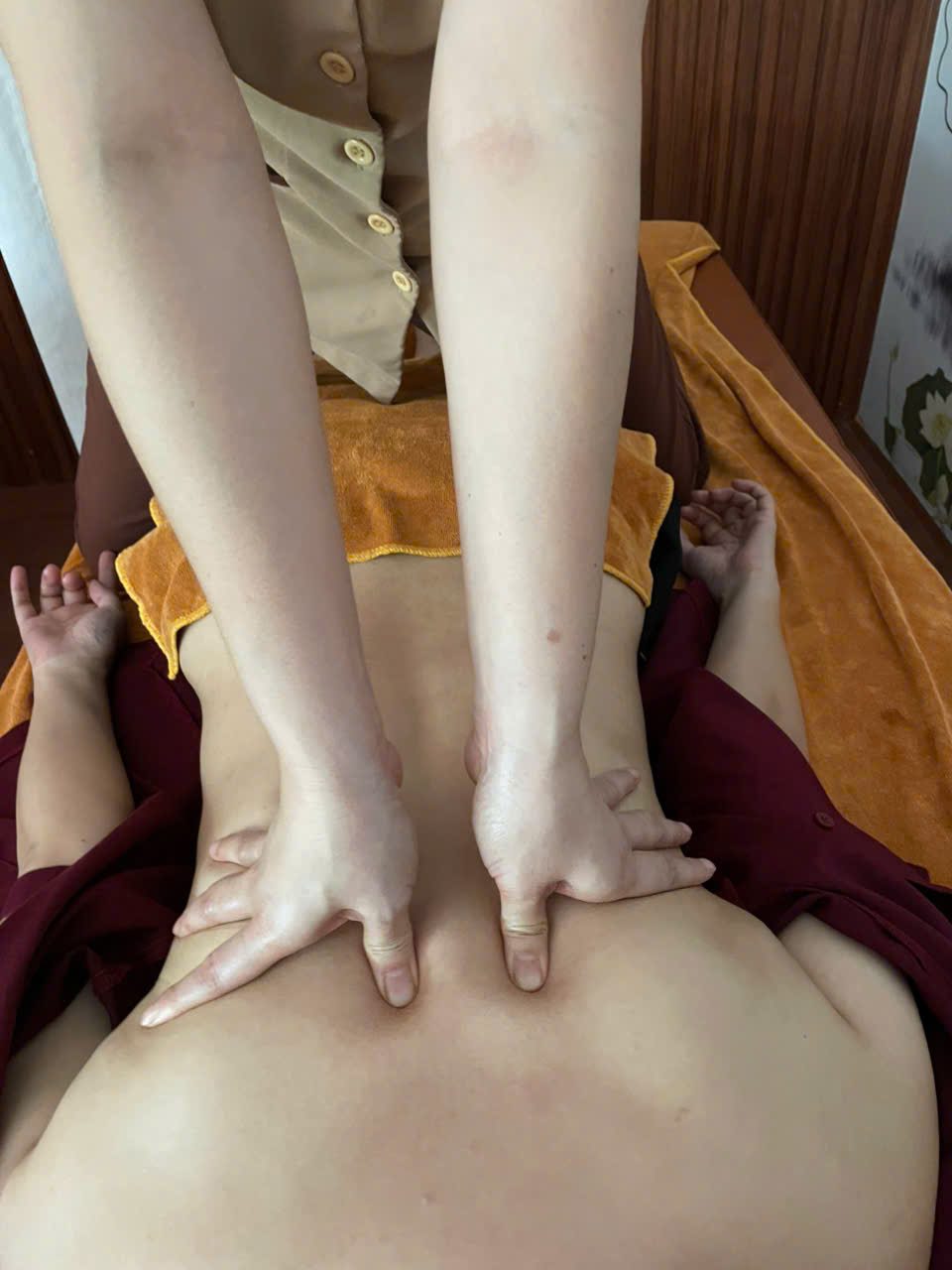
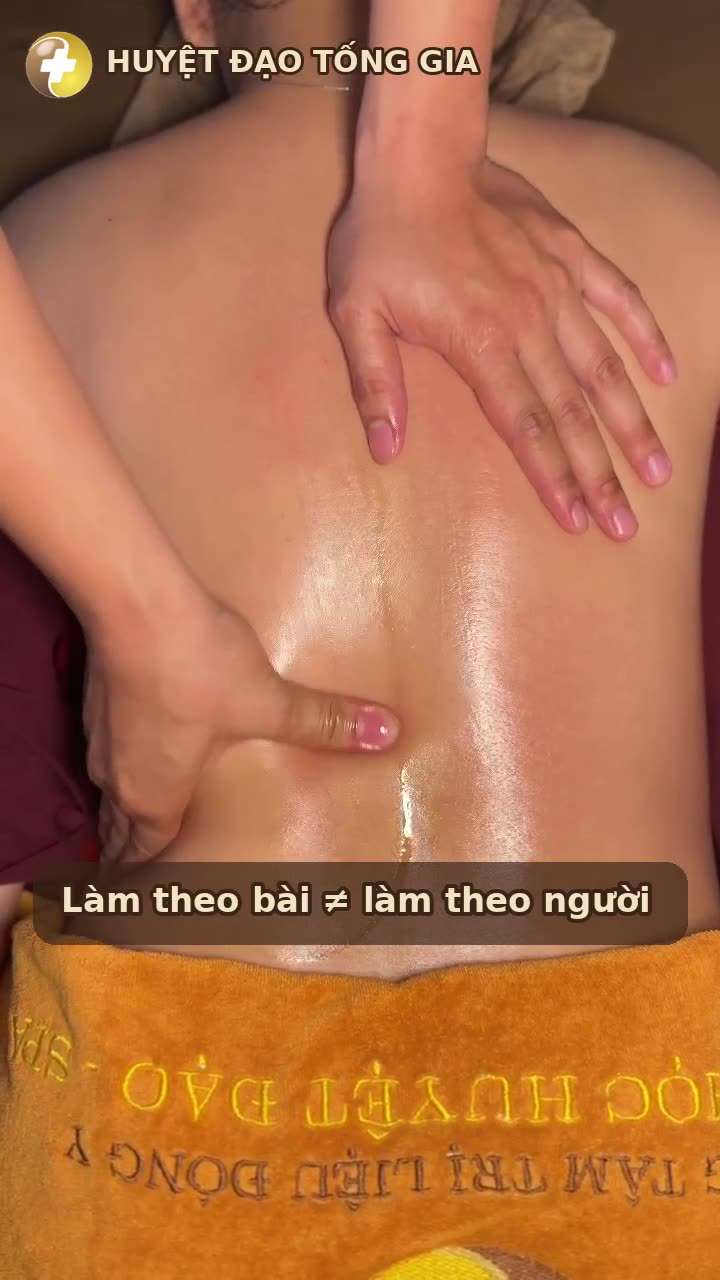
On a massage course in Vietnam, stroking along the spinal grooves means using the palms or both thumbs to stroke slowly and evenly from the neck down to the lower back, along the two muscle grooves running beside the spine. At Tong Gia, this is the first technique learners practise, used to open the session, link the steps and close it.
Where are the spinal grooves?
With the client lying face down, run your fingers down the middle of the back and you will feel the row of spinous processes standing out. On each side of that row is a mass of muscle running from the nape down to the lower back, and between the spinous processes and the muscle mass lies a hollow groove. Learners call it the spinal groove. In Eastern medicine, the line about 1.5 cun from the midline of the spine matches the first line of the Bladder meridian (BL, 足太阳膀胱经), where the back-shu points (背俞穴) of the back lie. See also the Bladder meridian, the vertical channel on the back.
Why is this stroke taught first?
- To read the back: after a few slow passes, the practitioner's hands feel where it is tight, where it dips, where it is unusually warm or cool.
- To help the client relax: an even, slow rhythm lets the client get used to the practitioner's hands before deeper strokes.
- To link the steps: after each area of pressing and kneading, stroking along again keeps the session flowing.
- To close the session: a few final passes bring the client's body back to a resting state.
Step by step
- Position: the client lies face down, with a thin pillow under the chest or under the ankles if needed. The practitioner stands beside or at the client's head, back straight, using force from the body rather than only the wrists.
- Warm up: rub both palms together and lay them on the client's back for 2–3 breaths.
- Stroke with the palms: place both hands either side of the spine with the heel of the hand in the groove, stroke from shoulder level down to the lower back, then glide lightly up along the sides of the ribs. Do 5–7 passes.
- Stroke with the thumbs: place both thumbs in the two grooves with the other fingers resting lightly on the back, and push slowly in short sections from below the nape down to the sacrum. Do 3–5 passes.
- Take note: wherever the thumbs catch, feel tightness, or the client reacts, make a mental note to come back to it later.
Pressure, rhythm and direction
- Pressure: light to medium. The first pass is always light, increasing gradually with the client's feedback. This is a probing and guiding stroke, not deep pressing.
- Rhythm: slow, about 4–6 seconds per pass from shoulders to lower back, even like breathing.
- Direction: along the axis of the spine, both hands balanced on each side. Tong Gia teaches the symmetry principle: as much on the right as on the left. See the symmetry principle in therapeutic-style massage.
Common beginner mistakes
- Pressing straight on the spinous processes instead of travelling in the muscle groove.
- Stroking fast like wiping a table, so the hands have no time to feel anything.
- Tensing the wrists, so the hands tire after a few clients.
- One hand strong and the other light, so the client feels lopsided.
- Skipping the stroking to go straight into acupressure before the client has relaxed.
Stroking along the spine in the spinal nerve-reflex balancing method
At Tong Gia, stroking along the spinal grooves is the foundation step for reading the back before choosing the next stroke, such as press-and-lift, press-and-shift or point kneading. Learners need to understand how the spine is divided into regions and which organ groups each region relates to; read how the 33 vertebrae are grouped into regions and the press-and-lift and press-and-shift strokes.
Try it at home
- Ask a family member to lie face down and stroke with your palms 5 times, very slowly.
- On the 6th pass, close your eyes and pay attention only to what is under your hands: where is it tighter?
- Ask the family member whether the pressure feels right and whether both sides feel even.
If the back has a wound, swelling and heat, sharp pain spreading down the leg, or the person has recently had surgery, do not do it and advise them to see a doctor at a medical facility.
Where to learn?
Lương Y Tống Văn Huynh personally demonstrates and corrects each learner's hands at Tong Gia. The weekly Sunday-morning trial class, 9:00–12:00, and the free Sunday Y Tướng Học (face reading for wellness) session are the open schedule for newcomers, at căn T16-21 khu Manhattan, Vinhomes Grand Park, TP. Thủ Đức (Ho Chi Minh City). Sign up for a trial class or call the training hotline 0917 945 259.
Questions learners often ask
How do I learn the stroke along the spinal groove safely?
Stroke only along the two muscle grooves beside the spine, slowly and evenly, never on the bony bumps. Skip clients with disc herniation or leg numbness and refer them to a clinic. In Eastern tradition this line follows the Bladder meridian. Huyệt Đạo Tống Gia trains this stroke early. Zalo/WhatsApp +84 917 945 259.
Frequently asked questions
What is the spinal groove? It is the hollow groove between the row of spinous processes and the muscle mass running along both sides of the spine, from the nape down to the lower back.
How much pressure is used when stroking along the spinal grooves? Light to moderate, and the first pass is always light. This is a technique for feeling out and guiding, not for pressing deep.
How many passes when stroking along the spinal grooves? Usually 5–7 passes with the palms and 3–5 passes with the thumbs, at a slow rhythm of about 4–6 seconds per pass.
Can you press on the spinous processes? No. The hands travel in the muscle grooves on both sides, never pressing straight on the spinous processes.
Where can I learn spinal massage techniques in Ho Chi Minh City? Tong Gia Acupoint Wellness holds a Sunday-morning trial class, 9:00–12:00, at Vinhomes Grand Park, Thủ Đức City. Call 0917 945 259.
Related articles
- 8 principles of spinal wellness massage: the rules of the hands for Tong Gia learners
- How much pressure in acupressure: gauging force by how the receiver feels
- Hands for wellness massage: soft hands, hard hands and 6 things you must train
- Protecting a massage practitioner's hands: keeping your hands fit for a long career
- All articles about learning the trade
Reserve a free Sunday-morning trial class or ask about the learning path: message Zalo 0917 945 259.

Founder of Tong Gia Acupoint Wellness (Huyệt Đạo Tống Gia), with more than 13 years in Eastern wellness practice, Y Tướng Học (face reading for wellness) and spinal nerve-reflex balancing. Lương Y's story
417 customers have reviewed Tong Gia on Google Maps
Reviews are written by customers themselves on Google; tap to read them before you visit.
Huyệt Đạo Tống Gia Quận 12
225 Dương Thị Mười, Phường Tân Chánh Hiệp (District 12, Ho Chi Minh City). 8:00 – 19:00 daily.
See reviews on Google MapsHuyệt Đạo Tống Gia Quận 9
Căn T16-21 khu Manhattan, Vinhomes Grand Park, Phường Long Bình (Thủ Đức City, Ho Chi Minh City). 9:00 – 20:00 daily.
See reviews on Google MapsWant to be observed in person?
A 90-minute session starts with observation, and only then moves on to muscle release and acupressure on the right areas. Two branches: District 12 and Vinhomes Grand Park.