Pressing and gliding for hollow areas: how Tong Gia learners work deep yet gently
Lương Y (traditional healer) Tống Văn Huynh · Tong Gia Acupoint Wellness (Huyệt Đạo Tống Gia) · 14/11/2026
The bỉ and miết techniques for hollow zones are a group of techniques that work deep into hollows on the back that a flat hand cannot reach: bỉ means resting a fingertip on one point and holding with the out-breath; miết means gliding slowly with even pressure along the floor of the hollow. Tong Gia Acupoint Wellness (Huyệt Đạo Tống Gia) teaches them at level L3.
Questions learners often ask about pressing and gliding for hollow areas
How do bỉ and miết differ in wellness massage?
Bỉ means leaning a fingertip into one point in the hollow and holding, raising pressure gradually with the client's out-breath. Miết means letting the fingertip glide slowly with even pressure along the floor of the hollow. At Tong Gia Acupoint Wellness (Huyệt Đạo Tống Gia), the two usually go together: bỉ to open, miết to connect.
What is a hollow area on the back, and why work on it separately?
It is a spot where the spine or the muscles beside it sink lower than the surroundings, felt when gliding along the spinal groove. Pushing, rotating or plucking, used for thick stiff areas, cannot reach the floor of a hollow, so the Tong Gia curriculum reserves bỉ and miết for it.
Where in Ho Chi Minh City can I learn bỉ and miết?
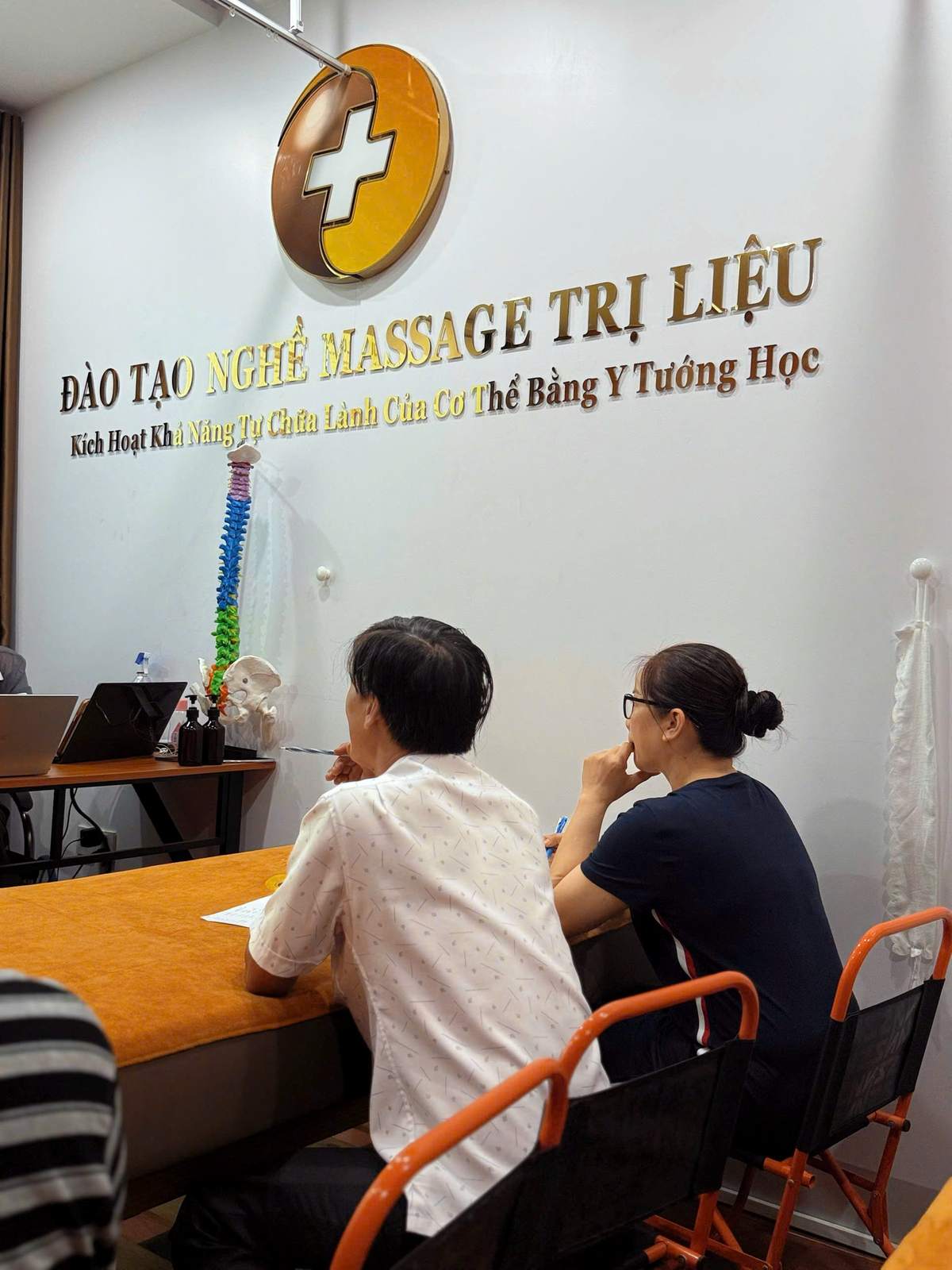
Tong Gia Acupoint Wellness teaches them in Module 4 of the spinal nervous reflex balancing massage course, with Lương Y Tống Văn Huynh leading the class at Vinhomes Grand Park, Thu Duc City. Sunday trial class, 9:00–12:00; training hotline 0917 945 259.
A fingertip that slides past a hollow unnoticed
In a practice session, a learner glides evenly along a partner's back from the nape to the lower back. Lương Y Tống Văn Huynh places a hand after them and points to a spot between the shoulder blades: this area sinks, the muscle is thin, and you slid past without stopping. The question of this article is: what does a learner do on such a hollow? The answer in the Tong Gia curriculum is pressing and gliding techniques for hollow areas.
What is a hollow area on the back?
Gliding along the spinal groove with the whole hand, one finger or three fingers, the hand meets high spots and low spots. A place where a vertebra or the muscle mass beside it is clearly lower than the area around it is called a hollow. It is one of the forms learners must recognise when reading the spine, along with bulging and shifting. See also the five forms of the vertebrae and the hand spine-reading routine.
Why does a hollow need its own technique?
The curriculum groups basic techniques by purpose: pushing and rotating to release thick, stiff, immobile areas; plucking to cut across fibrous, taut muscle bands; vibrating to create relaxing waves on soft, thick areas. These work on high, thick surfaces. On a hollow, a flat hand only touches the two edges, never the floor. So the curriculum sets apart bỉ and miết for deep work in hollows, and lách for scanning gaps and grooves to find new key points.
What is bỉ?
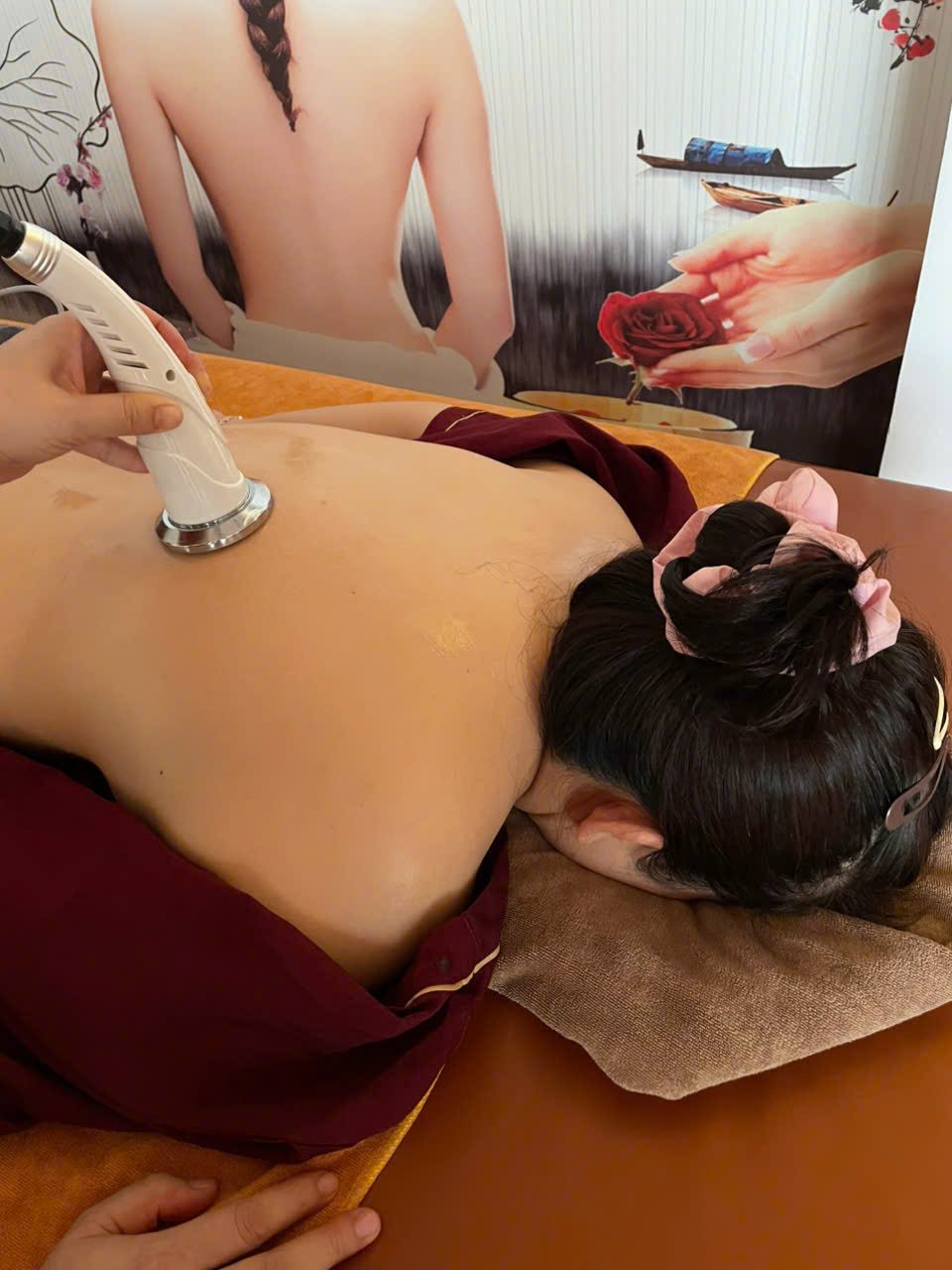
Put simply, bỉ means leaning a fingertip, usually the thumb, into one point on the floor of the hollow and holding it. Pressure is not dropped in all at once but rises with each out-breath of the client, stopping at a pleasant ache, with no grimacing or breath-holding. Hold for a few breaths, then release slowly. On thin, slack backs, the curriculum allows only light bỉ.
What is miết?
Miết means letting the fingertip glide slowly with even pressure along the floor of the hollow, usually from top to bottom. If bỉ opens point by point, miết joins the points into a line. Beginners often glide too fast, so the hand rises back to the skin surface. Done right, the person lying down feels a warm, even line running along the hollow.
Bỉ and miết within one session
- Read first: resting, gliding and probing to know where the hollow is, how deep, and whether the muscle is thin or contracted.
- Warm up: soften the area around the hollow first with light techniques.
- Bỉ point by point: from the upper edge to the lower edge of the hollow, a few breaths per point.
- Miết to connect: one to a few slow glides along the floor.
- Read again: glide again and compare warmth and softness before and after.
This order follows the 8 principles of spinal wellness massage: pressure from light to firm, direction centred on the spinal canal, and stopping once the threshold is reached.
Common beginner mistakes
Holding bỉ too long on one point reddens the skin and leaves the client sore. Driving pressure from the shoulders instead of body weight tires the hand and makes pressure jerky. Gliding as fast as stroking never reaches the floor. Forgetting to re-read means not knowing whether the area has changed. Bỉ and miết are not cracking or bone setting; they are just a way to bring pressure into low spots that a flat hand cannot reach.
How Lương Y Tống Văn Huynh teaches learners to slow down at hollows
With more than 13 years in Eastern wellness and spinal nervous reflex balancing massage, Lương Y Tống Văn Huynh tells learners: "High spots touch your hand by themselves; hollows your hand must go looking for, and once found, slow down, do not pass over them." In class, each learner marks with a skin pencil the hollows they have read on a partner's back before being allowed to use bỉ and miết.
When not to use bỉ and miết
Do not work on fresh injuries, hot red swelling, wounds, areas after recent spinal surgery, or on people with severe osteoporosis. If there is pain spreading to the arms or legs with numbness or weakness, fever, weight loss or pain worse at night: stop and advise the client to visit a medical facility. Tong Gia Acupoint Wellness offers wellness care, not a medical service.
Which level covers this?
Bỉ, miết and lách belong to Module 4 – System of techniques and methods in practice, taught in the Specialist Course (L3). Read more about plucking for fibrous muscle bands and the teacher Lương Y Tống Văn Huynh.
How to register
The Sunday trial class, 9:00–12:00, and the Sunday Y Tuong Hoc (face reading for wellness) session with no fee are open sessions for beginners, at unit T16-21, Manhattan block, Vinhomes Grand Park, Thu Duc City. Tong Gia does not promise jobs or income after the course. Book a trial class or call the training hotline 0917 945 259.
Frequently asked questions
What are the bỉ and miết techniques for hollow zones? A group of in-depth techniques for hollows on the back after careful reading by hand: bỉ rests a fingertip on one point at the floor of the hollow and holds it; miết glides slowly with even pressure along the floor of the hollow.
How does bỉ differ from miết? Bỉ rests on and holds one point, deepening with the out-breath; miết glides slowly with even pressure along the floor of the hollow.
Can bỉ be used on a back with thin muscles? Yes, but only light bỉ, held briefly, re-reading after each pass.
Where can I learn bỉ and miết? In the Specialist Course (L3) at Tong Gia Acupoint Wellness, Vinhomes Grand Park, Thu Duc City. Sunday morning trial class 9:00–12:00, hotline 0917 945 259.
Related articles
- 8 principles of spinal wellness massage: the rules of the hands for Tong Gia learners
- How to use the right pressure in acupressure: measuring force by how the receiver feels
- Hands for wellness massage: soft hands, hard hands and 6 things you must train
- All articles about learning the trade
Reserve a free Sunday-morning trial class or ask about the learning path: message Zalo 0917 945 259.

Founder of Tong Gia Acupoint Wellness (Huyệt Đạo Tống Gia), with more than 13 years in Eastern wellness practice, Y Tướng Học (face reading for wellness) and spinal nerve-reflex balancing. Lương Y's story
417 customers have reviewed Tong Gia on Google Maps
Reviews are written by customers themselves on Google; tap to read them before you visit.
Huyệt Đạo Tống Gia Quận 12
225 Dương Thị Mười, Phường Tân Chánh Hiệp (District 12, Ho Chi Minh City). 8:00 – 19:00 daily.
See reviews on Google MapsHuyệt Đạo Tống Gia Quận 9
Căn T16-21 khu Manhattan, Vinhomes Grand Park, Phường Long Bình (Thủ Đức City, Ho Chi Minh City). 9:00 – 20:00 daily.
See reviews on Google MapsWant to be observed in person?
A 90-minute session starts with observation, and only then moves on to muscle release and acupressure on the right areas. Two branches: District 12 and Vinhomes Grand Park.