Massage course Vietnam: pressing and circling techniques in therapeutic-style massage, and how to get your hands right
Lương Y (traditional healer) Tống Văn Huynh · Tong Gia Acupoint Wellness (Huyệt Đạo Tống Gia) · 10/11/2026
On a massage course in Vietnam, pressing and circling techniques go hand in hand: pressing uses the finger pad or the heel of the hand to drive pressure straight down onto one point and hold it; circling keeps the finger in place and turns it in very small circles to soften the muscle fibres underneath. At Tong Gia, learners practise both until they flow smoothly before working on clients.
What are pressing and circling in therapeutic-style massage?
In Tong Gia's therapeutic-style massage curriculum built on spinal nerve-reflex balancing, pressing and circling belong to the group of point techniques. Unlike rubbing, stroking or gliding, which travel over a wide area, pressing and circling work on one small point: an acupoint, a tight spot, a knot of muscle standing out under the hand.
- Pressing: place the pad of the thumb, the middle finger or the heel of the hand on the point, increase the force gradually at a right angle to the skin, hold for a few breaths, then release slowly.
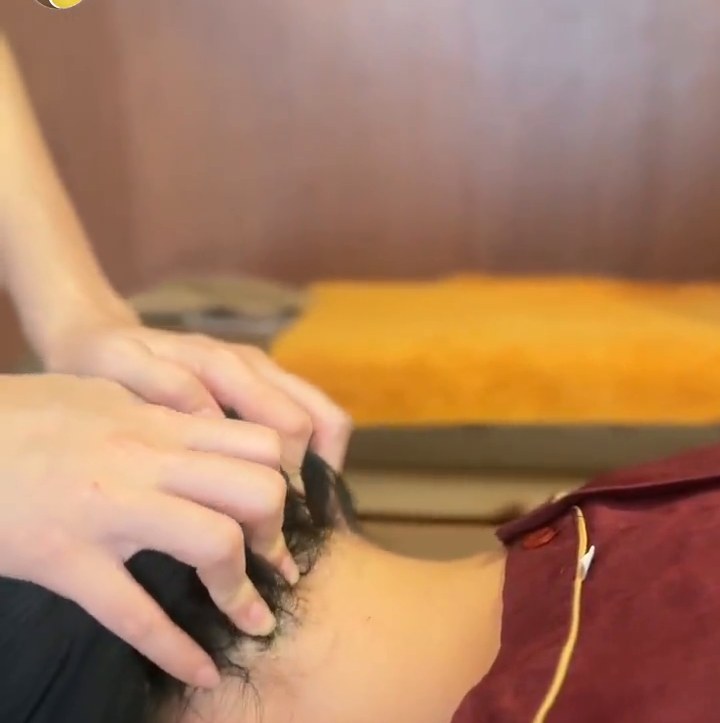
- Circling: keep the contact point where it is, without sliding over the skin, and turn the finger in small circles so the skin and the muscle beneath move together with the finger.
Beginners often think circling is just rubbing in circles. In fact, when circling is done correctly, the finger does not run over the surface of the skin but takes the layer of skin and muscle round with it. If you feel your finger slipping, you are rubbing, not circling.
Why do these two techniques usually go together?
Pressing lets the practitioner feel the point that needs work: where it is harder, where the receiver feels a stronger ache. But if you only press hard and hold for a long time, the muscle may react by tightening to protect itself. Circling right after pressing helps that muscle layer calm down, moving from bracing to letting go. So a standard sequence is usually: press to find the point, hold, circle small, release the force, then stroke lightly outwards around it.
Anyone who has read the article learning to knead and press acupoints will see that pressing is the foundation. Circling is the next step and needs more sensitive fingers, because you have to feel the muscle layer gradually softening under your hand.
Pressure, rhythm and direction when pressing and circling
- Place the hand first, add force after. Do not jab down. Rest the pad of the finger on the skin, wait one breath, then increase the force.
- Force comes from the body. Elbow almost straight, shoulder relaxed, let your body weight sink into the finger. Pressing with finger strength alone tires you quickly and the force is uneven.
- Right-angle direction. On the back, direct the force at a right angle to the skin. On the neck and abdomen, reduce the force and use a gentler angle.
- Circle small and slow. Each circle is about the size of a coin, about 1 circle per second, 6–10 circles on one point.
- Release slowly. Releasing quickly startles the receiver and loses the relaxation just gained.
The right sensation is an ache, a moderate tightness, spreading lightly to the surrounding area. If the receiver holds their breath, tenses up or grimaces, the pressure is too heavy and must be reduced at once.
Common mistakes beginners make
- Using the fingertip or fingernail instead of the pad, giving the client a stinging pain on the skin.
- Circling that slides over the skin, which turns into rubbing and does not reach the muscle layer.
- Pressing too long on one point, thinking that longer is better.
- Working directly on the spine, the pulse area of the neck, or areas that are swollen and hot or have a wound.
- Practising on only one person, so never getting used to how thin and thick muscle feel different.
Areas that should not receive strong pressure are covered in the article when a massage technician must refuse to work.
Where do pressing and circling fit in a session?
In a back-care session following Tong Gia's method, the practitioner does not press right from the start. First comes reading the spine by hand to find areas that are out of line or tight. Then rubbing and stroking to warm the muscles. Only once there is a map of the points that need work are pressing and circling used on each point, and the session ends with lengthwise stroking techniques such as those in the article stroking along the spinal grooves.
This order helps learners understand that a technique does not stand on its own. Pressing the right point before the muscle has been warmed still leaves the client feeling more pain than comfort.
Where to learn pressing and circling with confident hands?
Pressing and circling are learned through the hands; watching clips is not enough. Learners need someone to place a hand over theirs so they can feel the correct pressure, and they need to practise on many different people. At Tong Gia, Lương Y Tống Văn Huynh personally guides and corrects each student's hands, from people learning to care for their family to people who want to work in the trade.
How to register
The trial class every Sunday morning, 9:00–12:00, and the free Sunday Y Tướng Học (face reading for wellness) session are the open schedule for newcomers, at căn T16-21 khu Manhattan, Vinhomes Grand Park, TP. Thủ Đức (Thu Duc City, Ho Chi Minh City). Register for a trial class or call the training hotline 0917 945 259.
Questions learners often ask
How are pressing and rolling techniques used in acupressure massage?
Pressing drives steady force into one tight spot; rolling keeps the finger in place and circles very small to soften the fibres. Too much force makes the muscle guard and hurt, so build pressure with the client's breath. Eastern tradition sees both as moving qi and blood locally. Zalo/WhatsApp +84 917 945 259.
Frequently asked questions
How do the pressing and circling techniques differ? Pressing drives force straight down into one point and holds it. Circling keeps the finger in place and turns small circles so the skin and muscle beneath move with it, helping that point soften.
Is circling the same as rubbing in circles? No. When rubbing, the finger slides over the skin. When circling, the finger does not slide but takes the skin and muscle round with it.
How long should you press one point? Usually hold for a few breaths, then circle 6–10 small circles. Pressing too long on one point easily makes the muscle react by tightening.
Can beginners practise pressing and circling at home on their own? You can practise feeling the pressure on your own upper arm or thigh, but you should have someone correct your hands before working on other people.
Where can I learn therapeutic-style massage techniques in Ho Chi Minh City? Tong Gia Acupoint Wellness (Huyệt Đạo Tống Gia) has a trial class every Sunday morning, 9:00–12:00, at Vinhomes Grand Park, Thu Duc City. Call the training hotline 0917 945 259.
Related articles
- 8 principles of spinal wellness massage: the rules of the hands for Tong Gia learners
- How much pressure in acupressure: gauging force by how the receiver feels
- Hands for wellness massage: soft hands, hard hands and 6 things you must train
- Protecting a massage practitioner's hands: keeping your hands fit for a long career
- All articles about learning the trade
Reserve a free Sunday-morning trial class or ask about the learning path: message Zalo 0917 945 259.

Founder of Tong Gia Acupoint Wellness (Huyệt Đạo Tống Gia), with more than 13 years in Eastern wellness practice, Y Tướng Học (face reading for wellness) and spinal nerve-reflex balancing. Lương Y's story
417 customers have reviewed Tong Gia on Google Maps
Reviews are written by customers themselves on Google; tap to read them before you visit.
Huyệt Đạo Tống Gia Quận 12
225 Dương Thị Mười, Phường Tân Chánh Hiệp (District 12, Ho Chi Minh City). 8:00 – 19:00 daily.
See reviews on Google MapsHuyệt Đạo Tống Gia Quận 9
Căn T16-21 khu Manhattan, Vinhomes Grand Park, Phường Long Bình (Thủ Đức City, Ho Chi Minh City). 9:00 – 20:00 daily.
See reviews on Google MapsWant to be observed in person?
A 90-minute session starts with observation, and only then moves on to muscle release and acupressure on the right areas. Two branches: District 12 and Vinhomes Grand Park.