Spa massage client psychology: 5 client types Tong Gia learners read before working
Lương Y (traditional healer) Tống Văn Huynh · Tong Gia Acupoint Wellness (Huyệt Đạo Tống Gia) · 14/11/2026
Spa and massage client psychology usually falls into 5 types: first-timers who feel anxious, long-term pain sufferers who are doubtful, busy people who want it quick, quiet people, and people who tense up. How to respond: explain the routine clearly, be honest, lighten the pressure, keep quiet when needed. At Tong Gia Acupoint Wellness (Huyệt Đạo Tống Gia), learners read clients through their breathing and shoulders.
Questions learners often ask about spa massage client psychology
What do first-time massage clients usually worry about?
Most often: fear of pain, shyness about undressing, discomfort with a stranger touching them, and fear of being pushed to buy a package. At Tong Gia Acupoint Wellness (Huyệt Đạo Tống Gia), learners are taught to explain what comes next, ask about pressure, keep unworked areas covered and never push extra sales.
As a spa technician, how can I tell a client is uncomfortable before asking?
Watch for held or short breaths, clenched hands, raised shoulders, curled legs, one-word answers or a forced smile. Tong Gia learners who see these signs lower the pressure one level, slow the rhythm and ask a short question: is this pressure all right?
Where in Ho Chi Minh City can I learn to read spa massage clients?
Tong Gia Acupoint Wellness teaches communication and client psychology in its vocational courses, with Lương Y Tống Văn Huynh leading the class at Vinhomes Grand Park, Thu Duc City. Sunday trial class, 9:00–12:00; training hotline 0917 945 259.
Same technique, two different results
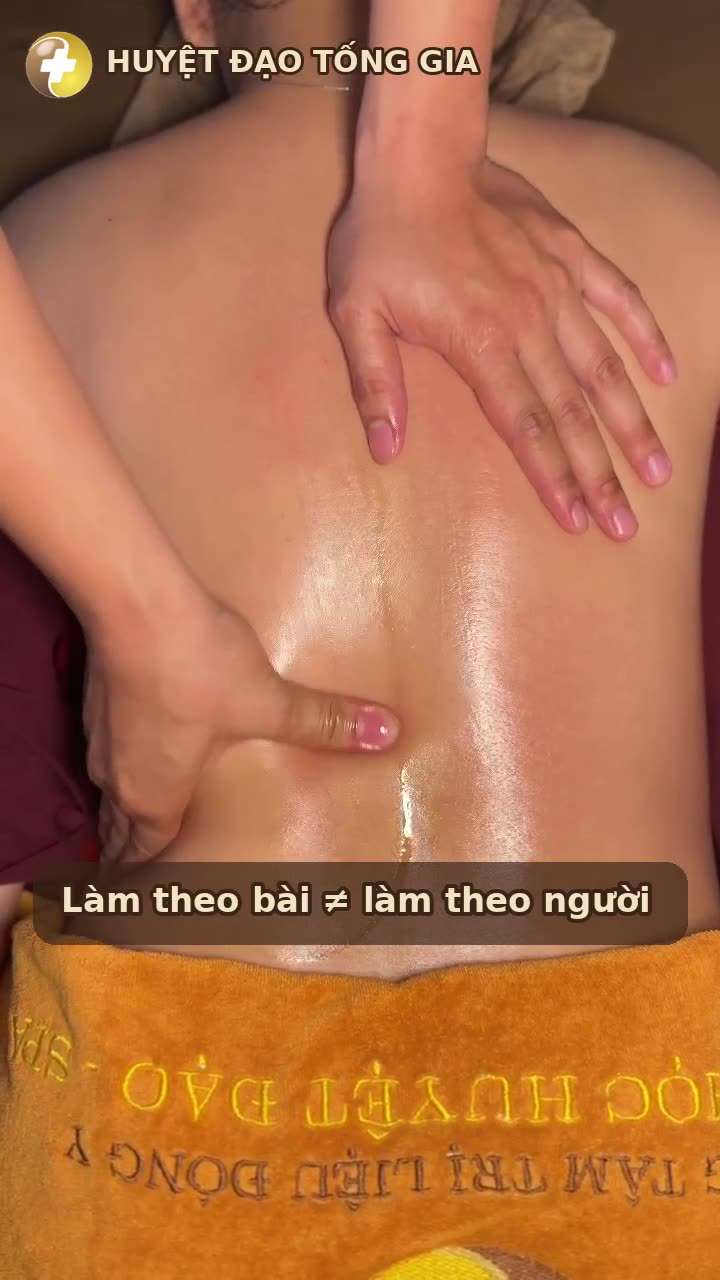
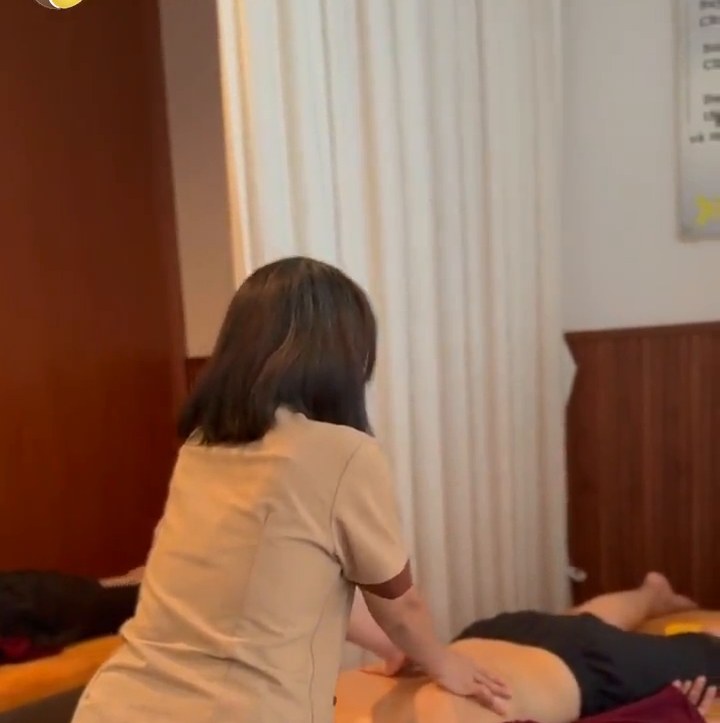
In class, two learners follow the same routine, with the same pressure and timing, on two partners. One partner lies relaxed and dozes off. The other lies stiff and keeps opening the eyes to look around. Lương Y Tống Văn Huynh explains: the difference is not in the hands but in the mind of the person lying down. This article helps learners understand spa massage client psychology through 5 common client types and how to support each one.
Type 1: the anxious first-timer
Afraid of pain, shy about undressing, uneasy with a stranger touching them, worried about sales pressure. Signs: many questions about the routine, lying still but holding the breath. Support: briefly explain what you will do, for how long, on which area; keep the body well covered; start with resting and light gliding; ask about pressure in the first 5 minutes.
Type 2: the long-term sufferer who doubts
Has tried many places, expects little, often asks "will this make it go away?". Support: say honestly that massage is wellness care and you cannot promise the pain will go; explain with what your hands read on the back; suggest habits for home. Read more on the psychology of clients with long-term aches.
Type 3: the hurried client
Checks the phone, asks the time, wants hard pressure for a quick "fix". Support: state the duration upfront, focus on the active zones you have read instead of spreading thin; briefly explain why you do not press hard from the start.
Type 4: the quiet client who likes silence
Answers in one or two words, closes the eyes early. Support: ask the necessary questions at the start and then keep quiet; agree on a hand signal beforehand (raise a hand to lower pressure); do not keep making conversation.
Type 5: the client who tenses up
Raised shoulders, clenched hands, a back that stiffens at the first touch. Often from stress or being hurt in the past. Support: lower the pressure, slow the rhythm to the out-breath, keep the client warm. See why clients tense up during massage and how to help clients relax.
Four words for talking with clients
The Tong Gia curriculum sets the communication principle: honest, evidence-based, safe and respectful of the client. No promises of recovery or "detox", no advice to stop medicine, no judging a client's character by the face. Reading the mind is for fitting the care to the person, not for labelling or upselling.
How Lương Y Tống Văn Huynh teaches learners to read the client before the back
With more than 13 years in Eastern wellness and spinal nervous reflex balancing, Lương Y Tống Văn Huynh tells learners: "Until the client trusts you, the back does not open; to read the back, you must first read the person." In class, each pair spends 3 minutes talking before placing a hand, then says which type they noticed and which hand rhythm they chose.
When to advise the client to see a doctor
If the client mentions weeks of poor sleep, long-lasting low mood, palpitations without clear reason, negative thoughts, or pain with numbness or weakness in the limbs, fever or weight loss: the practitioner does not handle it alone, but advises a visit to a medical facility or a mental health professional. Tong Gia Acupoint Wellness offers wellness care, not a medical service.
Which level covers this?
Communication and reading client psychology start at L2 Basic Vocational and deepen in the Specialist Course (L3) alongside spine reading and Y Tuong Hoc. See also client communication skills for technicians and the teacher Lương Y Tống Văn Huynh.
How to register
The Sunday trial class, 9:00–12:00, and the Sunday Y Tuong Hoc (face reading for wellness) session with no fee are open sessions for beginners, at unit T16-21, Manhattan block, Vinhomes Grand Park, Thu Duc City. Tong Gia does not promise jobs or income after the course. Book a trial class or call the training hotline 0917 945 259.
Frequently asked questions
What types of spa and massage client psychology are common? Five common types: anxious first-timers (explain the routine, keep them well covered, start gently), doubtful long-term pain sufferers (be honest, never promise the pain will go), busy people in a hurry (state the duration up front), quiet people who like silence (ask what you need, then stay quiet), and people who tense up (lighten pressure, slow down with their breathing).
What do first-time clients fear most? Pain, undressing, being touched by a stranger, and being pushed to buy a package.
How can I tell a client is uncomfortable? Holding the breath or short breaths, clenched hands, raised shoulders, curt answers; when you see these, lighten the pressure, slow down and check in again.
Where can I learn to read client psychology? In the vocational courses at Tong Gia Acupoint Wellness, Vinhomes Grand Park, Thu Duc City. Sunday morning trial class 9:00–12:00, hotline 0917 945 259.
Related articles
- 8 principles of spinal wellness massage: the rules of the hands for Tong Gia learners
- How to use the right pressure in acupressure: measuring force by how the receiver feels
- Hands for wellness massage: soft hands, hard hands and 6 things you must train
- All articles about learning the trade
Reserve a free Sunday-morning trial class or ask about the learning path: message Zalo 0917 945 259.

Founder of Tong Gia Acupoint Wellness (Huyệt Đạo Tống Gia), with more than 13 years in Eastern wellness practice, Y Tướng Học (face reading for wellness) and spinal nerve-reflex balancing. Lương Y's story
417 customers have reviewed Tong Gia on Google Maps
Reviews are written by customers themselves on Google; tap to read them before you visit.
Huyệt Đạo Tống Gia Quận 12
225 Dương Thị Mười, Phường Tân Chánh Hiệp (District 12, Ho Chi Minh City). 8:00 – 19:00 daily.
See reviews on Google MapsHuyệt Đạo Tống Gia Quận 9
Căn T16-21 khu Manhattan, Vinhomes Grand Park, Phường Long Bình (Thủ Đức City, Ho Chi Minh City). 9:00 – 20:00 daily.
See reviews on Google MapsWant to be observed in person?
A 90-minute session starts with observation, and only then moves on to muscle release and acupressure on the right areas. Two branches: District 12 and Vinhomes Grand Park.