Reading the spine by hand: the steps Tong Gia learners follow before working
Lương Y (traditional healer) Tống Văn Huynh · Tong Gia Acupoint Wellness (Huyệt Đạo Tống Gia) · 14/11/2026
The process of reading the spine by hand at Tong Gia Acupoint Wellness (Huyệt Đạo Tống Gia) starts with questions and safety screening, then three reading techniques: resting the hand to feel skin temperature, gliding and pressing to probe muscle, tendon and spinal groove, rolling to learn vertebral shape. Learners narrow from survey area to key zone and key point before choosing how to work.
Questions learners often ask about reading the spine by hand
What are the steps of reading the spine by hand?
In the Tong Gia Acupoint Wellness (Huyệt Đạo Tống Gia) curriculum: ask and screen for safety; rest the hand (lifting and sliding) to check skin temperature; glide and press along muscles, tendons and the spinal groove; roll (shift, knead, push, rotate) to learn vertebral shape and the comfortable tender point; finally mark the survey area, key zone and key point and fill in the record sheet.
As a massage beginner, how long until I can read a spine?
It depends on the person and practice hours. Tong Gia learners practise reading backs in pairs every session; what matters is going through every step and comparing right with left, upper with lower, not guessing fast. Lương Y Tống Văn Huynh corrects hands directly in class.
Where in Ho Chi Minh City can I learn to read the spine by hand?
Tong Gia Acupoint Wellness teaches it in the spinal nervous reflex balancing massage part of the Specialist Course (L3), at Vinhomes Grand Park, Thu Duc City. Sunday trial class, 9:00–12:00. Training hotline 0917 945 259.
The hand reads first, then works
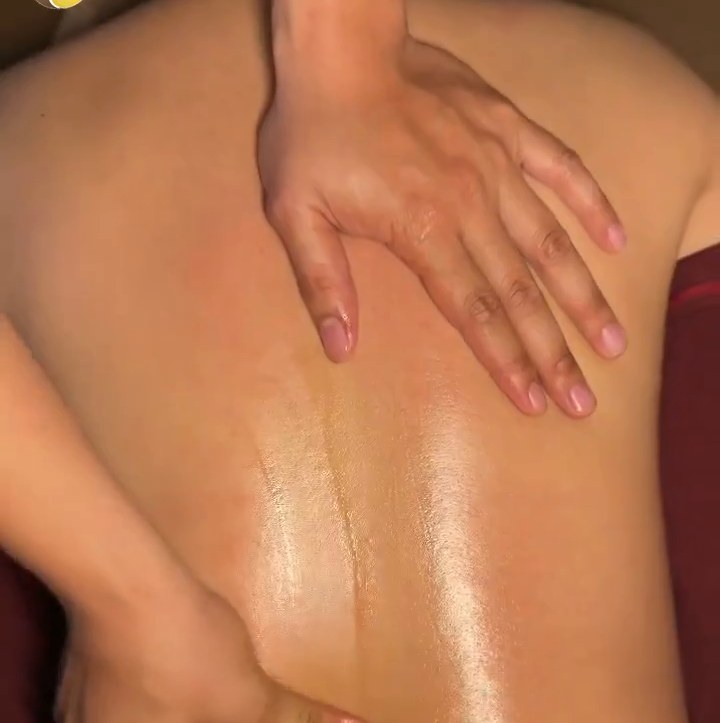
In the first spinal session at a Tong Gia class, learners usually want to start working right away. Lương Y Tống Văn Huynh has the whole class place both hands on a practice partner's back, close their eyes and only say what they feel: which spot is warmer, which is stiff, which dips in. No one may press hard. That is the opening exercise of the process of reading the spine by hand, the part learners must complete before touching any working technique.
Step 0: ask and screen for safety
Before placing a hand, the learner asks about history: pregnancy, heart disease, a stent, high blood pressure, blood thinners, recent surgery, a recent fall. Any warning sign means no work and advice to see a doctor. The client lies face down comfortably, unworked areas are kept warm, the room is quiet.
Step 1: resting the hand, feeling skin temperature
Resting means placing the whole palm on the skin, in two ways, lifting and sliding, from the nape down to the tailbone. The aim is to check skin temperature: which area is warmer, which cooler. In the curriculum, high temperature, stiff muscle and increased pain mark an active zone. The learner does not press yet.
Step 2: gliding and pressing along muscle, tendon and spinal groove
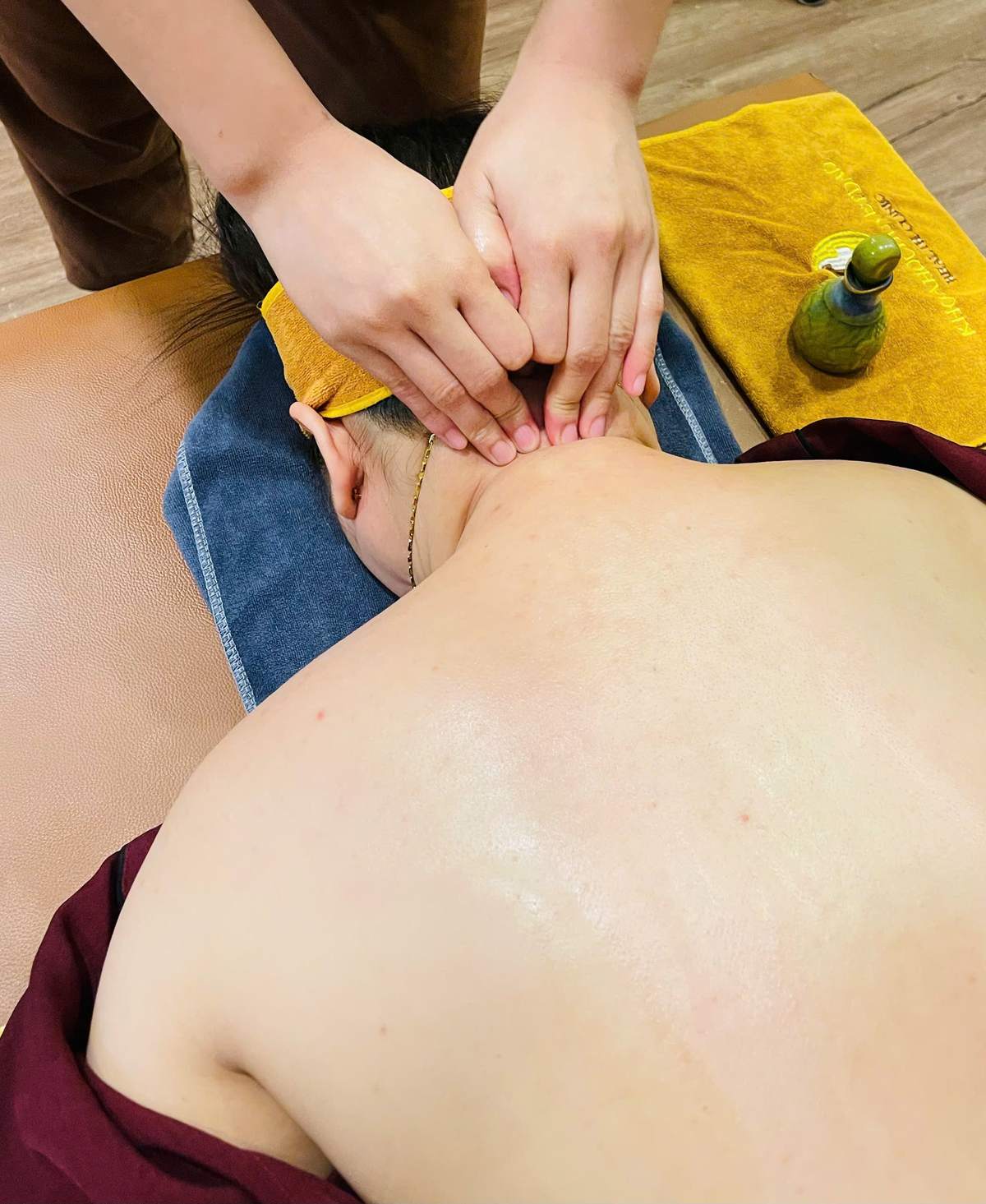
The learner glides along the muscles, tendons and the spinal groove, sometimes with the whole hand, sometimes one finger, sometimes three; then presses lightly to probe. This shows which tendons and muscles are contracted, where the groove feels full or empty, and how shallow or deep a spot sits. Read more on the 4 objective factors when reading the spine by hand.
Step 3: rolling to read vertebral shape
Rolling includes shifting, kneading, pushing and rotating over each vertebra to pin down bone shape and the comfortable tender point. The fingers compare each vertebra with the one above, the one below and both sides, sorting it into 5 shapes: raised, raised and shifted, shifted, sunken and shifted, sunken. See the 5 vertebral shapes.
Step 4: narrowing in three layers
From what the hands have read, the learner follows the localisation principle: survey area → key zone → key point. The survey area is the whole section of back showing signs; the key zone is the most marked segment; the key point is the smallest spot that decides the whole area. Alongside it runs the symmetry principle: compare right with left, upper with lower, the spine with the periphery.
Step 5: record and cross-check
The learner notes which vertebra, which shape, temperature, tension and the client response. Then they cross-check with the areas served by the 33 vertebrae (cervical C1–C7, thoracic D1–D12, lumbar L1–L5, sacrum and coccyx) to see which area needs care. Only with a reading sheet in hand do they choose techniques and methods. See how the 33 vertebrae are grouped.
How Lương Y Tống Văn Huynh teaches learners to keep the reading order
With more than 13 years in Eastern wellness and spinal nervous reflex balancing, Lương Y Tống Văn Huynh tells learners: "Read a back like a book: start from the first page; skip a step and you misread the whole story." In class, every learner reads the same back and then compares sheets; wherever the sheets differ, Lương Y places his hand to check again and points out the skipped step.
Common beginner mistakes when reading the spine
- Pressing deep from the start, so the client's muscle contracts and the tension reading is wrong.
- Reading only one side, forgetting to compare with the symmetrical side.
- Working wherever it hurts without checking whether the zone is active or inhibited.
- Not keeping a record, so next session no one knows how the client has changed.
The two kinds of zones are explained in active and inhibited zones on the back.
When to advise the client to see a doctor
If while reading you find an unusual lump, a swollen, hot, red area, sharp pain at a light touch, or the client reports numbness or weakness in the limbs, pain spreading down the leg, fever, unexplained weight loss or bladder problems: stop, do not continue, and advise the client to visit a medical facility. Reading the spine by hand serves wellness care and does not replace medical examination and tests. Tong Gia Acupoint Wellness is not a medical service.
Which level covers this?
The process of reading the spine by hand is in Modules 3–4 of the Specialist Course (L3). Beginners start at L1 Foundation to get used to hand placement and feeling skin temperature. About the teacher: Lương Y Tống Văn Huynh.
How to register
The Sunday trial class, 9:00–12:00, and the Sunday Y Tuong Hoc (face reading for wellness) session with no fee are open sessions for beginners, at unit T16-21, Manhattan block, Vinhomes Grand Park, Thu Duc City. Tong Gia does not promise jobs or income after the course. Book a trial class or call the training hotline 0917 945 259.
Frequently asked questions
What are the steps of reading the spine by hand? Ask and screen; rest the hand to feel skin temperature; glide and press along muscle, tendon and spinal groove; roll to read vertebral shape; mark survey area, key zone and key point; record and cross-check the areas served.
Why not press hard when reading the spine? Hard pressure makes the muscle contract in self-defence, so the hand misreads tension and the client feels discomfort; reading uses light pressure only.
What is the key point? The smallest spot within the key zone that decides the state of the whole area; learners find it with the localisation principle.
Where can I learn to read the spine by hand? In the Specialist Course (L3) at Tong Gia, Vinhomes Grand Park, Thu Duc City. Trial class Sunday 9:00–12:00, hotline 0917 945 259.
Related articles
- 8 principles of spinal wellness massage: the rules of the hands for Tong Gia learners
- How to use the right pressure in acupressure: measuring force by how the receiver feels
- Hands for wellness massage: soft hands, hard hands and 6 things you must train
- All articles about learning the trade
Reserve a free Sunday-morning trial class or ask about the learning path: message Zalo 0917 945 259.

Founder of Tong Gia Acupoint Wellness (Huyệt Đạo Tống Gia), with more than 13 years in Eastern wellness practice, Y Tướng Học (face reading for wellness) and spinal nerve-reflex balancing. Lương Y's story
417 customers have reviewed Tong Gia on Google Maps
Reviews are written by customers themselves on Google; tap to read them before you visit.
Huyệt Đạo Tống Gia Quận 12
225 Dương Thị Mười, Phường Tân Chánh Hiệp (District 12, Ho Chi Minh City). 8:00 – 19:00 daily.
See reviews on Google MapsHuyệt Đạo Tống Gia Quận 9
Căn T16-21 khu Manhattan, Vinhomes Grand Park, Phường Long Bình (Thủ Đức City, Ho Chi Minh City). 9:00 – 20:00 daily.
See reviews on Google MapsWant to be observed in person?
A 90-minute session starts with observation, and only then moves on to muscle release and acupressure on the right areas. Two branches: District 12 and Vinhomes Grand Park.