Blind and visually impaired people learning massage and acupressure: hands as an advantage, how to learn and how to choose a class
Lương Y (traditional healer) Tống Văn Huynh · Tong Gia Acupoint Wellness (Huyệt Đạo Tống Gia) · 18/11/2026
Blind and visually impaired people can learn massage and acupressure as a trade, because the craft is learned mainly through touch: finding bony landmarks, feeling tight muscle and adjusting pressure. At Tong Gia Acupoint Wellness (Huyệt Đạo Tống Gia), what matters is hands-on guidance, clear spoken description and a teacher who stays close, not whether the learner can see the textbook.
Questions learners often ask about massage training for blind and visually impaired people
My brother is blind, 25, and wants to learn massage and acupressure in Ho Chi Minh City. How can he learn without seeing point charts?
Through his hands and spoken description. The teacher places the learner’s hand on landmarks such as the spinous processes and the edge of the shoulder blade, then measures distances in finger-widths. Tong Gia teaches by checking with the hands along the spine, in small classes where Lương Y Tống Văn Huynh guides each person.
Does a visually impaired learner need to know Eastern medicine first, and can they work right after the course?
No prior Eastern medicine is needed. It takes time practising on many people to get used to pressure and anatomical landmarks. This is wellness care, not a medical profession; clients with lasting pain or growing numbness and weakness should be advised to see a medical professional. Tong Gia does not promise jobs or income after the course.
How do I choose a massage class for a blind learner in Thu Duc without wasting money?
Ask about class size, hands-on correction, whether materials come in audio form and whether the route to class is easy. Tong Gia Acupoint Wellness, unit T16-21, Manhattan block, Vinhomes Grand Park, Thu Duc City, runs a Sunday morning trial class; call 0917 945 259 first to talk it through.
Is massage and acupressure a good trade for blind and visually impaired people?
Blind and visually impaired people learning massage and acupressure as a trade is a path many countries have known for a long time. In Vietnam, many visually impaired people have earned their living through massage, and associations and vocational centres for the visually impaired in many localities still run classes. The reason is simple: this craft is read with the hands, not the eyes. Bony landmarks, muscle fibres, tight spots and skin warmth all reach us through the fingertips. People who already live by touch often have an advantage in staying focused on what is under their hands.
This article is written for visually impaired readers themselves and for families looking for a trade for a loved one. The aim is to explain how to learn and how to choose a class, not only to introduce one place.
Learning with the hands: what the teacher must do differently
With sighted learners, teachers often point at a point chart. With visually impaired learners, teaching has to shift to three things:
- Placing the hand on landmarks: the teacher guides the learner’s hand to the spinous process of the seventh cervical vertebra, the inner edge of the shoulder blade, the iliac crest. Points are found from these fixed landmarks.
- Measuring with the body: point distances are measured in “thốn” based on the finger joints of the person receiving care, so learners can measure without a ruler.
- Describing clearly in words: “below the spinous process, two finger-widths outward, press to feel a dip” instead of “right here”.
Families should ask directly whether a class can do these three things before paying fees.
Reading the spine with the hands
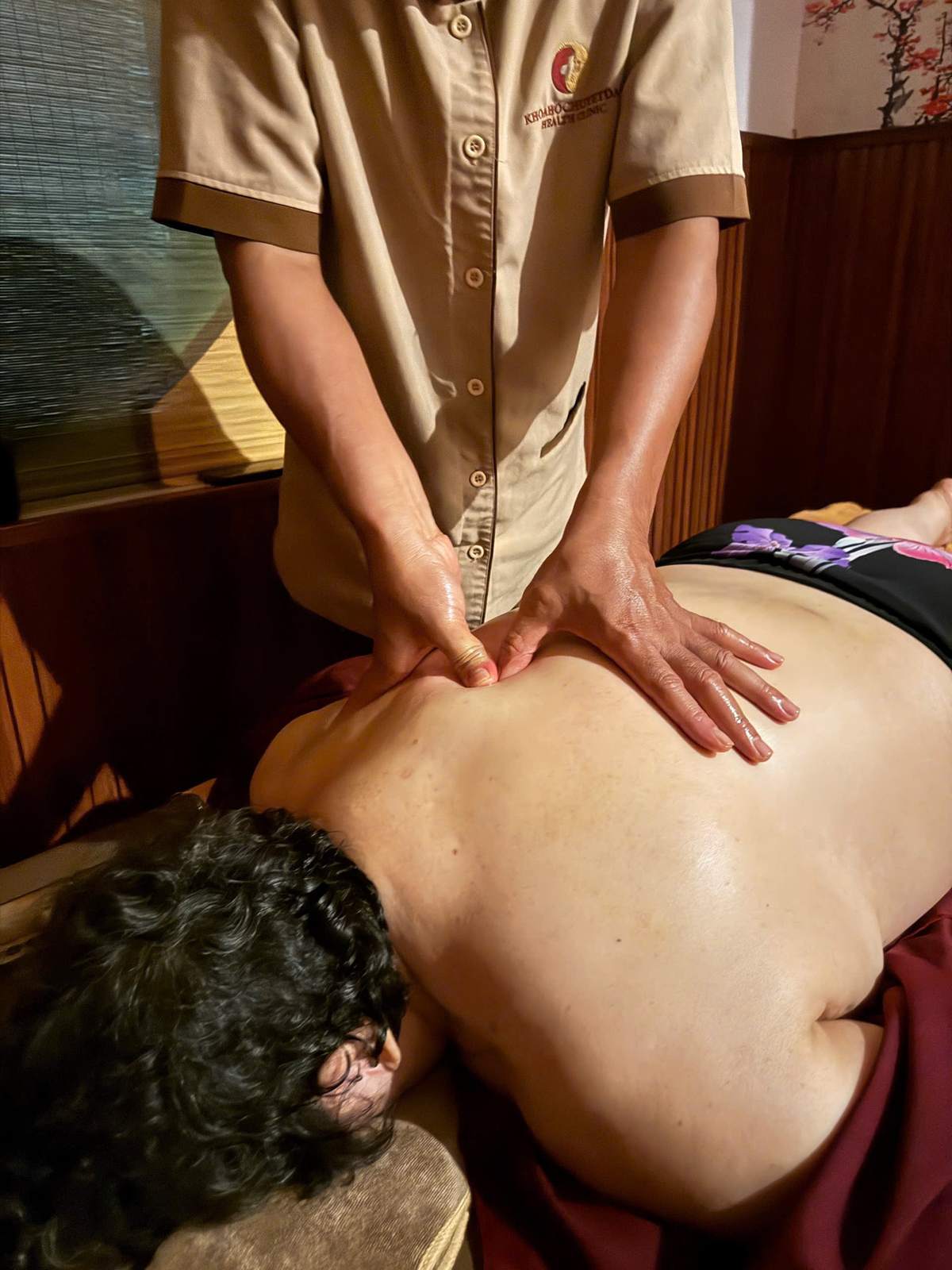
The Tong Gia approach suits visually impaired learners well. In therapeutic massage that balances the spinal nerve reflex system, learners trace the spine from the neck down to the lower back to feel which vertebra stands out, sinks or shifts, and whether the muscles on both sides are unevenly tight. Lương Y Tống Văn Huynh’s principle is that every observation must be checked again by hand. The Y Tuong Hoc (Vietnamese physiognomy) part, which normally uses the eyes to read facial complexion, is learned differently: listening to descriptions, asking the client, feeling skin warmth and moisture. Ask the adviser beforehand how this part is adapted for you.
Questions to ask before choosing a class
| Question | Why it matters |
|---|---|
| How many people per class, is there close guidance? | In large classes the teacher cannot guide each person’s hands |
| How much of the time is practice? | Learning by hand needs lots of practice; at Tong Gia about 70% of class time is practice |
| Are materials available as audio or screen-reader text? | Learners can review at home |
| Are the route, lift and toilets easy to use? | Regular attendance is what keeps skills alive |
| What paperwork is given after the course and what is it worth? | Ask reception clearly before paying fees |
Keeping clients and yourself safe
Every practitioner must know when not to work. Clients with wounds, hot red swelling, recent surgery or fever should not be massaged in that area. Clients with lasting pain, growing numbness and weakness or underlying conditions should be advised to see a medical professional. Visually impaired practitioners should build the habit of asking clients before each session and, when needed, asking a helper to check the client’s skin, because some signs such as bruises or unusual moles need to be seen. This is wellness health care, not a medical profession.
Can I learn at Tong Gia Acupoint Wellness?
Tong Gia does not yet have a dedicated class for visually impaired learners. Current classes are small, the Lương Y guides each person and most of the time is practice on real people, so there is a lot that fits. You or your family can call ahead to talk with an adviser, then come to a trial class together to feel it for yourselves. Tong Gia does not promise jobs or income after the course. Read more: learning to help others or to work: which course to choose and one-to-one therapeutic massage lessons, or see learning therapeutic massage in Ho Chi Minh City.
How to register
The Sunday morning trial class 9:00–12:00 (10 places) and the Sunday Y Tuong Hoc session with no fee are open sessions for beginners, at unit T16-21, Manhattan block, Vinhomes Grand Park, Thu Duc City, Ho Chi Minh City. Book a trial class or call the training hotline 0917 945 259.
Frequently asked questions
Can blind or visually impaired people learn massage and acupressure? Yes. The craft is learned mainly through touch: finding bony landmarks, feeling tight muscle and adjusting pressure, so the class needs hands-on guidance and clear spoken description.
How do visually impaired learners find acupoints? From fixed bony landmarks such as the spinous processes and the edge of the shoulder blade, then by measuring in thốn based on the finger joints of the person receiving care.
Does Tong Gia have a class just for visually impaired learners? Not yet. Current classes are small and the Lương Y guides each person; call 0917 945 259 to talk first and come to a trial class with a family member.
Will I be promised a job after a massage course? Tong Gia does not promise jobs or income after the course. Ask any school clearly about this before enrolling.
What should families ask when looking for a class for a visually impaired learner? Class size, practice time, hands-on correction, audio materials, an easy route to class and the paperwork given after the course.
Related articles
- 8 principles of spinal wellness massage: the rules of the hands for Tong Gia learners
- How to use the right pressure in acupressure: measuring force by how the receiver feels
- Hands for wellness massage: soft hands, hard hands and 6 things you must train
- All articles about learning the trade
Reserve a free Sunday-morning trial class or ask about the learning path: message Zalo 0917 945 259.

Founder of Tong Gia Acupoint Wellness (Huyệt Đạo Tống Gia), with more than 13 years in Eastern wellness practice, Y Tướng Học (face reading for wellness) and spinal nerve-reflex balancing. Lương Y's story
417 customers have reviewed Tong Gia on Google Maps
Reviews are written by customers themselves on Google; tap to read them before you visit.
Huyệt Đạo Tống Gia Quận 12
225 Dương Thị Mười, Phường Tân Chánh Hiệp (District 12, Ho Chi Minh City). 8:00 – 19:00 daily.
See reviews on Google MapsHuyệt Đạo Tống Gia Quận 9
Căn T16-21 khu Manhattan, Vinhomes Grand Park, Phường Long Bình (Thủ Đức City, Ho Chi Minh City). 9:00 – 20:00 daily.
See reviews on Google MapsWant to be observed in person?
A 90-minute session starts with observation, and only then moves on to muscle release and acupressure on the right areas. Two branches: District 12 and Vinhomes Grand Park.