Therapeutic-style massage vs body massage: how they differ, so you choose right as a client and as a massage student
Lương Y (traditional healer) Tống Văn Huynh · Tong Gia Acupoint Wellness (Huyệt Đạo Tống Gia) · 29/10/2026
Quick answer: Therapeutic-style massage differs from body massage mainly in its goal: body massage aims at even, whole-body relaxation, while therapeutic-style massage targets the muscle areas that feel tight and tired and looks for why they are tight. That different goal changes how the client is asked questions, how pressure is used and how the time is split. This article compares the two on 5 criteria, gives a concrete example and suggests which path a massage student in Ho Chi Minh City should take.
Questions learners often ask about therapeutic-style massage vs body massage
Is there body massage training in Thu Duc with a trial class?
Yes. Tong Gia's class in Vinhomes Grand Park, Thu Duc City, holds a free trial on Sunday mornings. It helps you see how relaxing body massage differs from remedial massage, which follows tight muscle groups and observes outer signs of the inner organs. Lasting pain needs a medical facility first; this is wellness care, not a medical service. Classes: căn T16-21 khu Manhattan, Vinhomes Grand Park, TP. Thủ Đức; free trial on Sunday mornings; Zalo/WhatsApp +84 917 945 259.
How does therapeutic-style massage differ from body massage?
In short: body massage aims at a feeling of whole-body relaxation, while therapeutic-style massage aims at one specific muscle area that is tight and tired, and looks for why that area is tight. One goes wide and even. The other goes deep and selective.
Both have their place. Neither is "fancier" than the other. What differs is the goal of the session, and that changes how the client is asked questions, how pressure is used and how the time is split.
Names on the market are not consistent either. Some places call body massage full-body massage or relaxation massage; some call therapeutic-style massage acupressure massage, muscle release or deep-tissue massage. Ask carefully what the session actually includes, rather than looking only at the name.
Body massage: even relaxation across the whole body
A body massage session usually follows a fixed sequence: back, shoulders, arms, legs, and in some places the abdomen and head as well. The main strokes are gliding, rubbing, kneading and long strokes along the muscle fibres, usually with oil or cream.
Pressure is moderate and the rhythm steady; the aim is for the person to let go, and falling asleep is even better. The practitioner rarely needs to ask much, mostly whether the pressure should be firmer or lighter and which areas not to touch.
A body massage learner needs to memorise the sequence, keep an even hand rhythm and save energy to work on many clients a day. You can also read the article learning professional body massage to see what this trade requires.
Therapeutic-style massage: it starts with the question "tight where, and why"
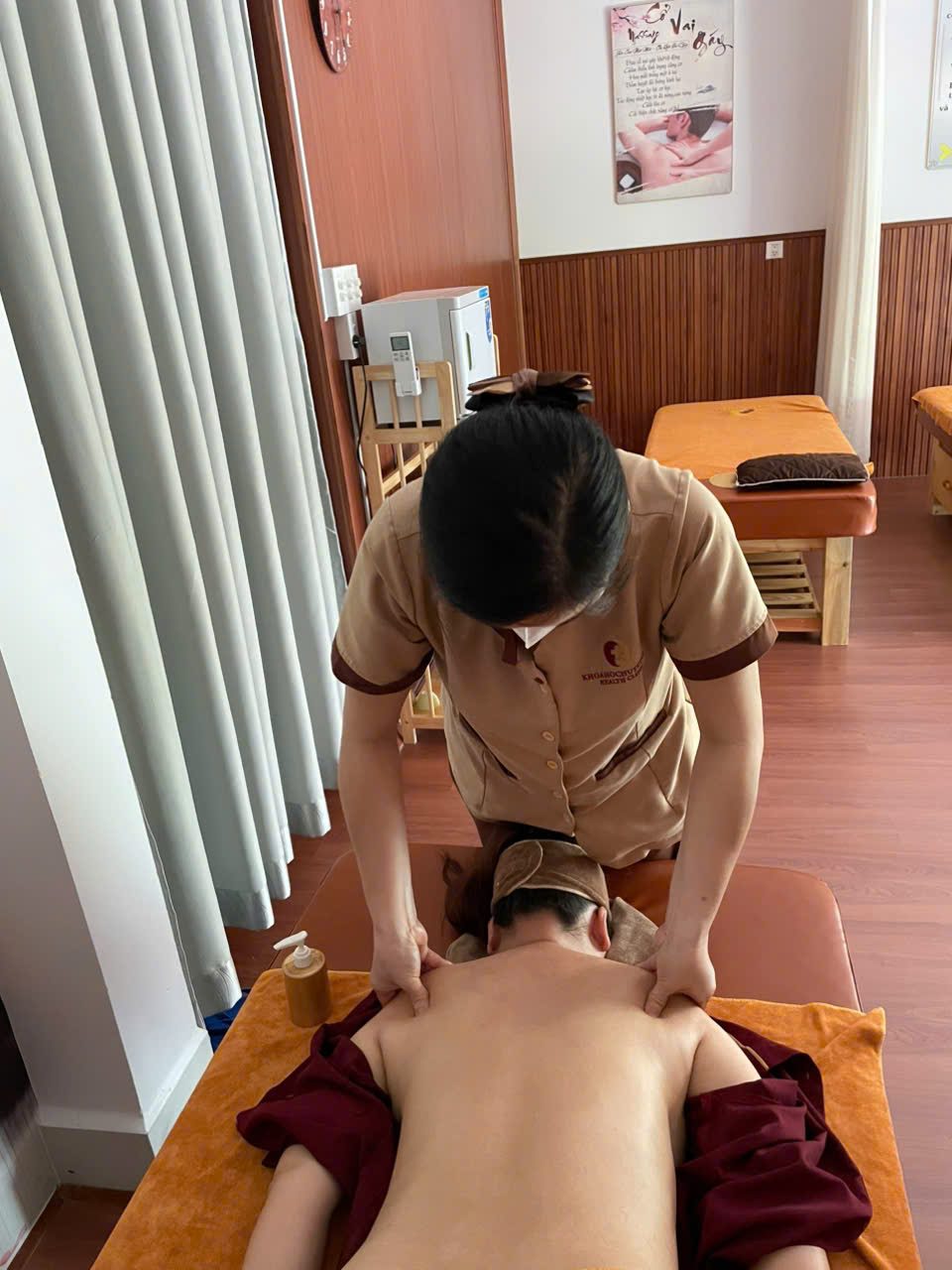
Therapeutic-style massage does not begin with a stroke. It begins with asking and looking: which area feels tired, since when, how you sit at work, how you sleep. Then the practitioner places their hands to find contracted muscle, points that are sore when pressed, and differences between the left and right sides.
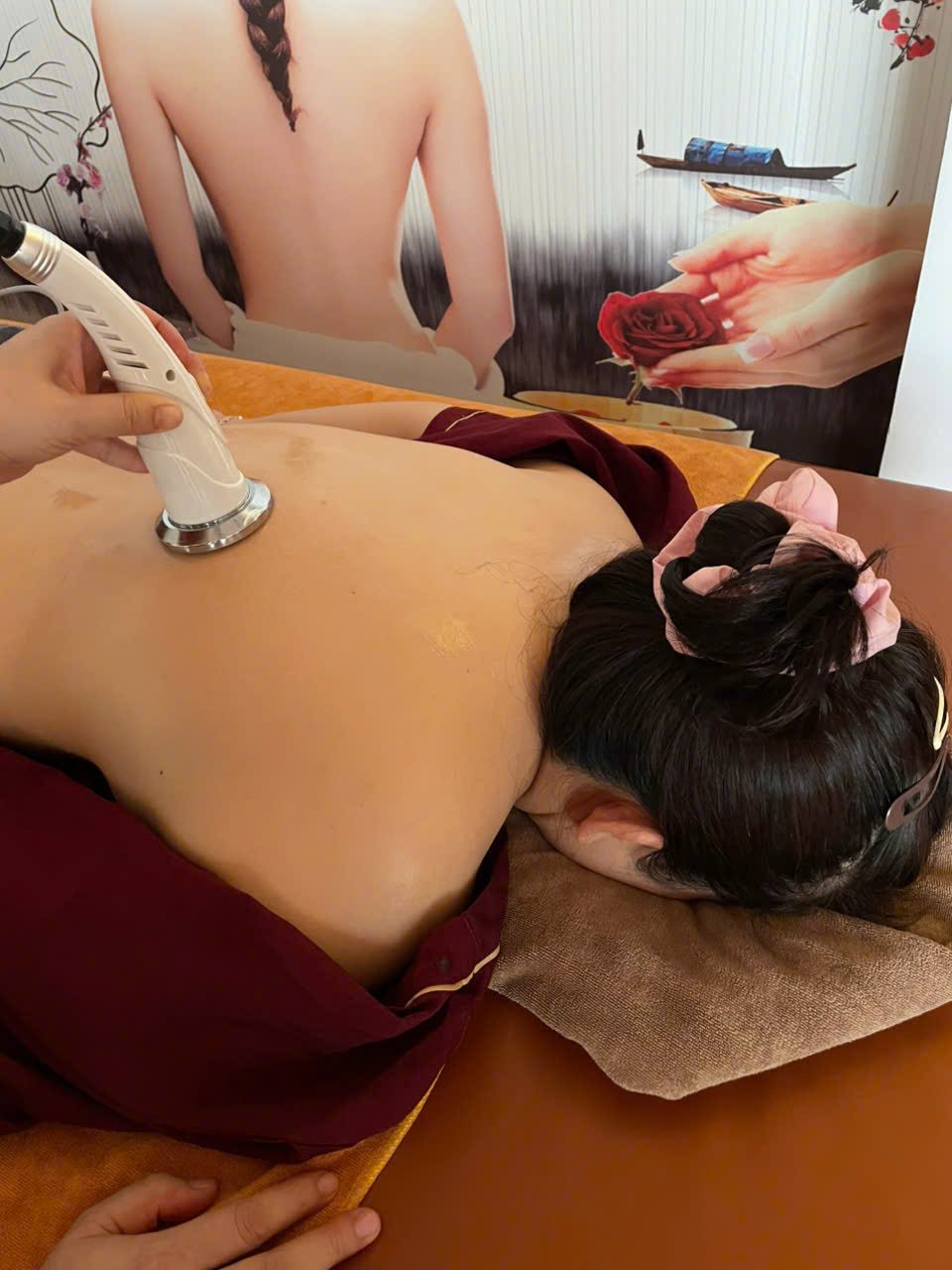
Only then are the techniques chosen: muscle release for contracted muscle bundles, acupressure at the related points, circular pressing, pressing, gentle stretching. Time is not split evenly but concentrated on the area that needs work. Some sessions cover almost nothing but the neck, shoulders and upper back.
That is why a therapeutic-style massage learner also has to learn to "read" the body: where the main muscle groups are, where the acupoints are, how pressure feels under the hand. This part cannot be learned quickly; you have to put your hands on real people many times.
Quick comparison on 5 criteria
- Goal: body massage aims at general relaxation; therapeutic-style massage aims at easing tightness and tiredness in a specific area.
- Before the session: body massage asks briefly about pressure; therapeutic-style massage asks in detail about habits, tired areas and current health conditions.
- Hand pressure: body massage is even and smooth; therapeutic-style massage varies by area, deep in some places, very light in others.
- Time split: body massage spreads time evenly over the whole body; therapeutic-style massage concentrates on the main area.
- After the session: body massage usually ends with a pleasant feeling; therapeutic-style massage usually comes with advice on posture, light movement and self-care at home.
Put the same person through both sessions
Imagine an office worker who sits at a computer all day, gets a tired nape every afternoon, and whose right shoulder feels heavier than the left.
In a body massage session, this person gets even work over back, shoulders, arms and legs. It feels pleasant, sleepy and light. The nape is worked like every other area.
In a therapeutic-style massage session, the practitioner asks about sitting posture, looks at the shoulder line, then places their hands along the neck, the shoulders and both sides of the upper spine. Most of the time goes to the right side of the neck and shoulders and the tight points around the shoulder blade. At the end there may be advice on where to put the screen and how to stretch during breaks.
Neither session is wrong. If this person just needs rest, the first kind suits. If they want to understand why the right shoulder always feels heavier, the second kind fits better. The example shows that therapeutic-style massage differs from body massage not in how hard the hands press, but in the goal of the session.
The shared limit of both: when to see a doctor
Whether body massage or therapeutic-style massage, both are hands-on care, not a medical service. If pain lasts, numbness or weakness in the arms or legs keeps getting worse, pain spreads down an arm or leg, you have an underlying condition such as heart disease, blood pressure problems or diabetes, you are pregnant or have just been injured, see a doctor at a medical facility first. A massage student must also know when not to work and advise the client to see a doctor.
The deeper therapeutic-style massage goes into one area, the more this matters, because the practitioner works more strongly on the very area that has the problem.
Which path should a massage student choose?
Once you understand where therapeutic-style massage differs from body massage, ask yourself a few questions before choosing:
- Where do you want to work: a spa or hotel focused on relaxation, or a wellness centre where clients come for a stiff neck and shoulders or a tired back?
- Do you enjoy asking, observing and looking for causes, or do you prefer working to a fixed sequence?
- Do you have time to study the theory of muscles, acupoints and meridians?
- Does the school let you practise a lot on real people, with someone beside you correcting your hands?
Many people start with body massage and then move on to therapeutic-style work; others learn therapeutic-style massage from the start. The article how muscle release and relaxation massage differ goes deeper into muscle release.
Therapeutic-style massage at Tong Gia rests on 2 pillars
Tong Gia teaches therapeutic-style massage in the Eastern tradition, on two pillars. The first pillar is Y Tướng Học (face reading for wellness): reading complexion, Five Element body types and the 3 zones of the face to understand the tendencies of the organs before placing the hands. "The organs are the cause, the signs are the effect."
The second pillar is spinal nerve-reflex balancing. The principle: every reading from the face must be checked again by hand on the spine. The eyes only suggest; the hands confirm.
The learning ladder has 4 levels. L1 Introduction to Y Tướng Học; L2 Basic Trade with muscle release, acupressure for the neck and shoulders, back and legs, and the standard Tong Gia 90-minute session routine; L3 Specialist with spinal nerve-reflex balancing; L4 Master and Transfer for business owners. About 70% of class time is hands-on practice on real people, in small classes, with Lương Y Tống Văn Huynh guiding each learner.
This routine is used every day at Tong Gia's two service branches in District 12 and District 9, Ho Chi Minh City. Tong Gia does not promise a job or income after the course. For the type of paperwork issued after the course and its legal value, ask reception directly before paying the fee. See everything on the therapeutic-style massage course in Ho Chi Minh City page.
How to register
The L1 Introduction to Y Tướng Học class (1.500.000đ) opens on a schedule; register via the hotline 0917 945 259.
Not sure which path suits you? Sign up for a free Sunday-morning trial class, 9:00–12:00, 10 places a week, at unit T16-21, Manhattan zone, Vinhomes Grand Park, Phường Long Bình, TP. Thủ Đức (Thủ Đức City, Ho Chi Minh City). Lương Y looks at your hand skills and suggests the right level. Fees and number of sessions for L2–L4 are given by the advisor when you register.
Frequently asked questions
Which is better, therapeutic-style massage or body massage? Neither is better; one simply fits you more. If you need whole-body relaxation, choose body massage; if your neck, shoulders or back get tired again and again, therapeutic-style massage fits better.
Does therapeutic-style massage hurt? Tight muscle areas may feel sore, but pressure must be adjusted to the person on the table. If you feel a sharp pain or discomfort, say so straight away so the practitioner can ease off.
I have learned body massage. Can I go on to learn therapeutic-style massage? Yes. Someone already used to placing their hands and keeping a rhythm has an advantage; they only need to add observation, locating acupoints and finding the muscle areas to work on.
Can therapeutic-style massage replace seeing a doctor? No. This is hands-on wellness care. If pain lasts, numbness or weakness keeps getting worse, or you have an underlying condition, see a doctor at a medical facility first.
Where can I learn therapeutic-style massage in Thủ Đức? Tong Gia has a class at Vinhomes Grand Park, Thủ Đức City, with a free trial 9:00–12:00 every Sunday morning. Register via Zalo 0917 945 259.
Related articles
- The 3 “no’s” of the Tong Gia spinal balancing method: no needles, no medicine, no rough force
- How the 33 vertebrae are grouped into regions: the spine map every therapeutic-style massage student must know
- 4 objective factors when reading the spine by hand: let the hands record, not guess
- 5 vertebral patterns (raised, sunken, shifted): reading the spine by hand in the Specialist course
- All articles on learning the trade
Reserve a free Sunday-morning trial class or ask about the learning path: message Zalo 0917 945 259.

Founder of Tong Gia Acupoint Wellness (Huyệt Đạo Tống Gia), with more than 13 years in Eastern wellness practice, Y Tướng Học (face reading for wellness) and spinal nerve-reflex balancing. Lương Y's story
417 customers have reviewed Tong Gia on Google Maps
Reviews are written by customers themselves on Google; tap to read them before you visit.
Huyệt Đạo Tống Gia Quận 12
225 Dương Thị Mười, Phường Tân Chánh Hiệp (District 12, Ho Chi Minh City). 8:00 – 19:00 daily.
See reviews on Google MapsHuyệt Đạo Tống Gia Quận 9
Căn T16-21 khu Manhattan, Vinhomes Grand Park, Phường Long Bình (Thủ Đức City, Ho Chi Minh City). 9:00 – 20:00 daily.
See reviews on Google MapsWant to be observed in person?
A 90-minute session starts with observation, and only then moves on to muscle release and acupressure on the right areas. Two branches: District 12 and Vinhomes Grand Park.