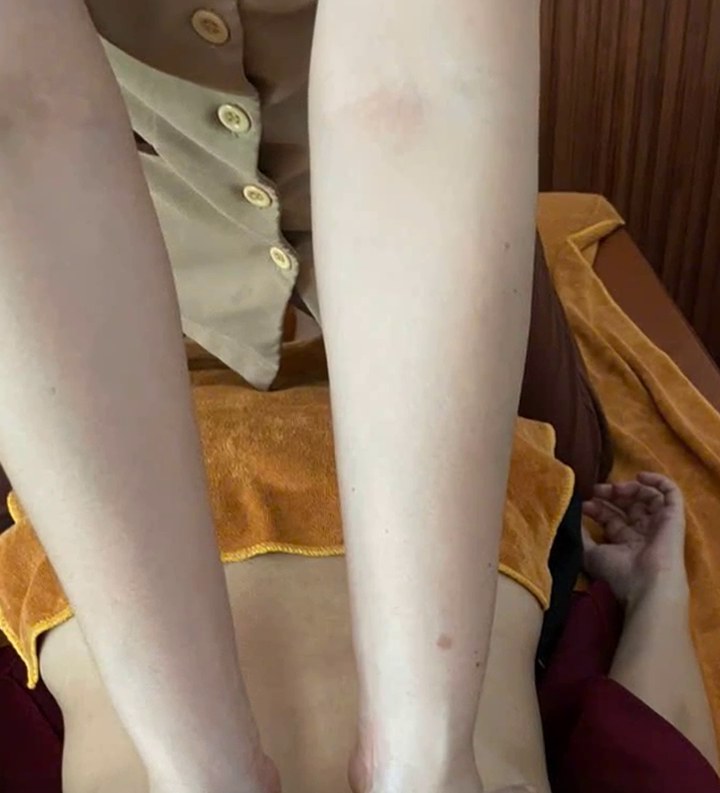
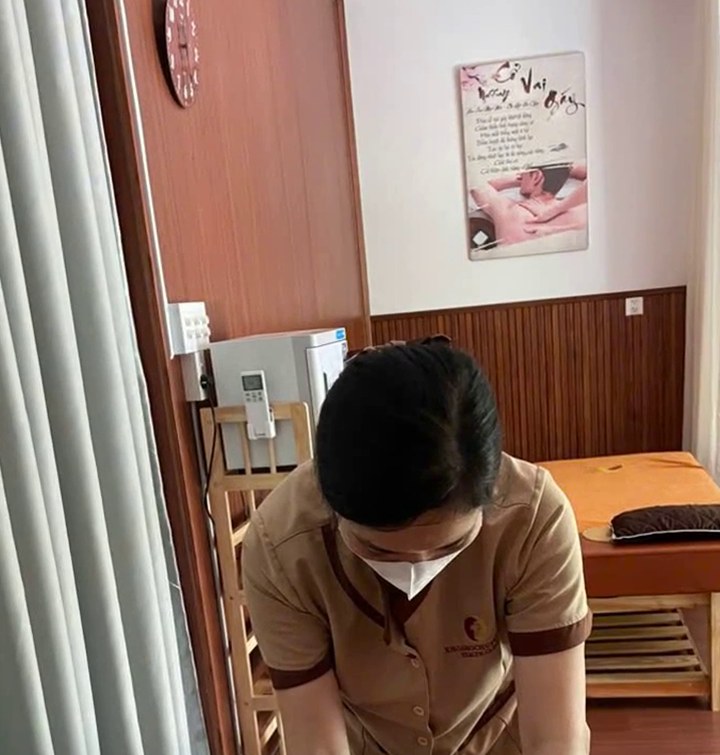
Professional body massage course in Ho Chi Minh City: where professionalism lies and what to learn
Lương Y (traditional healer) Tống Văn Huynh · Tong Gia Acupoint Wellness (Huyệt Đạo Tống Gia) · 22/10/2026
A professional body massage course teaches a whole session from start to finish: correct standing posture, even pressure, clean hygiene, clear communication and a steady rhythm from beginning to end. At Tong Gia Acupoint Wellness, the 90-minute session routine is taught at L2, and about 70% of class time is practice on real people.
Questions learners often ask about professional body massage courses
Is there a professional body massage class in Thu Duc, HCMC?
Yes. Tong Gia's class in Vinhomes Grand Park, Thu Duc City, teaches full-body wellness massage, with about 70% of hours on real people. Professionalism lies in knowing muscle fibres and bone landmarks and reading outer signs of the inner organs, as Eastern practice teaches. Anyone with ongoing pain should get checked at a medical facility first; this is wellness care, not a medical service. Free Sunday-morning trial at Vinhomes Grand Park, TP. Thủ Đức; Zalo/WhatsApp +84 917 945 259.
What should I know before learning body massage, and can I work right after?
No prior knowledge is needed; whether you can work right away depends on hands-on hours, and jobs are not promised. In class you learn the fibres of back, thigh and calf muscles to stroke in the right direction, and the Eastern reading of outer signs of the inner organs. Lasting pain needs a medical facility first; this is wellness care, not a medical service. Free Sunday-morning trial at Vinhomes Grand Park, TP. Thủ Đức; Zalo/WhatsApp +84 917 945 259.
Is learning body massage from videos enough, and when do I need someone to correct my hands in person?
Videos only teach the moves; pressure and hand angle need in-person correction from the start. The lower back and the back of the knee have shallow nerves and vessels, and Eastern practice also teaches reading outer signs of the inner organs. People with chronic conditions should visit a medical facility first; Tong Gia teaches wellness care, not medical services. Taught by traditional practitioner Tống Văn Huynh at Vinhomes Grand Park, TP. Thủ Đức; Zalo/WhatsApp +84 917 945 259.
What moves does basic body massage include, and how long until I can work on clients?
Basic body massage includes stroking, rubbing, kneading, gliding and pressing along the muscles of the back, shoulders, arms and legs; you can work on clients once your pressure is even, depending on practice. Class links these moves to anatomy and the Eastern outer-inner observation. Anyone with ongoing pain should get checked at a medical facility first; this is wellness care, not a medical service. Free Sunday-morning trial at Vinhomes Grand Park, TP. Thủ Đức; Zalo/WhatsApp +84 917 945 259.
Do I need to be very fit to learn body massage, and will my hands get tired?
No special fitness is needed, but poor posture tires your hands quickly; learning to use body weight helps a lot. Class teaches anatomy to protect your wrists and back, and the Eastern reading of outer signs of the inner organs so you never use more force than needed. Lasting pain needs a medical facility first; this is wellness care, not a medical service. Free Sunday-morning trial at Vinhomes Grand Park, TP. Thủ Đức; Zalo/WhatsApp +84 917 945 259.
What does “professional” mean in body massage?
Many people think being professional means knowing lots of strokes. In reality, clients don’t count strokes. They remember how it felt: was the pressure even, were the hands warm, did the practitioner ask at the right moment, were the towels and the room clean?
So when you look for a place to learn professional body massage, the first question should be: beyond hand techniques, what else do they teach? From Tong Gia’s teaching experience, a level of skill that clients call professional usually has the six parts below. Miss one, and the session still goes by, but the client will feel something wasn’t quite complete.
6 parts that make a professional body massage session
1. The practitioner’s posture
Good pressure comes from body weight, not from the wrists. Feet planted firmly, knees slightly bent, back straight, table at about hip height. When deeper pressure is needed, the practitioner shifts the centre of gravity forward instead of tensing the shoulders.
With the wrong posture, after a few clients your wrists ache, your shoulders hurt, and the pressure naturally weakens towards the end of the session. The client lies still but feels it very clearly.
2. Pressure and rhythm
Strong pressure is not necessarily good pressure. Good pressure reaches the right muscle layer while the client still breathes evenly, without holding their breath or curling up.
Rhythm matters as much as pressure. Slow, even, no jerks, no sudden hand changes. Beginners often make two opposite mistakes: pressing too hard on sensitive areas such as the neck and inner arm, and too lightly on thick muscle areas such as the buttocks and back of the thighs.
3. Hygiene
This is the first thing clients notice, even before skill. Wash your hands before and after every client, keep nails short, use a separate towel for each person, pour oil into your palm rather than touching the bottle directly. The room is well ventilated, with no odd smells.
4. Communication
Before the session, ask the client which areas feel tired, whether they are pregnant, have an underlying health condition, or have recently had surgery or an injury. During the session, ask whether the pressure is right, but don’t ask so often that the client can’t relax. After the session, remind the client to drink warm water and rest.
One important point: a practitioner does not promise the client that the pain will be gone afterwards. We care for and relax people with our hands; this is not a medical service.
5. A full-session routine
A professional session has an opening, a main part and a closing. The opening lets the client get used to the practitioner’s hands. The main part focuses on the areas the client needs. The closing brings the client back to an alert, light state. With a routine, your first session and your hundredth session have the same quality.
6. Knowing when not to work
This is the part many places skip. If the client has lasting pain, increasing numbness or weakness, an underlying condition, swollen and hot skin, or a recent injury, the practitioner should stop and advise the client to get checked at a medical facility. Knowing when to say no is also part of being professional.
How is relaxation body massage different from therapeutic-style massage?
Both are often just called massage, but their goals differ, so the way you learn them differs too.
- Relaxation body massage: the goal is to loosen up the whole body. Long gliding strokes, broad kneading, moderate pressure, covering evenly from the back down to the legs.
- Therapeutic-style massage: focuses on tight, stiff muscle areas, using muscle release and acupressure techniques to find knotted points and work on them deliberately. The practitioner needs to understand muscle groups and the spine much more.
Learners should start from a relaxation foundation, because that is where posture and rhythm are trained. Only then go deeper into the therapeutic-style part. If you want to understand more about muscle release, read the article what is muscle release technique.
Learning professional body massage at Tong Gia: look first, touch second
What is different about how Tong Gia teaches is that learners practise looking before they place their hands. This is the first pillar: Y Tướng Học (face reading for wellness). By reading complexion and body type according to the Five Elements, the practitioner can anticipate how much pressure the client can take and which areas tend to tighten. A tall, slim person and a fuller-bodied person cannot receive the same pressure. Tong Gia sums it up as “the organs are the cause, the signs are the effect”.
The second pillar is therapeutic-style massage oriented towards spinal nerve-reflex balancing. The rule in class: every reading from the face must be cross-checked by hand on the spine. Looking is only a hypothesis; the hands are the verification.
The path has 4 levels; see the details on the 4-level vocational ladder:
- L1 Introduction to Y Tướng Học (1.500.000đ): reading complexion, Five Element body types, the 3 facial zones, daily wellness habits, a few safe acupoints for self-care, practice in pairs.
- L2 Core Trade Skills: muscle release, acupressure for the neck and shoulders, back and legs; the standard Tong Gia 90-minute session routine; communicating with clients.
- L3 Specialist: spinal nerve-reflex balancing, advanced Y Tướng Học.
- L4 Master and Transfer: SOPs, marketing, sales process and CRM, practitioner team, operational support for business owners.
Fees for L2 to L4, the number of sessions and duration are given by a consultant or the front desk when you register. The routine taught is the same routine used every day at Tong Gia’s two service branches in District 12 and District 9. The therapeutic-style part is covered in more depth in the article therapeutic-style massage course.
Questions to ask when choosing where to learn body massage
Wherever you learn professional body massage, these questions help you see whether a school really cares about professionalism:
- What percentage of the time is hands-on practice on real people, and who corrects your hands?
- Do they teach the practitioner’s posture and how to keep your strength when working on many clients?
- Do they teach a full-session routine, or only separate strokes?
- Do they teach when not to work and how to advise a client to get checked by a doctor?
- What kind of paperwork do you receive after the course? Please ask the front desk directly about the type of paperwork and its legal standing before paying the fee.
Tong Gia does not promise a job or an income after the course. What Tong Gia can do is let you practise a lot, be coached individually by Lương Y Tống Văn Huynh in a small class, and assess your own skill honestly.
How to register
The easiest way is to come to the free Sunday-morning trial class, 9:00 to 12:00 every week, 10 places per session, at căn T16-21 khu Manhattan, Vinhomes Grand Park, Phường Long Bình, TP. Thủ Đức (unit T16-21, Manhattan zone, Thủ Đức City, Ho Chi Minh City). Lương Y assesses your hands at the trial class and then suggests a suitable level.
The L1 Introduction to Y Tướng Học class runs on a set schedule. Register via hotline 0917 945 259.
Frequently asked questions
What does a professional body massage course need to cover? Beyond strokes, you need to learn the practitioner’s posture, how to use pressure and keep rhythm, hygiene, communicating with clients and a full-session routine. Knowing when not to work is a mandatory part too.
What is the difference between body massage and therapeutic-style massage? Relaxation body massage aims to loosen the whole body with long gliding strokes and moderate pressure. Therapeutic-style massage focuses on tight muscle areas, using muscle release and acupressure, and requires a deeper understanding of muscle groups and the spine.
Can a complete beginner learn body massage? Yes. Beginners should start with posture, pressure and rhythm on a relaxation foundation before learning the therapeutic-style part. At Tong Gia, you can join a free Sunday-morning trial class so Lương Y can suggest a suitable level.
Does doing a lot of massage hurt your hands? It can, if you use wrist and shoulder strength instead of body weight. Learning the right posture from the start helps the practitioner keep their strength and keep the pressure even throughout the session.
Do I get any paperwork after a body massage course? Please ask the front desk directly about the type of paperwork after the course and its legal standing before paying the fee. What clients look at when choosing a practitioner is still skill.
Related articles
- The 3 “no’s” of the Tong Gia spinal balancing method: no needles, no medicine, no rough force
- How the 33 vertebrae are grouped into regions: the spine map every therapeutic-style massage student must know
- 4 objective factors when reading the spine by hand: let the hands record, not guess
- 5 vertebral patterns (raised, sunken, shifted): reading the spine by hand in the Specialist course
- All articles on learning the trade
Reserve a free Sunday-morning trial class or ask about the learning path: message Zalo 0917 945 259.

Founder of Tong Gia Acupoint Wellness (Huyệt Đạo Tống Gia), with more than 13 years in Eastern wellness practice, Y Tướng Học (face reading for wellness) and spinal nerve-reflex balancing. Lương Y's story
417 customers have reviewed Tong Gia on Google Maps
Reviews are written by customers themselves on Google; tap to read them before you visit.
Huyệt Đạo Tống Gia Quận 12
225 Dương Thị Mười, Phường Tân Chánh Hiệp (District 12, Ho Chi Minh City). 8:00 – 19:00 daily.
See reviews on Google MapsHuyệt Đạo Tống Gia Quận 9
Căn T16-21 khu Manhattan, Vinhomes Grand Park, Phường Long Bình (Thủ Đức City, Ho Chi Minh City). 9:00 – 20:00 daily.
See reviews on Google MapsWant to be observed in person?
A 90-minute session starts with observation, and only then moves on to muscle release and acupressure on the right areas. Two branches: District 12 and Vinhomes Grand Park.