Wellness massage for people under nervous stress: what Tong Gia learners do so the client can let go
Lương Y (traditional healer) Tống Văn Huynh · Tong Gia Acupoint Wellness (Huyệt Đạo Tống Gia) · 13/11/2026
Wellness massage for people under nervous stress needs a slow rhythm, light pressure built up step by step, and a reading of the active zones on the back before working. At Tong Gia Acupoint Wellness (Huyệt Đạo Tống Gia) in Ho Chi Minh City, learners use the wave method and the 8 principles to calm the client, not hard pressing.
Questions learners often ask about wellness massage for people under nervous stress
For someone who is often stressed and cannot relax, should wellness massage be light or strong?
Start light and build up. Following the 5 pressure levels taught at Tong Gia Acupoint Wellness (Huyệt Đạo Tống Gia), the practitioner moves from one finger to the whole hand and only then to the arm. Stressed people tend to tense up under strong pressure, so an even rhythm and just enough pressure help the body let go sooner.
I work as a spa technician in Ho Chi Minh City. With clients stressed by work, which back areas should I focus on?
There is no fixed area for every client. Tong Gia learners read the spine by hand using 4 objective factors: skin temperature, the cushioning muscle layer, vertebral shape and sensation, then work only the active zones. Office clients often have a stiff neck, nape and upper back, but each person must still be read.
Where in Thu Duc can I learn wellness massage for people under nervous stress?
Tong Gia Acupoint Wellness teaches this in the Specialist Course (L3), with Lương Y Tống Văn Huynh leading the class at Vinhomes Grand Park, Thu Duc City. Beginners can join the Sunday trial class, 9:00–12:00. Training hotline 0917 945 259.
A back as stiff as a board
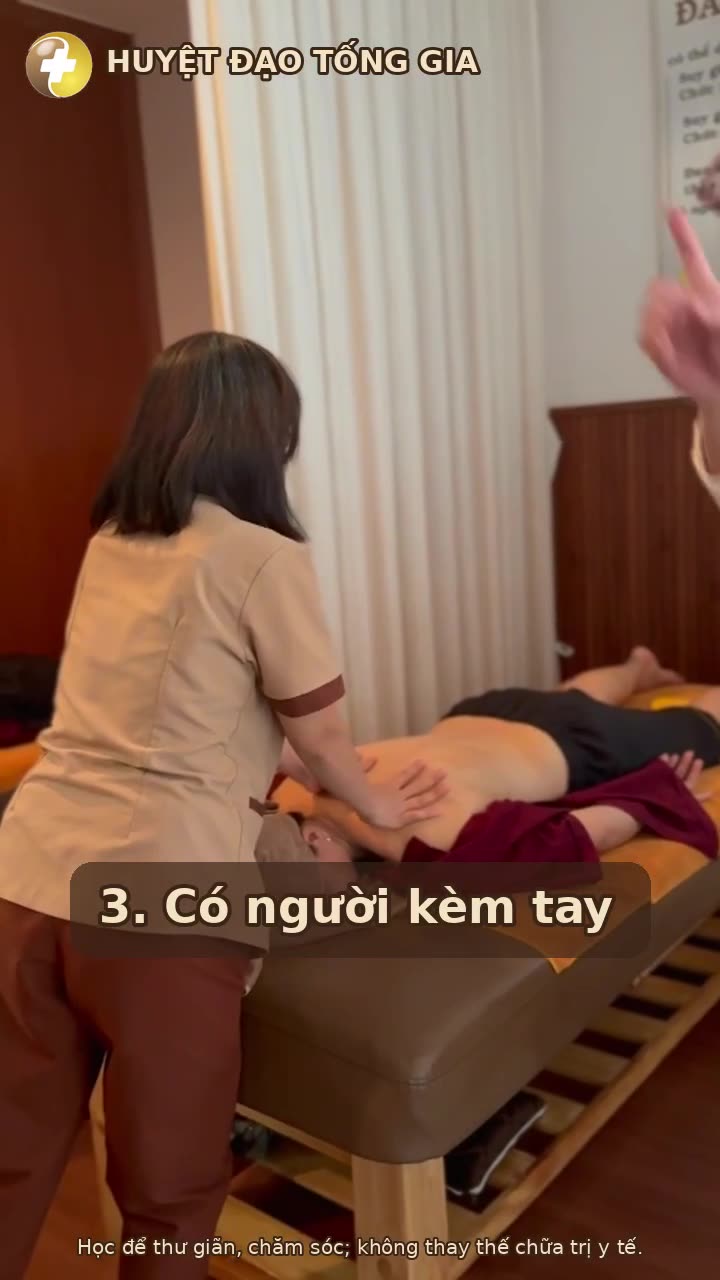
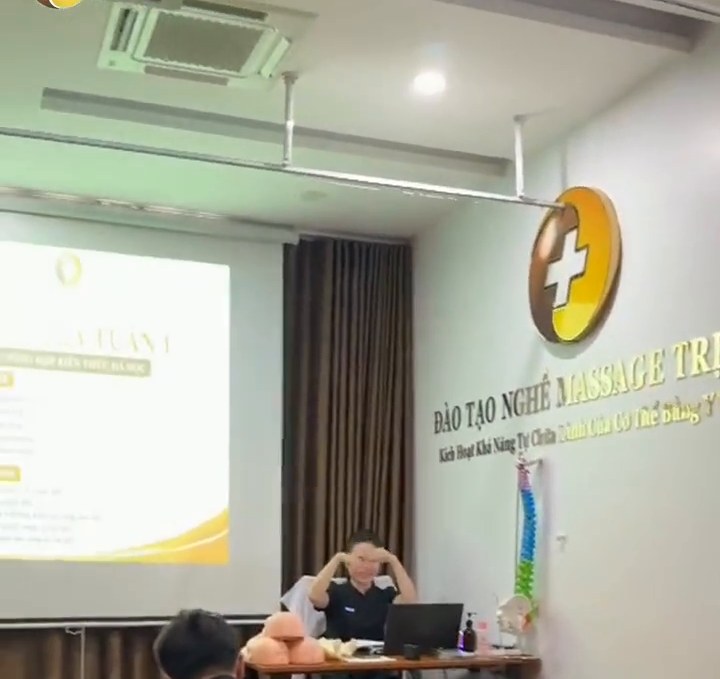
In class at Vinhomes Grand Park, learners often meet this scene when practising in pairs: the person lying down is an office worker, and the moment a hand touches, the whole back feels as stiff as a board, shoulders raised, breath short. A beginner's reflex is to press harder. Lương Y Tống Văn Huynh lifts the learner's hand and asks for a restart at the lightest level. Ten minutes later the back is clearly softer. This article answers the question learners ask most: how should wellness massage for people under nervous stress be done?
How does nervous stress show on the back?
When stress lasts, the sympathetic nervous system stays busy: the heart beats faster, breathing is shallow, muscles stay on alert. Over time the muscles around the neck, the shoulder blades and along both sides of the spine stiffen. Learners read this through 4 objective factors when placing a hand on the back:
- Skin temperature: some areas are clearly warmer, often the neck and upper back.
- Cushioning muscle layer: thick, tight, poor elasticity.
- Vertebral shape: some segments move poorly when pressed lightly.
- Sensation: the client reports soreness or spreading ache at the key point.
Read more on the 4 objective factors when reading the spine by hand.
Why not press hard?
Stressed people often have a lower pain threshold. Pressing hard from the start makes the muscle contract to protect itself, so the hand pushes against a muscle that resists. The client hurts, tenses more and goes home more tired. The Tong Gia curriculum sets pressure from light to strong across 5 levels, with no skipping. See the 5 pressure levels in massage.
What the learner does during the session
- Ask briefly before touching: how is your sleep, is work stressful, where is the most tired spot.
- Keep the client warm, the room quiet, the light soft; say which area comes next.
- Open with resting and gliding strokes so the muscles get used to the hands.
- Use the wave method: an even rhythm from the nape down to the tailbone, timed to the client's breath.
- Work only the active zones, never directly on inhibited zones.
- Dosage: when the skin at the key point turns from dry to moist, stop and move on.
The wave and compression methods are explained in compression and wave methods.
How Lương Y Tống Văn Huynh teaches learners to keep the rhythm
With more than 13 years in Eastern wellness and spinal nervous reflex balancing, Lương Y Tống Văn Huynh reminds learners of one line when they meet a stressed client: "A stressed person does not need more force; they need an even rhythm of the hands so the nerves can trust that they are safe." In class, learners count the rhythm on the out-breath of the person lying down and lower the pressure one level whenever that person holds the breath or clenches a fist.
After the session: helping the client live lighter
Massage is only one part. Learners are taught to suggest a few small habits: stand and move every hour, drop the shoulders at the computer, breathe slowly for a few minutes before sleep, cut afternoon coffee. Understanding the client and supporting the client is Tong Gia's way of care.
When to advise the client to see a doctor
If the client has had poor sleep for weeks, palpitations or a fast heartbeat without clear reason, chest pain, shortness of breath, dizziness, long-lasting low mood or negative thoughts: advise them to see a medical facility or a mental health professional. For people with heart disease, high blood pressure or on sedatives: ask carefully and work only lightly. Tong Gia Acupoint Wellness offers wellness care, not a medical service.
Which level covers this?
Spine reading, the 8 principles and the wave method sit in the spinal nervous reflex balancing part of the Specialist Course (L3). Beginners start at L1 Foundation to learn hand placement. About the teacher: Lương Y Tống Văn Huynh.
How to register
The Sunday trial class, 9:00–12:00, and the Sunday Y Tuong Hoc (face reading for wellness) session with no fee are open sessions for beginners, at unit T16-21, Manhattan block, Vinhomes Grand Park, Thu Duc City. Tong Gia does not promise jobs or income after the course. Book a trial class or call the training hotline 0917 945 259.
Frequently asked questions
How should wellness massage for people under nervous stress be done? Start with light pressure and a slow, even rhythm, read the spine by hand to work only active zones, and stop when the skin at the key point turns from dry to moist.
Why not press hard on a stressed person? Hard pressure makes the muscle contract in self-defence, so the client hurts and tenses more; pressure should rise from light to strong across 5 levels.
Where are stressed people usually stiff? Often the neck, shoulder blades and along both sides of the upper spine, but each person must still be read by hand.
Where can I learn wellness massage for people under nervous stress? In the Specialist Course (L3) at Tong Gia, Vinhomes Grand Park, Thu Duc City. Trial class Sunday 9:00–12:00, hotline 0917 945 259.
Related articles
- 8 principles of spinal wellness massage: the rules of the hands for Tong Gia learners
- How to use the right pressure in acupressure: measuring force by how the receiver feels
- Hands for wellness massage: soft hands, hard hands and 6 things you must train
- All articles about learning the trade
Reserve a free Sunday-morning trial class or ask about the learning path: message Zalo 0917 945 259.

Founder of Tong Gia Acupoint Wellness (Huyệt Đạo Tống Gia), with more than 13 years in Eastern wellness practice, Y Tướng Học (face reading for wellness) and spinal nerve-reflex balancing. Lương Y's story
417 customers have reviewed Tong Gia on Google Maps
Reviews are written by customers themselves on Google; tap to read them before you visit.
Huyệt Đạo Tống Gia Quận 12
225 Dương Thị Mười, Phường Tân Chánh Hiệp (District 12, Ho Chi Minh City). 8:00 – 19:00 daily.
See reviews on Google MapsHuyệt Đạo Tống Gia Quận 9
Căn T16-21 khu Manhattan, Vinhomes Grand Park, Phường Long Bình (Thủ Đức City, Ho Chi Minh City). 9:00 – 20:00 daily.
See reviews on Google MapsWant to be observed in person?
A 90-minute session starts with observation, and only then moves on to muscle release and acupressure on the right areas. Two branches: District 12 and Vinhomes Grand Park.