How the L3 Specialist course differs from the L2 Core craft course: 6 points to choose the right level
Lương Y (traditional healer) Tống Văn Huynh · Tong Gia Acupoint Wellness (Huyệt Đạo Tống Gia) · 22/11/2026
The L3 Specialist course differs from the L2 Core craft course in that L2 teaches you to deliver a session correctly (muscle release, acupressure, the 90-minute routine), while L3 teaches why: reading the spine by hand, five-organ wellness and advanced Y Tuong Hoc (Vietnamese physiognomy). At Tong Gia Acupoint Wellness (Huyệt Đạo Tống Gia), L3 is for people already working in the craft.
Questions learners often ask about how L3 differs from L2
I am 34 and have worked as a spa technician in District 12 for 3 years. Should I take L2 or go straight to the L3 Specialist course in Thu Duc?
If your muscle release, neck, shoulder, back and leg acupressure are solid and you can deliver a full 90-minute session, you can ask to join L3. At Tong Gia, Lương Y Tống Văn Huynh reviews your hands at the Sunday morning trial class and suggests a level. Classes are at unit T16-21, Vinhomes Grand Park; hotline 0917 945 259.
How long is the L3 Specialist course, do I need Eastern medicine first, and what changes compared with L2?
L3 runs one month, 60 sessions: theory in the mornings, hands-on practice on real people in the afternoons. No prior Eastern medicine is needed, but a craft base is. It adds three parts: five-organ wellness, therapeutic massage balancing the spinal nerve reflex system, and advanced Y Tuong Hoc. This is a wellness craft, not a medical profession.
How should I ask about L2 and L3 fees and schedules so I do not pay for the wrong level or waste money?
L2–L4 fees are given by the advisor at enrolment; only L1 is listed, at 1,500,000 VND. Attend the Sunday trial class so Lương Y can see your hands, then ask reception about schedule, make-up sessions and paperwork before paying. Tong Gia does not promise jobs or income after the course.
L2 and L3 differ in the question a learner brings to class
“I have worked for three years; clients say it feels nice but they do not come back. Should I study further?” Many technicians ask Tong Gia this, and it is the easiest way to see how the L3 Specialist course differs from the L2 Core craft course. People entering L2 ask “how do I do it right?”. People entering L3 ask “why does it hurt here when I must work over there?”. Two questions lead to two ways of learning.
Comparing 6 points
| Point | L2 Core craft | L3 Specialist |
|---|---|---|
| Who it is for | Newcomers to the craft, people who finished L1 | Working technicians: spa, massage, wellness hair washing, shop owners |
| Main content | Muscle release; acupressure for neck, shoulders, back and legs; the 90-minute session; talking with clients | Three parts: five-organ wellness, therapeutic massage balancing the spinal nerve reflex system, advanced Y Tuong Hoc |
| Hand work | Correct moves, correct pressure, correct order | Read the spine by hand first, then choose the area and the pressure level |
| Y Tuong Hoc | Uses the introduction from L1 | Advanced: 10 face types, bone and flesh features, matching facial signs with the spine |
| One session | The standard Tong Gia 90-minute routine | A 6-step routine: observe, ask, read the spine by hand, choose the area, work, give aftercare advice |
| Duration | Given by the advisor at enrolment | One month, 60 sessions, theory in the morning, practice in the afternoon |
Where are you now? Try 3 questions
- Can you deliver a full 90-minute neck, shoulder, back and leg session without tiring your hands?
- Can you explain to a client why you work the upper back when their shoulders ache?
- Do you know when to stop and advise the client to see a medical professional?
Unsure on question 1: take L2 first. Sure on 1 but hesitant on 2: L3 is for you. Question 3 is taught at both levels, because this is a wellness craft, not a medical profession: lasting pain, numbness or weakness that keeps increasing, or an underlying condition means advising a medical check.
L2 gives you correct hands
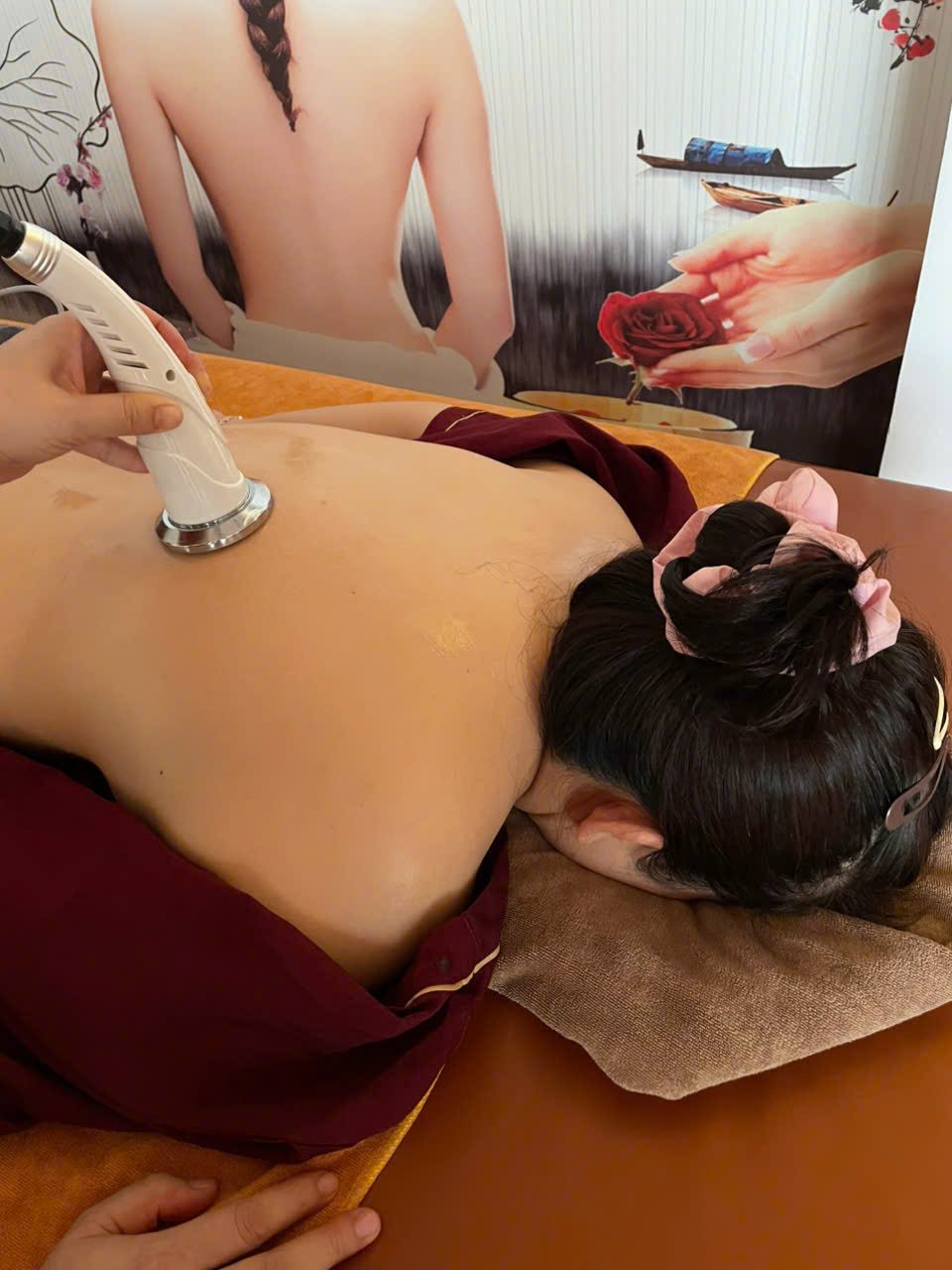
At L2 core craft, the focus is the hands: holding posture so your back does not hurt, using body weight instead of finger force, releasing muscles in chains and pressing points in the areas clients complain about. Learners repeat the 90-minute routine until their hands move on their own. Client communication is here too: what to ask before, what to say during and what to advise after a session.
L3 gives you a specialist’s view
The L3 Specialist course uses the Tong Gia Specialist Curriculum in three parts. Five-organ wellness covers the Liver, Heart, Spleen, Lung and Kidney in Eastern medicine, their points, seasons, emotions and the signs that mean a client should see a medical professional. Therapeutic massage balancing the spinal nerve reflex system teaches reading the spine by touch, excitatory and inhibitory zones, five pressure levels, techniques such as pressing, stroking, kneading, rolling, pushing, rotating, vibrating and compressing, and the “three nos”: no needles, no medicines, no rough force. Advanced Y Tuong Hoc teaches reading the face, nose, lips, ears and tongue as observation hints, then checking again by hand on the spine. No labelling illness, no fortune-telling.
Should you go straight to L3?
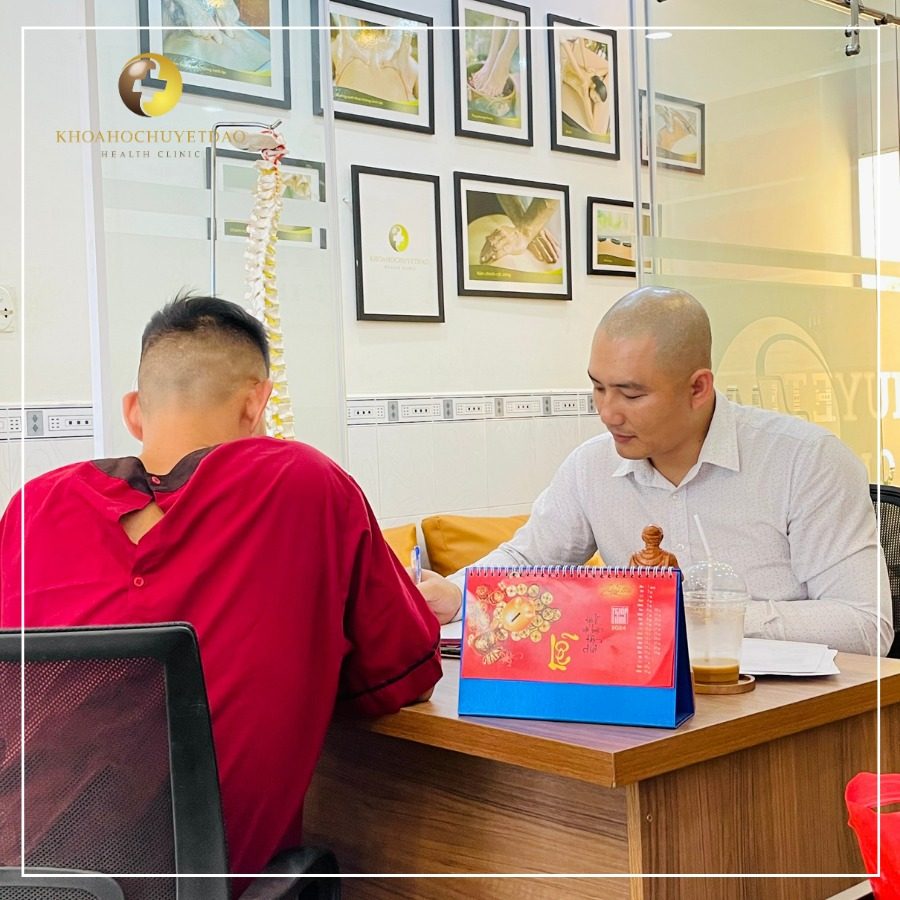
Not if you have never worked in the craft. L3 assumes base hand skills; without them, spine reading is hard because the hands are not yet sensitive enough. People with a few years of work can ask to join L3, but should attend a trial class first. Lương Y Tống Văn Huynh, with more than 13 years in the craft, reviews each person’s hands before suggesting a level, so you do not pay for the wrong one. L2 and L3 fees are given by the advisor at enrolment. Tong Gia does not promise jobs or income after the course; ask reception directly about the type of paperwork after the course and its legal value before paying.
How to register
The Sunday morning trial class 9:00–12:00 (10 places) and the Sunday Y Tuong Hoc session with no fee are open sessions for beginners, at unit T16-21, Manhattan block, Vinhomes Grand Park, Thu Duc City, Ho Chi Minh City. Book a trial class or call the training hotline 0917 945 259.
Frequently asked questions
What is the main difference between L2 and L3 at Tong Gia? L2 teaches delivering a session correctly: muscle release, acupressure, the 90-minute routine, client communication. L3 teaches reading the spine by hand, five-organ wellness and advanced Y Tuong Hoc.
How long is the L3 Specialist course? One month, 60 sessions: theory in the mornings, guided hands-on practice on real people in the afternoons.
Can I go straight to L3 without craft experience? It is not advisable. L3 is for people with base hand skills; newcomers should take L1 and L2 first.
How much are L2 and L3? Fees are given by the advisor at enrolment. Only L1 is listed, at 1,500,000 VND.
How do I know which level suits me? Attend the Sunday morning trial class 9:00–12:00; Lương Y Tống Văn Huynh reviews your hands and suggests a suitable level.
Related articles
- 8 principles of spinal wellness massage: the rules of the hands for Tong Gia learners
- How to use the right pressure in acupressure: measuring force by how the receiver feels
- Hands for wellness massage: soft hands, hard hands and 6 things you must train
- All articles about learning the trade
Reserve a free Sunday-morning trial class or ask about the learning path: message Zalo 0917 945 259.

Founder of Tong Gia Acupoint Wellness (Huyệt Đạo Tống Gia), with more than 13 years in Eastern wellness practice, Y Tướng Học (face reading for wellness) and spinal nerve-reflex balancing. Lương Y's story
417 customers have reviewed Tong Gia on Google Maps
Reviews are written by customers themselves on Google; tap to read them before you visit.
Huyệt Đạo Tống Gia Quận 12
225 Dương Thị Mười, Phường Tân Chánh Hiệp (District 12, Ho Chi Minh City). 8:00 – 19:00 daily.
See reviews on Google MapsHuyệt Đạo Tống Gia Quận 9
Căn T16-21 khu Manhattan, Vinhomes Grand Park, Phường Long Bình (Thủ Đức City, Ho Chi Minh City). 9:00 – 20:00 daily.
See reviews on Google MapsWant to be observed in person?
A 90-minute session starts with observation, and only then moves on to muscle release and acupressure on the right areas. Two branches: District 12 and Vinhomes Grand Park.