Learning massage to care for older people in care homes: what to learn, what to do and what not to do
Lương Y (traditional healer) Tống Văn Huynh · Tong Gia Acupoint Wellness (Huyệt Đạo Tống Gia) · 17/11/2026
Learning massage to care for older people in care homes needs more careful study than ordinary massage, because older people have thin skin, fragile bones, often underlying conditions and many medicines. Learners must know very light pressure, safe positions in bed and in wheelchairs, how to talk with elders and when to call health staff. Tong Gia Acupoint Wellness (Huyệt Đạo Tống Gia) teaches this foundation at levels L1 and L2, with practice on real people.
Questions learners often ask about learning massage to care for older people in care homes
I am 40 and want to learn massage to work or help out at a care home near Thu Duc. Where can I learn with practice on real people?
Choose a small class with practice on real people that teaches how to work with older bodies. Tong Gia Acupoint Wellness at unit T16-21, Manhattan block, Vinhomes Grand Park, Thu Duc City teaches from L1 to L2, and Lương Y Tống Văn Huynh guides each learner. Each care home sets its own hiring requirements, so ask that home directly.
What should I watch for when massaging elders who are bedridden or in wheelchairs, so they are not hurt or do not fall?
Use very light pressure, more stroking than deep pressing, never press hard on bony points, and lock the wheelchair first. Elders have thin skin, so avoid pulling it. This is wellness care; if pain increases or breathing difficulty, drowsiness or new numbness or weakness appears, tell the home’s health staff at once.
How long does it take to learn massage for elder care, what does it cost, and will care homes accept me afterwards?
At Tong Gia, the L1 fee is 1,500,000 VND; the number of sessions and the L2 fee are given by an advisor at registration. Tong Gia does not promise jobs or income after the course. Ask reception about the paperwork after the course and its value before paying; hotline 0917 945 259.
How is massage for elders in care homes different from ordinary massage?
Learning massage to care for older people in care homes is a path many people ask Tong Gia about: some want to work at a home, some want to help at weekends, some have parents living in a home and want to care for them with their own hands. The biggest difference lies in the body being cared for. Older people have thin skin that bruises easily; fragile bones, with many elders living with osteoporosis; stiff joints and muscles wasted from little movement; many have high blood pressure, diabetes or heart conditions and take blood thinners. Pressure that is normal for a young person can be far too strong for an elder.
6 things to learn before caring for older people
- Very light pressure: mainly rubbing, stroking and shallow kneading, almost no deep pressing.
- Safe positions: work on a bed with side rails, on a chair with a backrest, and always lock wheelchair wheels.
- Areas to avoid: bony points such as the tailbone and heels; pressure sores, surgical scars, varicose veins, joints that are hot and swollen.
- Observing before touching: look at complexion, lips, breathing and how the elder sits through Y Tuong Hoc (Vietnamese physiognomy) to know whether today they are well or tired.
- Talking with older people: speak slowly, use their name, explain before touching, show patience with forgetfulness.
- Working with the home: ask health staff which residents may receive massage and which areas to avoid, and record each session.
Things never to do
| Situation | The carer should |
|---|---|
| The elder has chest pain, shortness of breath, cold sweat | Stop at once and tell the home’s health staff |
| The elder is drowsy, has slurred speech or new one-sided numbness or weakness | No massage; report at once so emergency services are called |
| A pressure sore, red skin that does not fade when pressed | Do not touch that area; tell the nurse |
| One leg swollen, pain in the calf | Do not massage the legs; tell health staff |
| The elder is well, with a tired back or poor sleep | Lightly stroke the back, hands and feet for 15–20 minutes |
A simple, safe session for an elder
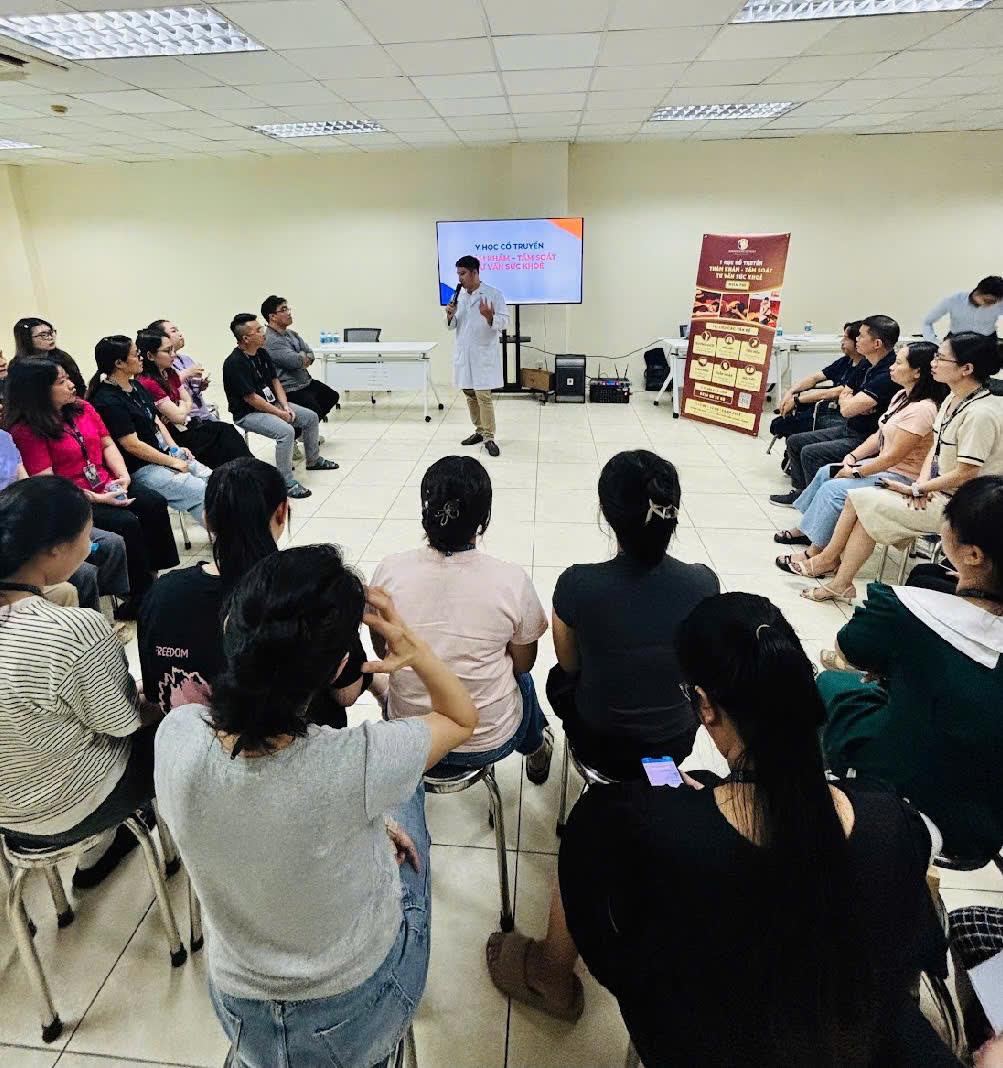
In Tong Gia classes, learners practise a short session for older people: ask and observe, warm both of the elder’s hands, stroke the forearms gently, rub the feet, then stroke very lightly along both sides of the spine if the elder can lie on their side. The whole session is only 15–20 minutes and ends with a drink of warm water and rest. Many elders need touch and conversation more than strong pressure. Read also massage for older people: what to avoid and learning acupressure for older people.
Which level should I study?
In Tong Gia’s 4-level ladder, level L1, Introduction to Y Tuong Hoc, teaches reading complexion and body types, daily wellness habits and a few safe self-care points, for a fee of 1,500,000 VND. Level L2, Core Trade Skills, teaches muscle release, acupressure for the neck, shoulders, back and legs, the session routine and talking with clients. Anyone hoping to work in a care home should complete both L1 and L2. About 70% of class time is practice on real people, and Lương Y Tống Văn Huynh, with more than 13 years in the craft, guides each learner.
Each care home has its own hiring requirements, so ask the home directly. Tong Gia does not promise jobs or income after the course. Massage is wellness health care and does not replace the medical care given by the home’s physicians and nurses.
How to register
The Sunday morning trial class 9:00–12:00 (10 places) and the Sunday Y Tuong Hoc session with no fee are open sessions for beginners, at unit T16-21, Manhattan block, Vinhomes Grand Park, Thu Duc City, Ho Chi Minh City. Book a trial class or call the training hotline 0917 945 259.
Frequently asked questions
What should I learn to massage older people in care homes? Very light pressure, safe bed and wheelchair positions, areas to avoid, observation, talking with elders and working with health staff.
Should older people receive strong acupressure? No. Their skin and bones are fragile, so use only stroking and light kneading; avoid pressing deep on bony points.
When must I stop massaging an elder? With chest pain, shortness of breath, drowsiness, new numbness or weakness, one swollen leg or a pressure sore; tell health staff at once.
Will care homes accept me after a massage course? That depends on each home; Tong Gia does not promise jobs or income after the course.
Where in Thu Duc can I learn massage for elder care? Tong Gia Acupoint Wellness, unit T16-21, Manhattan block, Vinhomes Grand Park, Thu Duc City; training hotline 0917 945 259.
Related articles
- 8 principles of spinal wellness massage: the rules of the hands for Tong Gia learners
- How to use the right pressure in acupressure: measuring force by how the receiver feels
- Hands for wellness massage: soft hands, hard hands and 6 things you must train
- All articles about learning the trade
Reserve a free Sunday-morning trial class or ask about the learning path: message Zalo 0917 945 259.

Founder of Tong Gia Acupoint Wellness (Huyệt Đạo Tống Gia), with more than 13 years in Eastern wellness practice, Y Tướng Học (face reading for wellness) and spinal nerve-reflex balancing. Lương Y's story
417 customers have reviewed Tong Gia on Google Maps
Reviews are written by customers themselves on Google; tap to read them before you visit.
Huyệt Đạo Tống Gia Quận 12
225 Dương Thị Mười, Phường Tân Chánh Hiệp (District 12, Ho Chi Minh City). 8:00 – 19:00 daily.
See reviews on Google MapsHuyệt Đạo Tống Gia Quận 9
Căn T16-21 khu Manhattan, Vinhomes Grand Park, Phường Long Bình (Thủ Đức City, Ho Chi Minh City). 9:00 – 20:00 daily.
See reviews on Google MapsWant to be observed in person?
A 90-minute session starts with observation, and only then moves on to muscle release and acupressure on the right areas. Two branches: District 12 and Vinhomes Grand Park.